2025 USUALPrice Prediction: Market Dynamics and Investment Opportunities in the Post-Pandemic Economy


Introduction: USUAL's Market Position and Investment Value
Usual (USUAL), as a secure and decentralized fiat-backed stablecoin issuer, has been redistributing ownership and value since its inception. As of 2025, USUAL's market capitalization has reached $54,813,682, with a circulating supply of approximately 1,048,664,295 tokens, and a price hovering around $0.05227. This asset, known as a "value redistributor," is playing an increasingly crucial role in the field of decentralized finance and stablecoin issuance.
This article will comprehensively analyze USUAL's price trends from 2025 to 2030, combining historical patterns, market supply and demand, ecosystem development, and macroeconomic environment to provide investors with professional price predictions and practical investment strategies.
I. USUAL Price History Review and Current Market Status
USUAL Historical Price Evolution Trajectory
- 2024: USUAL reached its all-time high of $1.6555 on December 20, marking a significant milestone for the project.
- 2025: The market entered a bearish phase, with USUAL's price declining substantially throughout the year.
- 2025: USUAL hit its all-time low of $0.04915 on September 26, representing a dramatic fall from its peak.
USUAL Current Market Situation
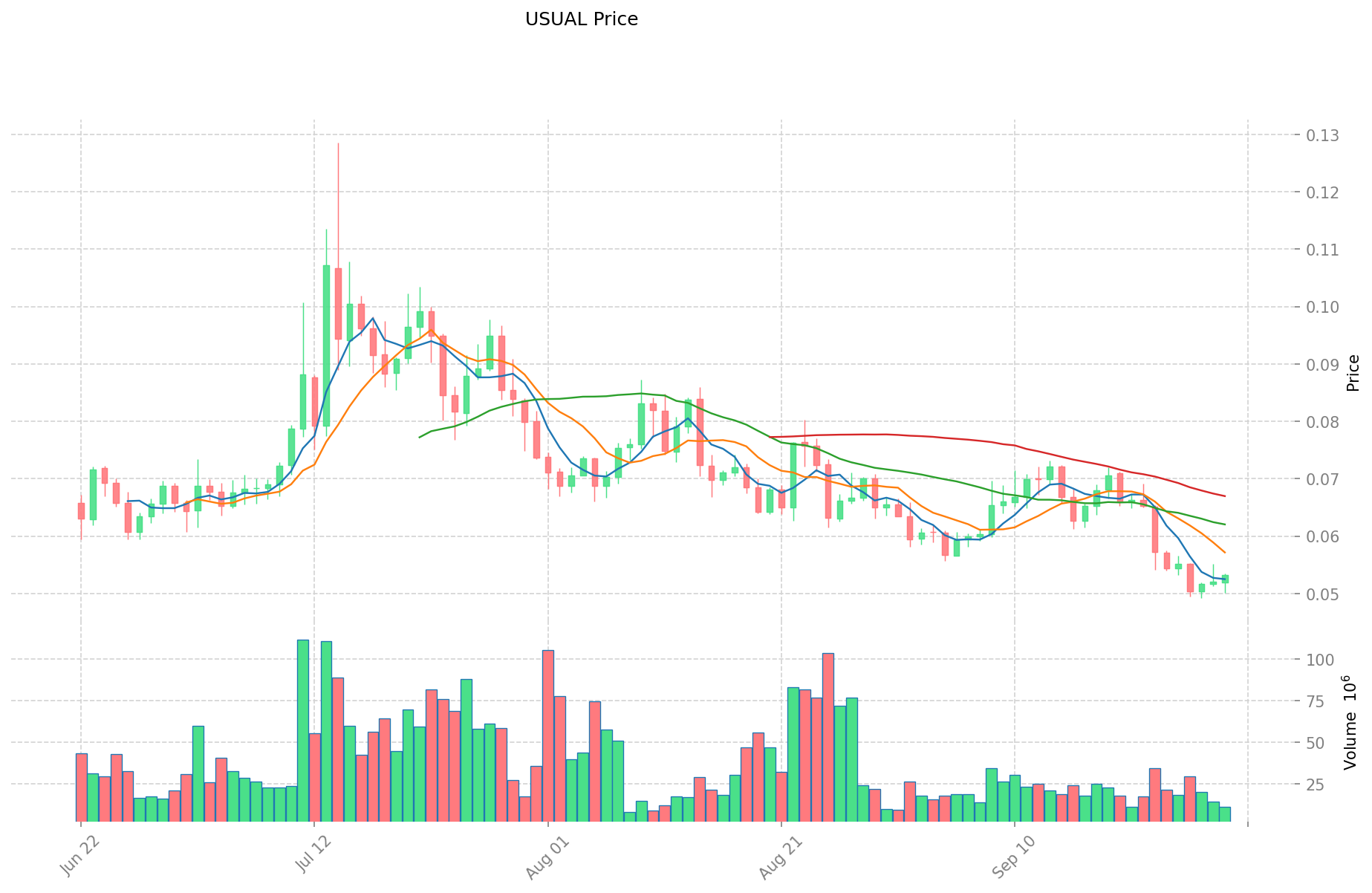
As of September 29, 2025, USUAL is trading at $0.05227, showing a 2.93% increase in the last 24 hours. The token's market capitalization stands at $54,813,682, ranking it 648th in the global cryptocurrency market. Despite the recent daily gain, USUAL has experienced significant losses over longer timeframes, with a 9.24% decrease in the past week and a substantial 21.4% drop over the last 30 days. The token's performance over the past year has been particularly challenging, with an 88.41% decline, reflecting the broader market downturn.
USUAL's trading volume in the last 24 hours is $549,965, indicating moderate market activity. The token's circulating supply is 1,048,664,295 USUAL, which represents 26.22% of its maximum supply of 4,000,000,000 tokens. This relatively low circulation ratio suggests potential for future token releases or emissions.
The current price of USUAL is significantly below its all-time high, trading at just 3.16% of its peak value. This substantial decrease highlights the volatile nature of the cryptocurrency market and the challenges faced by the USUAL project in maintaining its value proposition in a bearish environment.
Click to view the current USUAL market price
USUAL Market Sentiment Indicator
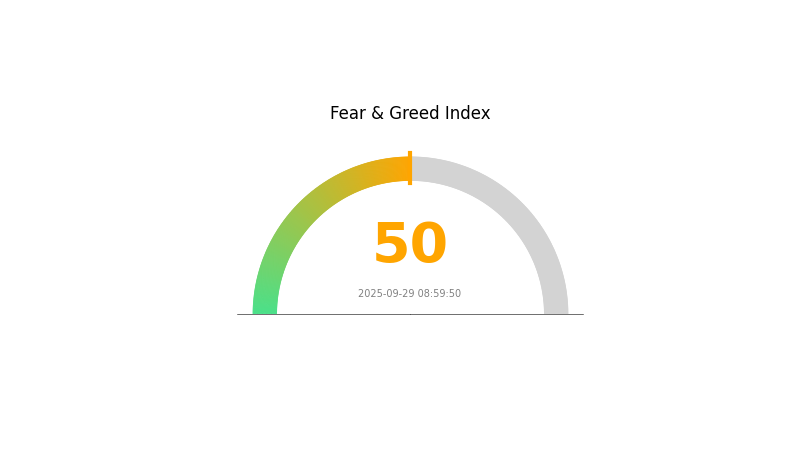
2025-09-29 Fear and Greed Index: 50 (Neutral)
Click to view the current Fear & Greed Index
The crypto market sentiment is currently balanced, with the Fear and Greed Index at 50, indicating a neutral state. This suggests that investors are neither overly pessimistic nor excessively optimistic. Such equilibrium often presents opportunities for thoughtful trading decisions. While the market lacks extreme emotions, it's crucial to stay informed and conduct thorough research before making any investment choices. Remember, market conditions can shift rapidly, so maintain a vigilant approach to your crypto portfolio management.
USUAL Holdings Distribution
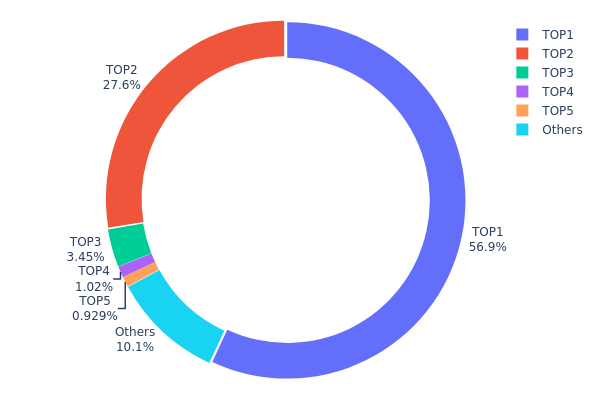
The address holdings distribution chart for USUAL reveals a highly concentrated token ownership structure. The top address holds a substantial 56.91% of the total supply, while the second-largest holder accounts for 27.59%. Together, these two addresses control over 84% of all USUAL tokens, indicating an extremely centralized distribution.
This level of concentration raises concerns about market manipulation and price volatility. With such a significant portion of tokens held by a few addresses, large-scale selling or buying actions could dramatically impact USUAL's market price. Additionally, this concentration may limit liquidity and potentially discourage broader market participation.
From a decentralization perspective, USUAL's current distribution suggests a low level of on-chain structural stability. The high concentration in top addresses could pose risks to the token's ecosystem and governance if implemented. Potential investors and market participants should be aware of these distribution characteristics when considering USUAL's market dynamics and long-term prospects.
Click to view the current USUAL holdings distribution
| Top | Address | Holding Qty | Holding (%) |
|---|---|---|---|
| 1 | 0x06b9...4d4b8e | 812490.01K | 56.91% |
| 2 | 0xf977...41acec | 393944.84K | 27.59% |
| 3 | 0x28c6...f21d60 | 49274.96K | 3.45% |
| 4 | 0x1ab4...8f8f23 | 14536.22K | 1.01% |
| 5 | 0x0d07...b492fe | 13263.80K | 0.92% |
| - | Others | 144104.17K | 10.12% |
II. Key Factors Affecting USUAL's Future Price
Supply Mechanism
- Token Economics: Changes in token economics or introduction of new features may lead to price fluctuations.
- Current Impact: The adoption rate of USD0 and its implementation on DeFi platforms directly affects the market demand for USUAL tokens.
Institutional and Whale Dynamics
- Regulatory Environment: Changes in cryptocurrency regulations or increased scrutiny by regulatory bodies may influence USUAL's price.
Macroeconomic Environment
- Market Volatility: Overall volatility in the cryptocurrency market can affect USUAL's price.
Technical Development and Ecosystem Building
- DeFi Implementation: The implementation of USUAL in DeFi platforms directly impacts the token's market demand.
- Ecosystem Applications: The development of the project's ecosystem and community growth are significant factors influencing USUAL's price trajectory.
III. USUAL Price Prediction for 2025-2030
2025 Outlook
- Conservative forecast: $0.03345 - $0.04500
- Neutral forecast: $0.04500 - $0.05500
- Optimistic forecast: $0.05500 - $0.0648 (requires strong market recovery and increased adoption)
2027-2028 Outlook
- Market phase expectation: Potential growth phase with increased volatility
- Price range prediction:
- 2027: $0.05821 - $0.08971
- 2028: $0.05774 - $0.11311
- Key catalysts: Technological advancements, broader market trends, and potential partnerships
2030 Long-term Outlook
- Base scenario: $0.08802 - $0.10235 (assuming steady market growth)
- Optimistic scenario: $0.10235 - $0.12000 (assuming strong market performance and increased utility)
- Transformative scenario: $0.12000 - $0.14022 (assuming breakthrough developments and mass adoption)
- 2030-12-31: USUAL $0.14022 (potential peak price under highly favorable conditions)
| 年份 | 预测最高价 | 预测平均价格 | 预测最低价 | 涨跌幅 |
|---|---|---|---|---|
| 2025 | 0.0648 | 0.05226 | 0.03345 | 0 |
| 2026 | 0.07843 | 0.05853 | 0.04097 | 11 |
| 2027 | 0.08971 | 0.06848 | 0.05821 | 31 |
| 2028 | 0.11311 | 0.0791 | 0.05774 | 51 |
| 2029 | 0.1086 | 0.0961 | 0.05958 | 83 |
| 2030 | 0.14022 | 0.10235 | 0.08802 | 95 |
IV. USUAL Professional Investment Strategies and Risk Management
USUAL Investment Methodology
(1) Long-term Holding Strategy
- Suitable for: Risk-tolerant investors with a long-term perspective
- Operational suggestions:
- Accumulate USUAL tokens during market dips
- Set price targets for partial profit-taking
- Store tokens securely in a hardware wallet
(2) Active Trading Strategy
- Technical analysis tools:
- Moving Averages: Use to identify trends and potential reversal points
- Relative Strength Index (RSI): Gauge overbought/oversold conditions
- Key points for swing trading:
- Monitor market sentiment and news affecting stablecoins
- Set stop-loss orders to manage downside risk
USUAL Risk Management Framework
(1) Asset Allocation Principles
- Conservative investors: 1-3%
- Aggressive investors: 5-10%
- Professional investors: 10-15%
(2) Risk Hedging Solutions
- Diversification: Spread investments across different crypto assets
- Stop-loss orders: Implement to limit potential losses
(3) Secure Storage Solutions
- Hot wallet recommendation: Gate Web3 Wallet
- Cold storage solution: Hardware wallet for long-term holdings
- Security precautions: Enable two-factor authentication, use strong passwords
V. USUAL Potential Risks and Challenges
USUAL Market Risks
- Volatility: High price fluctuations common in crypto markets
- Competition: Increasing number of stablecoin projects entering the market
- Liquidity: Potential issues during market stress
USUAL Regulatory Risks
- Stablecoin regulations: Potential new laws affecting stablecoin issuers
- Cross-border restrictions: Varying regulations across jurisdictions
- Compliance requirements: Increased KYC/AML measures for stablecoin users
USUAL Technical Risks
- Smart contract vulnerabilities: Potential bugs in the token contract
- Scalability issues: Challenges in handling increased transaction volume
- Integration risks: Potential issues when integrating with other platforms
VI. Conclusion and Action Recommendations
USUAL Investment Value Assessment
USUAL presents a unique value proposition as a fiat-backed stablecoin with decentralized governance. While it offers potential for long-term growth, short-term risks include market volatility and regulatory uncertainties.
USUAL Investment Recommendations
✅ Beginners: Start with small positions, focus on learning the technology ✅ Experienced investors: Consider a balanced approach, mixing long-term holding with active trading ✅ Institutional investors: Evaluate USUAL as part of a diversified crypto portfolio, conduct thorough due diligence
USUAL Trading Participation Methods
- Spot trading: Buy and sell USUAL on Gate.com
- Staking: Participate in yield-generating programs if available
- Governance: Engage in the project's decision-making process through token voting
Cryptocurrency investments carry extremely high risks, and this article does not constitute investment advice. Investors should make decisions cautiously based on their own risk tolerance and are advised to consult professional financial advisors. Never invest more than you can afford to lose.
FAQ
What is the future of usual coin?
The future of Usual Coin looks promising as a decentralized stablecoin protocol token. Market trends and adoption will likely drive its long-term growth, with steady performance expected through 2030.
Can usual coins reach 10 dollars?
While possible, it's unlikely. USUAL would need a $40 billion market cap, far exceeding its current value as of 2025.
Will usual coins recover?
Yes, usual coins are likely to recover. Market trends often show temporary dips, but strong coins tend to rebound over time. Patience is key for potential growth.
What is the usual price of usual?
The usual price of USUAL is $0.05076. It has seen a 4.80% decrease in the last 24 hours, with a trading volume of $21.44 million.
Share
Content
Introduction: USUAL's Market Position and Investment Value
I. USUAL Price History Review and Current Market Status
II. Key Factors Affecting USUAL's Future Price
III. USUAL Price Prediction for 2025-2030
IV. USUAL Professional Investment Strategies and Risk Management
V. USUAL Potential Risks and Challenges
VI. Conclusion and Action Recommendations
FAQ
How to Buy Cryptocurrency


Trending Cryptocurrencies



GUSD on Gate in 2025: Advantages and Opportunities of Gemini Dollar

How to Buy GUSD: A Complete Guide to Gemini Dollar
2025 SUSD Price Prediction: Analyzing Market Trends and Potential Growth Factors

2025 USDP Price Prediction: Analyzing Potential Growth and Market Factors for Stablecoin

Is TrueUSD (TUSD) a good investment?: Analyzing the Potential and Risks of this Stablecoin in the Crypto Market

2025 SUSD Price Prediction: Will the Stablecoin Maintain Its Dollar Peg Amid Evolving Crypto Regulations?
What Is FTN Price Volatility: Why Did FTN Drop From $4.4 to $1.95 in 2025?

Goerli Testnet

The Rise of AI Linked Debt: What Investors Should Know in 2026

What is APM coin and why is its price down 4.50% today?

What is XVG's regulatory compliance risk and why does it matter for crypto investors?