JST vs SNX: A Comparative Analysis of Two Synthetic Asset Protocols in DeFi

10-18-2025, 12:07:11 AM
Altcoins
Crypto Insights
DeFi
Investing In Crypto
Stablecoin
Article Rating : 3.5
half-star
0 ratings
This article provides a comparative analysis between JST and SNX, two prominent synthetic asset protocols in DeFi. It evaluates their investment value through historical price trends, supply mechanisms, and market applications. The article addresses key investor questions such as which token is a better buy, offering insights into price predictions, risk management, and investment strategies. Aimed at investors seeking to navigate the complexities of DeFi, it structures its analysis around price history, institutional adoption, technical development, and macroeconomic factors. Explore real-time updates and strategic allocation advice for diversified portfolios on Gate.
JST vs SNX: A Comparative Analysis of Two Synthetic Asset Protocols in DeFi

Introduction: JST vs SNX Investment Comparison

In the cryptocurrency market, the comparison between JST and SNX has always been a topic that investors can't ignore. The two not only have significant differences in market cap ranking, application scenarios, and price performance, but also represent different positioning in the crypto asset space.

Just (JST): Since its launch in 2020, it has gained market recognition for its goal of establishing a fair decentralized financial system and providing stable currency lending and governance mechanisms.

Synthetix (SNX): Launched in 2018, it has been hailed as a platform designed for engineers to build decentralized and trustless networks, supporting a variety of synthetic assets.

This article will comprehensively analyze the investment value comparison between JST and SNX, focusing on historical price trends, supply mechanisms, institutional adoption, technological ecosystems, and future predictions, attempting to answer the question that investors are most concerned about:

"Which is the better buy right now?"

I. Price History Comparison and Current Market Status

  • 2020: JST launched at $0.002, experiencing initial volatility as a new token.
  • 2021: SNX reached its all-time high of $28.53 on February 14, driven by the DeFi boom.
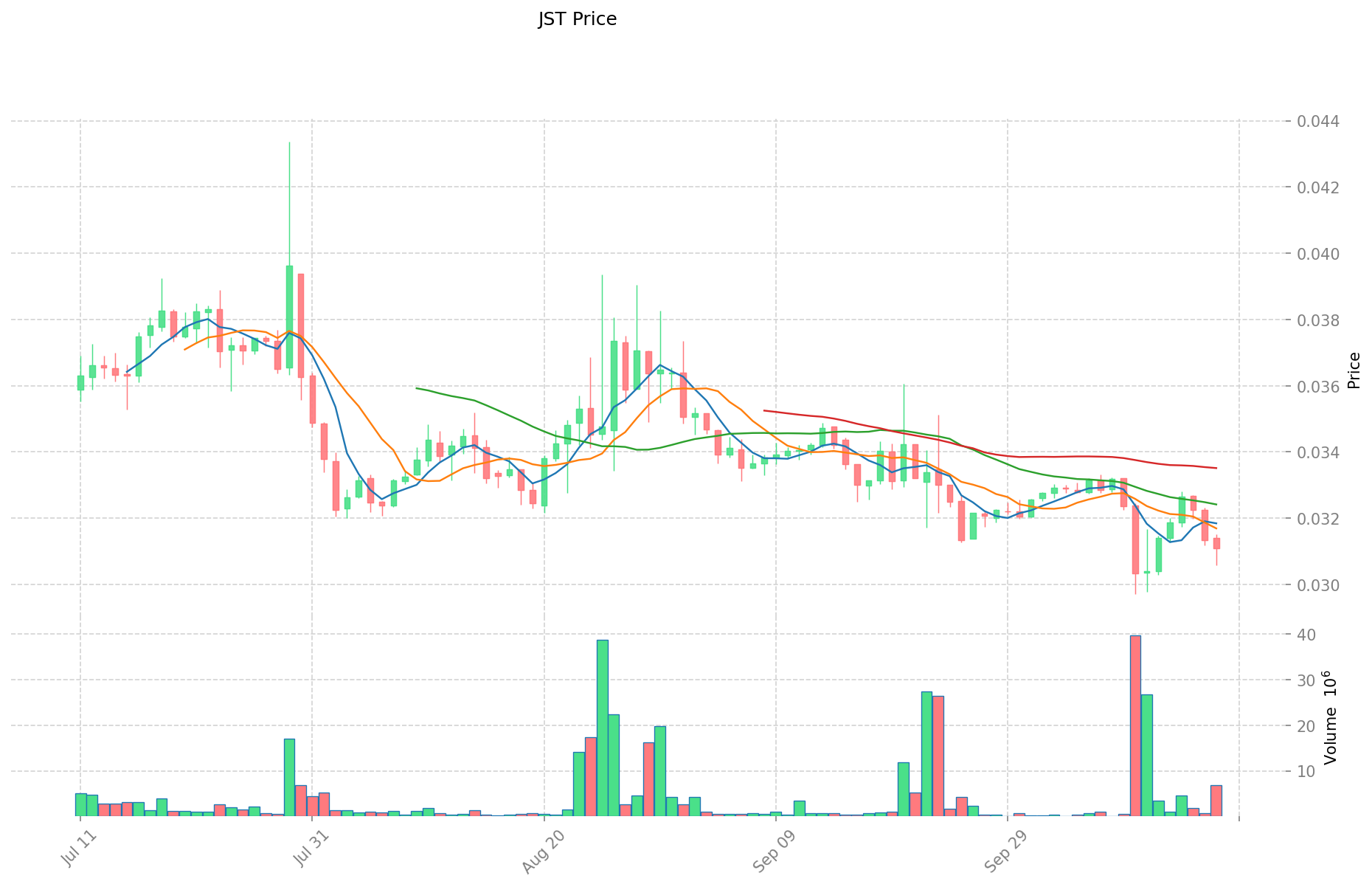
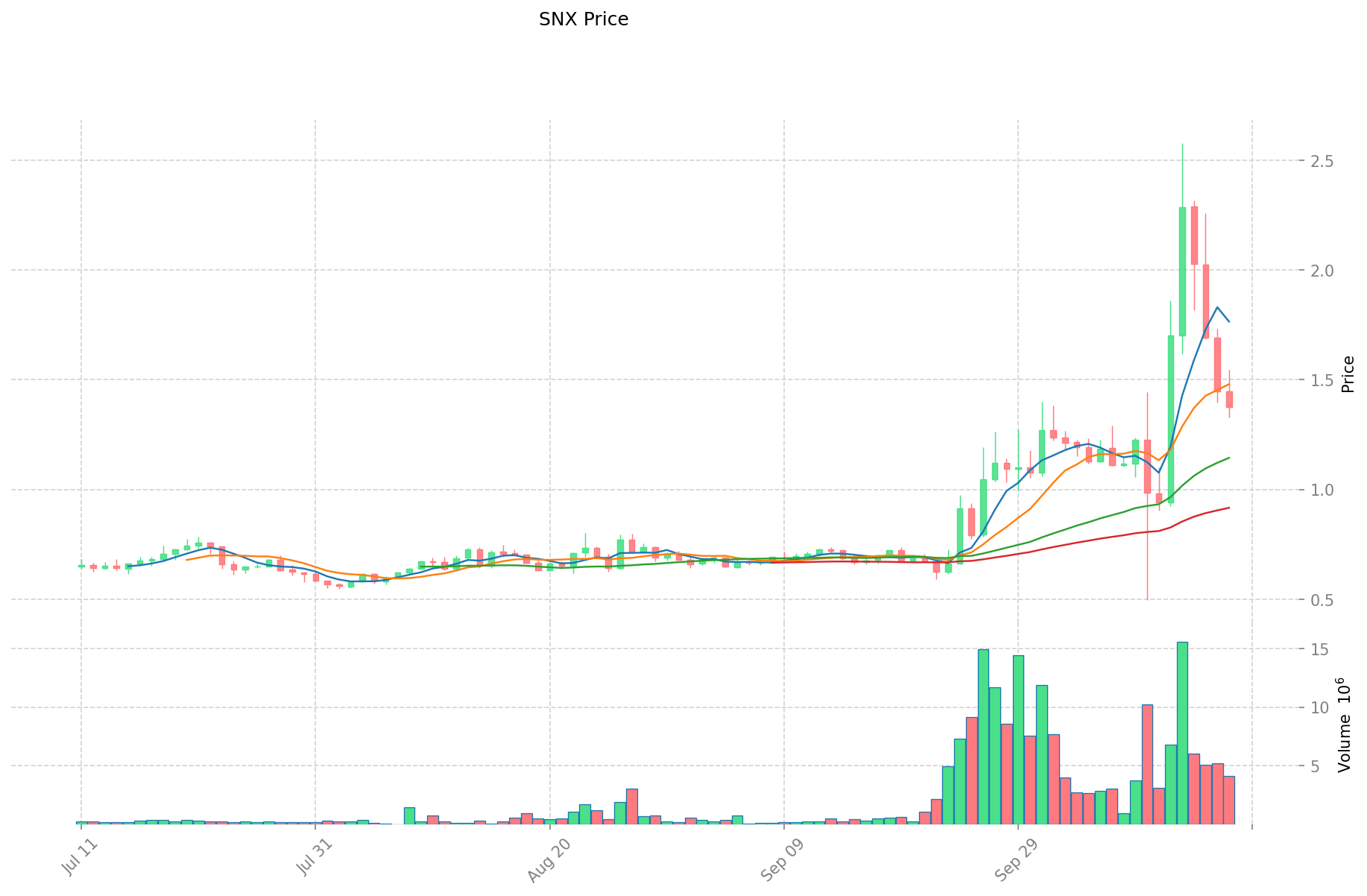
  • Comparative analysis: During the 2021 bull market, JST rose from its launch price to an all-time high of $0.193254, while SNX saw a more significant increase from its low of $0.0347864 to its peak.

Current Market Situation (2025-10-18)

  • JST current price: $0.03102
  • SNX current price: $1.3841
  • 24-hour trading volume: JST $209,926.64 vs SNX $5,996,990.70
  • Market Sentiment Index (Fear & Greed Index): 22 (Extreme Fear)

Click to view real-time prices:

price_image1 price_image2

II. Core Factors Affecting JST vs SNX Investment Value

Supply Mechanism Comparison (Tokenomics)

  • JST: JST has a total supply of 9,900,000,000 tokens, with circulating supply representing a portion of this total. The JUST network uses a deflationary model where tokens are burned through network activity.
  • SNX: Synthetix has an inflationary supply model with SNX tokens issued as rewards to stakers. The protocol has implemented several mechanisms to control inflation, including adjustments to staking rewards.
  • 📌 Historical Pattern: Deflationary tokens like JST tend to gain value during high network usage periods, while SNX's value is closely tied to staking participation rates and protocol revenue.

Institutional Adoption and Market Applications

  • Institutional Holdings: SNX has attracted more institutional interest due to its established position in the DeFi derivatives space and partnerships with other major DeFi protocols.
  • Enterprise Adoption: JST is primarily used within the JUST/TRON ecosystem for governance and stablecoin operations, while SNX serves as collateral for synthetic assets across various financial applications.
  • Regulatory Stance: Both tokens operate in regulatory gray areas in many jurisdictions, though SNX faces more scrutiny due to its derivative products potentially falling under securities regulations.

Technical Development and Ecosystem Building

  • JST Technical Upgrades: Recent improvements focus on enhancing the JUST protocol's stablecoin stability mechanisms and governance processes within the TRON ecosystem.
  • SNX Technical Development: Synthetix has been implementing V3 upgrades focusing on cross-chain functionality, improved capital efficiency, and reduced gas costs through optimistic rollups.
  • Ecosystem Comparison: SNX has deeper integration within the broader DeFi ecosystem, particularly in derivatives and synthetic assets. JST is more focused on stablecoin issuance (USDJ) and lending within the TRON ecosystem.

Macroeconomic Factors and Market Cycles

  • Inflation Environment Performance: SNX has historically shown more correlation with broader crypto market movements, while JST tends to be more stable due to its stablecoin backing mechanism.
  • Macroeconomic Monetary Policy: Both tokens are affected by Federal Reserve decisions and interest rate changes, with SNX typically showing higher volatility during policy shifts.
  • Geopolitical Factors: JST benefits from TRON's strong presence in Asian markets, while SNX has greater exposure to Western market dynamics and regulatory developments.

III. 2025-2030 Price Prediction: JST vs SNX

Short-term Prediction (2025)

  • JST: Conservative $0.024872 - $0.03109 | Optimistic $0.03109 - $0.0432151
  • SNX: Conservative $1.29941 - $1.3678 | Optimistic $1.3678 - $1.84653

Mid-term Prediction (2027)

  • JST may enter a growth phase, with estimated prices ranging from $0.0351463123 to $0.0555151978375
  • SNX may enter a volatile phase, with estimated prices ranging from $0.967191897 to $2.067135623
  • Key drivers: Institutional capital inflow, ETF, ecosystem development

Long-term Prediction (2030)

  • JST: Base scenario $0.06987604594414 - $0.092236380646265 | Optimistic scenario $0.092236380646265+
  • SNX: Base scenario $2.8629012903029 - $4.122577858036176 | Optimistic scenario $4.122577858036176+

View detailed price predictions for JST and SNX

Disclaimer: This analysis is based on historical data and current market trends. Cryptocurrency markets are highly volatile and unpredictable. These predictions should not be considered as financial advice. Always conduct your own research before making investment decisions.

JST:

年份 预测最高价 预测平均价格 预测最低价 涨跌幅
2025 0.0432151 0.03109 0.024872 0
2026 0.0427254325 0.03715255 0.028235938 19
2027 0.0555151978375 0.03993899125 0.0351463123 28
2028 0.068249745197562 0.04772709454375 0.045818010762 53
2029 0.081763672017625 0.057988419870656 0.051029809486177 86
2030 0.092236380646265 0.06987604594414 0.037034304350394 125

SNX:

年份 预测最高价 预测平均价格 预测最低价 涨跌幅
2025 1.84653 1.3678 1.29941 -1
2026 2.1857444 1.607165 1.30180365 16
2027 2.067135623 1.8964547 0.967191897 37
2028 2.635787564795 1.9817951615 1.34762070982 43
2029 3.4170112174583 2.3087913631475 1.223659422468175 66
2030 4.122577858036176 2.8629012903029 2.777014251593813 106

IV. Investment Strategy Comparison: JST vs SNX

Long-term vs Short-term Investment Strategies

  • JST: Suitable for investors focused on stablecoin ecosystems and TRON network growth
  • SNX: Suitable for investors interested in DeFi derivatives and synthetic asset exposure

Risk Management and Asset Allocation

  • Conservative investors: JST: 60% vs SNX: 40%
  • Aggressive investors: JST: 40% vs SNX: 60%
  • Hedging tools: Stablecoin allocation, options, cross-currency portfolios

V. Potential Risk Comparison

Market Risks

  • JST: Highly dependent on TRON ecosystem adoption and stablecoin demand
  • SNX: More susceptible to broader DeFi market fluctuations and liquidity risks

Technical Risks

  • JST: Scalability, network stability within TRON ecosystem
  • SNX: Smart contract vulnerabilities, oracle dependency

Regulatory Risks

  • Global regulatory policies may impact SNX more due to its involvement in synthetic assets

VI. Conclusion: Which Is the Better Buy?

📌 Investment Value Summary:

  • JST advantages: Stablecoin ecosystem integration, deflationary model
  • SNX advantages: Established DeFi presence, synthetic asset exposure

✅ Investment Advice:

  • Novice investors: Consider a higher allocation to JST for its relative stability
  • Experienced investors: Balanced approach with a slight tilt towards SNX for higher potential returns
  • Institutional investors: Strategic allocation to both, with SNX for DeFi exposure and JST for stablecoin ecosystem participation

⚠️ Risk Warning: Cryptocurrency markets are highly volatile. This article does not constitute investment advice. None

VII. FAQ

Q1: What are the main differences between JST and SNX? Answer: JST is primarily used within the JUST/TRON ecosystem for governance and stablecoin operations, while SNX serves as collateral for synthetic assets across various DeFi applications. JST has a deflationary model, whereas SNX has an inflationary supply model with tokens issued as rewards to stakers.

Q2: Which token has shown better historical price performance? Answer: During the 2021 bull market, SNX showed a more significant increase, rising from its low of $0.0347864 to an all-time high of $28.53. JST rose from its launch price of $0.002 to an all-time high of $0.193254.

Q3: How do the current market situations of JST and SNX compare? Answer: As of 2025-10-18, JST's price is $0.03102 with a 24-hour trading volume of $209,926.64, while SNX's price is $1.3841 with a 24-hour trading volume of $5,996,990.70. The overall market sentiment is in "Extreme Fear" with a Fear & Greed Index of 22.

Q4: What are the long-term price predictions for JST and SNX by 2030? Answer: For JST, the base scenario predicts a range of $0.06987604594414 to $0.092236380646265, with an optimistic scenario above $0.092236380646265. For SNX, the base scenario predicts a range of $2.8629012903029 to $4.122577858036176, with an optimistic scenario above $4.122577858036176.

Q5: How do the investment strategies for JST and SNX differ? Answer: JST is more suitable for investors focused on stablecoin ecosystems and TRON network growth, while SNX is better for those interested in DeFi derivatives and synthetic asset exposure. Conservative investors might allocate 60% to JST and 40% to SNX, while aggressive investors might do the opposite.

Q6: What are the main risks associated with investing in JST and SNX? Answer: JST's risks include high dependence on TRON ecosystem adoption and stablecoin demand, as well as scalability and network stability issues. SNX is more susceptible to broader DeFi market fluctuations, liquidity risks, smart contract vulnerabilities, and potential regulatory challenges due to its involvement in synthetic assets.

Q7: Which token might be a better buy for different types of investors? Answer: Novice investors might consider a higher allocation to JST for its relative stability. Experienced investors could take a balanced approach with a slight tilt towards SNX for higher potential returns. Institutional investors might strategically allocate to both, using SNX for DeFi exposure and JST for stablecoin ecosystem participation.

* The information is not intended to be and does not constitute financial advice or any other recommendation of any sort offered or endorsed by Gate.
Related Articles
2025 RESOLV Price Prediction: Analyzing Market Trends and Future Valuation Potential

2025 RESOLV Price Prediction: Analyzing Market Trends and Future Valuation Potential

The article, "2025 RESOLV Price Prediction: Analyzing Market Trends and Future Valuation Potential," provides a detailed analysis of the yield scaling stablecoin, RESOLV. It outlines the historical and current market performance of RESOLV, explores key factors affecting its future price, and presents a comprehensive prediction for its valuation up to 2030. The content caters to investors by offering professional insights on investment strategies, risk management, and potential market developments. Structured to guide readers through RESOLV's market position, price history, factors influencing its price, prediction outlooks, and strategic investment advice, this article ensures an in-depth understanding for anyone interested in DeFi investments and stablecoin opportunities on Gate.
10-6-2025, 2:11:52 AM
ENA vs CRO: A Comparative Analysis of Two Leading Genomic Data Repositories

ENA vs CRO: A Comparative Analysis of Two Leading Genomic Data Repositories

This article presents an in-depth comparison between Ethena (ENA) and Cronos (CRO), two prominent players in the cryptocurrency market. It explores their historical price trends, investment value, and ecosystem development. The analysis helps investors determine which token offers better investment potential by scrutinizing institutional adoption, technological frameworks, and macroeconomic influences. Primarily targeting cryptocurrency investors, it addresses key concerns such as market risks, technical stability, and regulatory implications. Sequentially, the content covers price comparisons, strategic investment guidance, and FAQs to equip readers with a comprehensive understanding of ENA and CRO's market positioning.
10-15-2025, 4:04:34 AM
What Is the Current Market Overview for ENA in 2025?

What Is the Current Market Overview for ENA in 2025?

The article delves into Ethena's ENA token's market dynamics as of October 28, 2025, highlighting its significant $3.52B market cap and ranking #41 among cryptocurrencies. It examines ENA's market performance, including recent volatility and trade volume spikes, emphasizing investor interest amid fluctuations. The content addresses ENA's strategic growth through ecosystem expansion and investments, while contrasting its resilience during market upheavals with other major cryptocurrencies. It targets cryptocurrency investors seeking insights on ENA's positioning and potential in the evolving market landscape.
10-28-2025, 12:40:33 PM
Is FeiUSD (FEI) a good investment?: Analyzing the potential and risks of this stablecoin in the volatile crypto market

Is FeiUSD (FEI) a good investment?: Analyzing the potential and risks of this stablecoin in the volatile crypto market

This article explores the investment potential of FeiUSD (FEI), a decentralized stablecoin, within the volatile crypto market. It delves into FEI's price history, current market status, and key factors influencing investment decisions, such as supply mechanisms, institutional adoption, and macroeconomic impacts. Readers will gain insights into FEI's long-term investment forecasts, strategies, risks, and FAQs, assisting beginners and experienced investors in understanding FEI's unique position and investment value. SEO keywords like "FeiUSD investment," "stablecoin risks," and "crypto trading strategies" are optimized for enhanced visibility.
10-14-2025, 4:01:55 AM
Is GHO (GHO) a good investment?: Analyzing the potential and risks of Aave's new stablecoin

Is GHO (GHO) a good investment?: Analyzing the potential and risks of Aave's new stablecoin

This article explores the investment prospects of GHO, Aave's decentralized and over-collateralized stablecoin. It assesses GHO's historical price trends, current market status, and factors influencing its investment potential, including supply mechanisms, institutional adoption, macroeconomic effects, and ecosystem development. The piece provides market forecasts for short-term, mid-term, and long-term investment scenarios, alongside practical investment strategies and risk management insights. Targeting both novice and experienced investors, it highlights GHO's potential for growth and its inherent risks. Visit Gate for real-time GHO price updates.
10-17-2025, 4:29:23 AM
2025 RSR Price Prediction: Navigating the Future of Reserve Rights Token in a Volatile Crypto Market

2025 RSR Price Prediction: Navigating the Future of Reserve Rights Token in a Volatile Crypto Market

This article provides a comprehensive analysis of the Reserve Rights (RSR) token's price trends and market positioning as of 2025. It examines historical price evolution, current market sentiment, and potential factors influencing RSR's future price, along with professional investment strategies. Readers will gain insights into supply mechanics, macroeconomic impacts, and risk management while considering RSR's applicability in decentralized finance. The article addresses market volatility, regulatory challenges, and technical risks, offering predictions up to 2030. Suitable for investors seeking strategic guidance on RSR amid a volatile crypto environment.
10-17-2025, 2:23:17 AM
Recommended for You
Beginner's Guide to Spot Trading in Cryptocurrency

Beginner's Guide to Spot Trading in Cryptocurrency

The article serves as a comprehensive guide to spot trading in the cryptocurrency market, providing essential insights for beginners and experienced traders alike. It explains the fundamentals of crypto spot trading, including how it works on centralized exchanges like Gate and decentralized platforms. The guide outlines the pros and cons of spot trading, distinguishing it from derivatives trading, and touching on the OTC spot market. This informative piece addresses key questions, making it ideal for newcomers seeking to grasp direct asset ownership and informed decision-making in the crypto space.
12-14-2025, 11:41:24 AM
Mastering Taproot Bitcoin Wallet: A User's Guide

Mastering Taproot Bitcoin Wallet: A User's Guide

"Mastering Taproot Bitcoin Wallet: A User's Guide" explores the Taproot upgrade, a major milestone in Bitcoin's evolution. It delves into how Taproot enhances security, privacy, and scalability through Schnorr signatures, MAST, and other innovations. Addressing the needs of advanced Bitcoin users, developers, and those interested in leveraging new blockchain functionalities, this guide explains Taproot's impact on transaction efficiency and the broader Bitcoin ecosystem. Key topics include the integration of DeFi, NFTs, and BRC-20 tokens, offering insights into Taproot's transformative potential.
12-14-2025, 11:38:09 AM
Master ENS Domains: A Comprehensive Guide to Utilizing Ethereum Name Service for Web3

Master ENS Domains: A Comprehensive Guide to Utilizing Ethereum Name Service for Web3

This article provides a comprehensive overview of the Ethereum Name Service (ENS), exploring its role in revolutionizing blockchain usability by transforming complex crypto addresses into human-readable names. It highlights the significance of ENS in enhancing user experience, facilitating decentralized web infrastructure, and promoting the adoption of Web3 technologies. Key topics include the functionality, importance, applications, and potential impact of ENS domains, underscoring their ability to democratize access and improve interoperability within the Ethereum ecosystem. With a clear structure, the guide offers practical insights into obtaining and using ENS domains effectively.
12-14-2025, 11:33:48 AM
How to Use ENS Domains for Your Cryptocurrency Wallet: An Ultimate Guide

How to Use ENS Domains for Your Cryptocurrency Wallet: An Ultimate Guide

This guide explores the Ethereum Name Service (ENS), a decentralized domain system that transforms complex Ethereum addresses into memorable names. Readers will learn about ENS's architecture, benefits such as user-friendly transactions, and its importance in accelerating Ethereum adoption. It addresses usability challenges in Decentralized Finance (DeFi) and decentralized identity systems. The guide details how to register and use ENS domains, underlining their potential impact on the decentralized web. Key topics include ENS's integration with wallets and DApps, and its role in enhancing blockchain accessibility.
12-14-2025, 11:28:43 AM
Blockchain Layer 0 Architecture: Advancements in Mainnets and Sidechains

Blockchain Layer 0 Architecture: Advancements in Mainnets and Sidechains

Discover the revolutionary Layer 0 blockchain architecture that transforms mainnets and sidechains to achieve superior interoperability and scalability. Explore how Layer 0 is reshaping blockchain infrastructure, featuring examples from leading projects such as Gate. This content is ideal for Web3 developers and enthusiasts dedicated to advancing state-of-the-art blockchain solutions.
12-14-2025, 11:26:00 AM
The Ultimate Bored Ape NFT Investment Guide

The Ultimate Bored Ape NFT Investment Guide

This article serves as a comprehensive guide to Bored Ape Yacht Club (BAYC), a cultural icon in the NFT space recognized for its unique collection of digital apes and expansive ecosystem. It explores the intricacies of BAYC, including token rarity, celebrity endorsements, and exclusive community benefits, while addressing the rising interest and accessibility challenges in acquiring these coveted NFTs. Structured to enhance understanding of NFTs and BAYC’s ecosystem, the guide also delves into ApeCoin and metaverse extensions like Otherside, providing details for both new and seasoned NFT investors.
12-14-2025, 11:22:43 AM