

Trade
Basic
Futures
Futures
Hundreds of contracts settled in USDT or BTC
TradFi
Gold
Trade global traditional assets with USDT in one place
Options
Hot
Trade European-style vanilla options
Unified Account
Maximize your capital efficiency
Demo Trading
Futures Kickoff
Get prepared for your futures trading
Futures Events
Participate in events to win generous rewards
Demo Trading
Use virtual funds to experience risk-free trading
Earn
Launch
CandyDrop
Collect candies to earn airdrops
Launchpool
Quick staking, earn potential new tokens
HODLer Airdrop
Hold GT and get massive airdrops for free
Launchpad
Be early to the next big token project
Alpha Points
Trade on-chain assets and enjoy airdrop rewards!
Futures Points
Earn futures points and claim airdrop rewards
Investment
Simple Earn
Earn interests with idle tokens
Auto-Invest
Auto-invest on a regular basis
Dual Investment
Buy low and sell high to take profits from price fluctuations
Soft Staking
Earn rewards with flexible staking
Crypto Loan
0 Fees
Pledge one crypto to borrow another
Lending Center
One-stop lending hub
VIP Wealth Hub
Customized wealth management empowers your assets growth
Private Wealth Management
Customized asset management to grow your digital assets
Quant Fund
Top asset management team helps you profit without hassle
Staking
Stake cryptos to earn in PoS products
Smart Leverage
New
No forced liquidation before maturity, worry-free leveraged gains
GUSD Minting
Use USDT/USDC to mint GUSD for treasury-level yields

More



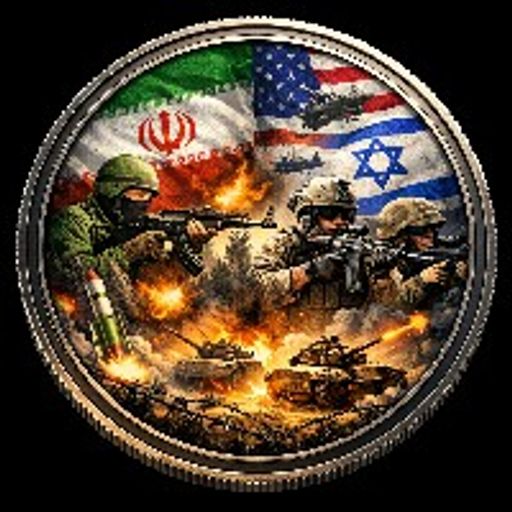

The Middle East's powder keg has exploded—what are the opportunities and risks for the A-shares?
Storms are brewing, and the Middle East’s powder keg has exploded! [Taogu Ba]
The biggest news this weekend is the US-Iran conflict. Surprisingly, in the first strike, Iran’s Supreme Leader Khamenei was targeted and killed. About 40 Iranian officials, including the Minister of Defense, died in the attack. High-level officials were wiped out, which is indeed unexpected.
I previously analyzed this in earlier articles,
My analysis at the time was that action would only come after March. The US had planned to hold a fourth round of negotiations, but Israel couldn’t wait any longer. Fearing prolonged uncertainty, Israel launched the attack directly, forcing the US to intervene and declare involvement.
Once a war begins, it rarely ends easily. Many now believe Iran will inevitably lose, and that Iran will fall quickly. On the surface, the US and Israel hold overwhelming military advantages, making Iran seem hopeless; but what is the essence of war? It’s never about the number of weapons but a contest of political will and strategic resolve. If Iran dares to mobilize fully for a prolonged war, resist stubbornly, and demonstrate its resolve to other countries—holding off initial attacks and achieving battlefield results—it will garner more support. Self-help is divine help; Iran’s fate is in its own hands.
Crises contain opportunities. What seems like Iran’s greatest crisis could also be its biggest turning point. If Iran withstands it, it can reshape its position in the Middle East. It could also mark the beginning of a downfall for the US and Israel, who would then fully control the Middle East and dominate global energy resources. This would lead to significant shifts in the world order. Let’s watch how things develop. No matter what changes occur, we must believe that justice will prevail, and ultimately, things will turn for the better.
Returning to the A-share market, a significant decline in indices next week is inevitable. The most direct impact of war is on financial markets. However, for the current A-shares, the situation may not be as bad as everyone imagines. With expectations of stability from the Two Sessions, the indices might digest the news by Monday and mainly fluctuate afterward. Any major adjustments are likely to occur after the meetings conclude. The medium-term upward trend of A-shares will not change because of this conflict. Therefore, the rapid declines caused by black swan events are opportunities, not risks. Short-term volatility is expected, but once the market fully digests and stabilizes, it will continue upward.
When guns fire, gold flows. The essence of this conflict is a battle for energy resources. The most favorable sectors are likely to be oil, followed by precious metals and non-ferrous metals, then aerospace and military industries. These are probably the main themes for March’s speculation, with repeated fluctuations as long as the conflict persists. Besides traditional energy, new energy sectors also benefit, along with shipping and RMB appreciation. The technology sector might undergo significant adjustments or reshuffling due to this event, with short-term declines but long-term potential remaining core. This correction could be a golden opportunity—an “opportunity in the dip.”
To seize this investment opportunity from the conflict, the idea is simple: in the initial phase, focus on sectors directly benefiting from the conflict. Which sectors the market will favor can be seen by Monday. Follow the trend promptly. If the war ends quickly like last year, it might be just a short-lived event. But if it drags into a prolonged conflict, the strongest sectors will likely see two major waves of market movement. After the Two Sessions and once the market fully digests the news and stabilizes, the most certain opportunity will be in index ETFs. As the conflict-related sectors continue to be hot, and after the hype subsides, the first move should be shifting into the tech sector. The future of A-shares belongs to technology stocks. The recent adjustments in some core tech stocks due to this sudden event present opportunities—grab them.
Opportunities are born from declines, so don’t fear short-term corrections. Even if there’s a sharp drop next week, it may seem risky in the short term. But from a larger cycle perspective, each unexpected event is not just a risk but a big opportunity. The key is to avoid risks at the start of crises; once the danger passes, opportunities are everywhere.