


Futures
Access hundreds of perpetual contracts
TradFi
Gold
One platform for global traditional assets
Options
Hot
Trade European-style vanilla options
Unified Account
Maximize your capital efficiency
Demo Trading
Introduction to Futures Trading
Learn the basics of futures trading
Futures Events
Join events to earn rewards
Demo Trading
Use virtual funds to practice risk-free trading
Launch
CandyDrop
Collect candies to earn airdrops
Launchpool
Quick staking, earn potential new tokens
HODLer Airdrop
Hold GT and get massive airdrops for free
Launchpad
Be early to the next big token project
Alpha Points
Trade on-chain assets and earn airdrops
Futures Points
Earn futures points and claim airdrop rewards


More




Daily payment of 29 yuan, and it’s turned out like this?
Why Are Car Companies Collectively Launching 7-Year Low-Interest Car Purchase Plans?
“I applied for the 7-year low-interest car purchase plan from Xiaomi Auto, provided half a year of personal income tax details, and it was approved in ten minutes.” Xiao Zhang (a pseudonym), a successful owner of the SU7 Pro, stated that the 7-year low-interest loan he obtained is not the financing lease model rumored online, but rather a loan through Ping An of China, without any collateral green book or other mortgage information, and the loan can enjoy state interest subsidies.
Since the beginning of this year, “7 years of ultra-low interest, easily acquiring a Tesla,” “the cost of a cup of milk tea per day,” “down payment starting at 32,500 yuan,” and “monthly payment of 1,918 yuan” have replaced cash discount slogans and become a new battleground for car companies.
According to incomplete statistics, nearly 20 car brands, including Tesla, Xiaomi, Li Auto, Xpeng, NIO, as well as Wenjie, Zeekr, Chery, Geely, and Changan, have launched “7-year low-interest loan” financial policies, with Dongfeng Nissan even introducing an “8-year ultra-long low-interest” plan.
Previously, car loan cycles were generally based on 3 to 5 years, but this year’s low-interest car purchase financial plans have reached a 7-year ultra-long loan period. Industry insiders believe this is closely related to policy guidance and market competition. On one hand, in March last year, the State Administration for Market Regulation relaxed the upper limit of personal consumption loan terms from commercial banks from 5 years to 7 years, while on the other hand, the subsidy for new energy vehicle purchase tax has been reduced, prompting car companies to stimulate consumer demand through new financial means.
The temptation of a monthly payment of 2,000 yuan has indeed motivated many consumers to consider purchasing. However, financial plans that have shifted from being profit centers to promotional tools are not as transparent as imagined, with contract nature being a typical example. For instance, some 4S stores may package financing leases as “manufacturer car loans,” attracting contracts with low down payment rhetoric while concealing the “rent-to-buy” nature, ultimately leading consumers to face the risk of “losing both the car and the finances.”
For consumers, whether it is the “price war” or “financial war” purchasing dividends, carefully distinguishing the nature of the loan contract and various terms is essential to truly “profit.”
Collective Opening Up
Faced with multiple pressures such as industry regulation “anti-involution,” the decline of purchasing tax subsidies, and the recovery of fuel vehicle sales, competition among new energy brands has intensified, forcing many car companies to join this “financial war” to lower purchase thresholds through flexible financial plans and compete for market share.
This battle began with Tesla. Since January 6, when Tesla first launched the “7-year ultra-low interest” limited-time purchase plan in the Chinese market, over 20 automotive brands have introduced related plans. However, each brand has formulated different financial schemes based on its market strategy, with varying focuses on down payment ratios, annual interest rates, and additional conditions.
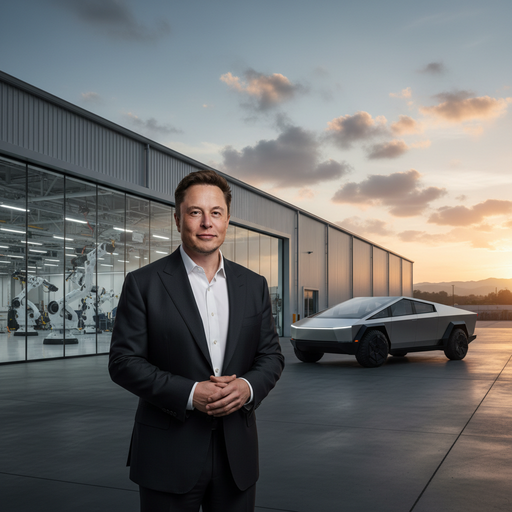
For example, Tesla’s 7-year low-interest plan adopts a bank mortgage loan model with a minimum annual interest rate of 0.5%, equivalent to an annualized interest rate of approximately 0.98%. Its most core feature is that vehicle ownership belongs to the consumer from the moment of taking delivery, effectively avoiding the “rent-to-buy” misconception for consumers.
Image source: Tesla
NIO has also chosen to collaborate with banks and launched an industry-leading annual interest rate of 0.49%, while clearly promising not to charge financial service fees. Consumers with early repayment needs do not need to pay penalties, further lowering the additional costs of purchasing.
Brands like Xiaomi, Leap Motor, Xpeng, and BYD have focused on lowering the purchase threshold, setting the minimum down payment ratio at 15%, with annual interest rates generally around 1% to 2%.
For example, the Formula Leopard has launched a plan with a down payment as low as 32,000 yuan, a 7-year loan annual interest rate of 1.5%, covering the Leopard 5 long-range version and the entire series of the Titanium 7 models. Taking the Titanium 7 top configuration with a guide price of 219,800 yuan as an example, the down payment is 72,800 yuan, with a loan of 147,000 yuan, totaling approximately 15,400 yuan in interest over 7 years, resulting in a monthly payment of 1,933 yuan. Ocean Network has also advertised “daily payment as low as 29 yuan,” equivalent to the price of a cup of milk tea or coffee per day.
Xpeng Motors supports a full range of 6-7 year low-interest loans with down payments starting at 15% and an annual interest rate of 2.86%, with some models like the MONA M03 having monthly payments as low as 1,355 yuan. Leap Motor’s 7-year low-interest plan also has a down payment as low as 15%, with the B01 model requiring a minimum down payment of only 13,800 yuan and daily payments starting at 33 yuan.
Some car companies offer interest-free options for the first few years for certain models, such as the Li Auto i8 and MEGA, which can enjoy a “loan 7, exempt 3” policy—0% interest for the first 3 years, with an annual interest rate of 4.75% for the remaining 4 years. IM Motors has introduced a “7-year ultra-long loan, 0 down payment, 0% interest for the first 3 years, with no penalty for early repayment after three years” plan across its entire series.
Dongfeng Nissan has even extended its offer further, introducing a “0 down payment, 8-year ultra-long low-interest loan” plan for the Teana·Hongmeng cockpit model. For the Teana·Hongmeng cockpit comfort version, with a guide price of 129,900 yuan, the plan offers 0 down payment, 96 installments, at an interest rate of 4.88%.
The various financial plans launched by different car companies are all striving to achieve one goal: to keep the monthly payment around 2,000 yuan, making consumers instantly think, “I can buy this.” These low monthly and daily payment figures visually demonstrate the immense appeal to younger consumers.
Image source: Xiaomi Auto
Industry insiders are not surprised by this, as direct price cuts can harm brand value, but financial plans can make consumers feel like they are “getting a bargain” through different designs. Based on traditional methods such as factory price reductions and terminal discounts, the 7-year low-interest loan has become a favored emerging promotional tool among many mainstream car companies, significantly reducing monthly payments through ultra-long terms and low-interest/subsidized rates, becoming a mainstream competitive tool beyond the “price war” in the car market.
According to a report by iResearch Consulting titled “2024 Young Consumer Car Purchase Behavior Report,” among users aged 25 to 35, 68% consider “whether the monthly payment is less than 20% of my salary” as a core decision factor. The car companies’ calculations have finally “hit the mark.”
Beware of Hidden Risks
Looking at the seven-year ultra-long loans available on the market, they are generally divided into bank loans and financing lease models. Compared to the strict risk control systems of banks, financing lease approvals are often more lenient, with faster disbursement, and may not require bank statements or income proof.
Currently, aside from Tesla and NIO, most other brands are provided by automotive financing leasing companies under the car companies or third-party financial institutions.
The fundamental difference between the financing lease model led by car companies and traditional bank car loans lies in the legal relationships and ownership rights involved. Bank loan plans are subject to the Civil Code regarding loan contracts and guarantees, and traditional credit compliance is strong, with stable funding sources. In contrast, financing lease products feature a separation of ownership and usage rights. Before consumers pay off the purchase price and all related fees, the vehicle’s ownership belongs to the financing leasing company. This means that with a direct bank loan, the vehicle’s ownership is immediately assigned to the consumer, while under a financing lease model, ownership remains with the leasing company until all payments are settled, giving consumers only usage rights.
What is even more concerning is the risk of default. The lengthy repayment period is filled with uncertainty, meaning that risks and costs are quietly extended, which is one of the main reasons financial institutions increase scrutiny on consumers who choose 7-year low-interest ultra-long loans.
A Tesla salesperson indicated that the approval for five-year interest-free loans is relatively easy, with more bank options, but the approval for 7-year low-interest loans has higher personal qualification requirements, and many customers fail the final review, opting instead for the five-year interest-free option.
The financing lease model, however, avoids such thresholds. While disbursement is faster, it comes with many issues, such as needing the leasing company’s cooperation in transferring ownership, reselling, significant modifications, or even some claims, adding more complex procedures for consumers. Additionally, under the financing lease model, early repayment incurs higher penalties than bank loan models.
According to data from third-party complaint platforms, 32% of automotive finance disputes stem from hidden service fees, while 15% of consumers encounter early repayment penalty traps.
Therefore, when consumers choose 7-year low-interest products, they should focus on distinguishing third-party leasing company products, clearly differentiate between direct leasing and back leasing ownership rights, and calculate the complete total car purchase costs, any additional service fees, and early repayment penalty costs, avoiding a narrow focus on short-term low monthly payments.
Reporter: Zheng Yu