Top 10 Most Popular Privacy Coins in 2023 | Digital Currency Guide

Top Anonymous and Untraceable Cryptocurrencies
Understanding Privacy
In the 21st century, privacy has become a growing concern for investors and technology users alike. Anonymity in cryptocurrencies works much like cash. When someone withdraws money from an ATM, the transaction is logged, but what happens to those funds afterward remains private. Anonymous cryptocurrencies bring this principle to digital finance.
Standard cryptocurrency exchanges require identity verification, which allows for tracking altcoins and analyzing related costs. The defining feature of anonymous assets is that once funds are credited to an electronic wallet, it’s impossible to monitor how they’re distributed. Users can convert these assets into fiat currencies without leaving any identifiable trail.
It’s critical to differentiate truly anonymous cryptocurrencies from pseudo-anonymous ones. Pseudo-anonymous coins reveal owner identities but keep financial transactions on a transparent, traceable ledger. To avoid linking activity to a user’s identity, experts recommend using a new address for each transaction. Still, it’s important to understand that all Bitcoin blockchain transactions can potentially be traced using advanced analytics.
Leading Untraceable Coins
Monero stands out as one of the most privacy-centric cryptocurrencies, with default anonymity features. Its protocol hides both sender and recipient identities, as well as the exact amount transferred. While Monero provides top-tier privacy, its transactions take longer to process versus other cryptocurrencies.
Dash, previously known as Darkcoin or XCoin, was designed as a more secure and private alternative to Bitcoin. Fully decentralized with no reliance on external regulators, Dash gives users complete control over their anonymous transactions.
Komodo uses cutting-edge technology with independent blockchains unified in a shared ecosystem. The platform enables users to build custom anonymous blockchains, offering flexible, personalized privacy solutions for various use cases.
Zcash operates on Bitcoin’s source code but with enhanced privacy protections. For Zcash transactions, users input a specific address, and the level of anonymity depends on this configuration, ensuring full confidentiality when required.
Bytecoin, launched in 2012, was among the first genuinely anonymous cryptocurrencies. It ensures user anonymity via ring signatures and stealth addresses, enabling fast, untraceable transfers.
Bitcoin Private combines Bitcoin and ZClassic and is a fork of the original blockchain. Transactions are peer-to-peer, with security and anonymity at their core.
Verge, introduced in 2014, aims for comprehensive data confidentiality. It employs proven technologies like TOR and I2P to solve user anonymity challenges through purely technical means.
NavCoin, also launched in 2014, is a popular privacy coin that has seen ongoing improvements. Its classified transactions help safeguard user privacy.
PIVX offers instant transaction confirmation, merging speed with privacy. Initially built for specific network use cases, PIVX evolved to focus on private, instant transactions.
Zcoin keeps a public transaction ledger but uses an inventive minting process for anonymity. Coins are burned and reissued, creating new private tokens with no traceable transaction history.
Pros and Cons of Untraceable Cryptocurrencies
Anonymous cryptocurrencies deliver strong advantages for privacy-conscious users. Chief among them is complete confidentiality: users can hide any number of transactions, blocking third-party access to that data. Transactions remain fully anonymous, protecting identities and preventing spending pattern analysis.
There are, however, notable drawbacks. A key limitation is the inability to include complex scripts in transactions, which restricts advanced features. Anonymous transactions also tend to cost more than standard ones due to the added computational overhead for privacy.
Users should stay alert to risks tied to these assets. As the security landscape evolves, bad actors continue to seek vulnerabilities in privacy coins. Notably, attackers can reference old transaction records, as privacy upgrades typically apply only to new transactions—potentially exposing historical data.
Conclusion
Anonymous cryptocurrencies mark a major step forward in digital financial privacy. With options like Monero and Zcoin, users have strong choices for confidential, untraceable transactions. Each coin takes a unique approach to anonymity, from default privacy protocols to advanced minting processes. While privacy coins offer significant benefits, users must weigh challenges such as higher fees and risks involving older transactions. Choosing the right privacy-focused cryptocurrency requires careful consideration of individual privacy and security requirements.
FAQ
Which cryptocurrencies are untraceable?
Zcash and Monero are the leading privacy coins, using advanced obfuscation technologies to hide transactions. They enable transfers with stealth addresses and encrypted values, ensuring complete anonymity.
Which cryptocurrencies are not tracked?
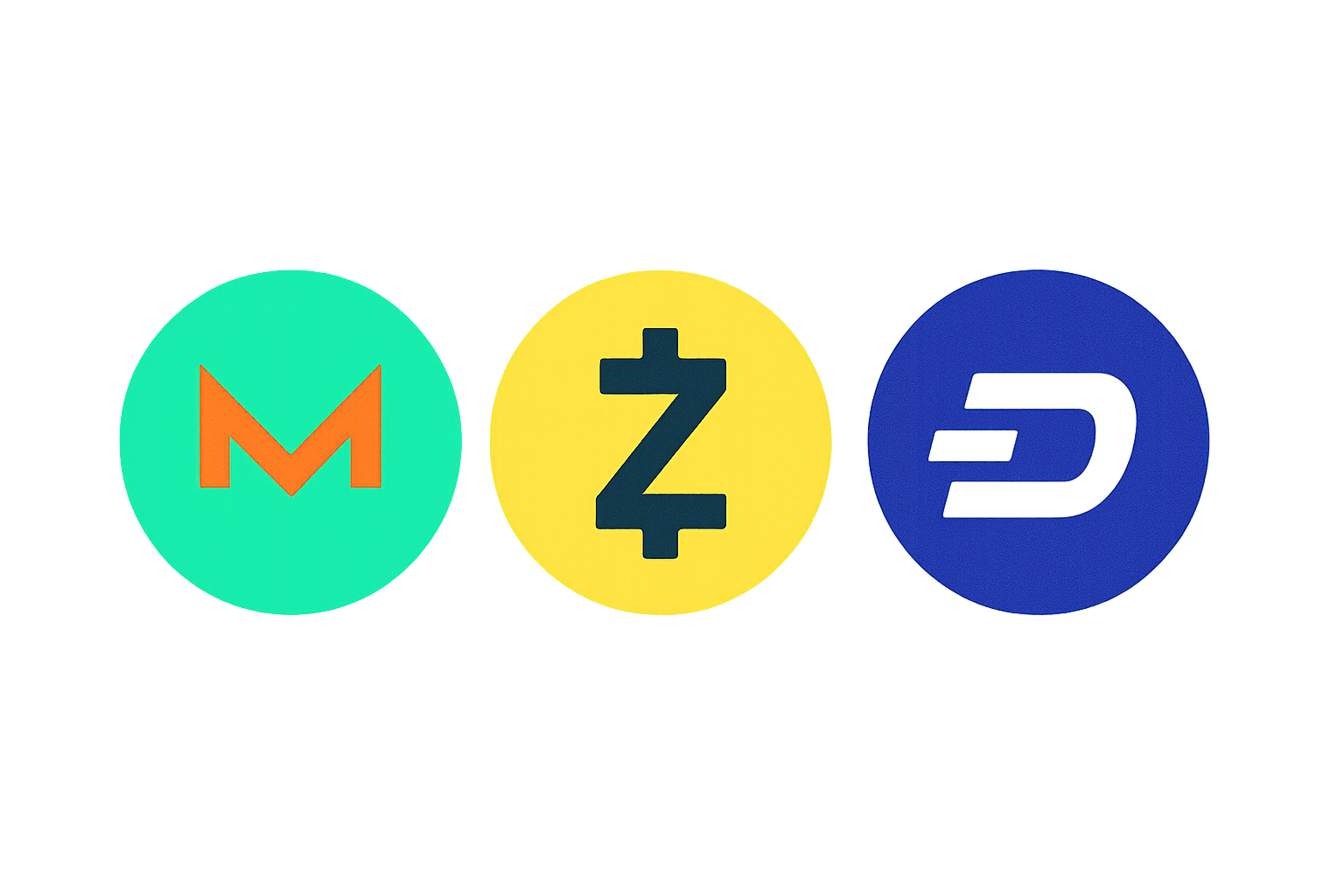
Monero, Zcash, and Dash are privacy-focused cryptocurrencies that make transaction tracking much harder than with traditional coins.
Why isn’t Bitcoin traceable?
Bitcoin runs on a decentralized peer-to-peer network, logging transactions on a public blockchain without direct ties to real-world identities. Public and private addresses enable anonymous transactions, maintaining user privacy.
What is the most anonymous cryptocurrency?
Monero is the most private cryptocurrency available. It uses advanced cryptography to fully conceal user identities and transaction amounts, leaving no traceable records on the blockchain.
Share
Content
How to Buy Cryptocurrency



How Does Lagrange (LA) Fundamentals Analysis Reveal Its Web3 Potential in 2025?

What is NAORIS: The Innovative Cybersecurity Protocol Revolutionizing Blockchain Technology

What is LAT: A Comprehensive Guide to Latissimus Dorsi Exercises and Training Methods

What is IKA: A Comprehensive Guide to International Kettlebell Association and Its Global Impact on Fitness Training

What is NAM: A Comprehensive Guide to Network Access Management in Modern IT Infrastructure

What is KOS: A Comprehensive Guide to Knowledge Organization Systems

Is Crypto Legal in Netherlands?

Marina Protocol Daily Quiz Answer for 7 january 2026

Spur Protocol Daily Quiz Answer Today 7 january 2026

Top dApps in The Open Network (TON) Ecosystem
Dropee Question of the Day for 7 january 2026