Gain mastery over Japanese candlestick charts for cryptocurrency trading. Discover how to identify eight key patterns, interpret bullish and bearish market charts, and integrate technical indicators on Gate to optimize your crypto investment strategies.
What Is a Candlestick?
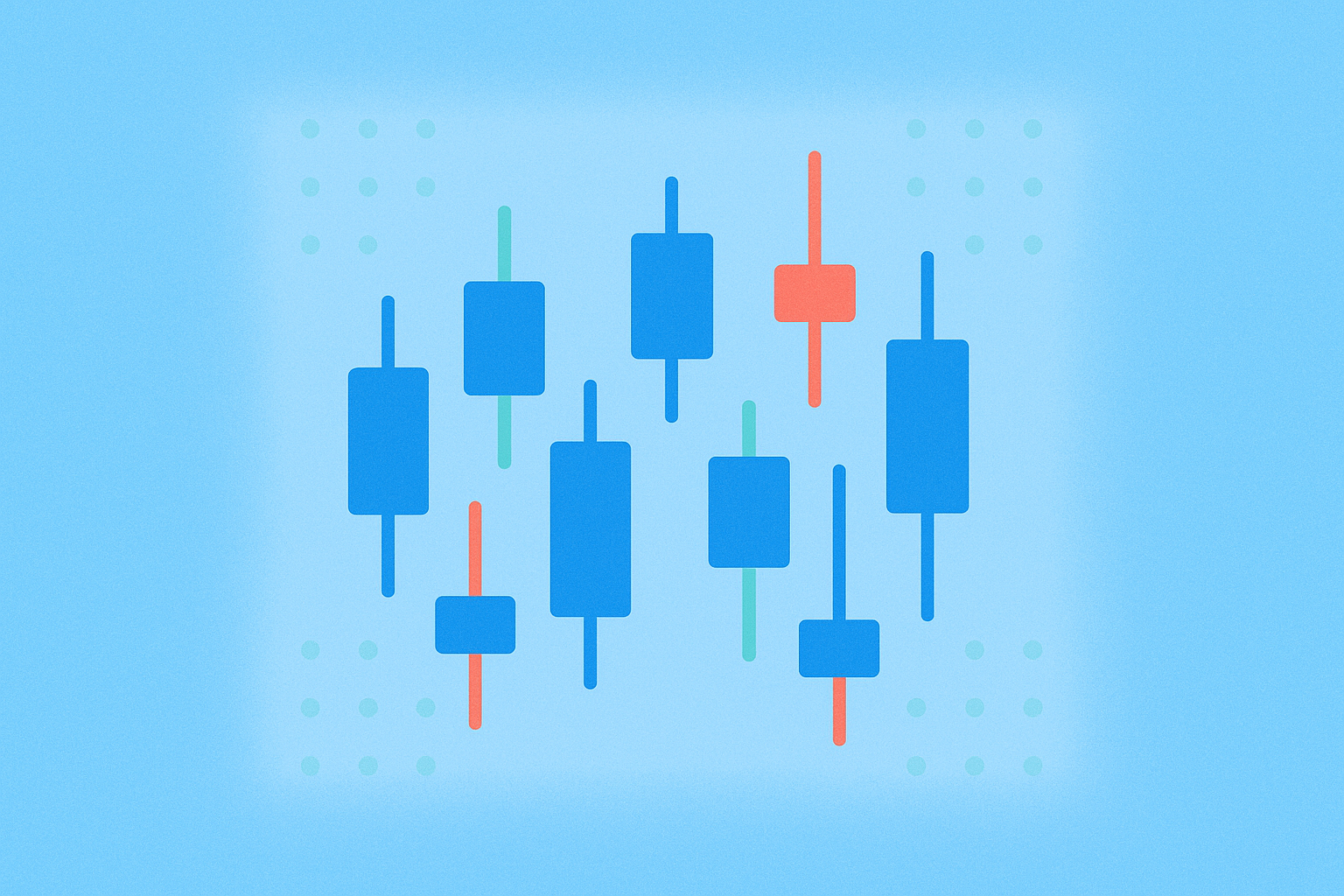
A candlestick visually depicts the price movement of an asset over a specific timeframe, which traders can adjust to fit their strategy (such as 1 minute, 1 hour, daily, or monthly). This visual system is a core component of technical analysis in the cryptocurrency market.
Each candlestick displays four crucial data points that together reveal the asset’s price action:
- Open: The asset’s price at the beginning of the selected period—this marks where trading activity starts for that interval.
- Close: The asset’s price at the end of the period—this determines the color of the candle and reflects final market sentiment.
- High: The highest price reached during the period, showing the peak of buying pressure or the upper end of the trading range.
- Low: The lowest price during the period, indicating the point of greatest selling pressure or the lower end of the range.
The body of the candle represents the range between open and close, providing an instant visual cue about price direction. The wicks (or shadows) extend above and below the body, marking the high and low prices within that period.
Color-coding simplifies interpretation:
- Green: Close is higher than open, signaling upward movement and dominant buying pressure.
- Red: Close is lower than open, indicating downward movement and prevailing selling pressure.
Why Use Candlestick Charts?
Candlestick charts originated in 18th-century Japan, when rice merchants developed the method to analyze price fluctuations. Today, they’re indispensable in modern trading—especially in crypto, where volatility is high.
Because they visually display both price action and market sentiment, candlestick charts deliver far more information than traditional line charts. Line charts show only the closing price, but candlesticks reveal the entire battle between buyers and sellers over each period.
Crypto traders favor candlestick charts for their ability to quickly highlight market behavior patterns, support and resistance levels, and potential trend shifts. This is especially valuable for making informed decisions in a market that operates around the clock.
How to Read Candlestick Patterns
Candlestick patterns form over time, highlighting market trends, potential reversals, or periods of indecision. A single candlestick can show who dominated a given period—buyers or sellers—but true analytical power emerges when you examine sequences of candles together. Multiple candles combine to form broader patterns, which experienced traders use to anticipate market direction. These patterns fall into three main categories:
- Continuation patterns: Indicate the current trend is likely to continue.
- Reversal patterns: Signal a possible trend change.
- Indecision patterns: Show a balance of buying and selling, often leading to consolidation.
Proper interpretation requires context—the preceding trend, trading volume, and other technical indicators all matter. The same pattern may mean different things depending on where it forms on the chart.
8 Must-Know Candlestick Patterns for Crypto Trading
Bullish Patterns
Hammer
The hammer is a bullish reversal that signals a potential bottom after a downtrend. It features a small (green or red) body at the top of the candle, a long lower wick at least twice the size of the body, and little or no upper wick.
This pattern indicates that sellers initially drove prices down, but strong buying later pushed the close back near the open—suggesting buyers are gaining control and a floor may be forming. The pattern is confirmed when the next candle closes above the hammer’s body.
Inverted Hammer
This pattern also appears at the end of a downtrend, with a small (green or red) body, a long upper wick, and little or no lower wick. It signals that buyers attempted a strong upward move but met resistance from sellers.
While sellers rejected the initial advance, the presence of the inverted hammer suggests growing buying pressure. If the next candle closes higher, it may confirm a bullish reversal—especially relevant in crypto after steep declines.
Bullish Engulfing
This is one of the most powerful and trusted reversal patterns. It consists of two candles following a downtrend: a small red candle showing continued selling, immediately followed by a large green candle that entirely engulfs the previous body.
This pattern signals a dramatic market shift—buyers have overwhelmed previous selling pressure. The larger the engulfing candle relative to the prior candle, the stronger the bullish signal. In crypto, this pattern often precedes major upward moves.
Morning Star
The morning star is a three-candle bullish reversal at the end of a downtrend. It starts with a long red candle confirming the downtrend, followed by a small-bodied “star” (green or red) with long wicks that reflects indecision, and finished by a long green candle closing above the midpoint of the first candle’s body.
This sequence shows selling pressure fading and buyers beginning to take control. The middle candle marks a balance between buyers and sellers; the final candle confirms the shift. This pattern is especially useful in crypto trading because it offers multiple confirmation points.
Piercing Line
A two-candle bullish reversal at the end of a downtrend. It starts with a long red candle continuing the downtrend, followed by a long green candle that opens below the prior close (a bearish gap) but closes above the midpoint of the red candle’s body.
This pattern shows buyers stepped in strongly after a bearish opening, pushing the price up and recovering more than half of the previous day’s losses. The higher the green candle closes within the red body, the stronger the reversal signal.
Bearish Patterns
Hanging Man
The hanging man is a bearish reversal that appears after an uptrend. It’s identical in shape to the hammer (small body at the top, long lower wick), but it signals a possible top due to its chart position. The body can be green or red, but a red body strengthens the bearish signal.
Although buyers kept the close near the open, heavy selling pressure during the period drove the price lower—implying sellers are gaining control. The pattern is confirmed if the next candle closes lower.
Shooting Star
The shooting star is a bearish reversal at the end of an uptrend. It has a small (green or red) body at the bottom of the candle, a long upper wick at least twice the size of the body, and little or no lower wick.
This pattern shows buyers tried to push prices much higher, but sellers rejected the move and forced a close near the open—suggesting a top may be forming. A red body reinforces the bearish signal.
Bearish Engulfing
The opposite of the bullish engulfing, this pattern is a highly reliable bearish reversal. It forms after an uptrend with a small green candle followed by a large red candle that completely engulfs the previous body.
This signals a strong shift to bearish sentiment—sellers overpower buyers and may trigger a correction or trend change. In crypto, bearish engulfing patterns often appear at key highs before significant moves down.
Combining Candlestick Patterns with Other Indicators
Candlestick patterns are powerful on their own, but become even more effective when paired with other technical indicators. This multi-layered approach helps filter out false signals and gives a fuller view of market conditions.
Popular complementary indicators include:
- Relative Strength Index (RSI): Confirms overbought or oversold conditions during reversal patterns.
- Moving Averages: Offer trend context and dynamic support/resistance levels.
- Bollinger Bands: Highlight volatility and potential reversal points when used with candlestick setups.
- Volume: High-volume patterns are more reliable; volume confirmation is critical.
- MACD: Detects momentum shifts that align with reversal signals.
Experienced crypto traders look for multiple confirmations before acting. For example, a bullish engulfing pattern is far more reliable if it forms at support, with RSI in oversold territory and an uptick in trading volume. This confluence dramatically reduces the risk of false signals.
Timeframe also matters—a pattern on a daily chart is more significant than the same formation on a five-minute chart. Professional traders often analyze multiple timeframes for a well-rounded market perspective.
Conclusion
Candlestick patterns are essential for crypto traders, offering deep insight into market sentiment and potential price movements. Their effectiveness has stood the test of time across financial markets, and they’re especially valuable in crypto’s volatile environment.
Mastering these patterns can greatly improve your trading strategy—helping you pinpoint entry and exit points with precision. Still, successful trading requires consistent practice, discipline, and solid risk management. No pattern is infallible; always interpret them within the broader market context.
Combine candlestick patterns with other technical tools to validate your analysis and minimize the risk of false signals. Build a robust trading plan that incorporates risk management strategies such as stop-loss orders and proper position sizing.
Continuous learning and using demo accounts will help you gain the experience needed to apply these patterns effectively. Over time, candlestick patterns will become second nature—helping you navigate the fast-moving crypto market with greater confidence.
FAQ
Candlestick patterns graphically display the open, close, high, and low prices of a cryptocurrency for a given period. Their lines and bodies visualize price action and volatility, allowing traders to spot trends and trading opportunities.
What are the most common candlestick patterns and how do you identify them (doji, hammer, engulfing, etc.)?
Common patterns include: Doji (small body, long wicks) signaling indecision; Hammer (small body at the top, long lower wick) indicating bullish reversal; Engulfing (large candle engulfs the previous) showing continuation; Dark Cloud Cover (opens within prior range) suggesting bearish reversal.
How do you use candlestick patterns to make buy and sell decisions in crypto trading?
Spot key patterns like doji, engulfing, and hammer to identify trend changes. Use these signals to select optimal entry and exit points—while also monitoring volume and price confirmation to maximize opportunities.
What is the difference between reversal and continuation candlestick patterns?
Reversal patterns indicate a likely change in price direction. Continuation patterns suggest the existing trend will persist. The former warn of potential turns; the latter confirm trend strength.
How reliable are candlestick patterns as price prediction tools?
Candlestick patterns can be reliable price predictors when applied properly. Combined with volume analysis and other technical indicators, they increase forecast accuracy.
How do you combine candlestick patterns with other technical indicators to improve trading accuracy?
Use candlestick patterns alongside indicators like RSI, MACD, or Bollinger Bands for confirmation. The convergence of multiple tools increases reliability and reduces false positives. Cross-analyze for more robust results.
* The information is not intended to be and does not constitute financial advice or any other recommendation of any sort offered or endorsed by Gate.