What's the Difference Between a CEX and a DEX?

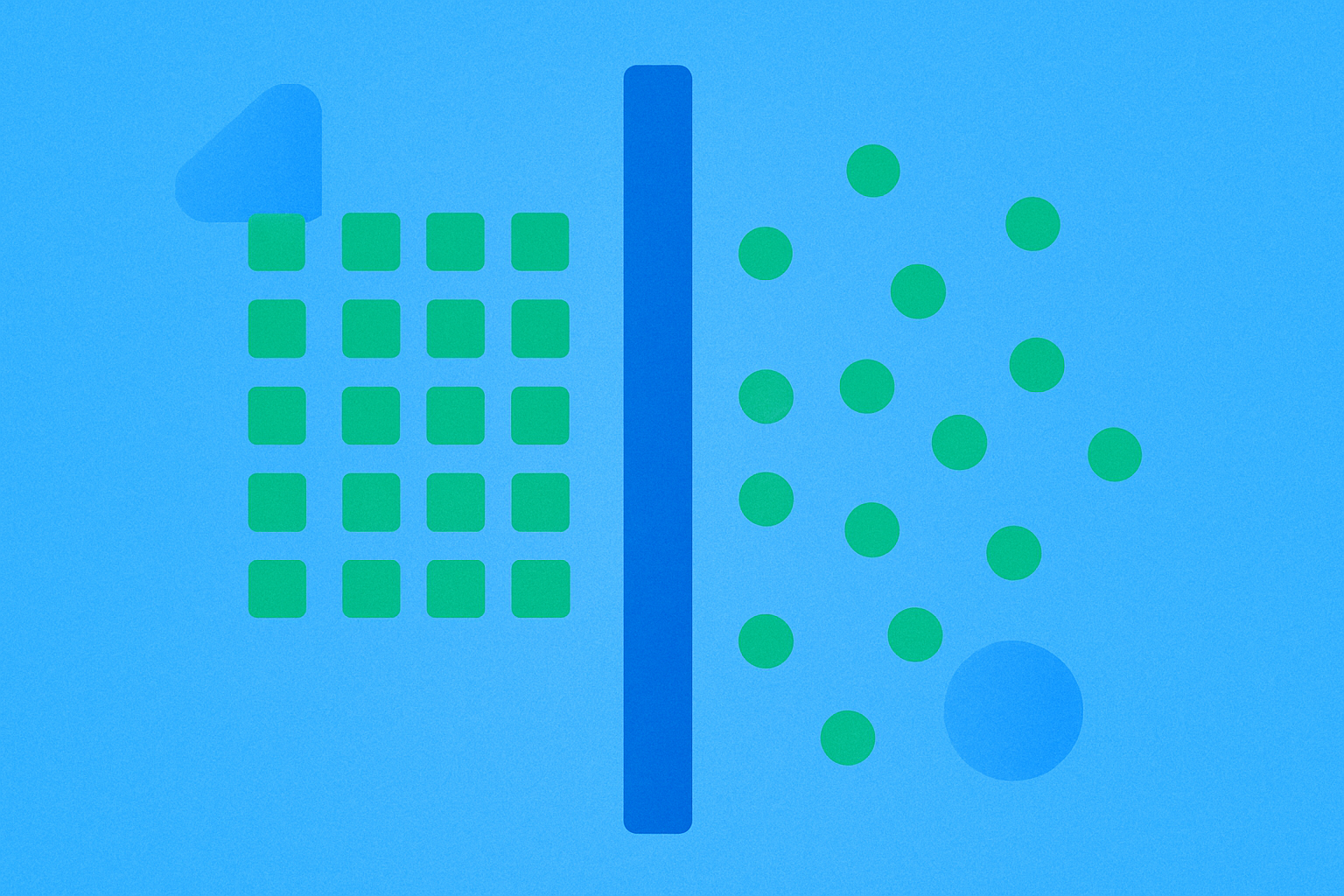
TL;DR
A centralized exchange (CEX) offers cryptocurrency exchange services to registered users. Its primary service typically matches buyers and sellers with an order book, though a CEX may offer its verified users various crypto products. For beginners, a CEX provides the simplest way to get started without needing in-depth knowledge of blockchain infrastructure and tools.
A decentralized exchange (DEX) uses on-chain smart contracts to run its exchange services. In most cases, users swap tokens from liquidity pools, with liquidity provided by other users in exchange for swap fees.
You don't need to register for a DEX, meaning they're open to anyone with a wallet and some crypto. DEXs are the gateway to the decentralized finance (DeFi) world and provide users with a lot of freedom. However, they lack the support a CEX can give, and it can be easy to make irreversible mistakes when using them.
Introduction
If you've been doing your crypto research, you'll likely have come across DEXs. Perhaps you're already a customer with a major CEX but are interested in using a DEX, or maybe you're looking to purchase the latest DeFi coin not currently available on CEXs.
No matter your story, you should know the crucial differences between a CEX and DEX before deciding which to use. Depending on what you want to do and your level of experience, each has its advantages and disadvantages.
Why Are There Different Types of Exchanges?
If you're a new trader or only have experience in traditional finance, the difference between a CEX and DEX can be confusing. A CEX works similarly to what you'd find in the world of stocks — a single entity operates using an order book in which market makers and takers place orders. The order book then matches buyers with sellers, taking a small cut of the transaction as a fee.
At the heart of the operation are the order book and exchange entity, making the model centralized. To use a major CEX, you must create an account and verify your identity according to local regulations. The exchange will also take custody of the assets you want to trade on the CEX after you've deposited them into your CEX account.
A DEX, however, is run through smart contracts, which are self-executing pieces of code on a blockchain. An entity or project may create and help run a DEX but it can, in theory, run itself as long as people provide liquidity to it.
Unlike CEXs, DEXs typically don't use order books to facilitate trading. Instead, they mainly use the automated market maker (AMM) model. To use a DEX, you only need a crypto wallet and some crypto (including enough for any gas / transaction fees). Due to its decentralized nature, there's no registration or account required of its users.
For newcomers, a CEX offers a more user-friendly experience and is an easier entry point. If anything goes wrong, you can contact the exchange's customer support team. A DEX also has several benefits but these are typically more attractive to experienced crypto users who value decentralization over ease of use.
Centralized Exchanges: Pros
User-Friendly
A major CEX platform focuses on providing user-friendly experiences for all kinds of users. Newcomers to crypto have access to simple conversion tools, while experienced traders can use advanced trading tools. A CEX will also likely have detailed guides as part of its services.
The process of registering with a CEX is similar to opening a bank account. Many of us are already familiar with this system, and technical knowledge is not a must-have. Most CEXs offer payment with credit or debit cards, making your first crypto investment as simple as possible.
Support and Protection
One of the biggest hurdles for crypto beginners when using DEXs is getting used to decentralized tools. Crypto wallets, addresses, gas fees, and other aspects of blockchain can be unforgiving when you make mistakes. There are no system admins to offer assistance, so you're on your own if you lose your seed phrase or send crypto to the wrong wallet.
You can avoid these pitfalls if you trade using a CEX. For example, customer support can help if you lose access to your account, and there's no need to pay gas fees when moving your crypto around a CEX's products. These measures support users and protect them from making the irreversible mistakes people sometimes make on DEXs.
More Integrated Services
A CEX can offer a wide range of products and integrated services, turning it into a one-stop crypto shop. On a leading CEX platform, you can access trading and staking services, an NFT marketplace, a launchpad, a P2P exchange, and more without leaving the platform. Moreover, moving funds among these different areas is simple. You can pay by card and even enjoy deals with partner merchants.
Centralized Exchanges: Cons
Susceptibility to Attack
As large centralized entities, CEXs are frequently the targets of attacks, which means any user funds stored on a CEX are susceptible to theft. While CEXs prioritize security, they cannot eliminate the risk of hacks and theft. Over the years, several high-profile security incidents have occurred across the industry.
Additional Transaction Fees
Almost every service you use on a CEX will incur a transaction fee. Often, it may be hidden or "baked into" the service. Due to their higher operating costs, CEXs may struggle to compete with the low transaction fees offered by DEXs. However, a CEX's additional transaction fees must be weighed against the gas fees of using a DEX, which can be considerable on some networks.
No User Custody of Assets
When using a CEX, you must deposit your crypto into its wallet. This means you relinquish custody of your funds by entrusting them to the CEX. As such, you may be unable to withdraw them whenever you please. This is problematic if an exchange becomes insolvent and can lead to you losing your funds entirely. This situation is similar to storing your cash with a bank — during a run on the bank, you may not be able to access your funds.
Decentralized Exchanges: Pros
Custody of Funds
When using a DEX, you never lose custody of your funds until a trade or interaction is complete. This means you can move and store them as you wish. If your crypto is stored in a wallet whose seed phrase only you can access, you have total control over your assets. To decentralization advocates, this is one of the most critical factors.
Data Protection and Privacy
When using a DEX, there's no need to supply personal, identifying information and trust it to be stored securely. This means your personal data is safe from bad actors who want to steal your identity. Note that when using an exchange, you are still bound by local regulations and laws.
Lower Barriers to Entry
Using a DEX requires only a wallet and some crypto to trade and pay gas fees. This makes DEXs highly accessible to a larger group of people globally. For decentralization fans, this is a huge benefit, and many value the more private nature of a DEX. Of course, this should also be considered in the context of local legislation, as well as relevant debates on crypto regulation.
Decentralized Exchanges: Cons
Complex to Use and to Enter
For a first-time user, understanding how to navigate and use a DEX can be challenging. Gas fees, liquidity pools, wallets, and slippage are all possible hurdles to overcome. It takes time to grasp how a DEX works confidently, and to invest responsibly, you should always understand your tools.
Lack of Fiat On and Off Ramps
Historically, buying your first coin or token was one of the most significant barriers to gaining crypto exposure. Major CEX platforms now, as a standard, offer credit and debit card options for buying crypto. Although some DEXs are beginning to offer this service with third-party providers, most still don't allow credit or debit card usage.
Liquidity Struggles
DEXs, on average, have smaller volumes and less liquidity than large CEXs. Market depth can be smaller, and large trades on a DEX may have a more significant price impact than if done on a CEX. Traders or investors making large volume orders can often find a better price doing over-the-counter (OTC) trades or using a CEX with deep order books.
Should I Use a DEX or a CEX?
By far, the simplest experience for a crypto beginner is to use a CEX. It removes the initial learning curve associated with decentralized blockchain infrastructure. If you face any issues using a CEX, a support team will help and guide you as much as possible.
Overall, the chances of making an irreversible mistake like losing access to your funds or transferring it to the wrong address are much lower with a CEX. So if it's your first time gaining crypto exposure or you prefer a more straightforward, digestible service, a CEX is for you.
A DEX, on the other hand, is an excellent gateway to the world of DeFi. With a single Ethereum Virtual Machine (EVM) wallet, you can explore the vast DeFi universe. A DEX is a versatile option for crypto power users and offers a high degree of freedom.
If you're looking to invest in an extensive range of new projects with low market caps, a DEX is also your best bet. While CEXs often launch new tokens, DEXs still facilitate most new token sales and liquidity.
Considering the above, and to help you decide at a glance, refer to the following use cases for each exchange type:
CEX
- Buy and sell crypto easily with fiat currencies
- No need to manage and keep safe your private keys
- Gain access to high-liquidity markets with less slippage
- Access to support if you run into issues
- Participate in a range of products without leaving the CEX
DEX
- Purchase low market cap coins and tokens that may not be on a centralized exchange
- Have full custody of your crypto
- Opportunities to earn transaction fees by providing liquidity
- Decentralized services with typically lower fees
- Access a full range of DeFi products across multiple blockchains
Closing Thoughts
If you're considering trying out a DEX, you need to do your own research beyond what is mentioned in this guide. Though the benefits sound appealing to some, we recommend making sure you fully understand how to use one and its associated tools.
If you're happy with the services offered by the CEX you're using, there's no need to switch. For many, a CEX offers the right balance of ease of use and available support.
FAQ
What do CEX and DEX mean respectively? What are their advantages and disadvantages?
CEX(中心化交易所)由中央机构管理,交易额大、流动性高、易于使用,但存在隐私风险。DEX(去中心化交易所)由智能合约管理,提供更高安全性和隐私保护,但操作相对复杂。新手适合选择CEX,经验丰富的投资者可选DEX。
Which is safer to trade on, CEX or DEX? What are the differences in fund risks?
DEX is generally safer due to higher transparency and lower fund risk. On CEX, your assets are held by the platform, exposing you to custody and mismanagement risks. On DEX, you maintain full control through smart contracts, eliminating central authority risks and making fraud more difficult.
CEX and DEX: What are the differences in trading fees and speed?
CEX typically offers lower fees and faster transaction speeds due to centralized infrastructure and high liquidity. DEX has variable fees depending on network congestion but provides greater transparency and decentralization, with slower speeds due to blockchain confirmation requirements.
Should Beginners Trade on CEX or DEX?
Beginners should start with CEX for simpler access and customer support. CEX offers easier registration, multiple payment methods, and protection against irreversible errors. As you gain experience and seek exposure to new tokens and DeFi opportunities, DEX becomes a viable option for more advanced users.
CEX and DEX: What's the Difference in User Experience and Liquidity?
CEX offers superior user experience with high liquidity and fiat on-ramps, ideal for beginners. DEX provides enhanced privacy and security through smart contracts, though with potentially lower liquidity and steeper learning curves for users.
Why does DEX require wallet connection compared to CEX? What are the benefits and risks?
DEX requires wallet connection for direct asset control and transparent transactions without intermediaries. Benefits include enhanced security, full ownership, and lower fees. Risks include higher operational complexity, potential smart contract vulnerabilities, and irreversible transaction errors.
Share
Content
How to Buy Cryptocurrency


Trending Cryptocurrencies



How to Get Started with Quantfury (QTF): A Fast and Easy Guide for Beginners

Examining the Distinctions Between Centralized and Decentralized Exchanges
What distinguishes a CEX from a DEX?

Effortless and Secure Cryptocurrency Exchange
Holsy Wallet

How to convert BTC to CAD: The best exchange rate and platform in 2025
How to Choose the Right Cryptocurrency Exchange: A Comprehensive Guide
Stablecoin: A Beginner's Guide to Understanding Digital Currencies with Stability
EigenLayer Opens EIGEN Token Claims with 1.673 Billion Total Supply

Coinbase Research Report: A Panoramic Overview of the EigenLayer AVS Ecosystem
TAO (El Tao) - What Is It and How Does It Work?