BlackRock Files for “Staked Ethereum ETF” — A New Era of Yield for ETH Investors
Background: BlackRock and the Evolution of Ethereum ETFs
BlackRock, one of the world’s largest asset managers, has a deep foundation in both traditional finance and the ETF market. In the crypto sector, BlackRock previously launched a spot Bitcoin ETF and filed for a spot Ethereum ETF. However, while a spot Ethereum ETF allows investors to gain indirect exposure to ETH, it does not enable participation in network staking. As a result, investors miss out on potential staking rewards—estimated at around 3% annually.
What Is a Staked Ethereum ETF? How It Differs from Traditional Spot ETFs
A staked Ethereum ETF is an exchange-traded fund that not only holds ETH but also stakes these assets through approved validators. This allows the ETF to participate in Ethereum’s network validation process and earn staking rewards. In effect, the ETF tracks ETH’s price movements while also generating interest-like, annualized returns for investors.
Compared to traditional spot ETFs, staked ETFs offer several key advantages:
- Dual return streams: capital appreciation plus staking rewards;
- Regulatory compliance: invest in crypto assets within a traditional ETF structure, eliminating the need for investors to manage private keys or staking nodes;
- Appealing to institutions and conservative investors: lower holding costs, less operational complexity, and a clearer path to compliance.
Key Elements of BlackRock’s Filing and Market Implications
On December 8, 2025, BlackRock submitted an S-1 registration statement to the SEC for the iShares Staked Ethereum Trust (ETHB), marking its fourth crypto-related ETF. According to the filing, ETHB intends to allocate about 70%–90% of its ETH holdings to third-party staking service providers under normal market conditions. BlackRock will not operate validator nodes directly; instead, it will delegate staking through a custodian to professional providers. This filing signals an accelerating trend toward the institutionalization and financialization of crypto assets. Historically, ETFs have tracked spot prices. Now, with the addition of staking yield, crypto assets are evolving from purely volatile instruments to yield-generating assets. Multiple research firms predict this will become a defining trend in the crypto ETF market.
Potential Impact on the ETH Market and Price
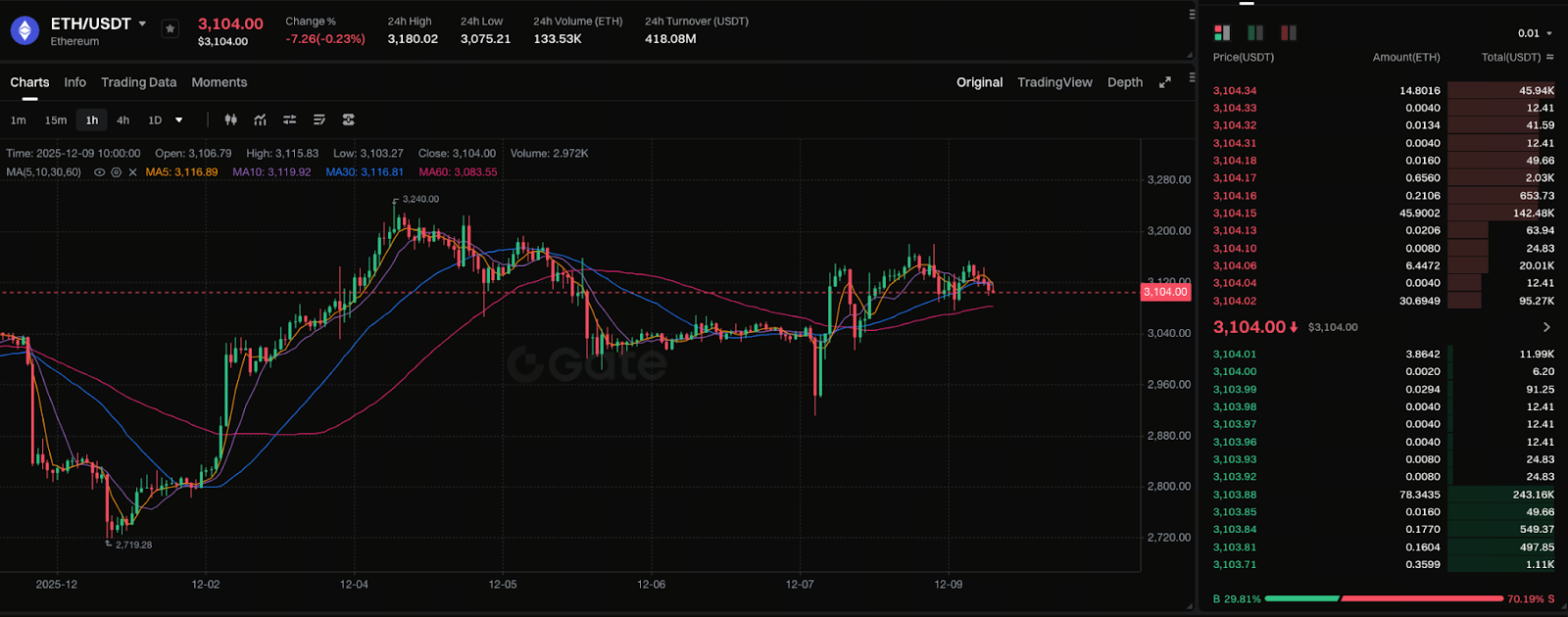
Chart: https://www.gate.com/trade/ETH_USDT
- Boosts interest in ETH from both institutional and retail investors — for those seeking steady returns without the hassle of direct staking, a staked ETF offers a streamlined option;
- Increases demand for and locked supply of ETH — if the ETF gains approval and attracts significant capital, it will drive ETH purchases and lockups;
- Helps stabilize price volatility — staking generates cash flow, reducing speculation-driven swings and supporting long-term allocations;
- Combines yield and liquidity — the ETF trades like a stock, offering both regular yield and flexible trading, making it more convenient than direct staking.
Additionally, expectations for ETH could rise, giving its price further room to appreciate.
How Should Investors View This Filing? Balancing Risks and Opportunities
Opportunities:
- Access ETH staking through regulated, compliant channels;
- No need for self-custody or node operation, simplifying the process;
- Well-suited for investors seeking passive income and long-term holding.
Risks / Uncertainties:
- The application is still under SEC review, and approval is not guaranteed;
- Staking rewards, fees, tax treatment, and protocol changes could impact actual returns;
- The ETF’s liquidity, redemption process, and lock-up provisions may present challenges;
- The crypto market remains highly volatile, with persistent price and regulatory risks that require careful assessment.
Conclusion
BlackRock’s application for a staked Ethereum ETF is a pivotal step in the financialization of crypto assets. If approved, it would provide investors with a new avenue to capture both price appreciation and staking yield, potentially establishing itself as a mainstream entry point for ETH investment. For long-term Ethereum supporters seeking stable returns, this represents a significant opportunity. As with any investment, risks are inherent—investors should thoroughly understand staking mechanisms, tax implications, and liquidity conditions before making allocation decisions.
Share
Content
Background: BlackRock and the Evolution of Ethereum ETFs
What Is a Staked Ethereum ETF? How It Differs from Traditional Spot ETFs
Key Elements of BlackRock’s Filing and Market Implications
Potential Impact on the ETH Market and Price
How Should Investors View This Filing? Balancing Risks and Opportunities
Conclusion


Related Articles

2025 BTC Price Prediction: BTC Trend Forecast Based on Technical and Macroeconomic Data

Flare Crypto Explained: What Is Flare Network and Why It Matters in 2025

Pi Coin Transaction Guide: How to Transfer to Gate.com

How to Use a Crypto Whale Tracker: Top Tool Recommendation for 2025 to Follow Whale Moves

What is N2: An AI-Driven Layer 2 Solution