Within the Enjin Coin digital asset ecosystem, ERC-1155 is broadly deployed to facilitate unified management of diverse asset types. This enables developers to handle multiple in-game items and NFTs within a single contract, establishing a design framework that contrasts with ERC-721.
These differences extend beyond asset types to encompass smart contract architecture, operational models, and overall system efficiency. Understanding these distinctions clarifies the technological underpinnings of NFTs and explains why various use cases demand different standards.
What Is ERC-1155? Multi-Asset NFT Standard and Unified Asset Management Explained
ERC-1155 is a token standard that allows multiple asset types to be managed within a single smart contract. It was designed to address inefficiencies in multi-asset systems.
Traditionally, each asset on an NFT standard required separate management. ERC-1155 introduces the concept of “Token ID,” allowing different assets to be identified and controlled within the same contract.
This structure delivers two major advances:
- A single contract can represent multiple assets (such as in-game currency, equipment, and items)
- Supports batch operations (process multiple assets in one transaction)
Architecturally, ERC-1155 serves as an “asset container” rather than a single-asset representation.
What Is ERC-721? Single NFT Standard and Unique Asset Mapping Explained
ERC-721 is the original and most widely adopted NFT standard, fundamentally designed around the concept of “one token equals one unique asset.”
In ERC-721, each NFT has a unique Token ID, and all assets are logically independent. This emphasizes asset uniqueness and non-fungibility.
This mechanism suits scenarios where individual distinction is critical, such as digital art or collectibles. Here, each asset carries its own value and must be represented separately.
Structurally, ERC-721 functions as a “one-to-one mapping model,” with each token mapped to a single asset.
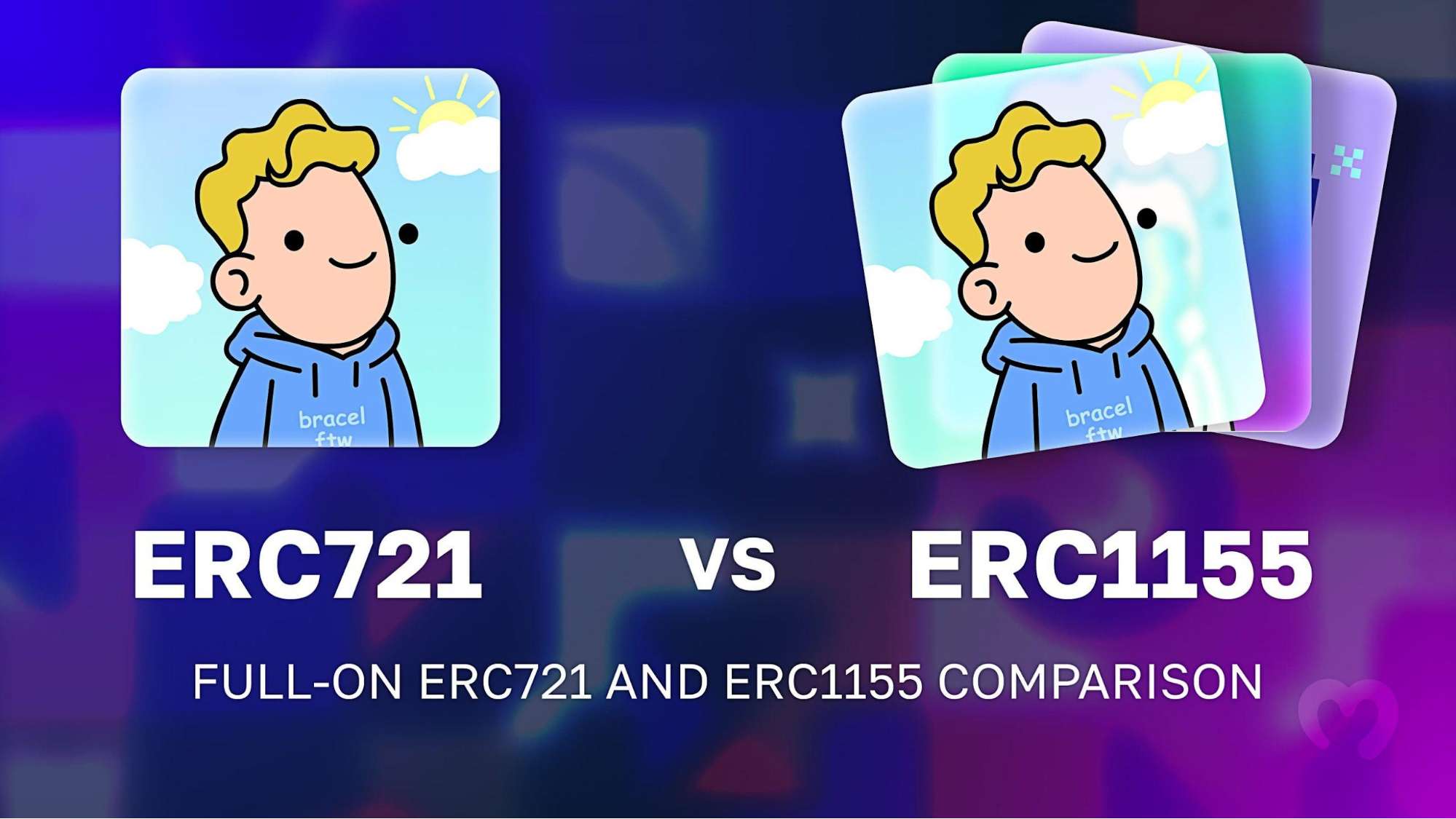
ERC-1155 vs. ERC-721: Asset Structure—Single NFT Model vs. Multi-Asset Collection
The core distinction between the two standards lies in asset structure.
ERC-721 adopts a single-asset model, with each NFT existing as a distinct entity. While simple and intuitive, this approach is less scalable for managing large asset volumes.
ERC-1155 uses a multi-asset model, administering various asset types within one contract by leveraging different Token IDs. This allows both fungible and non-fungible assets to be managed together, delivering greater flexibility.
From a system perspective:
- ERC-721 = Single asset representation
- ERC-1155 = Multi-asset collection
This structural difference shapes their performance in complex applications.
Contract Design Differences: Single vs. Multiple Contract Architectures
At the smart contract level, the gap widens.
ERC-721 typically requires deploying multiple contracts for different assets or series, driving up management complexity as the asset base expands.
ERC-1155 centralizes all asset types in a single contract, simplifying system structure. This approach reduces deployment costs and unifies operational logic.
From an architecture standpoint:
- ERC-721 is decentralized (multiple contracts)
- ERC-1155 is centralized (single contract)
As a result, ERC-1155 is better suited for complex systems, while ERC-721 fits simpler use cases.
Operational Mechanisms: Batch Transactions vs. Single Asset Transfers
Another major difference is in operational mechanisms.
ERC-721 usually handles one asset per transaction; for example, transferring an NFT is a one-transaction process.
ERC-1155 enables batch operations, allowing multiple assets to be transferred or managed in a single transaction. This dramatically boosts efficiency, especially when frequent multi-asset management is required.
Key impacts include:
- Fewer transactions
- Enhanced execution efficiency
- Streamlined user workflows
ERC-1155, therefore, excels in high-frequency trading and complex asset management scenarios.
Cost and Scalability: Gas Fees and System Efficiency
Their operational differences create clear contrasts in cost and scalability.
ERC-721’s approach to multiple assets requires several on-chain transactions, driving up gas fees and reducing efficiency.
ERC-1155’s batch capabilities enable multiple assets to be handled in a single transaction, sharply reducing costs.
From a scalability perspective:
- ERC-721 is best for small-scale, low-frequency scenarios
- ERC-1155 is optimal for large-scale, high-frequency systems
This distinction is most apparent in gaming and complex applications.
Application Scenarios: Gaming Asset Systems vs. Digital Collectible Ecosystems
Differences at the application level are rooted in structural design.
ERC-721 is best for assets where uniqueness matters most, such as digital art or collectibles—typically lower in quantity but with distinct individual value.
ERC-1155 is purpose-built for games and complex systems, for example:
- Reusable resources (in-game currency)
- Stackable items (materials)
- Rare equipment (NFTs)
Here, managing multiple asset types is essential—making ERC-1155 the superior choice.
ERC-1155 vs. ERC-721 Summary Table: NFT Standard Structure and Efficiency
| Comparison Dimension |
ERC-721 |
ERC-1155 |
| Asset Model |
Single NFT |
Multi-asset (FT + NFT) |
| Contract Structure |
Multiple contracts |
Single contract |
| Operation Method |
Single operation |
Batch operation |
| Use Cases |
Collectibles, Artworks |
Games, Complex systems |
| Cost Efficiency |
Higher |
Lower |
The table highlights that ERC-721’s core is “uniqueness”—each NFT is a distinct, non-fungible entity, making it ideal for digital art and collectibles where individual asset attributes are paramount.
ERC-1155, by contrast, focuses on “system efficiency and unified structure.” Its ability to manage various assets within a single contract and process them in batches dramatically lowers transaction costs and system complexity—making it ideal for blockchain games and multi-asset systems.
In essence, these standards embody two philosophies:
- ERC-721 is an “asset representation standard,” emphasizing definition of individual assets
- ERC-1155 is an “asset management framework,” enabling efficient management of multiple assets
This shows that NFT standards are not one-size-fits-all; they have evolved into multiple solutions tailored to different needs. In practice, the choice depends on asset complexity and system efficiency requirements.
Conclusion
ERC-1155 and ERC-721 are not mutually exclusive; they are purpose-built standards for different requirements.
ERC-721 is better for unique asset representation, while ERC-1155 is designed for complex asset systems. Recognizing this distinction enables a more accurate understanding of technical choices and application logic across blockchain projects.
FAQ
Which is more advanced: ERC-1155 or ERC-721?
They serve different design purposes and cannot be directly compared in terms of advancement.
Can ERC-1155 fully replace ERC-721?
No—they are tailored to different scenarios.
Why do most gaming projects use ERC-1155?
Games require management of various asset types and high-frequency operations.
Is ERC-721 less efficient?
It is less efficient in large-scale asset operations, but provides a simpler structure for single-asset use cases.
Are NFTs only possible with ERC-721?
No, NFTs can be implemented with various standards, including ERC-1155.