Ethereum Drops Below $3,000 Again — Mixed On-Chain Signals Spark Market Divergence
What’s Driving Ethereum Below $3,000 Again?
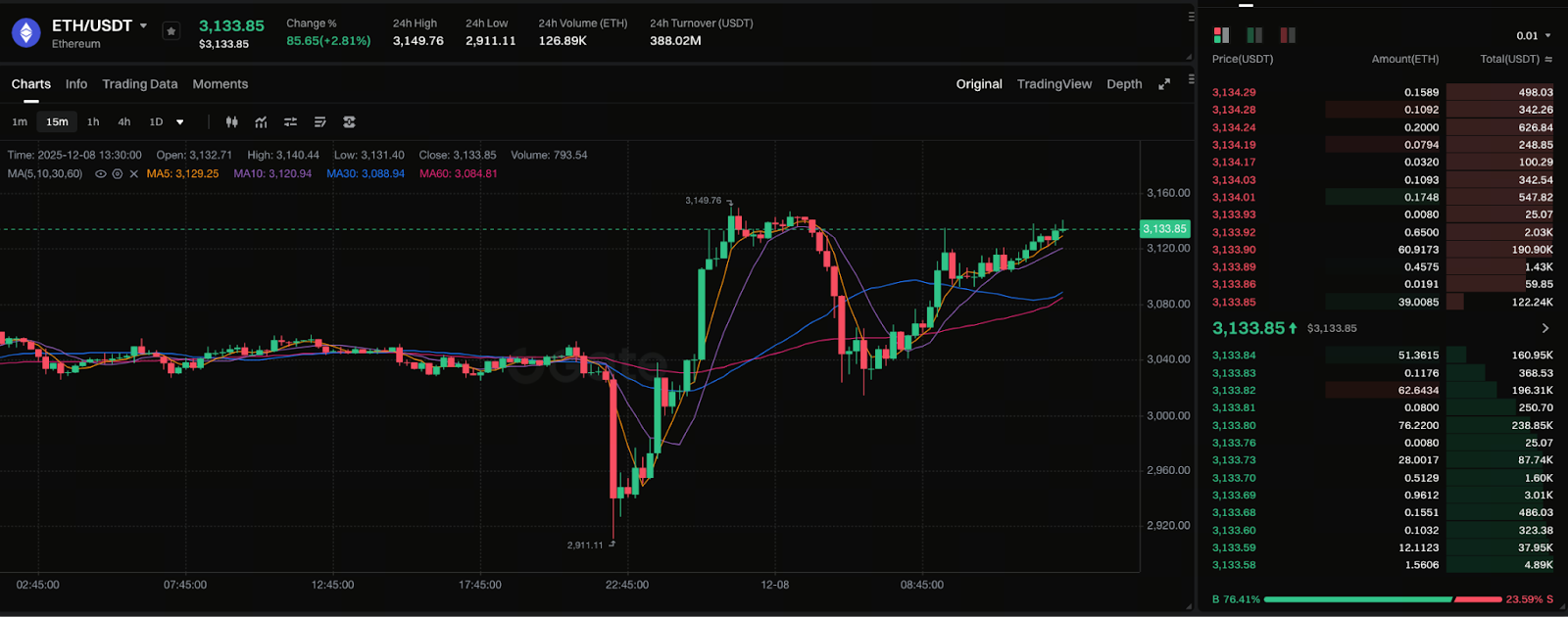
Chart: https://www.gate.com/trade/ETH_USDT
Ethereum’s latest slide below $3,000 isn’t due to a single catalyst—it’s the result of several overlapping factors fueling market volatility. The broader crypto market has seen increased turbulence lately. Bitcoin failed to lead a sustained market rally, and persistent uncertainty over global monetary policy has made investors more cautious.
Additionally, some traders have opted to take profits near the $3,000 mark, which has long been regarded as a major resistance zone. Without enough capital to break through, selling pressure mounts and triggers a pullback. Ethereum’s gains in recent weeks have been modest, with bulls lacking the momentum for a breakout. As buyers hesitate, short-term prices have corrected downward.
Why Are On-Chain Metrics Sending Mixed Signals?
On-chain data currently paints a complex and sometimes contradictory picture, with both bullish and bearish signals present:
Bullish Signal: Exchange Balances Keep Shrinking
ETH balances on centralized exchanges continue to decline, signaling that investors are moving assets to cold wallets. This is widely seen as a medium- to long-term bullish indicator, since lower circulating supply reduces short-term selling pressure.
This trend typically suggests:
- Market participants are preparing to hold ETH for the long term
- Current price levels are attractive to buyers
- Selling activity on exchanges is decreasing
Bearish Signal: Whales Increase Short-Term Selling
Meanwhile, several large ETH whale addresses have recently executed notable sell-offs, typically during price rebounds or at key resistance levels. A drop in whale holdings or increased net outflows often coincides with short-term corrections.
Neutral / Contradictory Signal: On-Chain Activity Drops
Despite declining exchange balances, network transaction fees have plummeted and decentralized exchange (DEX) volumes have shrunk, reflecting a decrease in overall network activity. This may indicate:
- Weaker speculation in the market
- Lower trading demand
- Capital temporarily sitting on the sidelines
This divergence in on-chain data leaves ETH without a clear short-term direction.
Diverging Market Sentiment: Who’s Buying and Who’s Selling?
Market sentiment is now clearly split into two camps:
Bullish (Buyers) Perspective:
- Decreasing ETH on exchanges suggests reduced selling pressure
- Institutional capital continues to trickle in
- Ethereum’s ecosystem holds long-term value, with L2 growth and a rebound in DeFi activity
These investors see the current decline as a “healthy correction” and expect ETH to eventually climb back above $3,000.
Bearish (Sellers) Perspective:
- Whales have been selling recently
- Network activity is too weak to support a strong rebound
- Macroeconomic headwinds are limiting risk appetite
Bears predict that if ETH can’t reclaim the $3,000–$3,200 range, prices could fall to $2,500 or even lower.
Key Technical Levels
Major Support:
- $2,800: Short-term support; a break below could spark further panic selling
- $2,500: Strong support, widely seen as the last line of defense after a decline
Major Resistance:
- $3,000: Psychological barrier
- $3,200: A breakout above this level could trigger a stronger upward trend
ETH is currently locked in a battle between bulls and bears. The direction of the next breakout may set the tone for the coming weeks.
Key Trends for Investors to Watch
Watch these signals closely in the near future:
- Whether ETH balances on exchanges continue to fall
- Whether DEX trading volumes rebound
- Whether whales halt their selling
- US economic data and monetary policy updates
- Whether new institutional capital enters the market
In the short term, ETH may continue to trade below $3,000. The market needs a fresh catalyst to break the current deadlock.
Share
Content


Related Articles

2025 BTC Price Prediction: BTC Trend Forecast Based on Technical and Macroeconomic Data

Pi Coin Transaction Guide: How to Transfer to Gate.com

Flare Crypto Explained: What Is Flare Network and Why It Matters in 2025

How to Use a Crypto Whale Tracker: Top Tool Recommendation for 2025 to Follow Whale Moves

What is N2: An AI-Driven Layer 2 Solution