Gate Leveraged ETFs: A Tactical Framework for Trading Efficiency in Volatile Markets
ETFs Are Evolving into Trading Instruments
Traditionally, ETFs have served as tools to reduce trading frequency, valued for their ability to diversify risk and smooth out volatility. They have been well-suited for long-term strategies that seek average returns over time. However, as market dynamics accelerate and prices shift direction more frequently in short periods, waiting for trends to extend is no longer the top choice for most traders.
In today’s highly volatile markets, the ability to deploy capital quickly and scale positions efficiently has become more important than simply holding for the long term. As a result, the role of ETFs is shifting—from passive allocation vehicles to tradable units that enable direct execution of trading strategies.
Leveraged ETFs: Built for Short-Term Market Cycles
Leveraged ETFs weren’t created to replace spot or derivatives trading, but to bridge the gap between the two. When market direction becomes clear in a short window, single-exposure products often can’t fully capture a trader’s insights, while full derivatives trading brings higher barriers for learning and risk management.
The core design of leveraged ETFs is to preserve the familiar spot trading experience while increasing the impact of price swings on capital efficiency. As a result, more traders now use leveraged ETFs as strategy amplifiers, not just as investment products.
Core Operating Principles of Gate Leveraged ETF Tokens
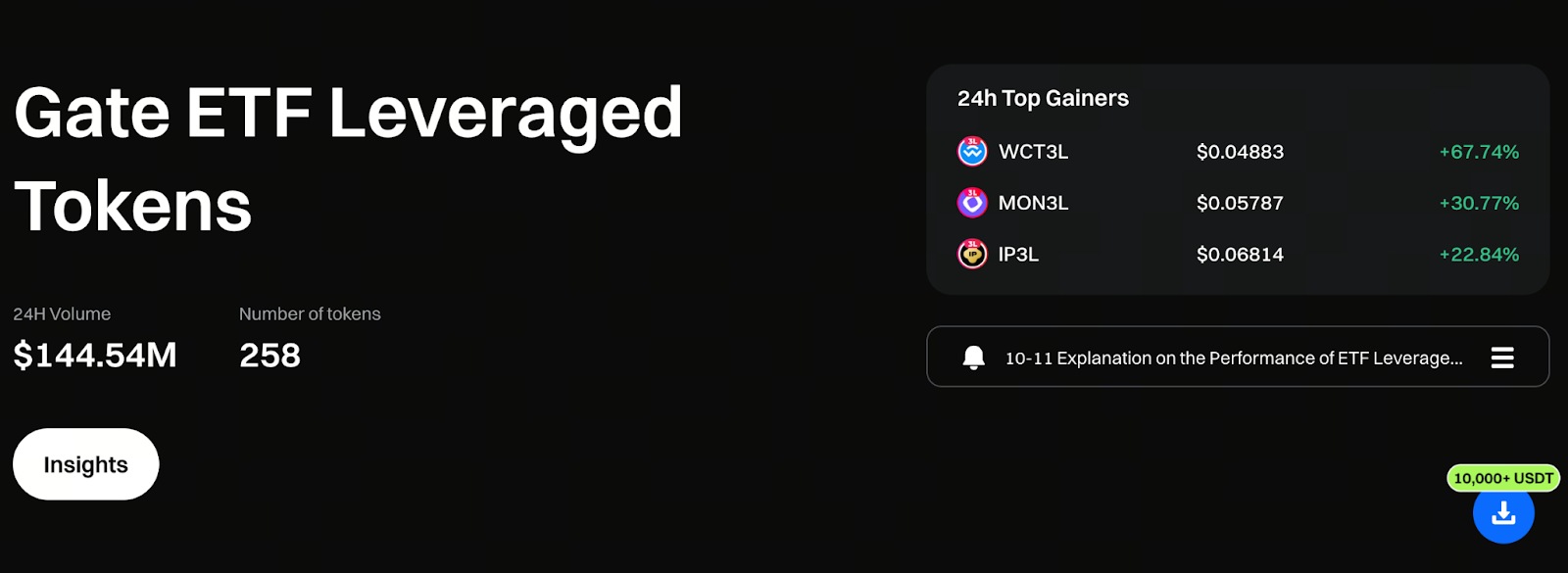
Gate leveraged ETF tokens derive their risk exposure from corresponding perpetual contract positions. However, the system automatically manages all contract-level details. For users, these tokens function as straightforward, tradable assets.
During trading, users don’t need to manage:
- Margin ratios
- Liquidation prices
- Borrowing and funding rates
- Timing for position adjustments
This allows traders to focus on the fundamentals: choosing the right direction and timing their entries and exits.
Start trading Gate ETF leveraged tokens now: https://www.gate.com/leveraged-etf
Fixed Leverage Through Continuous Rebalancing
Leveraged ETFs are dynamic products. To keep actual exposure within the target range, the system rebalances the underlying contract positions at set intervals. These adjustments are seamless for users but are critical for maintaining the leveraged structure over time. For this reason, leveraged ETFs aren’t just simple leverage multipliers—they’re dynamic, actively managed strategy systems.
Accessing Leverage Without Derivatives Trading
For many traders, the real psychological challenge isn’t leverage itself, but the complex, real-time risk management required in derivatives markets. Leveraged ETFs don’t eliminate risk, but they simplify risk exposure by tying it directly to price movements. Volatility is reflected in the token’s net asset value, not through forced liquidations or margin calls. This keeps strategy execution focused on market judgment, not on sudden position management issues.
Amplifying Trends and Efficiency Together
In trending or one-sided markets, leveraged ETFs can multiply price movements, allowing capital to be used more efficiently in the same timeframe. The rebalancing mechanism can also produce a compounding amplification effect in continuous trends. Because trading is similar to spot trading, leveraged ETFs are often used as transitional tools before fully adopting leverage strategies—they boost efficiency without requiring a full leap into complex derivatives markets.
Structural Constraints and Key Risks
Leveraged ETFs aren’t suitable for every market environment. In choppy or range-bound markets, rebalancing can erode returns, leading to outcomes that may differ from intuitive expectations. Final returns aren’t simply “underlying asset movement × leverage factor”—adjustment paths, transaction costs, and volatility all play a role. As such, leveraged ETFs are generally not recommended for long-term holding.
Why a Daily Management Fee Is Necessary
Gate leveraged ETFs charge a daily management fee of 0.1% to cover structural costs essential for ongoing product operation, including:
- Contract opening and closing fees
- Perpetual contract funding rates
- Hedging and position adjustment costs
- Slippage during rebalancing
This fee isn’t an extra burden—it’s a necessary condition for the stable operation of leveraged ETFs and is standard practice in the market.
Leveraged ETFs: Strategic Tools, Not Passive Assets
Leveraged ETFs are not meant to replace spot allocation, but to complement the strategic toolkit. They’re best suited for strategies with clear market views, defined entry and exit plans, and a tolerance for short-term volatility—not for long-term buy-and-hold. Only by understanding their structure, costs, and the right scenarios for use can leveraged ETFs truly enhance trading efficiency.
Conclusion
Leveraged ETFs don’t make trading easier—they make strategy execution more direct. They magnify price swings and the significance of every trading decision. For traders who can keep up with the market and actively manage risk, Gate leveraged ETFs offer a powerful way to boost capital efficiency. But ignoring their structure and volatility costs can lead to taking on more risk than anticipated.
Share
Content
ETFs Are Evolving into Trading Instruments
Leveraged ETFs: Built for Short-Term Market Cycles
Core Operating Principles of Gate Leveraged ETF Tokens
Fixed Leverage Through Continuous Rebalancing
Accessing Leverage Without Derivatives Trading
Amplifying Trends and Efficiency Together
Structural Constraints and Key Risks
Why a Daily Management Fee Is Necessary
Leveraged ETFs: Strategic Tools, Not Passive Assets
Conclusion


Related Articles

What is MetFi? All You Need to Know About METFI (2025 Update)
Every U.S. Crypto ETF You Need to Know About in 2025

What are Leveraged ETF Tokens?

Gate Research: BTC Hits New Highs, Bitwise Files Solana ETF, Stablecoin Exceeds $190B

Bitcoin Spot ETF Vs. Bitcoin Futures ETF: What's the Difference?