As global demand for safe-haven assets grows, silver, as a major precious metal, is increasingly attracting the attention of investors. Traditionally, investors have primarily gained exposure to silver prices by purchasing physical silver or silver ETFs. In recent years, with the advancement of blockchain technology, digital silver assets like Kinesis Silver (KAG) have emerged, providing new ways for the marketplace to invest in silver.
Silver ETFs have long been the go-to tool for institutional and traditional investors, while Kinesis Silver (KAG) represents the evolution of digital precious metals. Silver ETFs focus on the convenience of financial market trading, whereas KAG aims to combine physical silver ownership, digital payment capabilities, and innovative return mechanisms.
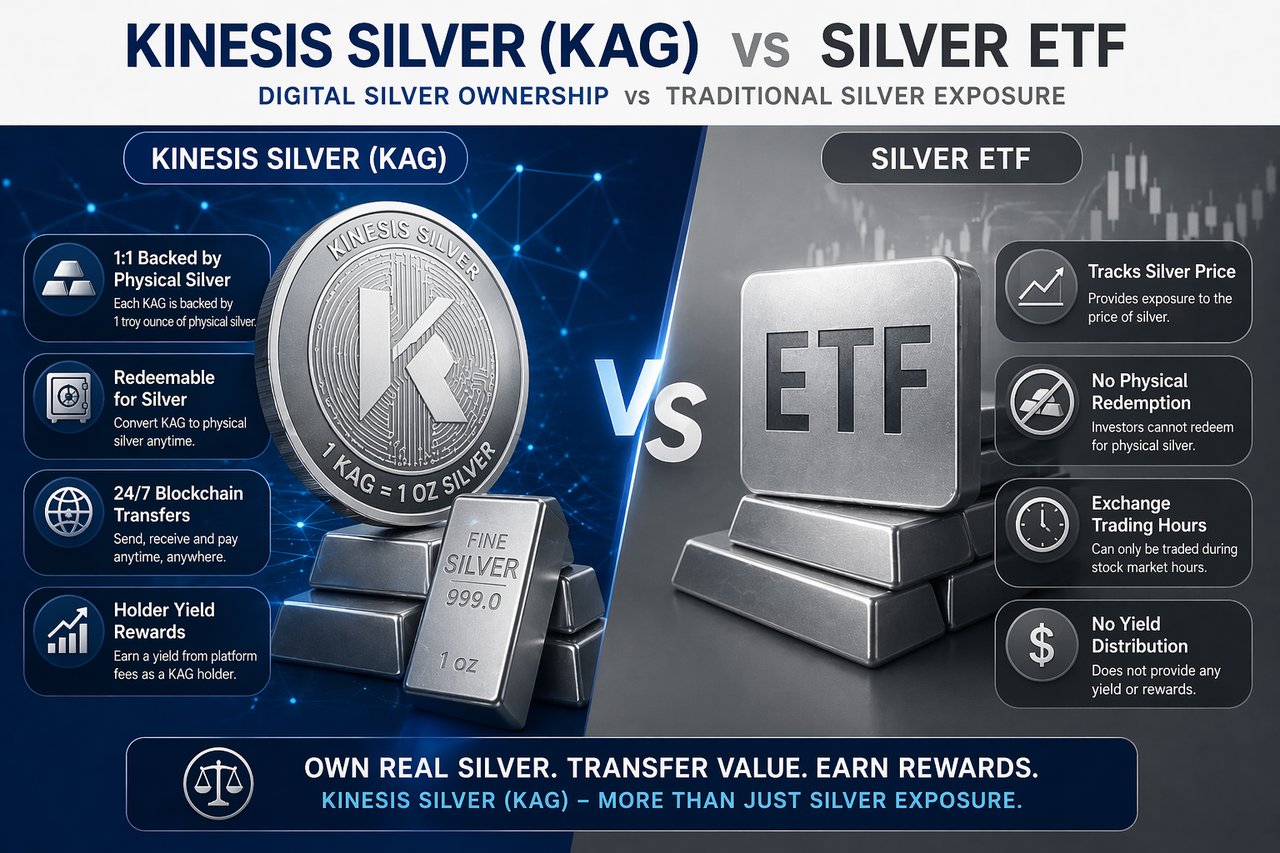
What Are the Key Differences Between Kinesis Silver (KAG) and Silver ETFs?
Kinesis Silver (KAG) and silver ETFs are both linked to the value of silver, but they are fundamentally different asset types. Silver ETFs are securitized products—when investors purchase ETF shares, they’re gaining exposure to silver price movements, not direct ownership of physical silver.
| Comparison Dimension |
Kinesis Silver (KAG) |
Silver ETF |
| Asset Nature |
Digital asset backed 1:1 by physical silver |
Security product tracking silver price |
| Asset Ownership |
Equity in corresponding physical silver |
Fund shares ownership |
| Physical Redemption Supported |
Supported |
Generally not supported |
| Trading Hours |
24/7 |
Exchange trading hours only |
| Payment Function |
Supports on-chain transfers and payments |
Not supported |
| Return Mechanism |
Holding-based return distribution |
No additional returns |
| Liquidity |
Real-time on-chain circulation |
Dependent on securities marketplace |
| Suitable For |
Digital asset investors |
Traditional financial investors |
| Main Risks |
Custody risk, regulatory risk |
Market risk, fund management risk |
KAG is a digital asset backed 1:1 by physical silver, with each KAG representing one ounce of physical silver held in reserve. Owning KAG means holding an equity stake in the underlying silver, making it much closer to digitalized physical silver ownership rather than just a price-tracking instrument.
Asset Ownership: How Do KAG and Silver ETFs Differ?
With silver ETFs, investors typically hold fund shares—not direct ownership of physical silver. Although ETFs may hold silver reserves, individual investors generally cannot redeem physical silver themselves.
KAG, by design, emphasizes direct asset ownership. Each KAG is backed by a specific silver reserve and allows users to redeem physical silver after meeting certain requirements. This mechanism gives KAG holders a more direct claim to silver, rather than indirect exposure through a fund structure.
Kinesis Silver vs Silver ETF: Differences in Liquidity and Trading
Silver ETFs are traded on securities exchanges, so their liquidity depends on market trading hours and broker systems—making them best suited for stock market participants. While ETFs offer efficient trading, they cannot support 24/7 on-chain transfers.
KAG, as a digital asset, can be transferred and used for payments on blockchain networks, offering higher liquidity and global transferability. Users can not only trade KAG but also use it for payments, much like digital currency, making it more versatile than silver ETFs.
How Do KAG and Silver ETFs Differ in Return Models?
Traditional silver ETF returns are driven primarily by silver price appreciation, and generally do not provide additional return distributions. Investors’ returns depend on market price changes and are subject to management fees.
KAG not only tracks silver prices but also features a return distribution mechanism. The KAG platform may distribute a share of trading fee returns to eligible holders, but these returns are variable, depending on platform rules and trading volume. This feature enhances asset efficiency and is a major differentiator from traditional ETFs.
Use Cases: How Do KAG and Silver ETFs Compare?
Silver ETFs are mainly used for investment and trading, focusing on asset allocation and price exposure—they do not support payments or on-chain transfers.
KAG serves both as an investment tool and a payment medium. Users can hold digital silver assets and transfer or spend them within the platform ecosystem, giving silver real-world liquidity. This payment functionality upgrades KAG from a traditional investment asset to a usable digital value carrier.
Risk Profile: How Do KAG and Silver ETFs Differ?
Silver ETFs’ main risks include silver price volatility and fund management risk, but their regulatory frameworks are mature, making them well-suited for traditional financial environments.
KAG, on top of silver price risk, faces platform custody risk, liquidity risk, and digital asset regulatory risk. Because KAG depends on platform operations and reserve management, its risk profile is more complex than ETFs, but it also offers greater functionality and return potential.
Which Silver Investment Is Better for Long-Term Holding?
If you prefer traditional market operations and value a mature regulatory environment, silver ETFs are a solid long-term allocation tool. Their trading logic is straightforward and they’re easily managed through brokerage accounts.
If you prioritize asset ownership, payment flexibility, and the potential for digital asset returns, KAG is more attractive. For users looking to allocate precious metals within the digital finance ecosystem, KAG offers more features than silver ETFs—such as on-chain transfers and platform return distribution—but also introduces additional platform and liquidity risks.
Summary
Both Kinesis Silver (KAG) and silver ETFs help investors allocate silver assets, but they represent different investment approaches. Silver ETFs are traditional financial instruments for price exposure, while KAG is a digital precious metal asset combining physical silver reserves, digital asset liquidity, and return distribution mechanisms.
Silver ETFs are ideal for investors seeking silver price exposure through traditional brokerage accounts, while KAG is suited for those looking to hold silver value in a digital asset environment and utilize on-chain features.
FAQs
What Is the Difference Between Kinesis Silver (KAG) and Silver ETFs?
Silver ETFs provide investment exposure to silver prices, while KAG offers digital asset equity backed by physical silver reserves and supports on-chain transfers.
Can KAG Be Redeemed for Physical Silver?
Generally, yes. After meeting platform requirements, KAG holders can apply for physical silver redemption, whereas silver ETFs rarely offer physical redemption to individual investors.
Why Might KAG Offer Additional Returns?
The KAG platform may distribute a portion of trading fee returns to eligible holders, but the amount depends on platform rules and marketplace activity.
For Long-Term Silver Holding, Which Is More Suitable: KAG or Silver ETFs?
If you prefer traditional financial products, consider silver ETFs. If you need digital asset features, consider KAG—but be aware of the additional platform risks.