Within the Bitcoin ecosystem, BTC has long been viewed as “digital gold,” primarily serving as a store of value rather than a yield-generating asset. This characteristic gives it strong advantages in security and scarcity, but also limits its activity within on-chain financial systems. As a result, how to generate yield without selling BTC has become one of the central challenges in the BitcoinFi space.
Mezo emerges in this context by introducing a financial layer and a stablecoin system that allows BTC to participate in lending and capital flows, thereby generating yield. This approach not only improves capital efficiency but also positions Mezo as a representative example of yield models in BitcoinFi.
At its core, Mezo aims to shift BTC from passive holding into an asset that actively participates in financial circulation. This transformation does not rely on BTC itself generating yield directly. Instead, it unlocks liquidity through collateralization and channels that liquidity into on-chain activities.
Once BTC is deposited as collateral, users can mint MUSD and use it in trading, lending, or other DeFi scenarios. The yield does not come from BTC itself, but from how the resulting liquidity is deployed. In this system, BTC acts more like a capital base, while returns are generated through financial activities built on top of it.
What Are Mezo’s Core Sources of Yield? A Breakdown of Its Revenue Structure
Mezo’s yield can be understood as a multi-layered structure driven by the use and movement of on-chain capital. The main sources include:
-
Stablecoin lending interest (borrowing demand)
-
Liquidity provision rewards (LP fees and incentives)
-
Fees generated from trading and capital flows
-
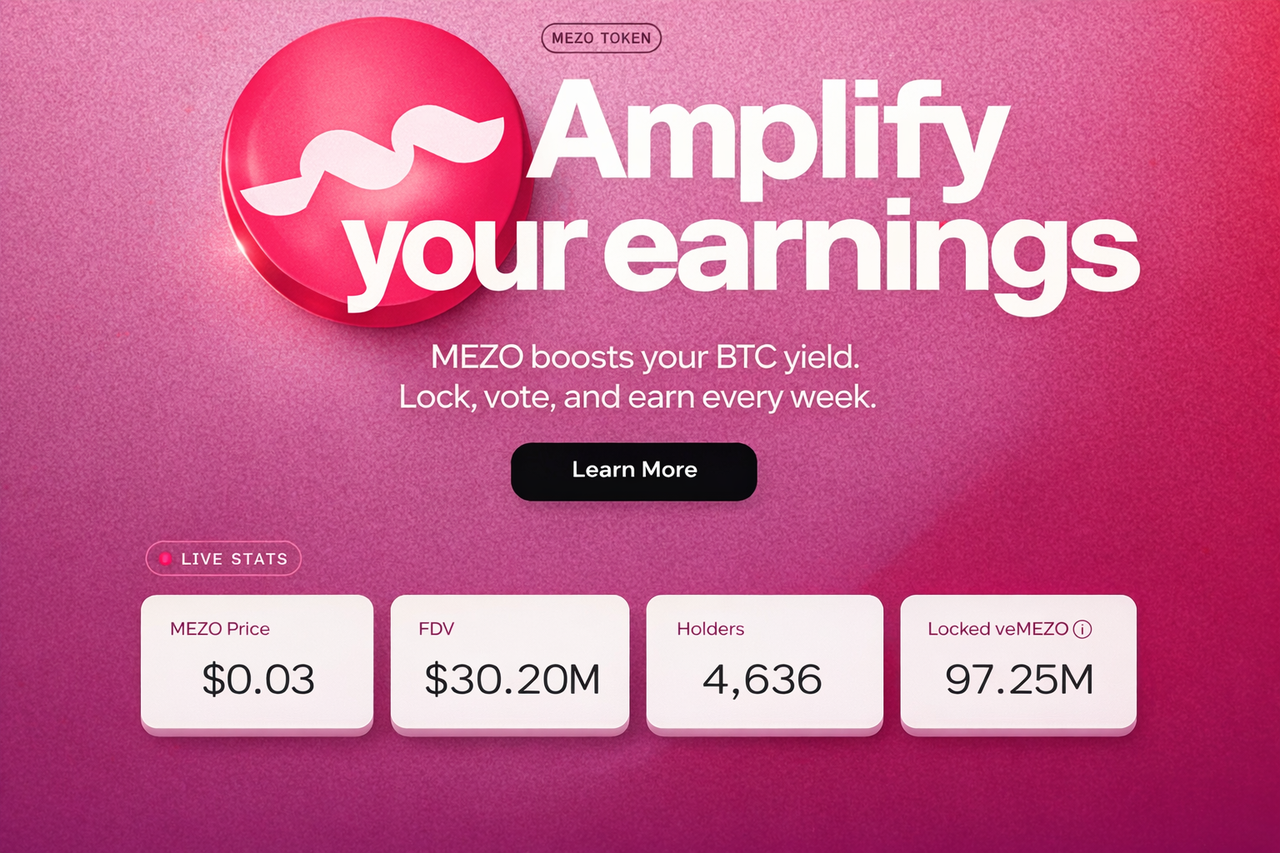
Protocol incentives (MEZO token distribution)
First, borrowing demand plays a key role. When users mint MUSD and put it into circulation, demand for capital generates interest rates within the system, creating yield.
Second, liquidity activities contribute additional returns. As stablecoins are traded and circulated, they generate fees or liquidity incentives that continuously flow through the system.
In addition, protocol-level incentives may also distribute value, often through token rewards that encourage participation. Overall, Mezo’s yield is not derived from a single source, but from the combined effects of lending, trading, and protocol incentives.
Where Does Yield Come From After BTC Is Collateralized? On-Chain Capital Utilization Paths
Once BTC is used as collateral, it does not directly produce yield. Instead, the minted MUSD enables users to access a wider range of financial opportunities.
For example, users can trade with MUSD, provide liquidity, or interact with other protocols to earn returns indirectly. This means that BTC’s yield potential depends on how the released capital is utilized, rather than the act of collateralization itself.
This model resembles traditional collateralized financing, where assets are pledged to obtain liquidity, which is then deployed in further financial activities to generate returns.
The Role of MUSD in the Yield System: How Stablecoins Drive the Yield Cycle
MUSD plays a central role in Mezo’s yield system. It is not only a medium of liquidity but also the foundation of the entire capital cycle.
Once minted, MUSD enters the market and begins circulating, creating demand. As long as MUSD continues to flow within the system, it drives lending interest, trading activity, and other financial interactions, all of which contribute to yield generation.
In this way, MUSD enables the value of BTC to be “unlocked” and actively circulated, forming a continuously operating yield system.
How Are Mezo’s Interest Rates and Incentive Mechanisms Designed? How Is Yield Distributed?
Mezo’s interest rate mechanism typically adjusts based on market supply and demand. When demand for stablecoins increases, borrowing costs may rise, leading to higher yields. Conversely, yields may decrease when demand weakens.
In terms of distribution, different participants earn yield in different ways depending on their roles. Collateral providers unlock liquidity and participate in the system, liquidity providers earn rewards by supporting market operations, and protocol participants may receive token incentives.
This structure allows value to be distributed across various roles, helping sustain the system’s overall operation.
How Does Mezo’s Economic Model Work? Value Flow Between BTC, MUSD, and MEZO
Mezo’s economic model revolves around three core assets. BTC serves as the foundational asset providing value backing, MUSD acts as the liquidity layer, and MEZO is typically used for protocol incentives and governance.
Within this system, value flows in a cyclical process. BTC is collateralized to mint MUSD, MUSD circulates and generates yield, and these activities in turn reinforce demand for BTC. Meanwhile, MEZO supports incentives and governance, helping regulate system behavior.
This three-layer structure enables Mezo to balance value stability with system incentives.
How Does Mezo Achieve Sustainable Yield? How Does It Differ from Traditional DeFi Models?
Mezo’s sustainability depends on real capital demand and genuine financial activity, rather than relying solely on token emissions.
In some DeFi models, yield primarily comes from token issuance, which may be difficult to sustain over time. In contrast, Mezo relies more on stablecoin demand and lending markets, creating a more stable and organic source of yield.
Additionally, because BTC has strong market consensus as a store of value, its role as collateral enhances system stability, further supporting the sustainability of the yield model.
What Are the Risks of Mezo’s Yield Model?
Despite offering new yield opportunities, Mezo’s model carries several risks.
First, interest rates may fluctuate with market demand, affecting yield stability. Second, the collateral system introduces liquidation risk. If BTC prices fall, user positions may be forcibly liquidated.
The system also depends on cross-chain infrastructure and smart contracts, which introduces technical uncertainties. Any issues at the infrastructure level could impact the yield model. Stablecoin depegging risk is another important factor, and together these risks form the main challenges facing Mezo’s yield system.
Conclusion
By integrating BTC into a collateralized stablecoin system, Mezo enables Bitcoin to participate in on-chain financial activities and builds a yield model based on capital circulation.
At its core, the system relies on MUSD to drive liquidity cycles, with interest rates and market demand generating returns. Structurally, it provides a scalable pathway for BTC to become a yield-generating asset.
However, its long-term sustainability depends on multiple factors, including stablecoin demand, system security, and the broader development of the ecosystem.
FAQs
Where does Mezo’s yield mainly come from?
Primarily from lending interest, trading activity, and capital flows driven by stablecoin usage.
Does BTC itself generate yield?
No. Yield comes from the liquidity unlocked through collateralization and how it is used afterward.
Why is MUSD important for yield?
It acts as the core medium of capital flow, driving the entire yield cycle.
Is Mezo’s yield stable?
It depends on market demand and system conditions, and may fluctuate.
What role does the MEZO token play in yield?
It is mainly used for incentives and governance, indirectly affecting yield distribution.
What risks are involved in earning yield with Mezo?
These include liquidation risk, interest rate volatility, and system dependency risks.