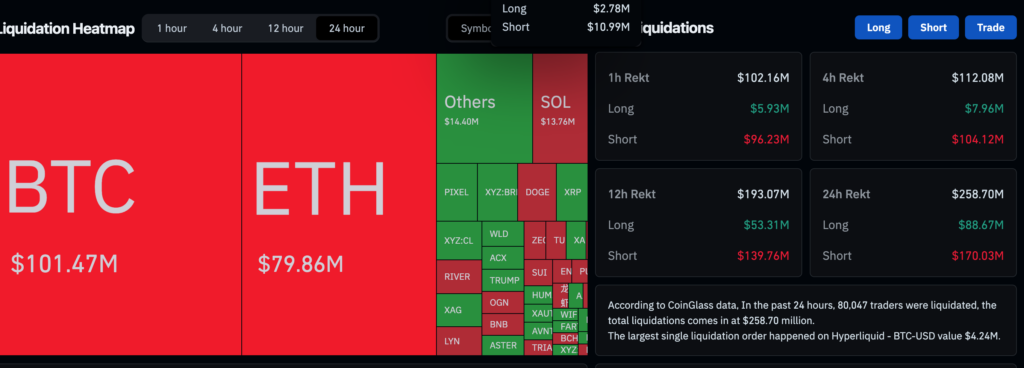
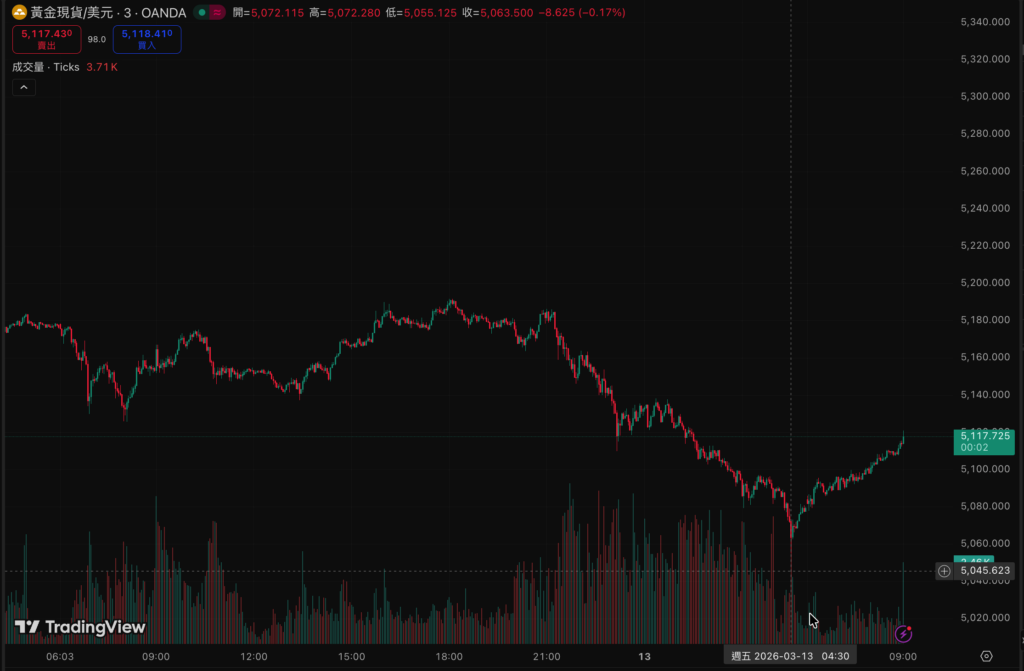
Bitcoin rebounded strongly this morning, reaching a high of $72,033, currently trading at $71,682; Ethereum also broke through the $2,100 mark, peaking at $2,150. In the past 24 hours, futures market liquidations totaled $256 million, with short positions being heavily liquidated. Notably, gold prices declined simultaneously during Bitcoin’s rise, suggesting that traditional safe-haven funds are retreating or reallocating into cryptocurrencies.
(Background: Bitcoin briefly broke above $71,000, Ethereum approached $2,100! 100,000 traders forced to liquidate)
(Additional context: Crude oil prices surged 9% before Trump intervened! Naval escort in the Hormuz Strait + DFC war risks, BTC defies the trend and surpasses $71,000)
Table of Contents
Toggle
- Short squeeze: $256 million futures liquidated
- Gold declines, crypto leads: signs of rotation in safe-haven funds
- CME CEO warns: government intervention in oil derivatives would be an “epic disaster”
- Market outlook: key levels and scenario analysis
Since late yesterday night, Bitcoin has been trading within a narrow range around $70,000, with bulls and bears at an impasse. However, this morning, the situation shifted as buying pressure rapidly pushed the price up to $72,033, then slightly retreated to $71,682. Ethereum also performed well, breaking through the psychological $2,100 level, reaching a high of $2,150, and currently trading at $2,126.62.
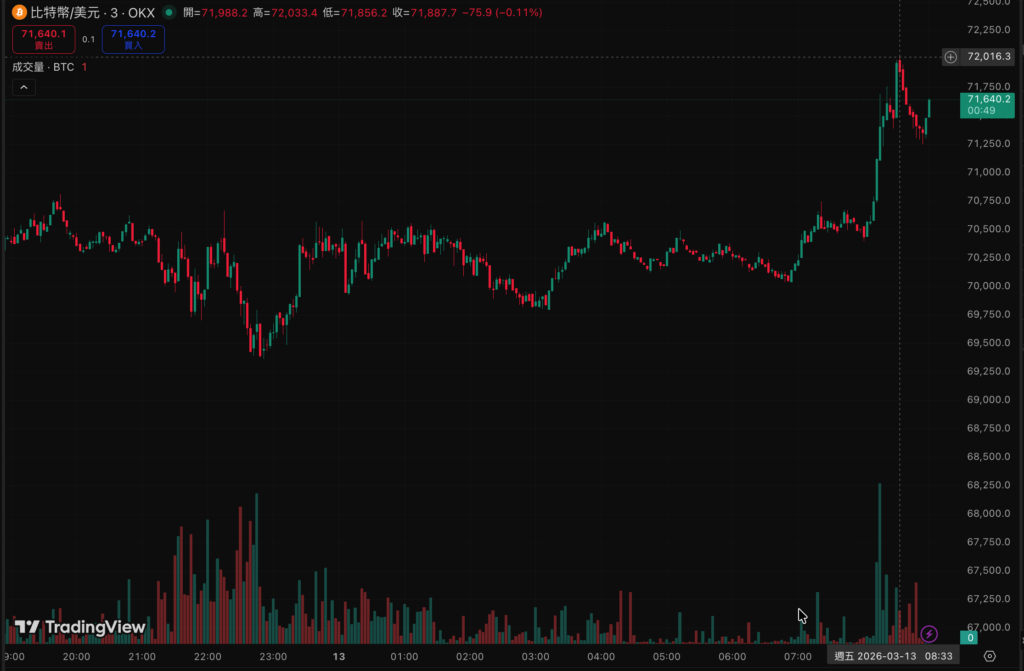
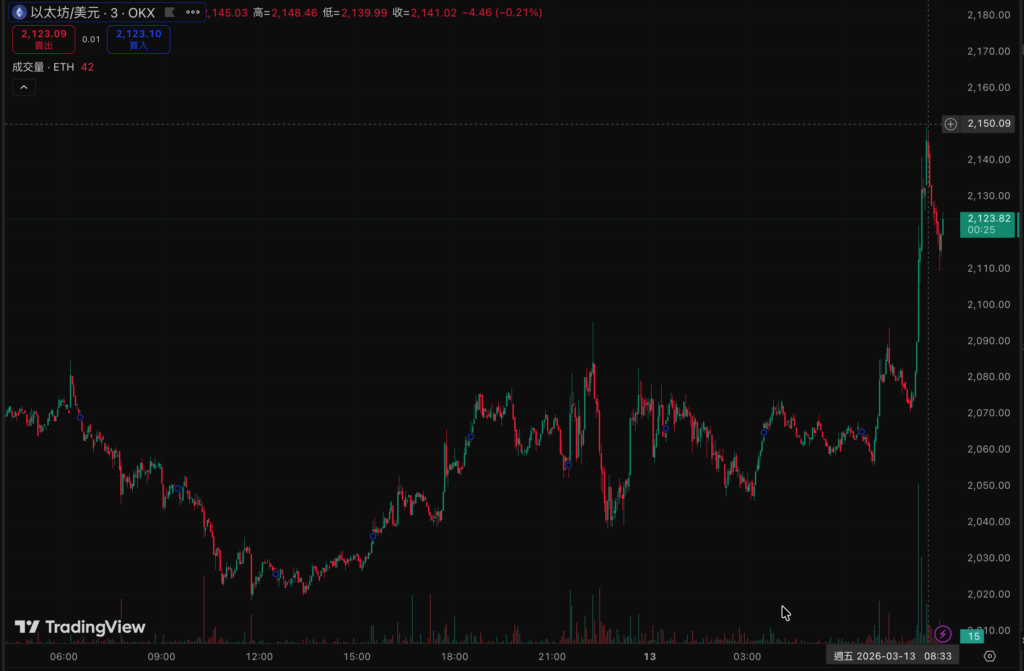
Short squeeze: $256 million futures liquidated
Over the past 24 hours, the crypto futures market saw liquidations totaling $256 million, with short positions making up the majority. This wave of liquidations indicates that traders betting on Bitcoin’s decline were caught in a short squeeze during the rapid price surge, forcing them to close positions and further driving up the price.
Ongoing geopolitical tensions and oil price instability have recently weighed on market sentiment. However, from the liquidation structure, it appears that overly crowded short positions are beginning to loosen, and the pricing of geopolitical risks is shifting.
Gold declines, crypto leads: signs of rotation in safe-haven funds
More notably, during Bitcoin’s rally, gold prices also declined. The retreat of traditional safe assets and the strength of cryptocurrencies highlight a rotation of funds seeking higher risk and return.
This phenomenon is not uncommon in past bull markets—when geopolitical risks ease, markets often shift from “panic safe-haven” mode to “risk appetite recovery,” with funds flowing out of gold and into more volatile but higher-yield assets like cryptocurrencies.
Recent releases of strategic oil reserves by various countries have eased oil prices, reducing concerns over runaway inflation and providing a window for risk assets to rebound.
CME CEO warns: government intervention in oil derivatives would be an “epic disaster”
However, oil price outlook remains uncertain. According to a March 13 report by the Financial Times, CME Group CEO Terry Duffy issued a stern warning: if the Trump administration attempts to manipulate derivatives markets to suppress oil prices during conflicts with Iran, it could lead to a “catastrophic outcome.”
Markets dislike government interference in price setting. If the government takes such actions, it could trigger an epic disaster, undermining investor confidence in the critical commodity pricing mechanism.
Earlier reports indicated that the U.S. Treasury is considering measures to lower oil prices, including intervention in futures markets. Duffy’s comments serve as a stark warning—if governments intervene in major commodity markets, it could shake the trust in global derivatives markets and impact all risk assets, including cryptocurrencies.
Market outlook: key levels and scenario analysis
From a technical perspective, after breaking above $72,000, Bitcoin’s immediate resistance is seen at the $73,500–$74,000 zone. If it can hold above $72,000, bulls may challenge the $75,000 level. Conversely, if it fails to maintain support at $70,000, a retest of around $68,500 is possible.
For Ethereum, the $2,100 level has shifted from resistance to support, with the next targets at $2,200–$2,250. A drop below $2,050 could signal short-term weakness.
Overall, the liquidation of short positions has improved market structure, and the decline in gold suggests a rotation of safe-haven funds. The short-term bullish outlook may continue, but investors should closely monitor oil prices and geopolitical developments—especially whether Trump’s government will intervene in futures markets, which could significantly influence risk sentiment moving forward.
This article is for informational purposes only and does not constitute investment advice. Cryptocurrency markets are highly volatile; please assess risks carefully before investing.
Disclaimer: The information on this page may come from third parties and does not represent the views or opinions of Gate. The content displayed on this page is for reference only and does not constitute any financial, investment, or legal advice. Gate does not guarantee the accuracy or completeness of the information and shall not be liable for any losses arising from the use of this information. Virtual asset investments carry high risks and are subject to significant price volatility. You may lose all of your invested principal. Please fully understand the relevant risks and make prudent decisions based on your own financial situation and risk tolerance. For details, please refer to
Disclaimer.


