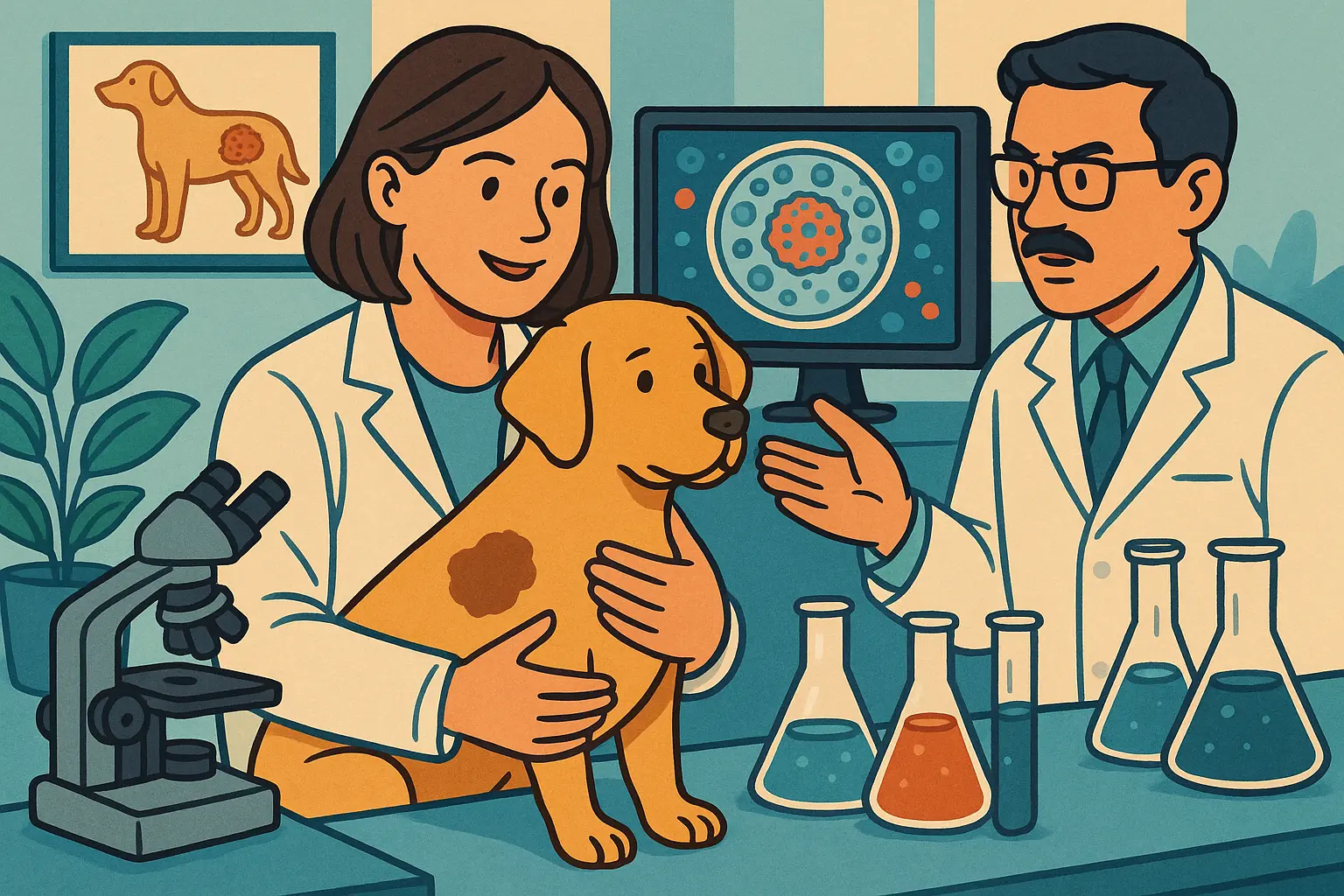
A story about Australian AI consultant Paul Cunningham using ChatGPT to assist Rosie, a beloved dog, in fighting late-stage cancer went viral after being retweeted by OpenAI co-founder Greg Brockman. However, researchers at the University of New South Wales, involved in the development of mRNA vaccines, stated that ChatGPT’s role in the process was limited to literature searches and institutional guidance.
The Actual Process of Rosie’s Story: Uses and Limitations of AI Tools
Rosie is a seven-year-old Shar Pei dog diagnosed with late-stage mast cell tumor in 2022, with veterinarians estimating a remaining lifespan of only one to six months. Cunningham decided to take proactive steps by establishing a research process based on consumer-grade AI tools:
ChatGPT: Used for developing action plans, querying relevant literature, and directing to the Ramaciotti Genomics Centre and recommending Illumina sequencing equipment.
Prof. Martin Alex Smith (University of New South Wales): Completed Rosie’s genome sequencing for about $3,000, with 30x coverage of healthy tissue and 60x coverage of tumor tissue, producing 320GB of raw data.
AlphaFold: Cunningham used it to model the c-KIT protein, but the confidence score was only 54.55; Dr. Kate Mitch, structural biologist at UNSW, publicly pointed out that this score was low, and AlphaFold “may be wrong,” with Smith confirming that AlphaFold “was not used at all for mRNA vaccine design.”
Grok: Cunningham admitted, “The final construct of Rosie’s vaccine was designed by Grok,” adding, “Gemini also did a lot of heavy lifting.”
Prof. Palli Thordarson (UNSW RNA Institute): Assembled the final mRNA lipid nanoparticle (mRNA-LNP) vaccine and publicly confirmed his actual contribution on X.
Treatment Outcome: Partial Effectiveness, Not Complete Cure
Professor Thordarson clearly stated on X: “This may not have cured Rosie. It bought time, but some tumors did not respond.” His team is still analyzing why some tumors did not respond to the therapy, noting that such personalized cancer vaccines usually require concurrent use of immune checkpoint inhibitors—vaccines alone are ineffective.
This case demonstrates the feasibility of personalized mRNA cancer vaccines in canine oncology but does not constitute a complete cure. Thordarson’s follow-up research is ongoing.
Narrative Framework Issue: The True Division of Labor Between AI and Scientists
This incident is not the first case of exaggerated AI medical claims. In 2017, IBM’s Watson for Oncology was internally documented as generating “unsafe and incorrect” recommendations. After investing $62 million, the MD Anderson Cancer Center abandoned the project, and IBM eventually sold off the entire Watson Health division in 2022.
The Rosie case differs fundamentally from Watson’s failure—no one was harmed, the scientific principles have been validated, and the involved researchers are credentialed. The real issue lies in the narrative framing: when ChatGPT dominates headlines and dissemination as the main actor, while the scientists responsible for genome sequencing, vaccine design, and assembly are marginalized, the public’s understanding of AI’s actual capabilities becomes systematically blurred.
Frequently Asked Questions
What role did ChatGPT truly play in Rosie’s treatment?
ChatGPT was mainly used for literature screening, identifying potential collaborators, and recommending sequencing equipment—functions comparable to a literature search tool. Genome sequencing was performed by Dr. Smith’s Ramaciotti Genomics Centre, mRNA vaccines were assembled by Prof. Thordarson’s RNA Institute, and the final construct was designed by Grok (according to Cunningham himself).
Was Rosie’s treatment truly successful?
The results are partial. Thordarson stated the therapy “bought time, but some tumors did not respond,” and emphasized that the vaccine needed to be used alongside immune checkpoint inhibitors. The research team is still analyzing data and has not claimed a complete cure.
What are the real boundaries of AI tools in medical research?
Current cases show that AI tools can effectively assist with literature searches, researcher matchmaking, and preliminary data exploration. However, genome sequencing, laboratory validation of proteins, vaccine design, and manufacturing still require trained scientists and institutional infrastructure. AI is an assisting tool, not a substitute for professional scientific judgment.
Disclaimer: The information on this page may come from third parties and does not represent the views or opinions of Gate. The content displayed on this page is for reference only and does not constitute any financial, investment, or legal advice. Gate does not guarantee the accuracy or completeness of the information and shall not be liable for any losses arising from the use of this information. Virtual asset investments carry high risks and are subject to significant price volatility. You may lose all of your invested principal. Please fully understand the relevant risks and make prudent decisions based on your own financial situation and risk tolerance. For details, please refer to
Disclaimer.


