There are rumors that ChatGPT was used to develop a dog cancer vaccine. Experts clarify that AI only assists with information retrieval, and actual research and development rely on professional scientists. They urge not to overhype AI’s medical role, and note that the case lacks scientific proof.
AI community buzz: ChatGPT helps dogs with cancer vaccines
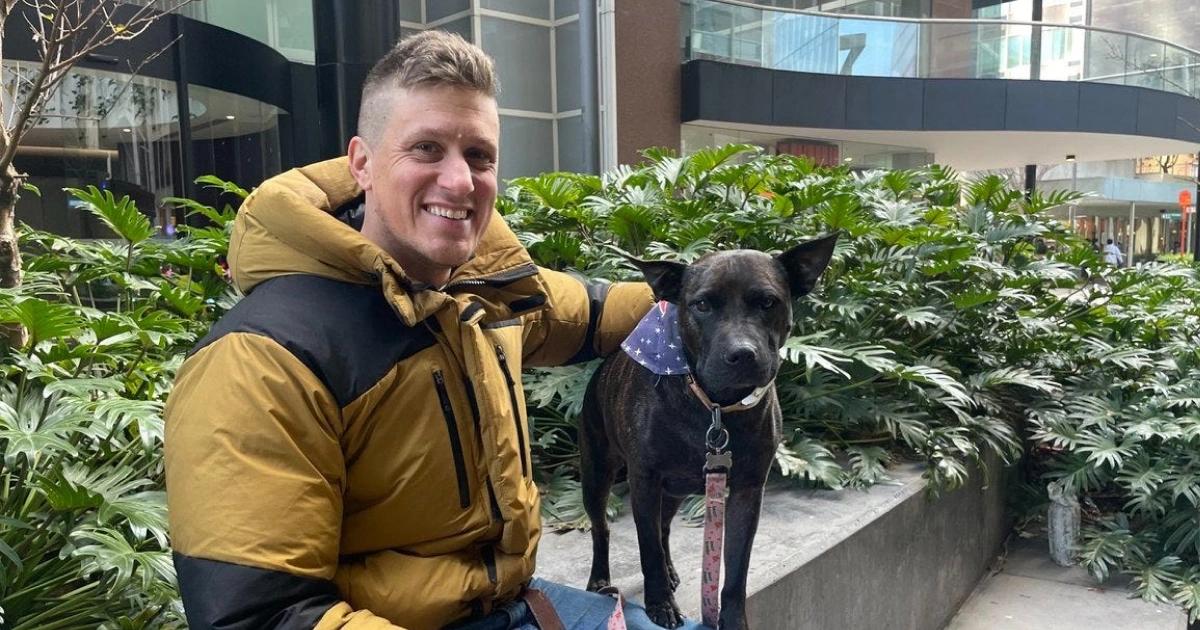
OpenAI co-founder Greg Brockman recently shared a story that drew attention. The main figures are Australian AI consultant Paul Conyngham and his 7-year-old Shar Pei dog, Rosie.
Rosie was diagnosed with cancer and was given only a few months to live. Conyngham claims that, with the help of ChatGPT from OpenAI, they successfully developed an mRNA cancer vaccine therapy.
After the news spread, it sparked community interest, with some touting AI as a miracle worker in medicine, like Hua Tuo. Although the treatment seems real, some researchers have begun questioning the actual capabilities of large language models (LLMs) in vaccine development and are examining ChatGPT’s true role.
Is it really that miraculous? Here’s the real story
Let’s go back to the process of finding the therapy. Conyngham states he used Google’s AlphaFold to model the c-KIT protein inside Rosie’s body and compared it with healthy data, finding mutations consistent with literature predictions.
He then searched for compounds that could target this protein and found a drug approved in the U.S. for treating other cancers. In an interview on Australia’s Today Show, Conyngham explained, they took tumor samples for DNA sequencing, converted tissue into data, identified issues, and developed a solution, emphasizing that ChatGPT provided assistance throughout the process.
Conyngham then contacted Professor Palli Thordarson, director of UNSW’s RNA research institute. Dr. Martin Smith performed sequencing and data transformation, while Professor Thordarson was responsible for assembling the mRNA vaccine.
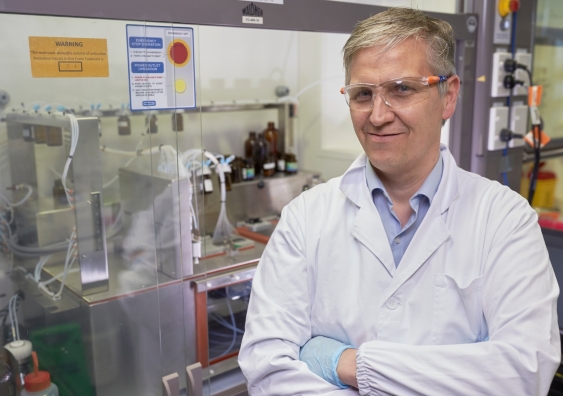
Image source: UNSW Sydney, Director of the RNA Research Institute Palli Thordarson
When confirming the specific molecular blueprint, Conyngham revealed that the final vaccine construct was designed by Grok, with Gemini handling much of the work.
ChatGPT was mainly used for screening research papers and finding researchers, while AlphaFold predicted the three-dimensional structure of proteins. Conyngham used AlphaFold with a confidence score of 54.55. Dr. Kate Michie, a structural biologist, said this score is low and warned that the system might be wrong, requiring laboratory verification.
Dr. Smith confirmed AlphaFold was not used for vaccine design, and Dr. Thordarson stated that while the treatment bought Rosie some time, some tumors did not respond, and it needed to be combined with checkpoint inhibitors.
The real credit goes to scientists and research institutions
Although Conyngham’s attempt does not mean AI has completely failed in medicine, the underlying scientific principles have been validated, and the involved researchers are recognized professionals.
However, in this story of developing an mRNA cancer vaccine, the greatest credit still belongs to the dedicated work of scientists and research institutions, especially those responsible for sequencing, vaccine production, and safety protocols.
Taiwanese doctor points out three misconceptions about the story
AI chatbots can assist with browsing and organizing scientific literature, but there is still a long way to go before they can replace the expertise and infrastructure needed for designing and producing medical treatments.
In September last year, a research team at Stanford University in the U.S. used the biological AI model Evo to design a live virus (bacteriophage) for the first time, but it is still far from being able to develop vaccines.
Dr. Huang Y, a molecular biologist at Chang Gung University in Taiwan, highlights three major doubts about “using ChatGPT to make a cancer vaccine for dogs”:
- Lack of scientific proof: This case has no control group; mast cell tumors can regress spontaneously, and there are no peer-reviewed publications. The scientists and the university are real, but there is no independent verification with tumor measurements, immune response data, or histological confirmation.
- Overhyping AI’s role: ChatGPT only functions as an advanced search tool; actual design depends on algorithms and professional scientists synthesizing mRNA. The story’s significance lies in lowering computational barriers, but medical methods still require professional institutions.
- Regulatory differences: Veterinary medicine regulations differ greatly from human medicine. This treatment is a compassionate use, not requiring clinical trials approved by the U.S. FDA.
He concludes, “Media love to write about AI miracles, but science doesn’t work that way.”
- Further reading: Taiwan creates the world’s first! Health Record App integrates Gemini, providing AI personalized advice for diabetics
Disclaimer: The information on this page may come from third parties and does not represent the views or opinions of Gate. The content displayed on this page is for reference only and does not constitute any financial, investment, or legal advice. Gate does not guarantee the accuracy or completeness of the information and shall not be liable for any losses arising from the use of this information. Virtual asset investments carry high risks and are subject to significant price volatility. You may lose all of your invested principal. Please fully understand the relevant risks and make prudent decisions based on your own financial situation and risk tolerance. For details, please refer to
Disclaimer.


