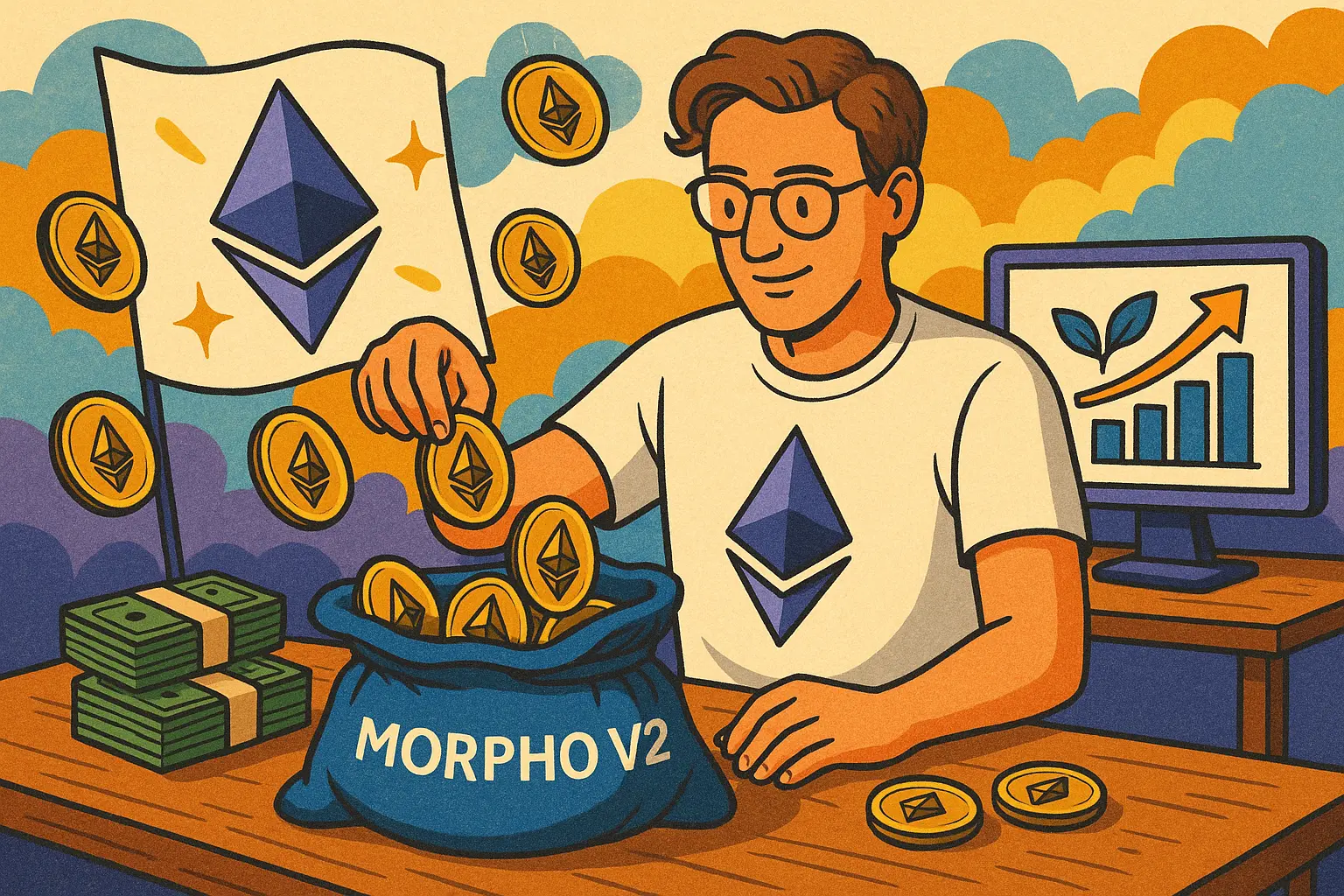
Ethereum Foundation announced on Wednesday that it has deployed an additional 3,400 ETH into Morpho Vaults, with 1,000 ETH specifically allocated to Morpho Vaults V2. Based on current market prices, this deployment is valued at approximately $7.6 million, marking the Foundation’s official acceleration in transitioning to a financial model that “uses DeFi yield to replace periodic ETH sales for operational funding.”
Third Morpho Deployment: Strategic Significance of V2 Architecture
This deployment is the Ethereum Foundation’s third major asset allocation on Morpho, continuing its open-source philosophy—both Morpho Vault V2 and Morpho Blue V1 are released under the GPL 2.0 open-source license, aligning with the Foundation’s long-term advocacy for free and open-source software principles.
Compared to previous deployments, a clear trend of scaling emerges:
Early 2025: Initial allocation, investing up to 50,000 ETH into multiple DeFi protocols such as Compound, Spark (Sky/MakerDAO lending platforms)
October 2025: Allocating 2,400 ETH and about $6 million in stablecoins to Morpho Yield Vaults
March 2026: Additional deployment of 3,400 ETH, first time on Morpho Vaults V2
The choice of Morpho Vaults V2 is particularly noteworthy. Launched in November 2025, V2 introduced expanded custodial models, allowing asset management entities to create more complex programmable liquidity conditions, and integrated compliance management features—these capabilities align closely with the Foundation’s needs for managing large, institutionally sensitive funds.
Macro Context of DeFi Treasury Management: Active Deployment of $800 Million Assets
According to Arkham Intelligence, the Ethereum Foundation’s total assets exceed $820 million, with approximately $735 million denominated in ETH. At this scale, the previous approach of “periodically selling ETH for fiat to support operations” faces efficiency issues—wasting ETH’s potential appreciation and possibly exerting ongoing selling pressure on the market.
Morpho itself has grown from a relatively niche DeFi lending protocol into a major industry platform. Throughout 2025, its user base expanded from 67,000 to over 1.4 million, deposits increased from $5 billion to $13 billion, and active loans reached $4.5 billion by year-end. Real-world asset (RWA) deposits on the protocol grew from nearly zero at the start of 2025 to $400 million by the third quarter. As of early March 2026, Morpho’s total value locked (TVL) is approximately $5.8 billion.
Frequently Asked Questions
Why did the Ethereum Foundation choose Morpho over other DeFi protocols?
The Foundation’s deployment announcements consistently emphasize Morpho’s open-source license (GPL 2.0), which aligns with its long-term advocacy for free and open-source software. Additionally, Morpho has a strong track record in security audits, risk management frameworks, and liquidity management flexibility. Its institutional-grade architecture (especially Vaults V2) supports programmable strategies suitable for managing large funds.
What impact does the 3,400 ETH deployment into Morpho have on the ETH market?
A single deployment of 3,400 ETH has limited direct impact on the overall market, but its signaling significance is more important. The Foundation’s decision to continue increasing DeFi allocations amid a relatively pressured ETH price (down over 5% on the day) demonstrates confidence in the long-term prospects of Ethereum’s DeFi ecosystem, which could positively influence market sentiment.
Does the Ethereum Foundation’s DeFi treasury strategy mean it will stop selling ETH in the future?
The current strategic shift is more about “increasing DeFi yield participation” rather than “completely halting ETH sales.” The Foundation still needs fiat for daily operational expenses (including researcher salaries, ecosystem subsidies, etc.), but the yields generated from DeFi protocols can partially replace previous ETH sales, reducing reliance on ETH liquidity events and supporting the Ethereum open-source ecosystem while generating stable returns.
Disclaimer: The information on this page may come from third parties and does not represent the views or opinions of Gate. The content displayed on this page is for reference only and does not constitute any financial, investment, or legal advice. Gate does not guarantee the accuracy or completeness of the information and shall not be liable for any losses arising from the use of this information. Virtual asset investments carry high risks and are subject to significant price volatility. You may lose all of your invested principal. Please fully understand the relevant risks and make prudent decisions based on your own financial situation and risk tolerance. For details, please refer to
Disclaimer.


