Written by DaiDai, MaiTong MSX
Many people think that this time at GTC, Jensen Huang will completely ignite the optical communication industry.
After all, this sector has been hot for a long time. From CPO to silicon photonics, from optical modules to high-speed interconnects, the market has almost projected all imaginable upgrades for AI infrastructure onto this area. Coincidentally, OFC 2026 is also happening in the same week—the technical conference runs from March 15 to 19, and the exhibition from March 17 to 19. One is Nvidia outlining its roadmap, and the other is the entire optical communication industry showcasing its strength. Naturally, the excitement has reached a peak.
So before Jensen Huang took the stage, the market was not expecting an ordinary speech but a spark. What everyone wanted to hear was not “the future is promising,” but a clearer statement: In the next phase, optical will be the main theme.
Unfortunately, Jensen Huang did not deliver that version.
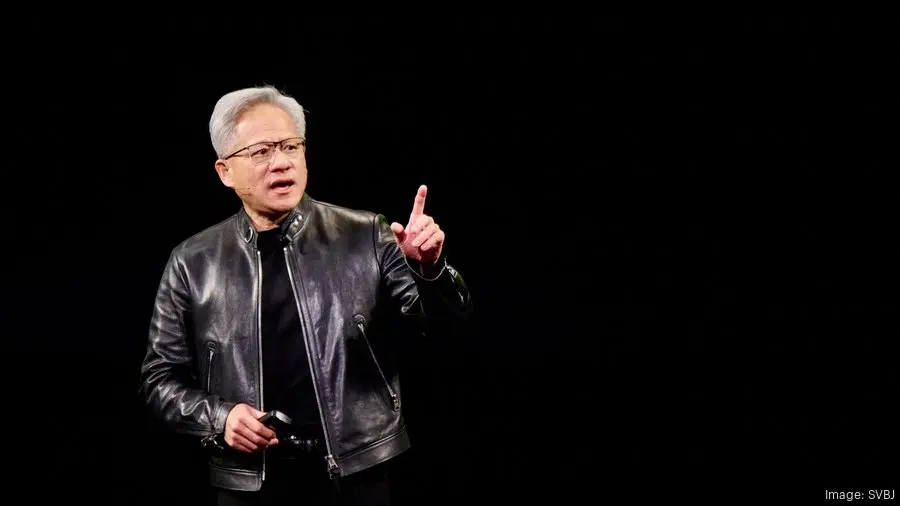
GTC Jensen Huang’s speech scene Source: The Business Journals
Why did Jensen Huang talk about optics but the market still didn’t buy it?
Recently, the reason optical communication has been so hyped isn’t just because it sounds advanced, but because the logic is so straightforward—As AI clusters grow larger, data transmission pressure increases, and copper will inevitably hit a bottleneck. So, is it time for optical to take over?
This story is too easy to believe. And because it’s so simple, the market naturally thinks one step further: since the direction is so clear, the realization shouldn’t be too far off.
Before GTC, many investors weren’t really debating “can optical do it,” but were betting in advance: Will Jensen Huang present this more aggressively than expected?
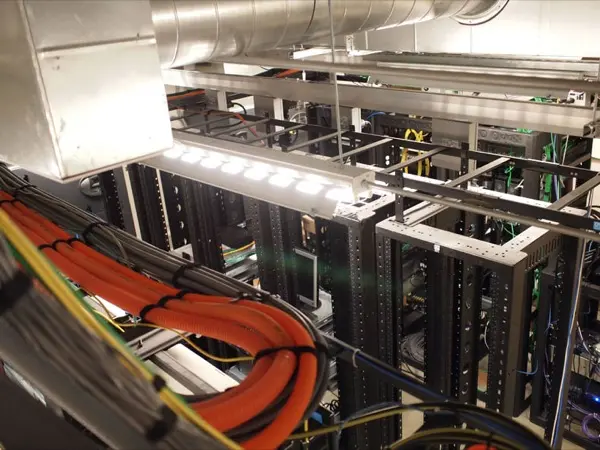
Data center racks and cabling Source: The Fiber Optic Association
The issue isn’t whether he mentioned optical.
He certainly did, and quite prominently. But what Jensen Huang actually emphasized was that optical is important, but copper won’t disappear in the short term. “Nvidia plans to continue using copper-based connections and updated optical technologies in upcoming platforms (including Vera Rubin Ultra and future systems).”
What the market wanted to hear was that optical would soon dominate across the board. That small difference was enough to cause a market reversal.
This is also the most awkward part for the market because stocks are often most afraid of not bad news, but the absence of good news as expected.
The issue isn’t “whether optical is promising,” but “whether to realize it now”
The most easily misunderstood point this time is that many interpret it as “optical is failing” or “copper wins.”
But that’s not true.
A more accurate way to put it is the long-term logic of optical hasn’t changed; what has changed is the market’s expectation of how quickly it will be realized. Nvidia’s official technical blog describing the Vera Rubin platform clearly explains this logic: larger-scale systems will use direct optical connections for rack-to-rack links, but many intra-rack connections will still rely on copper spine and pre-terminated copper cables.
Simply put, inside many racks, copper remains dominant; but at larger scales and across racks, optical’s importance begins to rise significantly.
Therefore, what GTC truly corrected isn’t the direction but the timeline. The market previously bought into this sector with a big future in mind; now it’s starting to ask: Who will realize this future first, and when?
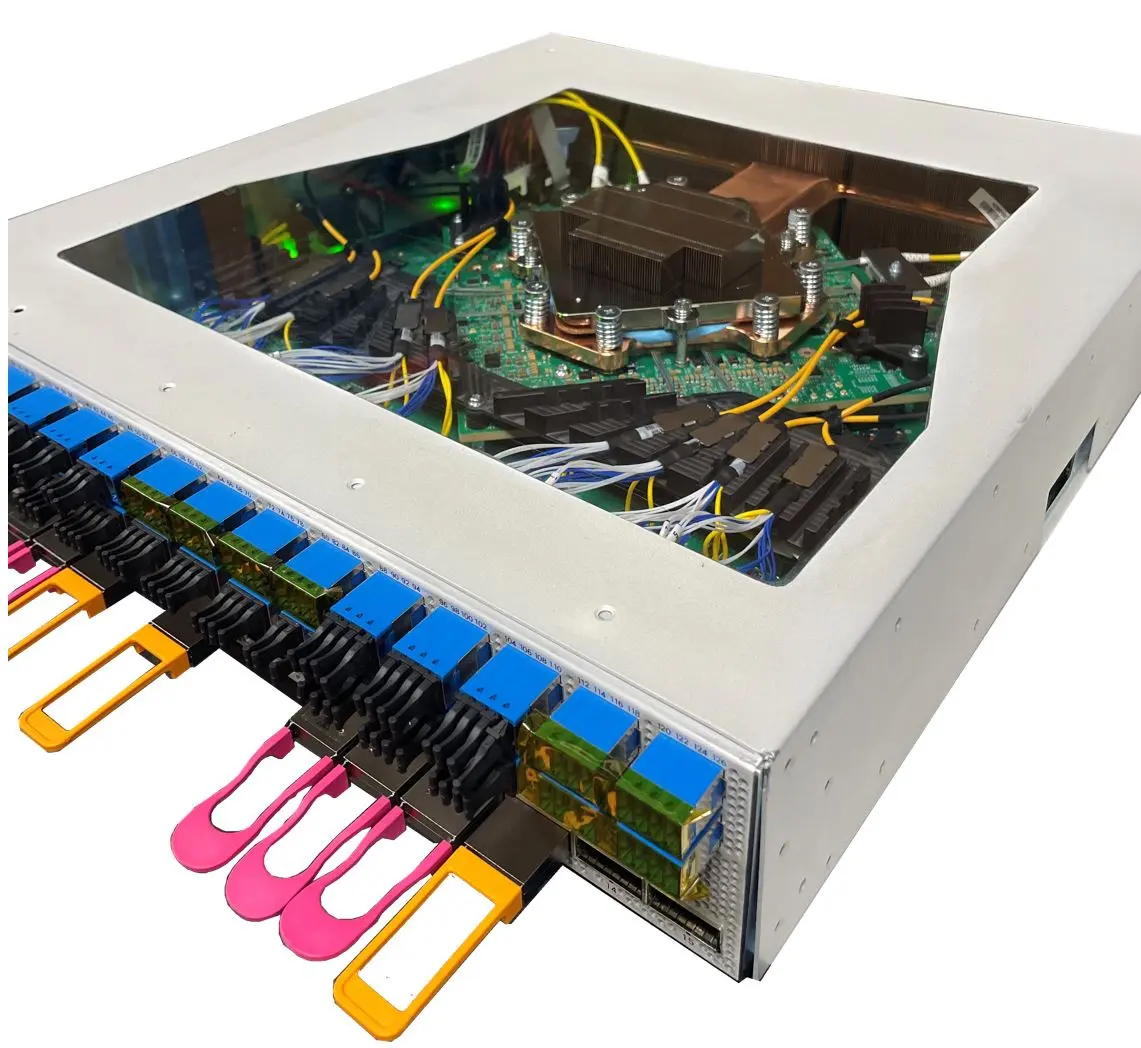
CPO equipment/system display Source: Cisco Blogs
Market shifts from “full optical” to “beginning to differentiate”
Because of this, after the speech, the market didn’t move as “all sectors surge together,” but rather experienced some turbulence first, then started to differentiate.
Barron’s summarized this well: the market interpreted Jensen Huang’s statement as “copper and optical will both continue to be used,” which shifted the sector from a “rise on optical” theme to a more nuanced “who benefits, who is just riding the hype” differentiation.
Looking at individual stocks, this differentiation becomes even clearer.
- Lumentum (LITE.M) continues to be discussed not just because it’s in the “optical” sector, but because it’s no longer just a concept stock in investors’ minds. It’s now considered part of the “next-generation interconnect systems” list. Even if short-term sentiment fluctuates, the market’s understanding tends to stay at “pace changes,” not “logic disappears.” Barron’s noted that on March 17, Lumentum was one of the few stocks still closing higher;
- Coherent (COHR.M) is similar to Lumentum but isn’t valued exactly the same. When the sector shifts from “big story” to “practical implementation,” investors pay more attention to which company benefits at which level, how long it takes to realize, and whether expectations were overly optimistic. It’s not directionless but enters a phase of “logical but needing time recalibration.” Barron’s also pointed out that on the same day, Coherent’s performance was noticeably weaker than Lumentum’s;
- Ciena (CIEN.M) is somewhat special. Unlike highly volatile names that can be pushed up and down by sentiment, Ciena is more about prompting the market to think “how will large-scale optical networks truly expand in the future.” Its significance isn’t just riding a hot word but reminding everyone that if large-scale AI infrastructure upgrades continue, it’s not just about a component story but about how the entire network capability advances. Barron’s post-GTC summary categorized Ciena as a relatively stable player in the optical chain;
- Applied Optoelectronics (AAOI.M) is a typical high-volatility stock in this rally. When sentiment is good, it’s often quickly pushed higher; but if catalysts aren’t strong enough to sustain expectations, it’s also the first to face profit-taking. Its volatility illustrates a key point: when the market doubts whether realization will be slower than expected, the stocks that surged fastest and had the highest expectations are the first to be hit. Barron’s also listed AAOI as under pressure on March 17;
- Credo (CRDO.M) reveals another important shift after this GTC: it’s not just about “copper-related” stocks benefiting automatically. Jensen Huang clarified that copper won’t exit immediately, but that doesn’t mean all copper interconnect companies will be rewarded right away. Investors will start asking more detailed questions: which segment of copper connectivity benefits most? Short-distance? AEC? Other links? Barron’s review shows Credo’s stock also experienced significant volatility, indicating the market no longer accepts the simple narrative of “as long as you’re on the theme, you’ll rise together.”
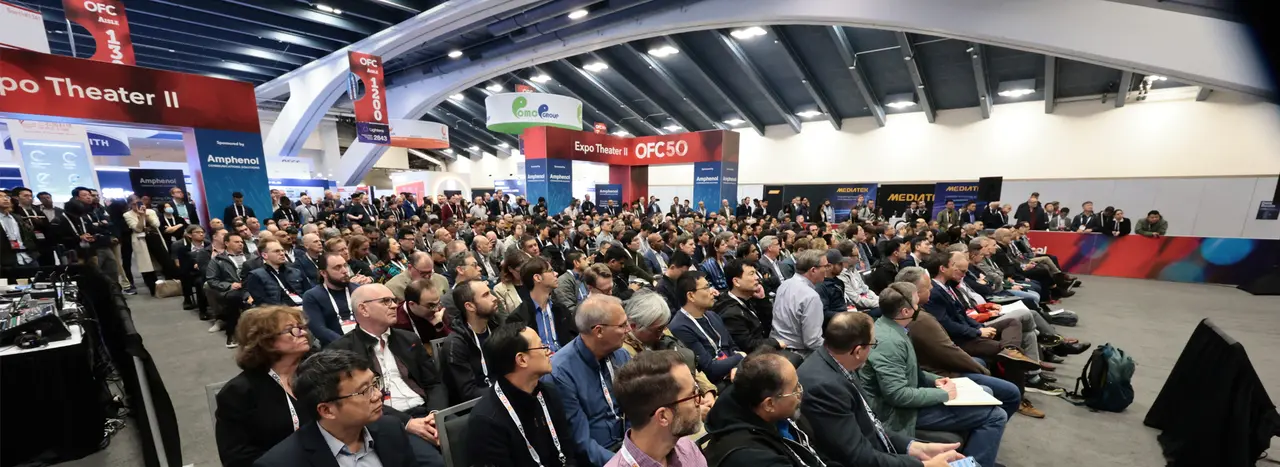
OFC conference scene Source: Public News Photos
In summary, looking at these stocks together, the most notable point isn’t who rises or falls, but that the market is beginning to treat them as assets with different positions, different realization timelines, and different degrees of certainty.
Earlier, everyone was more willing to lump them into one basket, but since GTC, that basket is being unpacked. AI interconnects aren’t a “choose between optical and copper” dilemma but a “who uses what where” division of labor.
Ultimately, Jensen Huang didn’t deny optical; he simply didn’t deliver the version the market most wanted to hear. After GTC, the focus isn’t just on “whether there’s a story,” but on “who is closer to implementation, who is closer to realization.” That’s why, even within the same optical communication sector, stock performances are beginning to diverge clearly.
Earlier, many companies could be traded together in the same basket; but from now on, the market will scrutinize more closely: who benefits first, who verifies first, and who was just pushed up by sentiment.
True differentiation has just begun
The direction of optical hasn’t changed; what has changed is the market’s perspective on this sector.
Previously, investors were more willing to buy into the imagination; now, the market will focus more on actual realization. The real gap will be not who can tell the best story, but who can turn the story into performance earliest.
Let’s wait and see.


