Since early 2025, CryptoQuant’s Miner Supply Ratio has been steadily declining, indicating that the amount of BTC sent to Binance by miners is decreasing. Despite this, BTC prices have shown a pattern of rising first and then falling. This suggests that even if miner selling pressure diminishes, prices may still decline.
Main costs faced by miners include electricity, hardware, operational expenses, and financing costs. Their break-even levels vary with market conditions, and after the halving, these costs have increased significantly. By 2026, the operating costs for high-efficiency large-scale miners are estimated to be between $34,000 and $43,000, while industry averages reach as high as $75,000 to $87,000. This means most miners are currently operating at or near breakeven, or even at a loss.
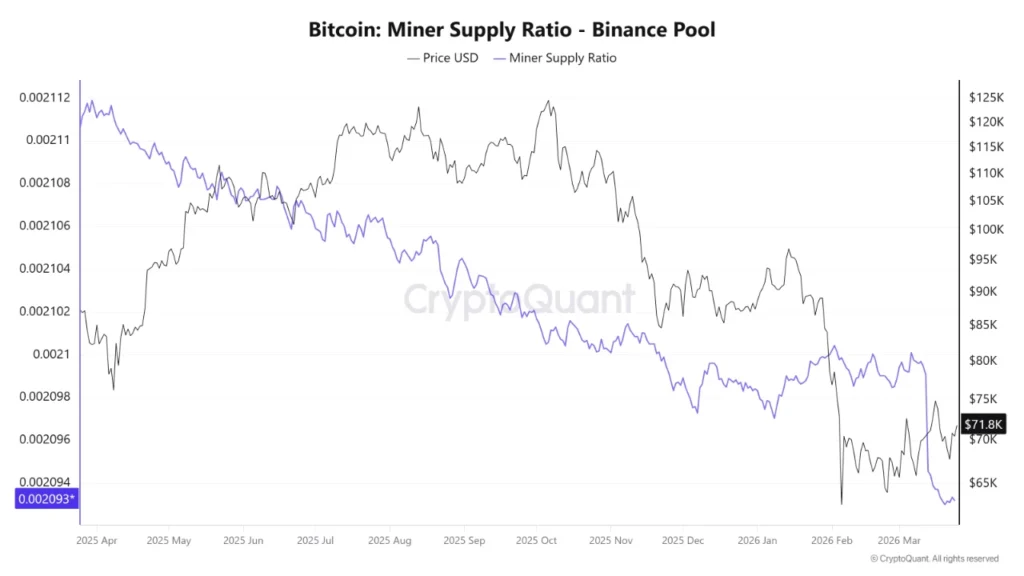
Miners are the only participants in the market continuously producing new BTC supply. A reduction in their selling behavior can ease the natural supply pressure in the spot market and may lead to short-term liquidity tightening. However, the chart shows that despite the decline in the Miner Supply Ratio, prices continue to fall. This clearly indicates that the current selling pressure is not coming from miners but is driven by spot investors, ETF capital flows, whales, and broader macroeconomic risk factors.
Disclaimer: The information on this page may come from third parties and does not represent the views or opinions of Gate. The content displayed on this page is for reference only and does not constitute any financial, investment, or legal advice. Gate does not guarantee the accuracy or completeness of the information and shall not be liable for any losses arising from the use of this information. Virtual asset investments carry high risks and are subject to significant price volatility. You may lose all of your invested principal. Please fully understand the relevant risks and make prudent decisions based on your own financial situation and risk tolerance. For details, please refer to
Disclaimer.


