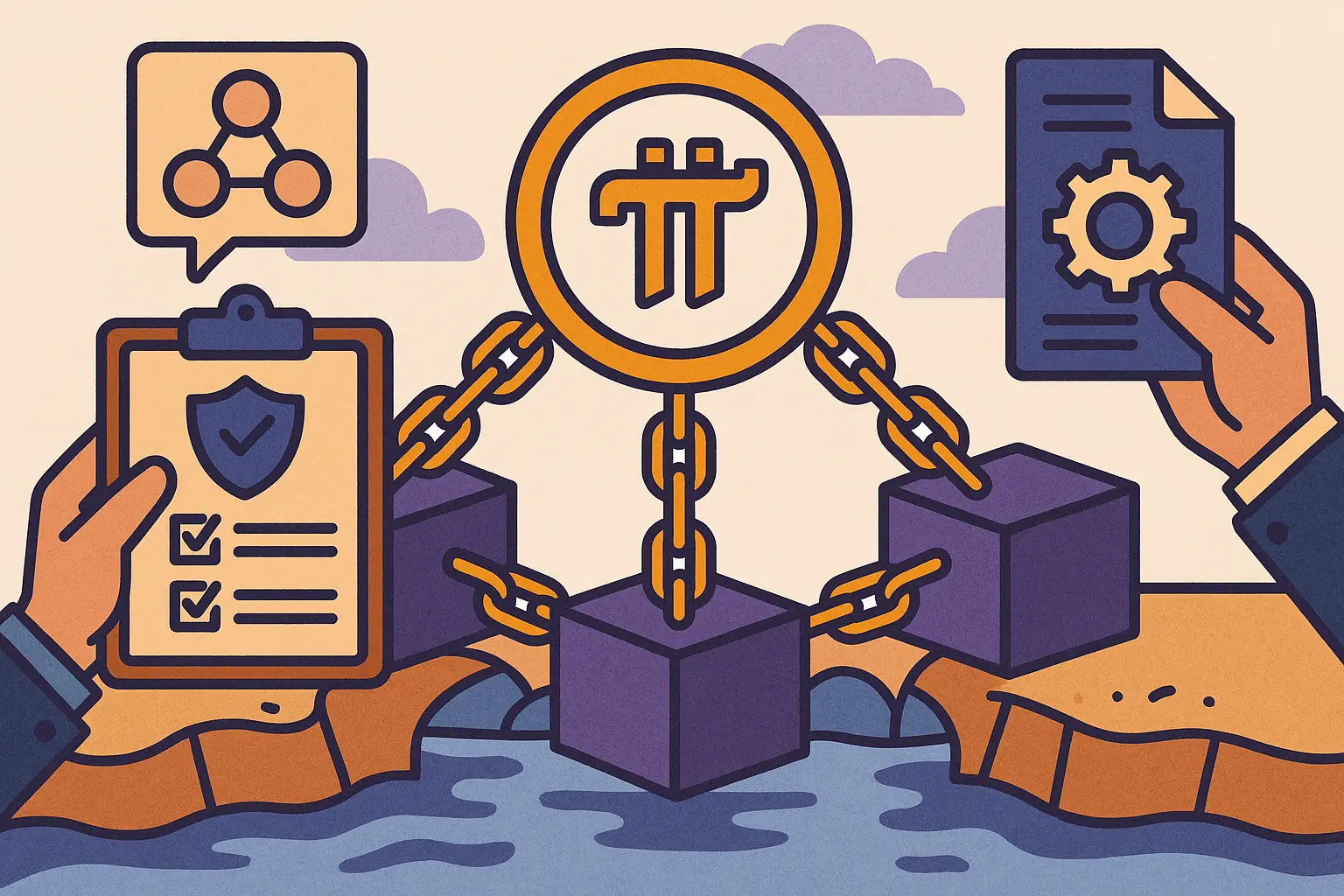
Pi Network is entering a new technical phase for mainnet expansion, with cross-chain bridge development and smart contract testing running in parallel. According to the development team’s latest progress, the cross-chain bridge system will connect the Pi blockchain with other major networks, enabling cross-platform asset transfers. The core design focus of this mainnet expansion is to position “Know Your Business” (KYB) identity verification as the central layer of the system, providing a trusted foundation for cross-chain activity under a compliance framework.
Cross-Chain Bridge Development: Smart Contract Testing and Security Audits Proceed in Tandem
Pi Network’s cross-chain bridge development adopts a cautious, phased strategy. At present, developers are testing smart contracts in a testnet environment to conduct comprehensive evaluation across three dimensions: performance, system stability, and security vulnerabilities. Pi Network has explicitly stated that all smart contracts must complete independent security audits before deployment to the mainnet to reduce system risks after launch.
The design of the cross-chain bridge and the integration of smart contracts are advancing in sync; this dual-track architecture is intended to improve execution efficiency for cross-chain transactions and coordination among different systems. The rollout for this launch is expected to use a controlled release approach to ensure the system has sufficient reliability before large-scale onboarding.
KYB Identity Verification: The Core Differentiator of Pi Network’s Cross-Chain Design
The most distinctive architectural decision of this mainnet expansion is to position the identity verification mechanism as the core layer of cross-chain activities. Pi Network uses KYB (Know Your Business) verification, requiring enterprises and service providers to complete qualification review before they can access the official Pi wallet and join the ecosystem.
This “identity-first” cross-chain design differs from mainstream solutions in several key ways:
Compliance-first enterprise onboarding: Web2 and Web3 enterprises that pass KYB review, including traditional internet businesses and decentralized protocols, can apply to join the Pi ecosystem
A controlled, compliant transaction environment: KYB verification helps ensure that transactions within the ecosystem meet regulatory requirements, reducing anonymous abuse and aligning with the global trend toward regulated digital finance
Technical bridging and compliance bridging in parallel: Identity verification connects different systems both at the technical layer and at the compliance layer, providing dual protection for trusted interactions across networks
Developers believe that the dual combination of technical bridging and identity verification could help establish a cross-chain ecosystem architecture that satisfies both flexible access and compliance controls.
The Ecosystem Significance of Mainnet Expansion: From Closed Testing to Open Enterprise Access
Mainnet expansion will open the door for a broader community of developers and enterprise users. Entities that have passed KYB review will be able to build and operate a variety of applications in the Pi environment, such as financial tools, digital marketplaces, and service platforms. Once the cross-chain bridge functionality is live, it is expected to further expand the use cases for the PI token, so its accessibility is no longer limited to a single on-chain environment.
Pi Network’s long-term value fundamentally depends on the depth of real-world application use cases in its app ecosystem. The integration of identity verification, smart contracts, and cross-chain functions forms the technical infrastructure framework that enables Pi Network to evolve into an application-oriented public chain.
Frequently Asked Questions
When will Pi Network’s cross-chain bridge be officially launched?
Pi Network has not yet announced the exact launch date for the cross-chain bridge. At present, developers are still testing smart contracts in the testnet environment, and all contracts must complete security audits before deployment. The launch is expected to be rolled out in a controlled manner step by step to ensure system stability.
What specific requirements does KYB verification impose on enterprises to access the Pi ecosystem?
KYB requires enterprises applying to access the Pi ecosystem to complete qualification review and receive approval before they can access the official Pi wallet and related functions. This mechanism applies to both Web2 and Web3 enterprises, and is intended to ensure compliance of transactions within the ecosystem, providing a controlled access environment for business partners.
What potential impact does the Pi Network cross-chain bridge have on the PI token?
Once the cross-chain bridge is launched, it will enable the PI token to transfer assets between the Pi Network and other blockchain networks, theoretically helping expand PI’s application scenarios and market accessibility. The real-world impact on token demand will ultimately depend on the adoption rate of genuine business applications within the ecosystem.
Disclaimer: The information on this page may come from third parties and does not represent the views or opinions of Gate. The content displayed on this page is for reference only and does not constitute any financial, investment, or legal advice. Gate does not guarantee the accuracy or completeness of the information and shall not be liable for any losses arising from the use of this information. Virtual asset investments carry high risks and are subject to significant price volatility. You may lose all of your invested principal. Please fully understand the relevant risks and make prudent decisions based on your own financial situation and risk tolerance. For details, please refer to
Disclaimer.


