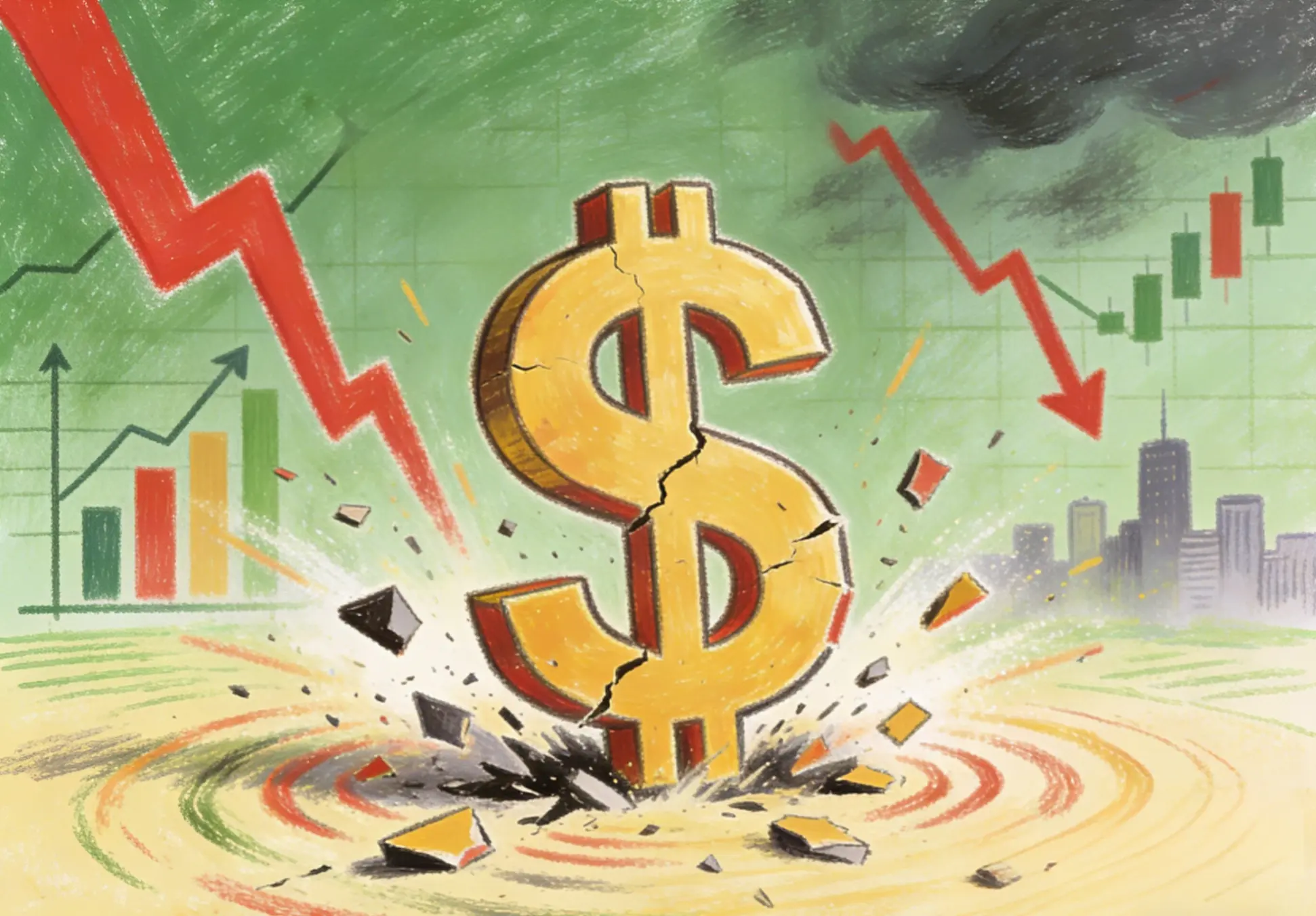
Economist and gold advocate Peter Schiff warned on April 1, 2026 that diminishing US credibility and accelerating de-dollarization could trigger higher interest rates, rising debt, persistent inflation, and recession, as gold surged above $4,700 per ounce following a 15% rally in just over one week.
Schiff characterized the combination of geopolitical tensions, US fiscal policy, and Federal Reserve monetary policy as creating a structural shift that could make three-digit oil prices permanent and erode the real value of US stocks when measured against precious metals.
Schiff Highlights Gold Surge as Signal of Dollar Weakness and Inflation Fears
Schiff posted on social media platform X that gold had surged over $100, rising back above $4,600, and later noted gold had climbed above $4,700. He stated that the war had improved the bullish fundamentals for precious metals, warning that the result would be diminished US credibility and accelerated de-dollarization, leading to more debt, higher interest rates, rising inflation, and recession for the United States.
Schiff noted that while the Dow Jones Industrial Average rose 2.4% on April 1, gold rose 3.8% and silver rose 7.3%, arguing that in terms of real money, the value of US stocks fell. He stated that the Dow has been consistently losing value when priced in gold and silver over the past 26 years, and that the consequences of larger federal deficits, a weaker dollar, and rising inflation continue to erode real values.
Since bottoming on March 23, Schiff noted that gold has rallied close to 15% in just over one week, finishing the quarter up approximately 7%. Despite the rally, March was the worst month for gold since 2008, which Schiff suggested could position April as gold’s best month since 1980.
Central Banks Shifting Reserves Toward Gold as Hedge against Currency Debasement
Schiff argued during a recent debate with investor Mark Moss that foreign central banks are already moving more of their US dollar reserves into gold because they are losing confidence in the US dollar and the ability of the US government to pay its debts in honest money without resorting to the printing press. The shift reflects broader concerns about sovereign debt sustainability and the potential loss of reserve currency status.
Structural developments in financial systems, including tokenization and digital infrastructure, may further enhance gold’s role by improving divisibility and transferability, strengthening the metal’s function within modern markets without altering its underlying characteristics. Schiff has repeatedly expanded on themes of declining US credibility and accelerating de-dollarization in recent commentaries.
Schiff characterized the potential loss of reserve currency status as a decisive blow to the US economic framework, arguing that reliance on the dollar underpins national financial strength. He has pointed to catalysts such as the weaponization of the dollar through sanctions and rising fiscal deficits that he views as unsustainable, warning that the resulting shift could trigger a prolonged inflationary downturn, reduced living standards, and a debt-driven crisis tied to monetary expansion.
Oil Prices and Fed Policy Compound Inflationary Pressures
Schiff stated that Americans need to get used to three-digit oil prices, arguing that as a result of the war, US fiscal policy, and Fed monetary policy, such levels are here to stay. He characterized $100 oil as likely the floor for triple-digit prices, with the ceiling unknown but not beginning with a one.
On inflation and interest rates, Schiff suggested that even if the Federal Reserve maintains or slightly increases borrowing costs, inflationary pressures could outpace those moves, compressing real yields and reinforcing demand for assets that preserve purchasing power. Expectations surrounding inflation and interest rates remain central to the broader economic outlook.
The economist’s warnings come as gold has demonstrated strong performance despite March being its weakest month since 2008. The combination of geopolitical tensions, currency concerns, and fiscal uncertainty has intensified focus on gold as a signal of shifting economic confidence.
FAQ
Why is gold rising amid geopolitical and economic uncertainty?
Investors are turning to gold as a hedge against inflation, currency instability, and global uncertainty. Peter Schiff noted that gold rallied nearly 15% in just over one week following a bottom on March 23, rising above $4,700 per ounce.
What is de-dollarization and why does Peter Schiff warn about it?
De-dollarization refers to the reduction of US dollar dominance in global reserves and trade. Schiff argues that foreign central banks are moving dollar reserves into gold due to declining confidence in US fiscal policy and the government’s ability to manage debt without monetary expansion, which could lead to higher interest rates, inflation, and recession.
How does gold performance compare to US stocks according to Schiff?
Schiff noted that while the Dow Jones Industrial Average rose 2.4% on April 1, gold rose 3.8% and silver rose 7.3%, meaning in terms of real money the value of US stocks fell. He stated that the Dow has been consistently losing value when priced in gold and silver over the past 26 years.
Disclaimer: The information on this page may come from third parties and does not represent the views or opinions of Gate. The content displayed on this page is for reference only and does not constitute any financial, investment, or legal advice. Gate does not guarantee the accuracy or completeness of the information and shall not be liable for any losses arising from the use of this information. Virtual asset investments carry high risks and are subject to significant price volatility. You may lose all of your invested principal. Please fully understand the relevant risks and make prudent decisions based on your own financial situation and risk tolerance. For details, please refer to
Disclaimer.


