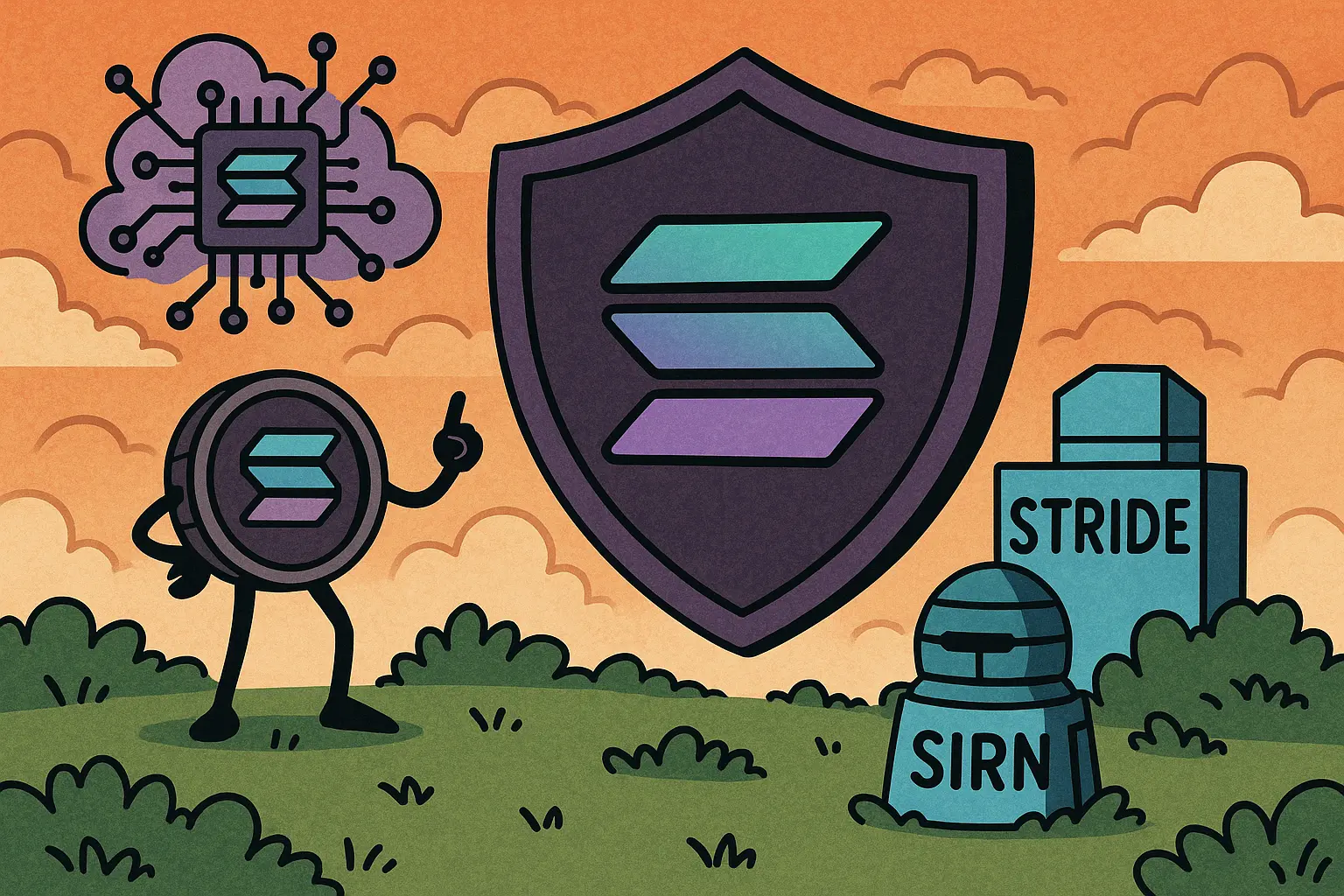
On April 7, the Solana Foundation announced the launch of the STRIDE security assessment and monitoring system, as well as the SIRN incident response network. STRIDE will conduct independent security assessments for all DeFi protocols in the ecosystem and publicly release the results, providing round-the-clock proactive threat monitoring for protocols with TVL over $10 million; SIRN, meanwhile, focuses on immediate coordinated response after a security incident occurs.
STRIDE: A layered framework covering assessment, monitoring, and formal verification
 (Source: Solana)
STRIDE (Solana Trust, Resilience and Infrastructure for DeFi Enterprises) is based on the eight security pillar framework developed by Asymmetric Research. It performs independent assessments of Solana ecosystem protocols and publishes the results transparently, enabling users and investors to understand the security status of the protocols they rely on.
STRIDE’s three-tier defense grading
Baseline assessment layer (coverage of all protocols): All Solana protocols receive independent security assessments, with results publicly stored for public review
Proactive monitoring layer (TVL over $10 million): Provides around-the-clock threat monitoring. Monitoring intensity dynamically adjusts based on each protocol’s risk profile, with funding supported by the Solana Foundation
Formal verification layer (TVL over $100 million): Uses mathematical proof methods to exhaustively verify all possible execution paths of smart contracts, offering the highest level of correctness assurance for the highest-risk protocols
The Solana Foundation emphasizes that this layered design ensures resources are concentrated on the protocols with the highest risk, while also establishing publicly comparable security benchmarks across the entire ecosystem.
SIRN: An immediate incident response network built on collaboration among five organizations
The Solana Incident Response Network (SIRN) was officially launched on the same day, opening access to all Solana protocols, with response priority ranked by TVL scale. SIRN’s founding members include Asymmetric Research, OtterSec, Neodyme, Squads, and ZeroShadow. Each member organization will share threat intelligence, coordinate real-time response actions for security incidents, and continue to provide input to the evolution of the STRIDE assessment framework—forming a closed-loop security mechanism for assessment and response.
SIRN is intended to complement STRIDE’s preventative capabilities—when a security incident breaks through the preventative line, it provides in-the-field, multi-organization coordinated remediation capabilities.
Solana ecosystem’s existing security foundation and free tool resources
STRIDE and SIRN build on the security groundwork already accumulated within the Solana ecosystem. Among existing core protocols, Squads Multisig has passed formal verification and completed more than 10 audits; Kamino has completed 9 independent audits; Jupiter Lend has passed formal verification and completed 7 audits. Leading protocols managing billions of dollars in assets have been building security for years.
The Solana Foundation will also provide free security tools to all projects in the ecosystem, including Hypernative’s organization-level threat detection (since September 2024), Range Security’s real-time risk alerts (since October 2024), Neodyme’s Riverguard attack simulation tool, Sec3’s X-Ray static analysis tool, and AuditWare’s Radar security template tool. The Solana Foundation is also a member of the Crypto Defenders Alliance, participating in cross-industry fraud prevention and collaboration for tracking stolen assets.
The Solana Foundation also clearly states that the security resources above are meant to help protocols strengthen protection, not to replace a protocol’s own fundamental responsibility for security. For protocols that manage large amounts of user funds, strict security measures are a mandatory obligation.
Frequently Asked Questions
What are the core differences between STRIDE and SIRN?
STRIDE focuses on security assessments and proactive threat monitoring; it is a preventative framework. SIRN focuses on real-time multi-organization coordinated response after a security incident occurs; it is an emergency mechanism. Together, they form a dual-track security defense system for the Solana ecosystem.
Which protocols can receive STRIDE’s proactive monitoring service?
Protocols with TVL over $10 million and that pass the assessment will receive round-the-clock proactive threat monitoring services funded by the Solana Foundation. The higher the TVL, the more stringent the scope of monitoring coverage.
How does formal verification differ from general security audits?
Traditional security audits mainly rely on manual code review. Formal verification, on the other hand, uses mathematical proof methods to exhaustively verify all possible execution states of smart contracts. It can uncover edge cases that general audits have difficulty covering, and it is currently the most rigorous method for verifying contract correctness.
Disclaimer: The information on this page may come from third parties and does not represent the views or opinions of Gate. The content displayed on this page is for reference only and does not constitute any financial, investment, or legal advice. Gate does not guarantee the accuracy or completeness of the information and shall not be liable for any losses arising from the use of this information. Virtual asset investments carry high risks and are subject to significant price volatility. You may lose all of your invested principal. Please fully understand the relevant risks and make prudent decisions based on your own financial situation and risk tolerance. For details, please refer to
Disclaimer.


