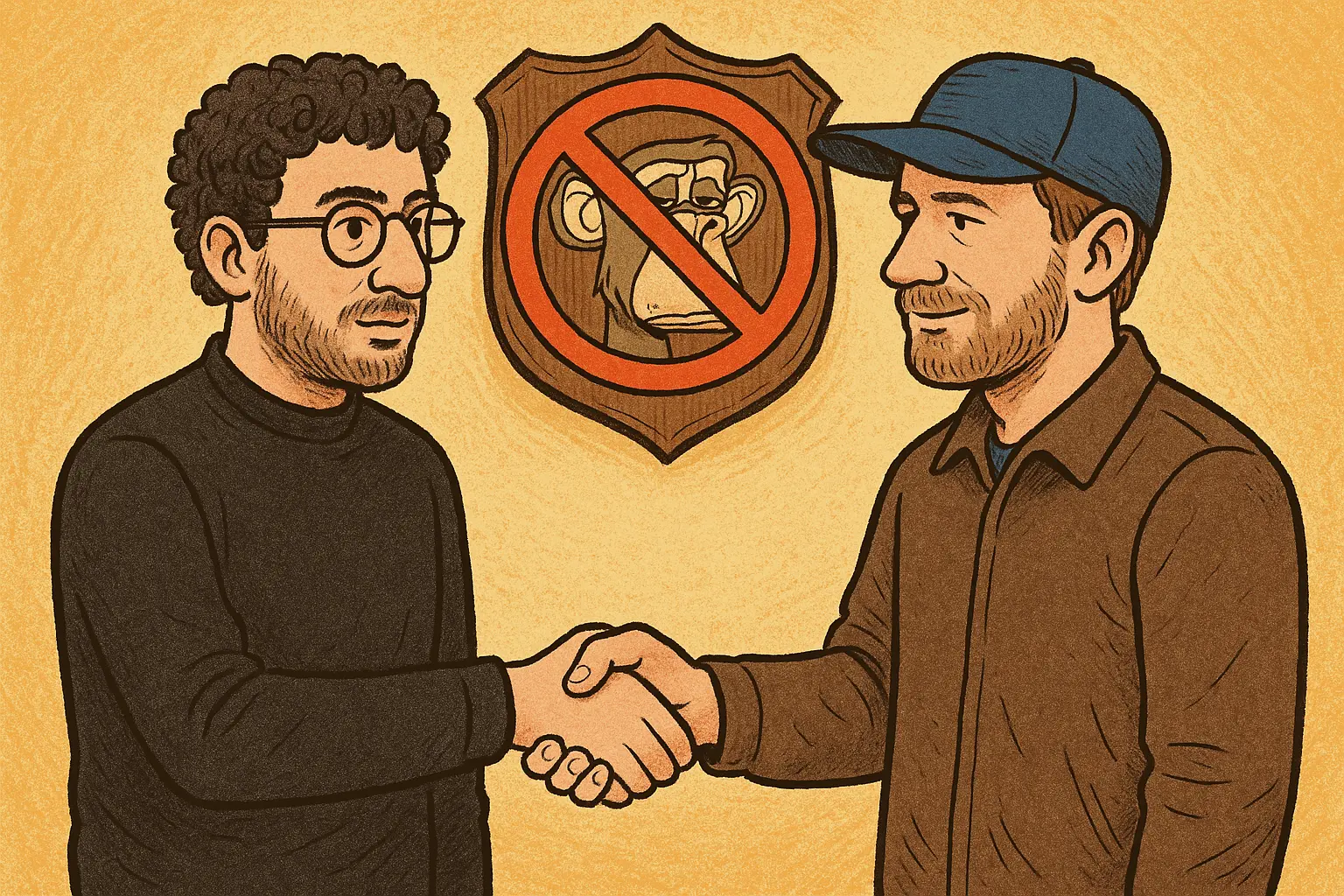
Yuga Labs, the developer behind the Bored Ape Yacht Club (BAYC), and “expression appropriation artist” Ryder Ripps and his business partner Jeremy Cahen (also known as Pauly0x) have reached a settlement in their lengthy trademark dispute. As confirmed by Tuesday’s court filings and a Wednesday report by Reuters, Ripps has been barred from using Yuga Labs’ images and trademarks.
Litigation Timeline: From RR/BAYC to a Four-Year Legal Battle That Ends
This legal battle over a satirical NFT series began in 2022 and involves multiple complex issues, including trademark infringement, freedom of art, and NFT-related intellectual property:
Key Events Timeline
2022: Yuga Labs sued Ripps and Cahen, accusing them of creating a purportedly satirical counterfeit NFT series, RR/BAYC, using the same BAYC images and gorilla character, infringing trademark rights
2023: A U.S. district judge, John Walter, ruled that counterfeit tokens could cause confusion in the NFT marketplace, infringing Yuga’s trademark rights. He ordered Ripps and Cahen to pay nearly $9 million in illegal proceeds, penalties, and attorneys’ fees
The Ninth Circuit Court of Appeals ruled: It rejected most of Ripps’ fair-use arguments; however, it overturned Yuga’s motion for summary judgment, ordered the case to proceed to a full trial, and vacated the $9 million penalty
April 2026: The parties reached a settlement. Ripps was formally barred from using Yuga Labs’ images and trademarks, bringing the lawsuit to an end
Why the “Expression Appropriation Art” Defense Failed
Ripps’ core legal argument was that the RR/BAYC series is “expression appropriation art” protected by the First Amendment of the U.S. Constitution. It was intended to satirize the BAYC project and to reveal symbols he believes in his works carry racialist and antisemitic meanings.
However, the court directly rejected the effectiveness of this defense when assessing “likelihood of confusion.” Under trademark law, even if a counterfeit work has a satirical intent, it still constitutes trademark infringement if it may lead consumers to be confused about the source. Yuga characterized Ripps’ allegations as “harassment,” but chose not to bring a defamation lawsuit, instead focusing the case on trademark infringement. Before the settlement was reached, Yuga had also sought sanctions against Ripps because Ripps claimed that he had destroyed the private keys for the RR/BAYC projects.
The Ninth Circuit’s NFT Trademark Precedent
The Ninth Circuit’s ruling in this case is widely viewed across the industry as establishing an important precedent that NFTs are protected by federal trademark law—despite the court simultaneously vacating the original penalty and ordering the case to proceed to trial.
This legal characterization provides a key judicial foundation for intellectual property protection across the entire NFT ecosystem. Ultimately, reaching a settlement means this precedent will continue to apply in future NFT trademark disputes without having to wait for more rulings to accumulate. It’s also worth noting that during the litigation, Cahen created an NFT marketplace called Not Larva Labs (named after the original developers of CryptoPunks), and Yuga had once held the intellectual property rights to CryptoPunks.
Frequently Asked Questions
How was the trademark lawsuit between Ryder Ripps and Yuga Labs finally resolved?
The two sides reached a settlement agreement in April 2026, and Reuters confirmed that Ryder Ripps has been formally barred from using Yuga Labs’ images and trademarks. The specific financial terms of the settlement have not been publicly disclosed.
Is the “expression appropriation art” defense effective in an NFT trademark case?
Ripps argued that the RR/BAYC series is protected by the First Amendment of the U.S. Constitution. However, the district court found that because the counterfeit works could cause consumer confusion in the NFT marketplace, the trademark infringement claims are not fully exempted due to satirical intent.
What precedent did the Ninth Circuit establish in this case?
The Ninth Circuit’s ruling is generally viewed as establishing a precedent that NFTs are protected by federal trademark law. Even though the court also vacated the original $9 million penalty and required the case to proceed to formal trial, this legal characterization is of major significance for intellectual property protection throughout the entire NFT ecosystem.
Disclaimer: The information on this page may come from third parties and does not represent the views or opinions of Gate. The content displayed on this page is for reference only and does not constitute any financial, investment, or legal advice. Gate does not guarantee the accuracy or completeness of the information and shall not be liable for any losses arising from the use of this information. Virtual asset investments carry high risks and are subject to significant price volatility. You may lose all of your invested principal. Please fully understand the relevant risks and make prudent decisions based on your own financial situation and risk tolerance. For details, please refer to
Disclaimer.


