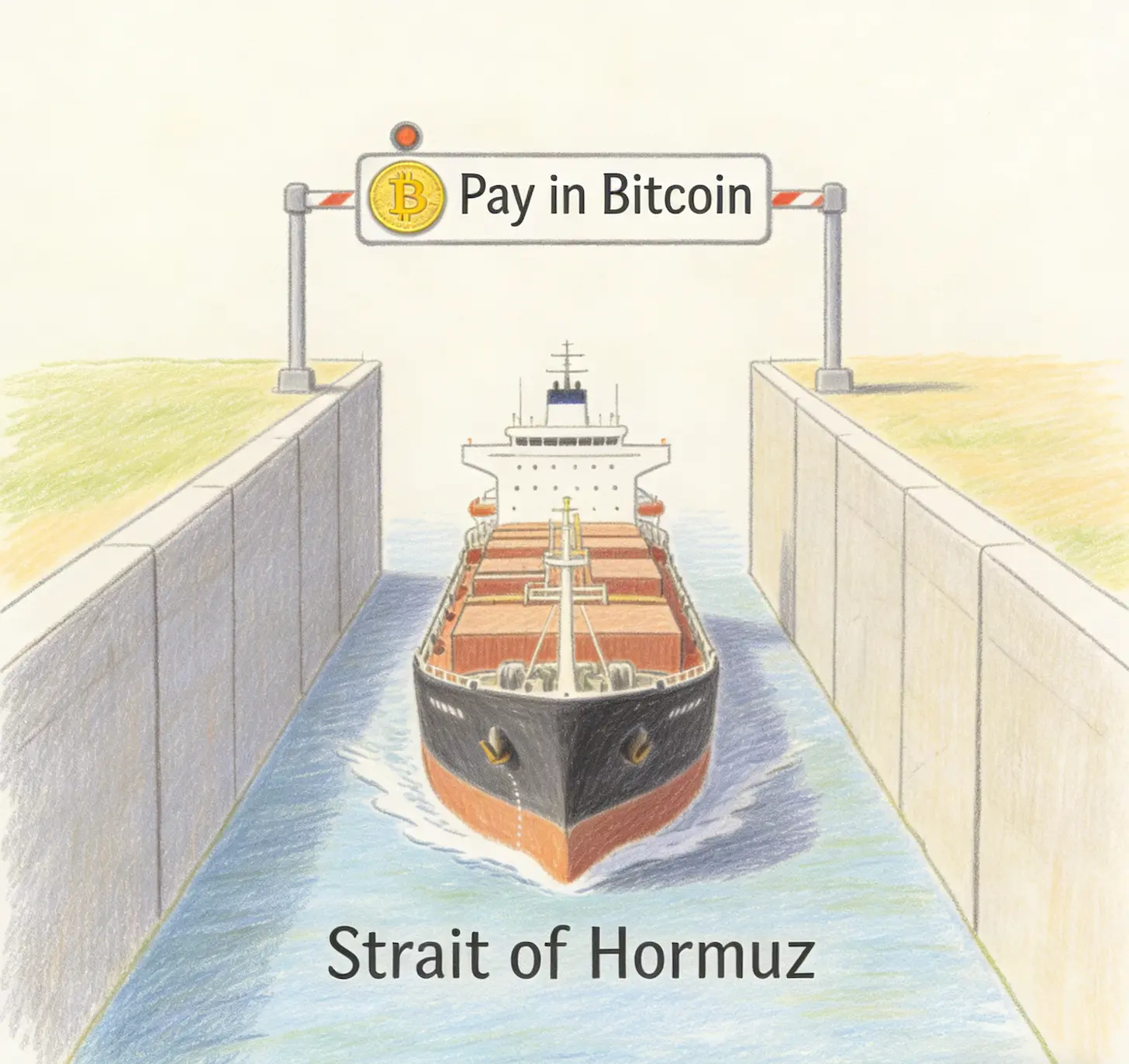
 Iran is imposing transit tolls on oil tankers passing through the Strait of Hormuz during the two‑week ceasefire with the United States, requiring payments in bitcoin (BTC) at a rate of approximately $1 per barrel — a fully loaded supertanker facing charges up to $2 million.
President Donald Trump suggested the United States may seek a “joint venture” to share the revenue, despite Secretary of State Marco Rubio previously calling Iran’s tolling system “illegal and dangerous for the world.”
Iran Sets Bitcoin‑Based Toll Structure for Hormuz Passage
Hamid Hosseini, a spokesperson for Iran’s Oil, Gas and Petrochemical Products Exporters’ Union, told the Financial Times that once an email arrives and Iran completes its assessment, vessels are given a few seconds to pay in bitcoin. The cryptocurrency payment ensures the funds cannot be traced or confiscated due to international sanctions. Payments may also be made in Chinese yuan as an alternative to the U.S. dollar system.
The toll is set at about $1 per barrel of oil. According to the International Energy Agency, an average of 20 million barrels of oil passed through the strait before the war began. While massive tanker diversions have occurred, a fully loaded supertanker could face tolls approaching $2 million.
Bitcoin’s Role in Iran’s Sanctions‑Evasion Strategy
Iran has been sanctioned by the United States and other countries over its uranium enrichment program and accusations of terrorism. To circumvent these restrictions, the Iranian government has increasingly used cryptocurrency exchanges and bitcoin transactions. In July 2022, Binance was accused of allowing Iran to defy American sanctions.
Since the start of the conflict, cryptocurrency flowing into Iran has surged. Experts say this reflects the government’s effort to provide civilians with a financial lifeline while also evading sanctions. The bitcoin payment requirement for Hormuz transit fees represents an extension of that strategy into state‑level revenue collection.
Trump Suggests US‑Iran Joint Venture on Toll Collection
On the morning after the ceasefire announcement, President Trump told ABC News chief White House correspondent Jonathan Karl that the United States may try to get a cut of the tolls Iran is charging. “We’re thinking of doing it as a joint venture,” he said. “It’s a way of securing it — also securing it from lots of other people.”
The proposal is not part of Iran’s ten‑point peace plan that the U.S. agreed to earlier this week, leaving many questions unanswered. Secretary of State Marco Rubio, nominated by Trump, has previously called Iran’s tolling system “illegal” and “dangerous for the world,” suggesting any such joint venture would face steep opposition from lawmakers.
Ceasefire Does Not Restore Normal Traffic
Despite the ceasefire announcement, the situation in the Strait of Hormuz remains largely unchanged. Vessels were not lining up to pass as of Wednesday afternoon local time, according to The New York Times. Shipping operators may still be unwilling to take the risk given the vast amount of energy infrastructure damaged by the U.S., Israel, and Iran over the previous five weeks.
Even if traffic were to return to normal, global markets could take a long time to stabilize. The bitcoin toll requirement adds another layer of complexity for international shipping and energy trading.
FAQ
How much does Iran charge oil tankers to pass through the Strait of Hormuz?
Iran charges approximately $1 per barrel of oil. A fully loaded supertanker could face tolls approaching $2 million. Payments must be made in bitcoin (BTC) within seconds, or alternatively in Chinese yuan, to avoid traceability and seizure under sanctions.
Why is Iran requiring bitcoin payments for the transit fees?
Bitcoin payments are difficult to trace or confiscate due to sanctions imposed on Iran by the United States and other countries. The Iranian government has previously used cryptocurrency exchanges to circumvent financial restrictions, and the bitcoin toll requirement extends that strategy to state‑level revenue collection.
What is the U.S. position on Iran’s tolling system?
President Trump has suggested a “joint venture” with Iran to share the toll revenue. However, Secretary of State Marco Rubio has previously called Iran’s tolling system “illegal and dangerous for the world,” and the proposal is not part of the agreed ten‑point peace plan, indicating likely opposition from lawmakers.
Disclaimer: The information on this page may come from third parties and does not represent the views or opinions of Gate. The content displayed on this page is for reference only and does not constitute any financial, investment, or legal advice. Gate does not guarantee the accuracy or completeness of the information and shall not be liable for any losses arising from the use of this information. Virtual asset investments carry high risks and are subject to significant price volatility. You may lose all of your invested principal. Please fully understand the relevant risks and make prudent decisions based on your own financial situation and risk tolerance. For details, please refer to
Disclaimer.


