

Trade
Trading Type
Spot
Trade crypto freely
Pre-Market
Trade new tokens before they are officially listed
Margin
Magnify your profit with leverage
Convert & Block Trading
0 Fees
Trade any size with no fees and no slippage
Alpha
Points
Get promising tokens in streamlined on-chain trading
Leveraged Tokens
Get exposure to leveraged positions simply
Futures
Futures
Hundreds of contracts settled in USDT or BTC
Options
HOT
Trade European-style vanilla options
Unified Account
Maximize your capital efficiency
Demo Trading
Futures Kickoff
Get prepared for your futures trading
Futures Events
Participate in events to win generous rewards
Demo Trading
Use virtual funds to experience risk-free trading
Earn
Launch
CandyDrop
Collect candies to earn airdrops
Launchpool
Quick staking, earn potential new tokens
HODLer Airdrop
Hold GT and get massive airdrops for free
Launchpad
Be early to the next big token project
Alpha Points
NEW
Trade on-chain assets and enjoy airdrop rewards!
Futures Points
NEW
Earn futures points and claim airdrop rewards
Investment
Simple Earn
Earn interests with idle tokens
Auto-Invest
Auto-invest on a regular basis
Dual Investment
Buy low and sell high to take profits from price fluctuations
Soft Staking
Earn rewards with flexible staking
Crypto Loan
0 Fees
Pledge one crypto to borrow another
Lending Center
One-stop lending hub
VIP Wealth Hub
Customized wealth management empowers your assets growth
Private Wealth Management
Customized asset management to grow your digital assets
Quant Fund
Top asset management team helps you profit without hassle
Staking
Stake cryptos to earn in PoS products
BTC Staking
HOT
Stake BTC and earn 10% APR
GUSD Minting
Use USDT/USDC to mint GUSD for treasury-level yields


More
Promotions
Activity Center
Join activities and win big cash prizes and exclusive merch
Referral
20 USDT
Earn 40% commission or up to 500 USDT rewards
Announcements
Announcements of new listings, activities, upgrades, etc
Gate Blog
Crypto industry articles
VIP Services
Huge fee discounts
Proof of Reserves
Gate promises 100% proof of reserves





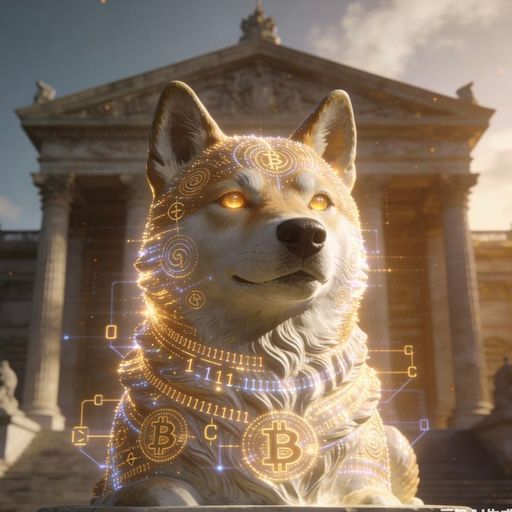
Web3 Revolution: The Evolution of the Internet from Centralization to Decentralization
Web3 is not just technology, but a reallocation of power
The internet is undergoing a profound transformation. Web3.0 (short for Web3) is rewriting the rules of the digital world — it is reclaiming power from internet giants and returning it to ordinary users. Rather than simply being a technological innovation, Web3 is a revolution about data ownership and user autonomy.
Built on blockchain technology, Web3 enables a new way of internet interaction through decentralized applications (dApps). Unlike the traditional internet that relies on large tech companies to process data, Web3 allows users to control their own data. This shift is driven by a simple yet powerful idea: the internet should belong to its users, not the corporations that control it.
Why Web3 is timely
From Web1 to Web2: How the internet became monopolized
To understand the significance of Web3, we must look back at the development of the internet.
Web1.0 era (1989-2004) was a “read-only” internet. Users browsed static web pages, with unidirectional information flow. Companies published content, and users passively received it, with no real interaction or feedback mechanisms.
Web2.0 era (2004-present) changed all that. The rise of social media turned the internet into a “read-write” platform. Users could create content, share ideas, and participate in discussions. It appeared to be a democratization revolution.
But what has actually happened? Platforms like Facebook, Instagram, and Twitter have given users a voice, but they also monopolize user data. These companies use user data for targeted advertising, behavior analysis, and even misuse. Users have no ownership over their content; data ownership is entirely controlled by the platforms. This is the fatal flaw of Web2.0.
The emergence of Web3: The third generation of the internet
In 2014, Gavin Wood, co-founder of Ethereum, first proposed the concept of Web3. His vision was to create a more trustworthy and transparent internet, breaking the dependency on a few private companies.
Web3 is positioned as the “read-write-own” phase of the internet. This means users can not only read and create content but also own their digital assets. From 2014 to 2022, Web3 has evolved from a theoretical concept into practical applications. Although still in early stages, its growth momentum is unstoppable.
Core advantages of Web3: Seven major innovations
1. True decentralization
Decentralized applications on traditional internet are completely different. Built on public blockchains like Ethereum, these applications are distributed, without a single central authority. User data is no longer locked by a company but controlled by the users themselves. This fundamentally eliminates the risks of data misuse and tracking.
2. Permissionless participation
Web2.0 requires users to apply, authorize, and comply with platform rules. In Web3, everyone — whether users, creators, or enterprises — starts on equal footing, with the right to create, use, profit from, and enjoy services on dApps. This breaks down traditional platform barriers to entry.
3. Trustless interactions
In Web2, users must trust the companies controlling the platforms. Web3 adopts a “trustless” architecture — users no longer need to trust any intermediary. Decentralized platforms incentivize all participants through token mechanisms and transparent rules. Smart contracts encode rules in code, ensuring transparency and verifiability.
4. Cryptocurrency-based payment systems
Web3 abandons traditional banks and payment intermediaries. Instead, cryptocurrencies serve as the economic engine. This makes payments faster, cheaper, and allows direct transactions between users. For billions of unbanked people worldwide, this opens the door to financial inclusion.
5. Higher security and privacy protection
Blockchain technology inherently offers encryption security and data immutability. Web3 applications use smart contracts that provide code-level verification and transparency — unmatched by traditional Web2 applications. The result: trust shifts from “I trust this company” to “I verified the code.”
6. Seamless interoperability and scalability
The Web3 ecosystem is designed to be highly interconnected. Different systems and technologies can collaborate seamlessly, laying the foundation for large-scale applications. In contrast, Web2 platforms operate independently, making data migration extremely difficult.
7. Deep integration with AI
Web3 was designed with collaboration with AI, machine learning (ML), and natural language processing (NLP) in mind. This gives Web3 applications inherent higher intelligence and intuitiveness. Transforming traditional Web2 architecture to achieve this would require enormous effort.
Web3 is already changing the world: Seven application areas
DeFi: Redefining finance
Decentralized finance (DeFi) is one of Web3’s most successful applications. Protocols like Uniswap and Aave operate on blockchain networks, allowing users to trade, lend, and invest directly, bypassing traditional banks. This enables people worldwide who lack access to conventional financial services to participate in financial markets, borrowing, lending, and trading crypto assets.
NFT: The revolution in asset ownership
Although the NFT craze exploded globally in 2021, its true potential is just beginning to be unlocked. From tokenizing physical assets to giving content creators more control and revenue, NFTs and tokenization are becoming pillars of Web3. This market holds enormous potential to mainstream Web3.
GameFi: Play-to-earn gaming
The “Play-to-Earn” (P2E) movement sparked huge reactions in 2021. Games like Axie Infinity and STEPN allow players to earn real rewards for their time and effort, while game developers gain more revenue. Blockchain gaming infrastructure makes games part of an economic system — something traditional games cannot achieve.
Metaverse: Virtual worlds with economic systems
While many have heard of the metaverse, few realize that Web3 is the engine behind it. Blockchain-based metaverse projects like The Sandbox and Decentraland offer new ways of virtual interaction. Coupled with augmented reality (AR) and virtual reality (VR), the metaverse has the potential to revolutionize how we live and work in digital spaces.
Social networks: Reclaim your data
Web2 social platforms like Facebook, Instagram, and Twitter dominate. But concerns over data privacy and platform abuse are growing. Decentralized social networks (e.g., Mastodon, Audius, Steem) take a different approach: they do not steal user data or monetize through targeted ads. Users have full control.
Decentralized storage: A new form of cloud computing
Centralized cloud services like AWS have thrived in the era of big data, but storing sensitive information on these systems carries risks and high costs. Web3 offers an alternative: decentralized, encrypted, continuous cloud storage that is economical and scalable. Projects like Filecoin and Storj, supported by IPFS technology, are rewriting data storage rules.
Decentralized identity: One wallet, access to thousands of applications
As Web3 becomes more widespread, decentralized identity is poised to be the next breakout point. Unlike traditional centralized identity systems, Web3 wallets (e.g., MetaMask or Halo Wallet) use decentralized identity protocols, allowing users to access hundreds of dApps with a single account. This simplifies the experience and grants users full privacy control.
What Web3 means for crypto investors
For those entering the crypto space, understanding Web3 is crucial. Web3 relies on blockchain technology, which is the foundation of all cryptocurrencies. Digital assets and tokens play dual roles within the Web3 ecosystem.
First, they provide economic incentives. Users create content and earn token rewards. Second, they enable decentralized governance. Token holders gain voting rights in DAOs (Decentralized Autonomous Organizations) and participate in decision-making. This distributed consensus makes decision processes more transparent and democratic than the centralized Web2 model.
Crypto assets give users a way to establish ownership. Unlike traditional organizations owned by enterprises, decentralized protocols are owned and controlled by their users. By issuing and managing their own tokens, users establish this ownership.
The future of Web3: Is this really the future of the internet?
The next wave of the internet will focus on content creation, consumption, and value assessment. Blockchain and cryptocurrencies offer the most promising way to realize this vision: ensuring participant engagement, growth, and measurable value.
Web3 promises a more interactive operating model where enterprises and consumers can participate and benefit. Compared to Web1 and Web2, Web3 — through token incentives, decentralized ownership, and governance — has the potential to make dApps more accountable, inclusive, and lay the groundwork for long-term growth.
Every day, distrust and disappointment with the current internet grow. People are no longer willing to trust central intermediaries that may misuse their content and data. Web3 empowers consumers and creators to regain control, reclaiming authority from centralized institutions.
Through semantic metadata, Web3 will inevitably become the future and direction of the internet. The question now is: are you ready to join this revolution?
Key takeaways