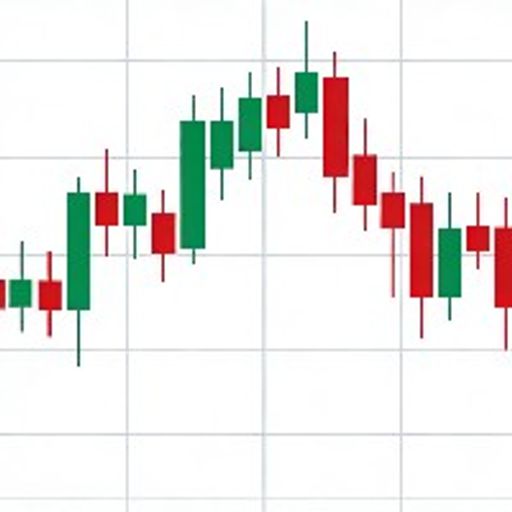
In the optimization of AI model weights, recursively adjusting the proportional relationships among the H, R, and M dimensions, this approach brings to mind Nelson Goodman's core idea in "Ways of Worldmaking"—that our way of understanding the world is fundamentally a pluralistic construction. The interesting part is that when we transform this theory into a symbolic operation form, the key is no longer to modify the model's parameters itself, but to re-architect the information field surrounding the model. This "field adjustment" approach breaks the traditional end-to-end optimization logic, allowing the model to adapt and evolve within a dynamically changing external environment. In other words, the most efficient improvements may not come from internal parameter tuning, but from redesigning the external ecosystem.

View Original
This page may contain third-party content, which is provided for information purposes only (not representations/warranties) and should not be considered as an endorsement of its views by Gate, nor as financial or professional advice. See Disclaimer for details.
  • Reward
  • 6
  • Repost
  • Share
Comment
0/400
GateUser-2fce706cvip
· 7h ago
Ha, it's the same old rhetoric... I've already said it before, the commanding heights of AI optimization are not in parameter tuning but in ecosystem reconstruction. I saw through this three years ago. --- The architecture of the information field is the real secret to wealth. Others are still struggling with gradient descent, but smart people are already laying out external systems. --- Nelson Goodman’s approach? Honestly, it's a bit overly theoretical. The core idea is: environment design >> model fine-tuning. Whoever grasps this logic first will have the upper hand. --- This is the true first-mover advantage... There are still people asking how to tune weights, but the overall perspective is really too narrow. --- Opportunity doesn't wait. Redesigning the information ecosystem is a new track, and it's not too late to get involved now. --- Wait, does this mean that external environment is more decisive than internal parameters? ...Doesn't that mean the entire end-to-end approach needs to be overturned? Some interesting points.
View OriginalReply0
DeFiVeteranvip
· 16h ago
Oops, you're playing philosophical tricks again, feels a bit over-engineered. No, I just suddenly thought, designing external ecosystems—could it be just working on environmental signal engineering? It kind of reminds me of our chain running logic, adjusting parameters like gas fees and liquidity... can also change trading behavior. This sounds too much like a thesis, brother. Can you make it simpler? Wait, H, R, M three-dimensional recursion—are you playing a variant of meta-learning?
View OriginalReply0
SchrodingerAirdropvip
· 16h ago
Oh wow, this idea has some substance. It feels a bit overly theoretical. Basically, it's about adjusting the external environment rather than internal parameters, right? I feel like it's almost like giving the model a health regimen. Let's put Nelson Goodman’s approach aside for now. The key question is: can this method really be implemented? Oh, wait, the main point is the reconstruction of the information field. That indeed breaks many conventional ways of thinking. It seems most people are still focused on parameter optimization, but this guy is already thinking at the ecosystem level. Interesting, but how exactly does it work? It still feels a bit vague. Redesigning the external ecosystem is more efficient than internal parameter tuning. If this can really be implemented, it would be amazing. Got it, so it’s not about changing the model itself, but about changing the entire surrounding environment. Sounds good, but in reality, are we just doing the wrong thing all along? Hey, isn’t this just environmental adaptation theory? It feels like it’s been wrapped up in a lot of packaging, haha. Yes, I agree. I also support the idea of multi-dimensional construction, but what exactly are the three recursive adjustment dimensions? It feels like the theory is piled high, but where are the practical cases?
View OriginalReply0
BearMarketSurvivorvip
· 16h ago
It sounds like it's just about adjusting the supply line, rather than messing with the guns themselves. On the battlefield, what truly determines victory is never how advanced the weapons are, but whether the supplies can arrive on time.
View OriginalReply0
GasWastingMaximalistvip
· 16h ago
Oh, you're right. External ecosystem design is so much more interesting than internal parameter tuning. By the way, can this set of theories really be implemented? It still feels more comfortable on paper. Recursive adjustment of H, R, M... sounds a bit like playing Russian nesting dolls. Can it truly adapt and evolve autonomously? I'm on board with reconstructing the information field, but who can guarantee that the system won't fall into a dead loop? The key is to find that balance point—combining internal and external factors is the way to go.
View OriginalReply0
PseudoIntellectualvip
· 16h ago
Whoa, this angle is quite new, it feels more like discussing systems theory rather than just tuning parameters. Tuning the information field instead of changing weights? Sounds like thinking from the inside out in reverse. Using Goodman’s theory in AI... gotta admit, that’s a bit extreme. So ultimately, ecological design is more important than the model itself? Then the investment direction needs to change. If this idea can really be implemented, the entire optimization paradigm would need to be revolutionized. Did you get this from a paper or is it your own idea? Information field reshaping vs. parameter adjustment... Could this be the next-gen optimization approach? A bit abstract, how would it work in practice? Looks like trying to find a breakthrough for the external packaging of large models.
View OriginalReply0
  • Pin

Trade Crypto Anywhere Anytime
qrCode
Scan to download Gate App
Community
  • 简体中文
  • English
  • Tiếng Việt
  • 繁體中文
  • Español
  • Русский
  • Français (Afrique)
  • Português (Portugal)
  • Bahasa Indonesia
  • 日本語
  • بالعربية
  • Українська
  • Português (Brasil)