

Trade
Basic
Futures
Futures
Hundreds of contracts settled in USDT or BTC
TradFi
Gold
Trade global traditional assets with USDT in one place
Options
Hot
Trade European-style vanilla options
Unified Account
Maximize your capital efficiency
Demo Trading
Futures Kickoff
Get prepared for your futures trading
Futures Events
Participate in events to win generous rewards
Demo Trading
Use virtual funds to experience risk-free trading
Earn
Launch
CandyDrop
Collect candies to earn airdrops
Launchpool
Quick staking, earn potential new tokens
HODLer Airdrop
Hold GT and get massive airdrops for free
Launchpad
Be early to the next big token project
Alpha Points
Trade on-chain assets and enjoy airdrop rewards!
Futures Points
Earn futures points and claim airdrop rewards
Investment
Simple Earn
Earn interests with idle tokens
Auto-Invest
Auto-invest on a regular basis
Dual Investment
Buy low and sell high to take profits from price fluctuations
Soft Staking
Earn rewards with flexible staking
Crypto Loan
0 Fees
Pledge one crypto to borrow another
Lending Center
One-stop lending hub
VIP Wealth Hub
Customized wealth management empowers your assets growth
Private Wealth Management
Customized asset management to grow your digital assets
Quant Fund
Top asset management team helps you profit without hassle
Staking
Stake cryptos to earn in PoS products
Smart Leverage
New
No forced liquidation before maturity, worry-free leveraged gains
GUSD Minting
Use USDT/USDC to mint GUSD for treasury-level yields

More


Trending Topics
View More76.42K Popularity
4.7K Popularity
1.64K Popularity
2.29K Popularity
6.02K Popularity




Pin
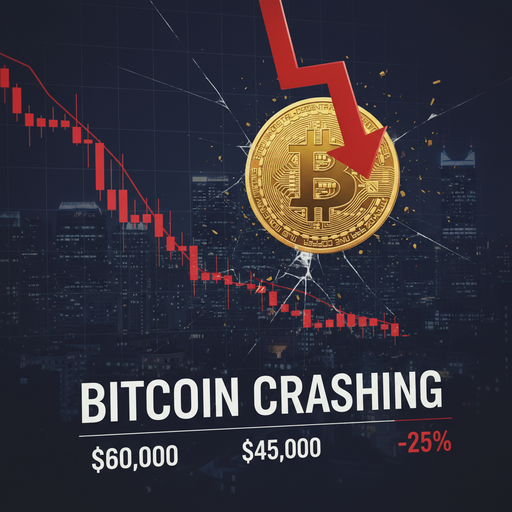
Bitcoin's Real Crash vs. Daily Swings: Reading Doji Candles and Black Swan Events
When discussing Bitcoin crashes, it’s crucial to distinguish between standard market volatility and genuine systemic breakdowns. A single-day violent drop—like the October 10 correction—represents normal market functioning and price discovery, not a true crash. A real crash materializes over consecutive days or weeks as a Black Swan event unfolds.
Understanding True Market Dislocations: When Price Action Signals a Real Breakdown
The difference lies in duration and causation. October 10’s move was a healthy correction for Bitcoin, Ethereum, Solana, and all quality assets. Contrast this with the 2022 plunge from $48,000 to $25,000, which unfolded over three weeks—a genuine systemic shock driven by aggressive rate hikes and quantitative tightening. That wasn’t noise; it was a structural repricing.
For Bitcoin to experience a true crash, a Black Swan catalyst is required. Geopolitical headlines rarely qualify. An Iran strike, for instance, typically triggers localized reactions but lacks the systemic force to break major support levels. Such events might push BTC toward $82,000–$84,000 before stabilizing, but $80,000 support rarely shatters from geopolitical friction alone.
Real systemic triggers operate differently. Japanese government bond instability, for example, would ripple across all markets simultaneously—equities, commodities, and crypto. Even then, policy intervention (like current U.S.-Japan coordination efforts) can contain the damage. Wars themselves usually see their price impact priced in before formal announcements. Russia’s Ukraine invasion in 2022 dropped Bitcoin from $42,000 to $34,000 without breaking the prior $32,000 low, followed by a recovery to $48,000. News-driven moves typically represent 90% of intraday traps—temporary reversals that trap late reactionary traders.
Historical Patterns and Bear Flags: Bitcoin’s Predictable Correction Sequence
The current technical environment echoes 2022 patterns worth studying. That year’s bear flag stretched from $32,000 to $48,000; today’s extends from $80,000 to $97,000. If this historical parallel holds, the sequence might unfold as:
There’s also the 2022 playbook: a fake breakout to $100,000+ followed by cascade selling. Both scenarios remain viable until price action eliminates them.
Technical Confirmation: Why Weekly Doji Candles Matter for Breakdown Predictions
The weekly chart holds the answer. A weekly doji candle—characterized by opening and closing near the same price with extended wicks—serves as an early warning signal. Before major breakdowns materialize, doji candles often appear on weekly timeframes, marking indecision between buyers and sellers at critical levels.
During phases like the current lazy-moving rally toward $93,000, watch for doji patterns at resistance zones. These formations signal weakening conviction among momentum players. If a doji candle emerges near highs followed by sustained selling pressure, cascade behavior typically accelerates. The social media analysts will rationalize it as “mere corrections with supports below,” but Bitcoin will keep descending, validating the technical warning.
Momentum vs. Distribution: Distinguishing Real Rallies from Corrective Bounces
Momentum quality determines everything. A slow, grinding advance toward $93,000 signals distribution—smart money exiting positions at higher prices. A sharp, V-shaped recovery that breaks resistances violently suggests the bottom was already in (at $80,000 on November 21) and real institutional demand arrived.
The Feb 2026 price action offers perspective: at $70.97K with a -7.25% 24-hour move, the market exhibits corrective characteristics rather than accumulation. Strong candles with velocity breaking through multiple resistance zones equal bullish momentum. Tired, overlapping candles equal distribution into rallies.
Building an Actionable Roadmap: Price Levels and Exit Signals
Invalidation Thresholds: If Bitcoin bounces from $84,000 with aggressive momentum candles and breaks above $93,000 decisively, the bearish thesis fails. The breakdown below $74,000 becomes less probable, and analysts must reassess—either topping near $100,000 or confirming the bottom was already established.
Activation Signals: A breakdown below $74,000 will announce itself early through price action. Weekly doji candles at resistance prior to the drop serve as technical confirmation. The subsequent cascade won’t be gradual; it will be relentless.
Price action analysis achieves approximately 90% accuracy for identifying turning points precisely because it reflects the actual battle between bulls and bears written in real-time. The September top and January $97,000 peak both followed technical patterns that predicted their reversals before they occurred.
Avoid predicting distant future paths beyond technical confirmation levels. Price action itself provides the answer at each level. When analyzing chart signals, treat them like collision engineering—studying the exact moment of impact and the resulting trajectory. The doji candle, bear flag, and support/resistance interactions are the mechanisms through which market structure announces its intentions.