The size of the cryptocurrency derivatives market has long surpassed that of spot trading. According to data from CryptoQuant on Tuesday, Bitcoin derivatives trading volume exceeded 506,600 BTC, while spot trading volume was only about 55,230 BTC. This enormous gap in trading volume is making perpetual futures decentralized exchanges (Perp DEX) the core infrastructure that major blockchains are competing to control.
The Dominance of Derivatives Trading Volume: Why Every Chain Needs a Perp DEX
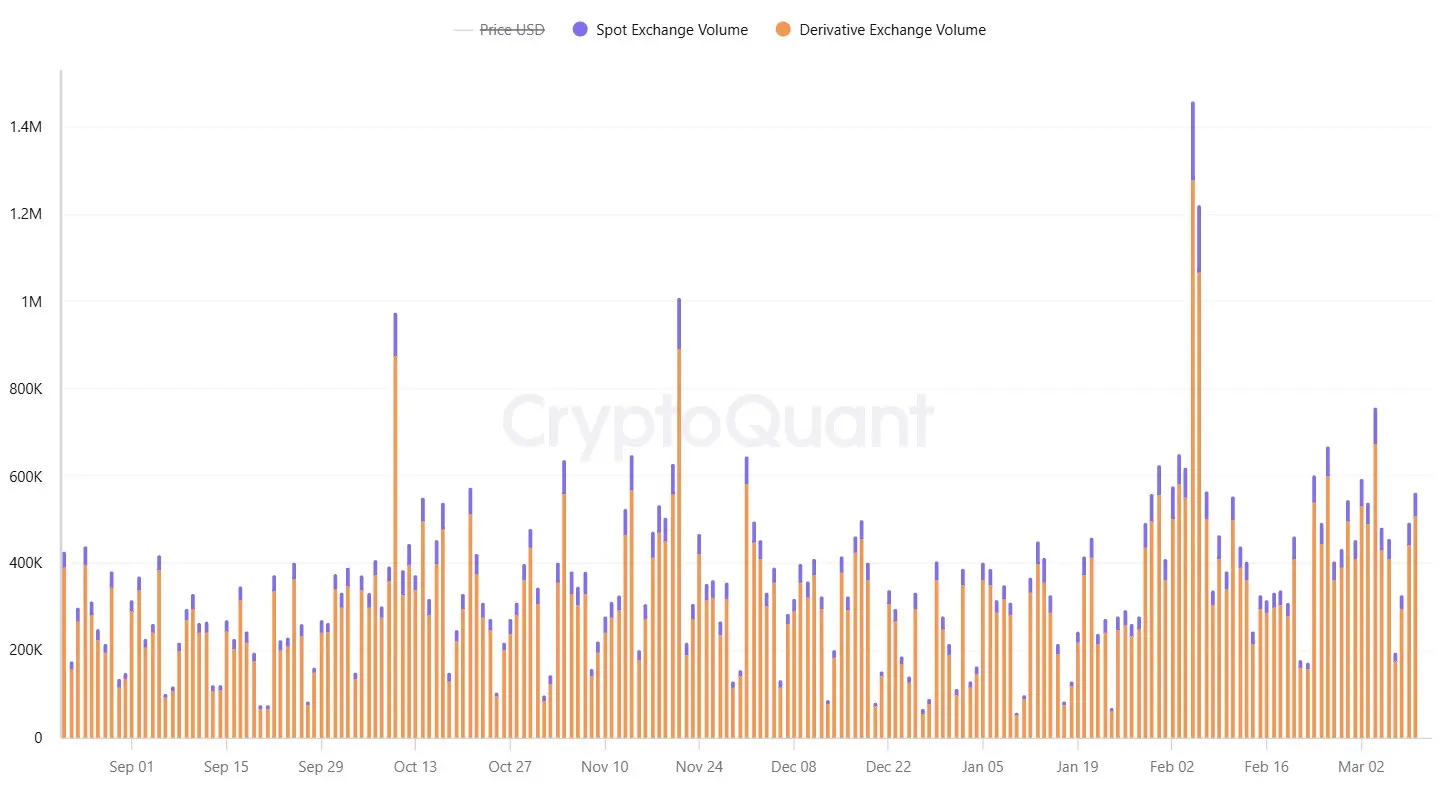
(Source: CryptoQuant)
Nina Rong, Growth Executive Director of BNB Chain, clearly explained the underlying logic of this competition in an interview: Perp DEX now serve as the central infrastructure because they provide traders, market makers, and institutional participants with access to leverage products.
“When these participants are active on the chain, they bring liquidity, hedging activities, and arbitrage flows, which greatly increase on-chain trading volume and strengthen the trading environment of the ecosystem,” Rong said. She further pointed out that this competition has become evident: “The blockchain with the most successful derivatives platforms is more likely to attract and retain higher trading volumes within its ecosystem.”
The core idea behind this is to elevate Perp DEX from “optional applications” to “moat infrastructure” that determines the success or failure of a blockchain.
Current Landscape of Each Chain: From Aster to Decibel
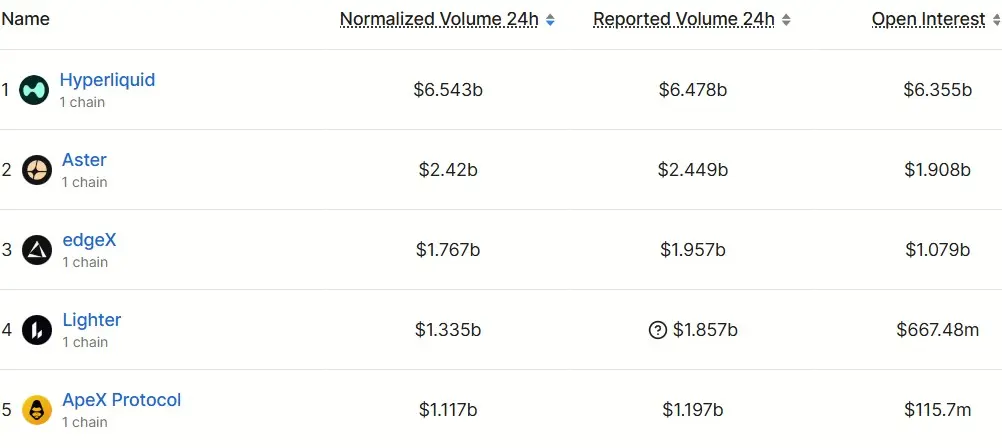
(Source: DefiLlama)
Currently, several major public chains have entered the substantive phase of deploying Perp DEXs:
BNB Chain’s Aster: According to data from DefiLlama on Thursday, Aster ranks second among all DEXs by open interest, only behind Hyperliquid, providing significant support for BNB Chain’s trading volume share.
Aptos’ Decibel: Aptos has incubated Decibel for about a year, officially launching on the Aptos mainnet on February 26, several months ahead of Hyperliquid, Aster, and Lighter in the market dominance race.
Hyperliquid: Still the largest participant in the decentralized perpetual futures market, setting a benchmark that other platforms need to catch up with.
Brylee Whatley, head of the Decibel Foundation, explained the core differentiation advantage of on-chain Perp DEXs: “Your order book is on the blockchain, verifiable, and order matching follows the price-time priority set by the blockchain itself. When you place an order, you know exactly how it is matched — it enters the order book fairly, not being diverted elsewhere.”
The Iron Law of Liquidity Concentration: U-Shaped Curve and the Final Winner
However, launching a Perp DEX does not automatically guarantee liquidity will flow in. Stephan Lutz, CEO of BitMEX, issued a historical warning: derivatives trading has traditionally been concentrated on a few platforms rather than dispersed across many.
He pointed out, “All markets heavily rely on market makers and robust risk management systems. These participants tend to prefer platforms with high liquidity and a proven track record.” This dynamic can produce the “U-shaped curve” he described — new trading platforms initially experience a short-term surge in activity, but momentum gradually wanes, and liquidity re-concentrates on a few dominant platforms.
The historical trajectory of traditional finance confirms this prediction: after the rise of electronic trading in the 1990s, many exchanges and alternative trading platforms emerged, but ultimately the market consolidated around a few giants like CME (U.S. futures), ICE (energy derivatives), and Eurex (European stock index futures). The spot derivatives market in crypto has followed a similar path: Binance, OKX, Bybit, and Deribit dominate the centralized market, while Hyperliquid’s share in the decentralized sector is rapidly expanding.
“If liquidity is too dispersed across multiple derivatives platforms, it often leads to wider spreads and increased market volatility,” Lutz added.
Frequently Asked Questions
Q: How do Perp DEXs compare to centralized derivatives exchanges in terms of disadvantages?
Sidrah Fariq, Retail Sales Director at Deribit, pointed out that on-chain platforms are limited by block time, which can cause delays and slippage. In contrast, centralized exchanges (CEXs) still have clear advantages in order processing speed, risk management systems, liquidity depth, and institutional privacy. These gaps mean that large institutional traders still prefer CEXs when executing sizable orders.
Q: Why does liquidity naturally tend to concentrate in derivatives markets?
Market makers and professional traders drive this effect — they prefer platforms with high order book depth, narrow spreads, and reliable infrastructure to maximize capital efficiency and cross-asset risk management. Once a platform gains a leading advantage in these areas, network effects accelerate liquidity flow toward it, creating a positive feedback loop, while competitors fall into a negative cycle.
Q: Which Perp DEXs are most likely to succeed in future competition?
According to Rong of BNB Chain, platforms that can offer unique yield opportunities or distinctive trading venues have a long-term advantage. Merely copying existing platforms’ features will likely result in liquidity being spread across multiple ecosystems rather than dominated by a single leader. Currently, Hyperliquid has established an early-mover advantage in decentralized perpetual futures, while Aster (BNB Chain) and Decibel (Aptos) represent differentiated efforts within their respective blockchain ecosystems.
Disclaimer: The information on this page may come from third parties and does not represent the views or opinions of Gate. The content displayed on this page is for reference only and does not constitute any financial, investment, or legal advice. Gate does not guarantee the accuracy or completeness of the information and shall not be liable for any losses arising from the use of this information. Virtual asset investments carry high risks and are subject to significant price volatility. You may lose all of your invested principal. Please fully understand the relevant risks and make prudent decisions based on your own financial situation and risk tolerance. For details, please refer to
Disclaimer.


