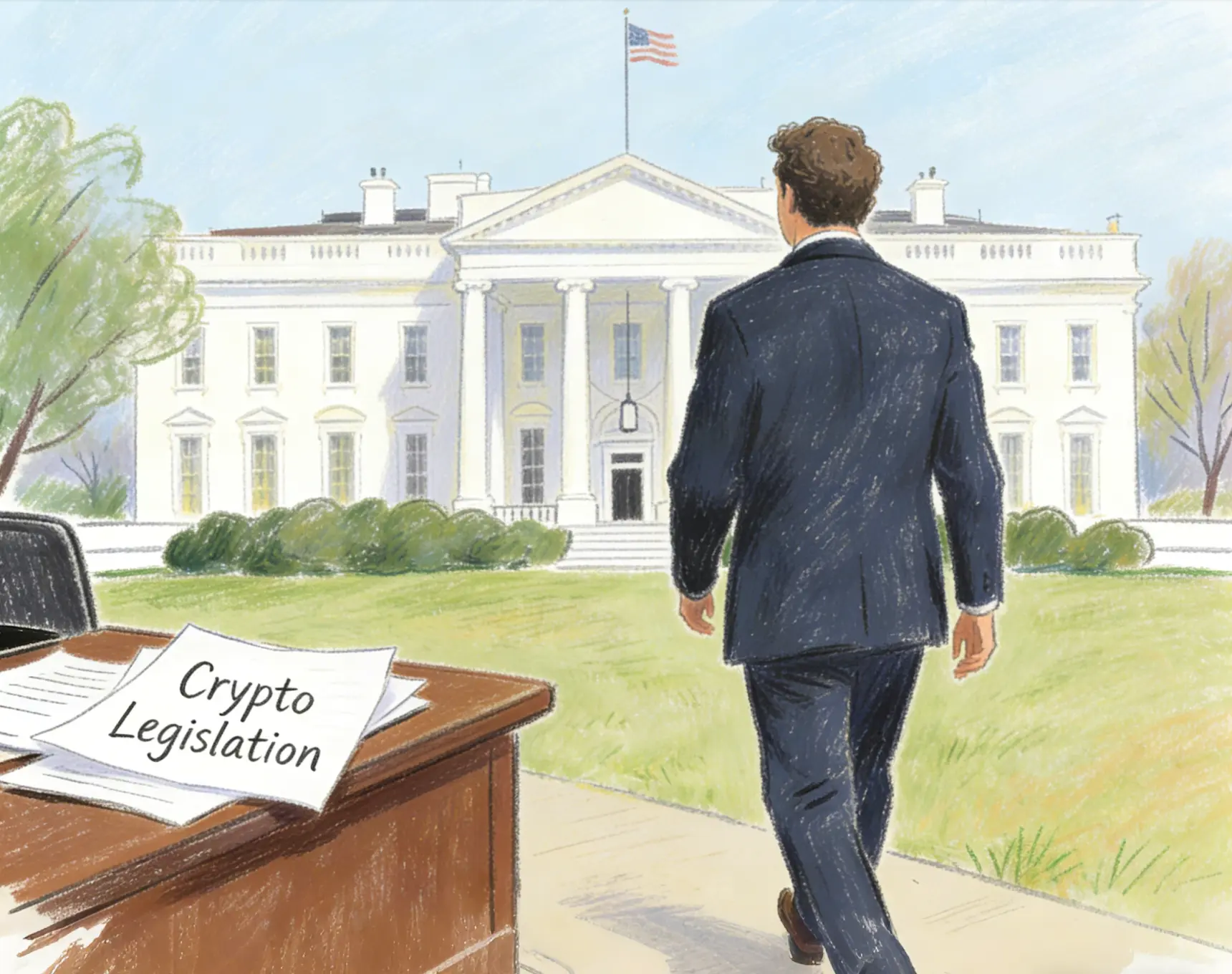
 David Sacks announced on March 26, 2026, that he is stepping down from his role as White House AI and crypto czar after reaching the 130-day limit for special government employees, leaving key legislative efforts—including market structure and stablecoin bills—still unresolved as he transitions to co-chair of the President’s Council of Advisors on Science and Technology (PCAST).
Sacks, a venture capitalist and partner at Craft Ventures, had played a central role in shaping the Trump administration’s crypto agenda, including pushing for the CLARITY Act and supporting a strategic Bitcoin reserve. He will continue advising the administration on technology policy through PCAST, where he will focus on artificial intelligence, quantum computing, and other emerging technologies.
Tenure and Transition
Special Government Employee Status
Sacks told Bloomberg that his time as a special government employee had ended after serving the maximum 130 days permitted under federal rules. He will remain involved in the administration as co-chair of PCAST, a federal advisory committee composed of outside industry and academic experts that provides evidence-based recommendations to the president on technology, scientific research, and innovation policy. “As co-chair of PCAST, I can now make a range of recommendations on not just AI but an expanded range of technology topics,” Sacks said. “This is how I’ll be involved moving forward.”
PCAST Membership
Other members of PCAST include Andreessen Horowitz co-founder Marc Andreessen, Google co-founder Sergey Brin, Dell founder Michael Dell, early Coinbase backer Fred Ehrsam, NVIDIA CEO Jensen Huang, AMD CEO Lisa Su, and Meta founder Mark Zuckerberg. Michael Kratsios, who served in both Trump administrations, will serve as co-chair alongside Sacks.
Unfinished Crypto Legislative Agenda
CLARITY Act and Market Structure
Sacks had previously stated that market structure and stablecoin legislation could pass within the administration’s first 100 days, but those efforts remain incomplete as Congress continues to debate the CLARITY Act beyond that timeline. The bill has faced resistance from some lawmakers and industry groups, with key provisions still under negotiation. Democrats have also pushed for ethics language banning senior government officials from personally profiting from the crypto industry, a provision that would target President Trump’s family crypto ventures.
Strategic Bitcoin Reserve
Sacks was involved in early discussions around the administration’s digital asset stockpile and strategic Bitcoin reserve, which were framed as part of a broader effort to position the U.S. as a global crypto hub. Efforts on that front have not fully materialized. The reserve is expected to be continuously seeded with Bitcoin seized by the U.S. government, though questions remain over whether and how additional purchases would be funded.
Crypto Council Proposal
An early proposal to create a permanent White House “crypto council” of industry leaders never materialized, with the administration instead opting for periodic summits and an internal digital-assets working group after industry infighting complicated the plan.
Conflicts of Interest and Industry Criticism
Personal Holdings
Before taking the role, Sacks said he sold his personal crypto holdings to avoid conflicts of interest. A White House memo from March 2025 revealed that Sacks sold over $200 million in digital asset-related investments.
World Liberty Financial Criticism
Sacks frequently dismissed concerns raised by Democratic lawmakers and industry participants about President Trump’s links to World Liberty Financial, a DeFi firm majority-owned by the president’s sons. Critics had argued that the president’s crypto ventures created potential conflicts of interest as the administration shaped digital asset policy.
Future Role and Technology Policy
Expanded Focus
Sacks said he will continue working on artificial intelligence policy and technology strategy through his new advisory role. He noted that PCAST will make policy recommendations and conduct studies around AI, quantum computing, nuclear power, and other “cutting edge technologies.” “I think you can expect us to make some recommendations in those areas. We want to push forward the president’s A.I. framework that was already released just last week,” Sacks said.
No Mention of Crypto
In his Bloomberg interview, Sacks did not mention cryptocurrency, indicating that his focus in the new role will be on broader technology issues rather than the unfinished crypto legislative agenda he oversaw as czar.
Frequently Asked Questions
Why did David Sacks leave his White House crypto role?
Sacks stepped down after reaching the 130-day limit for special government employees. He will continue advising the administration as co-chair of the President’s Council of Advisors on Science and Technology (PCAST).
What crypto legislation remains unfinished?
Key legislative efforts, including the CLARITY Act for market structure and stablecoin regulation, remain unresolved as Congress continues debate. A strategic Bitcoin reserve and a proposed White House crypto council also have not been fully implemented.
What is Sacks’ new role and focus?
Sacks will serve as co-chair of PCAST, where he will advise on artificial intelligence, quantum computing, nuclear power, and other emerging technologies. He will no longer focus on cryptocurrency policy in his official capacity.
Disclaimer: The information on this page may come from third parties and does not represent the views or opinions of Gate. The content displayed on this page is for reference only and does not constitute any financial, investment, or legal advice. Gate does not guarantee the accuracy or completeness of the information and shall not be liable for any losses arising from the use of this information. Virtual asset investments carry high risks and are subject to significant price volatility. You may lose all of your invested principal. Please fully understand the relevant risks and make prudent decisions based on your own financial situation and risk tolerance. For details, please refer to
Disclaimer.


