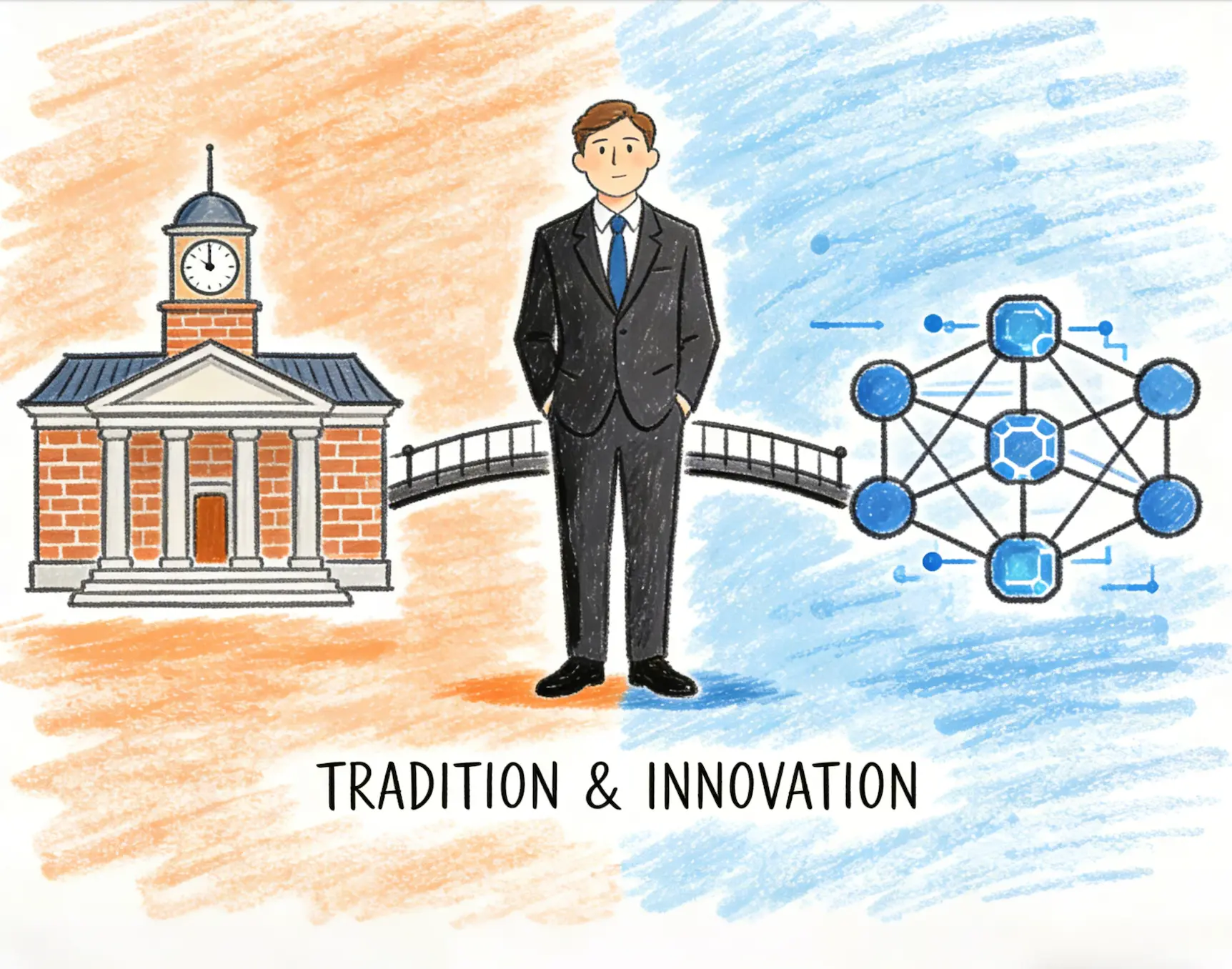
 New York Stock Exchange (NYSE) Chief Product Officer Jon Herrick stated on March 26, 2026, that the exchange’s strategy centers on blockchain interoperability with existing market infrastructure rather than wholesale replacement, emphasizing that legacy mechanisms such as central clearing retain irreplaceable risk management value and should be preserved.
Speaking at the New York Digital Assets Summit, Herrick described a model where blockchain technology is layered onto existing rails to enable applications such as real-time or near-real-time settlement and extended trading hours, while preserving regulation, centralized clearing, and investor protections. He predicted that the boundary between traditional and tokenized assets could largely disappear within the next decade.
The comments come weeks after NYSE parent Intercontinental Exchange (ICE) made a strategic investment in crypto exchange OKX, with plans to offer NYSE tokenized equities to OKX’s 120 million users.
NYSE’s Blockchain Integration Strategy
Interoperability Over Replacement
Herrick emphasized that the exchange is “striving for interoperability” and “building on top of what exists” as it explores how tokenized assets could function within current systems. He stated: “You have to be mindful of the inherent good things of the market that has developed up to now … it’s this balance of both things,” referring to the need to preserve elements like regulation, clearing systems, and investor protections. Rather than framing blockchain as a replacement for traditional finance, Herrick described a model where both systems merge: “It really isn’t about one side being more right than the other … [they] should, I think, in time, come together.”
Use Cases in Development
The NYSE is exploring tokenization applications including real-time or near-real-time settlement and extended trading hours. The exchange is already building a 24/7 blockchain-based trading venue for tokenized stocks and exchange-traded funds (ETFs), pending SEC approval. The platform is designed to combine NYSE’s Pillar order-matching engine with blockchain-based post-trade settlement funded by stablecoins.
ICE’s Strategic Investment in OKX
Partnership Details
Earlier in March 2026, ICE made a strategic investment in OKX, valuing the crypto exchange at $25 billion and securing a board seat. Under the partnership, subject to regulatory approval, OKX’s 120 million users would gain access to ICE’s U.S. futures markets and NYSE tokenized equities. Jeffrey C. Sprecher, Chair and CEO of ICE, stated: “Our strategic relationship with OKX will expand global retail access to ICE’s pre-eminent regulated markets and accelerate our plans to offer on-chain infrastructure and tokenized assets to U.S. investors.”
Market Context
The tokenized equity market reached a market cap of roughly $800 million and $1.8 billion in monthly volume as of early 2026, still nascent by Wall Street standards but growing fast. The SEC granted the Depository Trust & Clearing Corporation (DTCC) a three-year window in late 2025 to custody tokenized securities, effectively clearing a path for broker-dealers to connect to on-chain settlement without abandoning the existing market structure.
Industry Momentum
Parallel Developments
Morgan Stanley plans to enable tokenized stock settlement on its internal alternative trading system in the second half of 2026. Nasdaq has already filed with the SEC to support tokenized equities on its public exchange. Herrick’s interoperability-first philosophy reflects a broader industry approach: bridging old and new rather than replacing one with the other.
Long-Term Outlook
Herrick predicted that over the next decade, the distinction between traditional and tokenized assets may fade: “Maybe 10 years from now, whether [a] security is tokenized or not shouldn’t matter.”
Frequently Asked Questions
What is NYSE’s approach to blockchain technology?
NYSE is pursuing a strategy of interoperability, layering blockchain onto existing market infrastructure rather than replacing traditional systems. The exchange is exploring tokenization applications such as real-time settlement and extended trading hours while preserving regulation, central clearing, and investor protections.
What is ICE’s partnership with OKX?
ICE, NYSE’s parent company, made a strategic investment in crypto exchange OKX at a $25 billion valuation. Under the partnership, OKX’s 120 million users would gain access to ICE’s U.S. futures markets and NYSE tokenized equities, subject to regulatory approval.
How might tokenized assets affect traditional markets?
Herrick predicted that the boundary between traditional and tokenized assets could largely disappear within the next decade. Tokenization could enable faster settlement, round-the-clock trading, and broader global access to markets, while existing mechanisms like central clearing still carry irreplaceable risk management value.
Disclaimer: The information on this page may come from third parties and does not represent the views or opinions of Gate. The content displayed on this page is for reference only and does not constitute any financial, investment, or legal advice. Gate does not guarantee the accuracy or completeness of the information and shall not be liable for any losses arising from the use of this information. Virtual asset investments carry high risks and are subject to significant price volatility. You may lose all of your invested principal. Please fully understand the relevant risks and make prudent decisions based on your own financial situation and risk tolerance. For details, please refer to
Disclaimer.


