What is Cryptocurrency Staking and How Does It Work?

Key Points
Staking is the process of locking cryptocurrency to support the security and functionality of a blockchain, earning rewards in return.
Popular among cryptocurrency holders, staking allows investors to support their favourite blockchains whilst increasing their assets over time.
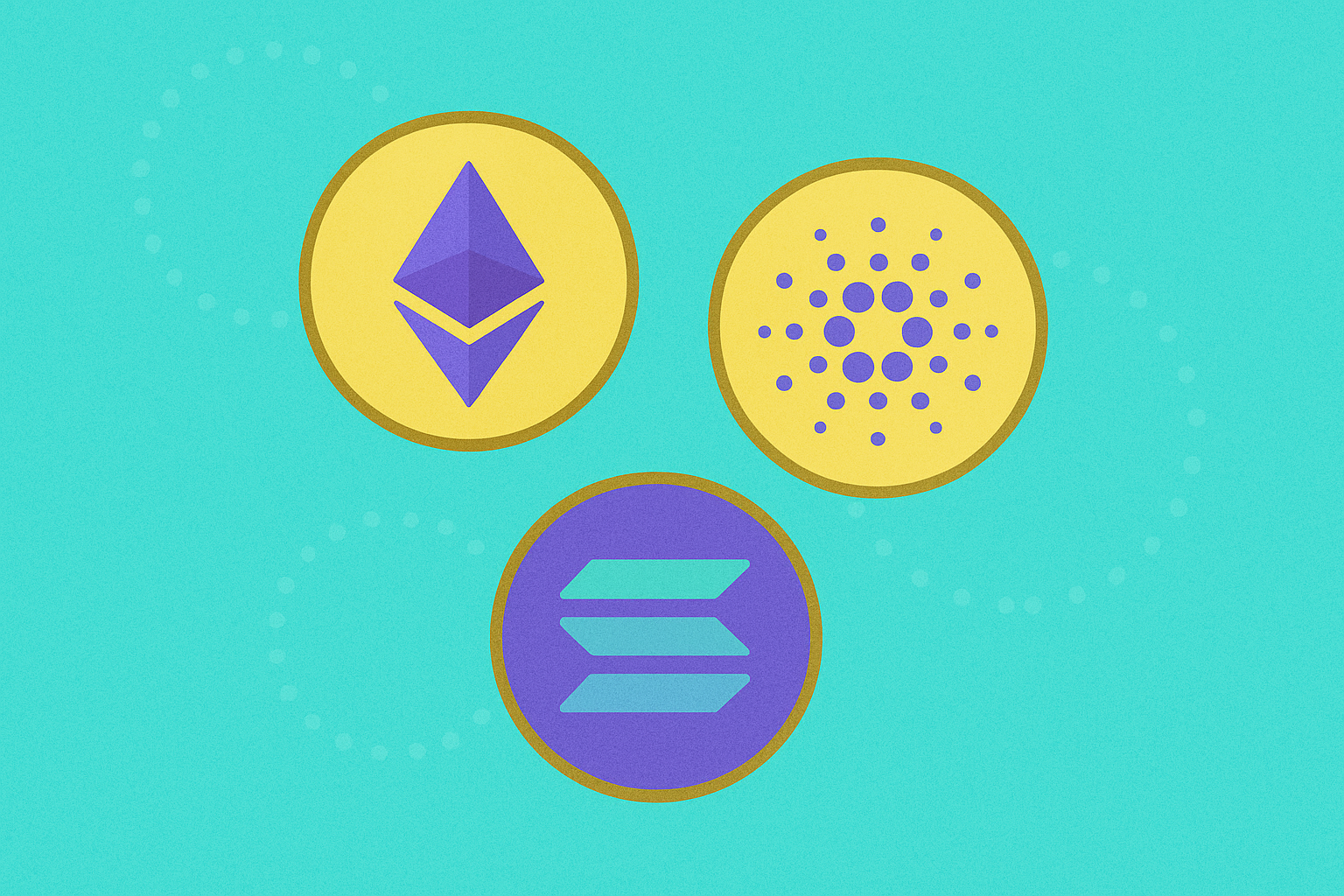
Staking is only available on certain blockchains that use the Proof of Stake consensus mechanism. Examples include Ethereum, Solana, Cardano, Avalanche, Polkadot, Cosmos and many others.
Whilst staking can multiply your crypto assets, it is important to consider potential risks, including loss of funds through volatility, slashing or technical failures.
What is Cryptocurrency Staking?
Staking is the process of locking a certain amount of cryptocurrency to secure and support the operation of a blockchain network. By doing this, stakers receive rewards in the form of cryptocurrency, making this process a popular way to generate passive income. Staking is an important part of blockchains using Proof of Stake.
What is Proof of Stake?
Proof of Stake (PoS) is a consensus mechanism used to verify and confirm transactions. It was created in 2011 as an alternative to Proof of Work (PoW), which is used by Bitcoin.
The main difference between PoW and PoS is that PoS does not rely on mining, which is a resource-intensive process. Instead of miners using computational power to solve complex mathematical problems, PoS networks rely on validators selected based on the amount of coins they hold and are willing to stake.
How Does Staking Work?
In short, staking involves locking your cryptocurrency to participate in blockchain network activity. The process may vary depending on the blockchain, but here is how it typically works:
-
Validator selection: In PoS blockchains, validators are selected based on a combination of factors, including the amount of coins staked, the length of time they have been staking, and sometimes random selection.
-
Transaction verification: Once selected, the validator is responsible for verifying and confirming transactions, ensuring their legitimacy.
-
Block creation: Verified transactions are grouped into a block, which is then added to the blockchain, which is essentially a distributed ledger.
-
Rewards: As a reward for their work, validators receive a portion of transaction fees and, in some cases, newly created cryptocurrency coins.
Types of Staking
Depending on your level of technical expertise and the amount of cryptocurrency you wish to stake, there are various ways to do this. Some of the most common types of staking include:
Solo staking involves running a validator node. This option gives you the most control but requires significant technical knowledge and responsibility. If not done properly, you may lose your assets through slashing penalties.
Exchange staking is where some cryptocurrency exchanges offer staking services, providing the simplest way to stake without technical steps. This method is also known as "staking as a service".
Delegated staking allows you to delegate your coins to a trusted validator or staking service, allowing them to handle the technical aspects.
Staking pools allow you to stake coins with other users, increasing your chances of receiving rewards without needing to run your own node.
What is a Staking Pool?
A staking pool is a group of cryptocurrency holders who combine their staking capabilities to increase their chances of being selected as validators. By pooling resources, participants can receive staking rewards proportional to their contribution to the pool.
This option is particularly beneficial for small investors who may not have enough coins to meet the minimum staking requirements.
Staking and Liquid Staking
Liquid staking is a new form of staking that allows users to stake their assets without losing liquidity. Unlike traditional staking, where assets are often locked and unavailable during the staking period, liquid staking introduces mechanisms that allow users to maintain liquidity whilst receiving staking rewards.
One common approach is the issuance of liquid staking tokens (LSTs), which are tokens representing staked assets. For example, when you stake ETH, you receive WBETH in return, which can be traded or used elsewhere without compromising your ETH staking rewards.
There are also platforms that allow direct staking without issuing LSTs, known as native liquid staking.
Advantages of Staking Your Cryptocurrency
Staking is a way to make your idle assets work for you, meaning you can earn rewards whilst helping to secure your favourite blockchain networks.
Why Stake?
Rewards: Staking allows you to earn additional cryptocurrency by keeping your coins in a staking wallet, which can be a good way to generate passive income.
Network support: By staking, you help secure the network and ensure it functions properly.
Governance participation: On some networks, staking gives you voting rights, allowing you to influence the future direction of the network.
Energy efficiency: Unlike PoW mining, staking requires significantly less energy.
Is Cryptocurrency Staking Worth It?
Yes. Generally, staking your idle crypto assets to generate passive income is a good idea, especially if you are a long-term holder and want to support the project. However, potential rewards and risks may vary depending on the cryptocurrency you choose and the platform you use.
Risks of Staking
Whilst cryptocurrency staking can bring rewards, it also comes with risks. Some of the potential risks of staking include:
-
Market volatility: If the price of the cryptocurrency you are staking falls significantly, there is a high probability that your staking rewards will not be enough to cover your losses.
-
Slashing risk: Validators who act maliciously or fail to maintain their node may be penalised, resulting in loss of staked funds.
-
Centralisation risk: If a small number of validators controls the majority of staked coins, this could lead to centralisation.
-
Technical risk: Some types of staking require you to lock your coins for a certain period. Technical issues, such as smart contract bugs, could result in loss of access.
-
Third-party risk: If you stake through a third-party service, you are trusting your funds to another entity.
How to Stake Cryptocurrency Today
-
Choose a PoS cryptocurrency: Select a cryptocurrency that supports staking. Make sure you understand the staking requirements and rewards.
-
Set up a wallet: Use a wallet that is compatible with staking.
-
Begin staking: Follow your network's instructions to stake your coins by running a validator node, delegating to validators, or joining a staking pool.
How are Staking Rewards Calculated?
Staking rewards depend on the network and are often determined by factors such as:
-
The amount of cryptocurrency you are staking.
-
The length of time you are staking.
-
The total amount of staked coins in the network.
-
The network's transaction fees and coin inflation rate.
On some blockchains, rewards are distributed as a fixed percentage. Staking rewards are often measured by their estimated annual percentage rate (APR).
Can You Withdraw Cryptocurrency from Staking?
Generally, yes. You should be able to withdraw your cryptocurrency from staking at any time. However, the exact mechanisms and rules will vary depending on the staking platform. In some cases, early withdrawal of staked assets may result in partial or complete loss of staking rewards.
Why Can't You Stake All Cryptocurrencies?
Staking is characteristic of PoS blockchains. Cryptocurrencies such as Bitcoin, which operate on the PoW consensus mechanism, cannot be used for staking.
Summary
Cryptocurrency staking offers a way to participate in blockchain networks whilst earning rewards. However, it is very important to understand the associated risks, including market volatility, third parties, slashing and technical risks. By carefully selecting your staking method and researching the network, you can make an effective contribution to the blockchain ecosystem and potentially earn passive income.
FAQ
Що таке криптовалютний стейкинг (Staking)? Яка різниця між ним і майнингом?
Стейкинг — це блокування активів для підтримки мережі, майнинг потребує обчислювальної потужності. Стейкинг енергоефективніший, майнинг ресурсозатратніший. Стейкинг вимагає капітальних вкладень, майнинг — спеціалізованого обладнання.
Як почати займатися крипто-стейкінгом? Які умови та мінімальні інвестиції потрібні?
Виберіть крипто-валюту для стейкінгу (ETH, ADA, SOL). Мінімальна інвестиція зазвичай 10-30 ETH залежно від платформи.锁定代币,отримуйте відсоти 3%-20% річних. Потрібен гаманець, сумісний зі стейкінгом або платформа для делегування.
Скільки прибутку можна отримати від staking криптовалюти? Як розраховується дохідність?
Дохідність staking залежить від типу монети,тривалості staking та активності мережі. Річна дохідність (APY) варіюється від 5% до 20% залежно від проекту. Дохід розраховується за формулою: Вознаграждення = (Кількість монет × APY) / 365 днів. Дохідність не фіксована і змінюється разом з мережею.
質押加密貨幣有哪些風險?資金安全性如何保障?
質押存在市場波動、流動性風險及技術故障風險。資金安全性通過雙重認證、冷存儲技術和專業安全審計保障。選擇信譽良好的質押平台可進一步降低風險。
Які криптовалюти підтримують стейкінг? Які основні монети для стейкінгу?
Основні криптовалюти для стейкінгу включають Ethereum(ETH)、Cardano(ADA)та Ripple(XRP)。Ці монети мають найбільшу ринкову капіталізацію та широку підтримку механізму стейкінгу серед користувачів.
质押期间能随时提取资金吗?解锁期是多长?
质押期间不能随时提取资金,解锁期为7天。用户需要申请解除质押后,等待7天才能提取质押的资金。
Поділіться
Контент
Key Points
What is Cryptocurrency Staking?
What is Proof of Stake?
How Does Staking Work?
Types of Staking
What is a Staking Pool?
Staking and Liquid Staking
Advantages of Staking Your Cryptocurrency
Is Cryptocurrency Staking Worth It?
Risks of Staking
How to Stake Cryptocurrency Today
How are Staking Rewards Calculated?
Can You Withdraw Cryptocurrency from Staking?
Why Can't You Stake All Cryptocurrencies?
Summary
FAQ
Як купити криптовалюту


Трендові криптовалюти



Ethereum 2.0 у 2025 році: Стейкінг, Масштабованість та Екологічний Вплив

Що таке STRX? Пояснення токена StrikeX
Gate ETH у блокчейні стейкінг: низькопорігова гнучка опція доходу.

Відкликання: все, що вам потрібно знати

Що таке SSV: основи роботи стейкінгових синхронних валідаторів у блокчейн-технологіях
Прогноз ціни SSV на 2025 рік: Аналіз ринкових тенденцій і перспектив зростання токена SSV Network
Порівняння MOOO та ARB: докладний аналіз двох ключових токенів для управління блокчейнами
ONC проти OP: аналіз основних відмінностей між Oncorhynchus та популяціями Oncorhynchus у системі управління лососем Тихого океану

RUNI проти APT: детальне порівняння двох провідних фреймворків для тестування продуктивності застосунків
Вступ до Bitcoin ATM

Що таке індекс PCE Deflator і як він функціонує?