The rise of decentralized finance has transformed blockchain networks from simple asset transfer tools into comprehensive on-chain financial infrastructure. Users now demand not only asset transfers but also more sophisticated on-chain financial activities—such as lending, stablecoin issuance, and return management. To meet these needs, leading public chain ecosystems are developing their own DeFi protocol systems to fulfill growing on-chain financial demand.
TRON, known for its high throughput and low transaction fees, requires a robust decentralized finance protocol to support on-chain asset liquidity and stablecoin issuance. The JUST Foundation was established to fulfill this need, delivering core financial functions—including lending, stablecoins, and governance—to the TRON ecosystem. As a result, JUST has become a cornerstone of TRON’s DeFi infrastructure.
JUST’s Role and Significance in the DeFi Sector
Within decentralized finance, stablecoin and lending protocols serve as foundational infrastructure. Stablecoins provide value-pegged assets, while lending protocols increase the utilization of on-chain assets. JUST brings these functions together in a unified ecosystem, allowing users to generate stablecoins by collateralizing digital assets and to participate in lending markets.
This integrated approach makes JUST more than a single protocol—it is a comprehensive DeFi platform on the TRON network. The governance token, JST, powers protocol governance, incentives, and fee payments. For the TRON ecosystem, JUST supplies essential stablecoin and lending infrastructure; for users, it offers decentralized financial tools without the need for intermediaries, cementing its importance within TRON DeFi.
What Is JUST (JST)?
JUST is a decentralized finance ecosystem deployed on the TRON network, primarily comprising stablecoin protocols, lending protocols, and governance mechanisms. Its mission is to deliver open financial services, enabling users to collateralize assets, mint stablecoins, and borrow on-chain using smart contracts.

JST is the native governance token of the JUST protocol, used for protocol governance, parameter adjustments, fee payments, and community incentives. JST holders can participate in protocol governance, voting on collateral parameters, interest rate mechanisms, and feature upgrades.
In short, JUST is the DeFi protocol suite within the TRON ecosystem, and JST is the governance token that drives its operation.
How Does the JUST DeFi Ecosystem Work?
JUST’s operating model is based on “collateralize assets—generate stablecoins—participate in lending,” leveraging multiple protocol modules working in concert.
Users begin by collateralizing TRON ecosystem assets—such as TRX—through the stablecoin protocol, generating the USD-pegged stablecoin USDD. This process resembles over-collateralized lending, where users lock higher-value assets to obtain circulating stablecoins.
The USDD produced can then be deployed in the JustLend lending marketplace, either to earn returns by lending or to borrow other assets. All transactions are executed via smart contracts, requiring no centralized intermediaries. JST underpins governance and incentives, ensuring protocol parameters are managed by the community.
This modular structure enables JUST to form a fully integrated on-chain financial ecosystem.
What Are JUST’s Core Products?
The JUST ecosystem is built from multiple protocol modules, each serving distinct roles to create a comprehensive DeFi service platform.
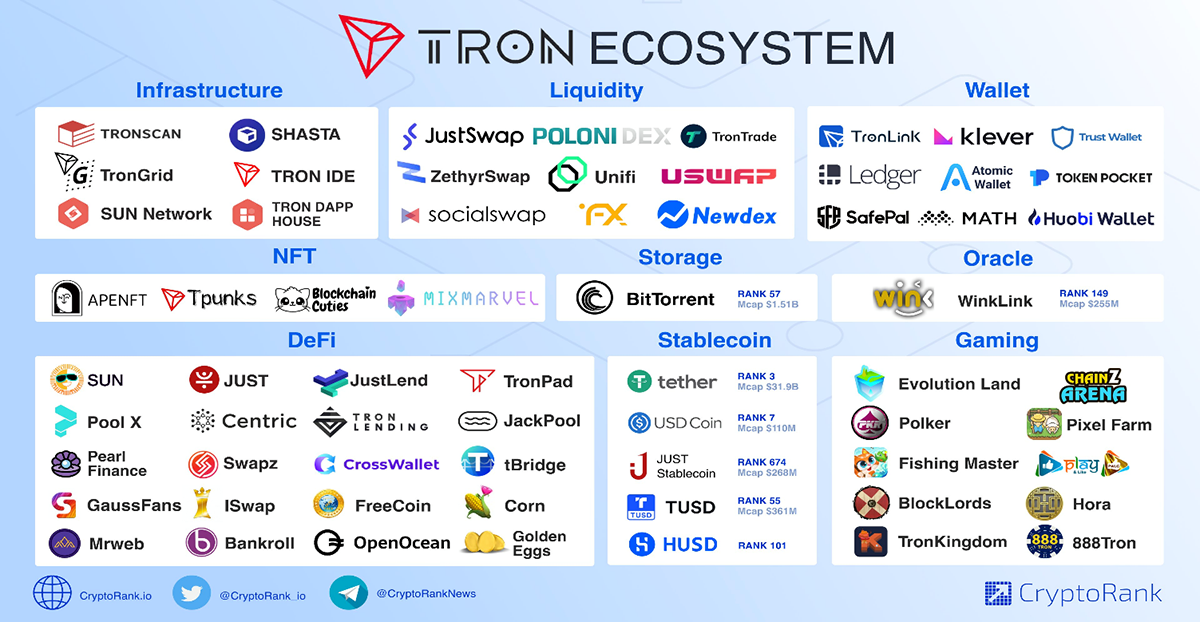
JustStable enables users to generate the USDD stablecoin by collateralizing assets, providing the ecosystem’s stablecoin issuance capability and serving as one of JUST’s foundational components.
JustLend is the lending marketplace protocol, where users can deposit assets to earn interest or use collateral to borrow other digital assets, increasing capital efficiency.
Additionally, JUST collaborates with other TRON DeFi protocols such as SUN.io, delivering liquidity support and return-generating tools to broaden the ecosystem’s financial offerings.
What Is the Role of JST Within the JUST Ecosystem?
JST is the governance token of the JUST protocol and a key element of its governance framework. JST holders can vote on governance proposals, adjusting protocol parameters such as stablecoin fee rates, collateralization ratios, and upgrade plans.
Beyond governance, JST is used to pay protocol-related fees. For example, fees generated during stablecoin issuance can be settled with JST, providing it with practical utility.
JST also serves as an incentive mechanism, rewarding users for participating in governance and ecosystem activities. Together, governance, fee payments, and incentives form the core value proposition of JST.
How Does JUST Differ from Other DeFi Protocols?
JUST’s primary distinction is its native integration with the TRON ecosystem. While MakerDAO and Aave are built on Ethereum, JUST delivers stablecoin and lending infrastructure tailored for TRON.
TRON’s low transaction fees and rapid confirmation times give JUST a competitive edge in cost and efficiency. This enables users to minimize on-chain interaction costs when collateralizing assets or generating stablecoins.
However, compared to mature protocols on Ethereum, JUST’s growth is more closely tied to the expansion of the TRON ecosystem. Its scalability and market impact are therefore directly linked to the underlying network’s activity.
What Are JUST’s Advantages and Limitations?
JUST’s chief advantage is its ability to deliver low-cost on-chain financial services. Built on the TRON network, it allows users to collateralize, borrow, and mint stablecoins with minimal fees, reducing barriers to DeFi adoption.
By combining stablecoin and lending protocols, JUST creates a closed financial loop, enhancing asset liquidity within the ecosystem.
Nevertheless, JUST faces notable limitations. Its development is highly dependent on the TRON network, and compared to major DeFi protocols, its market depth and influence remain limited. As a result, JUST’s long-term competitiveness will depend on the growth of the TRON DeFi ecosystem.
Summary
JUST serves as the decentralized finance infrastructure for the TRON network, offering on-chain financial services through stablecoin and lending protocols. JST, as the governance token, plays a vital role in protocol management, fee payments, and ecosystem incentives.
Structurally, JUST delivers the core stablecoin and lending modules for the TRON ecosystem, enabling users to collateralize assets, mint stablecoins, and access capital through smart contracts. Understanding JUST’s mechanics provides valuable insight into how DeFi protocols build on-chain financial infrastructure across diverse public blockchain ecosystems.
FAQs
What is the difference between JST and USDD?
JST is the governance token used for protocol management and fee payments, while USDD is a stablecoin generated by collateralizing assets and is used for value transfer.
What are the primary functions of JUST?
JUST offers stablecoin issuance, on-chain lending, and asset management services, serving as a key DeFi infrastructure within the TRON ecosystem.
Which blockchain is JUST built on?
JUST is built on the TRON blockchain and is a core part of TRON’s native DeFi ecosystem.
What are the main uses of JST?
JST is primarily used for governance voting, paying protocol fees, and participating in ecosystem incentive programs.







