Search result of OIL

Behind the WTI Oil Plunge: How the Two-Week U.S.–Iran Ceasefire Is Repricing Global Oil, Inflation, and Capital Markets
Beginner

Behind the WTI Oil Plunge: How the Two-Week U.S.–Iran Ceasefire Is Repricing Global Oil, Inflation, and Capital Markets

Following the announcement of a two-week ceasefire between the US and Iran, which includes the reopening of the Strait of Hormuz, WTI crude oil prices experienced a significant decline. Drawing on the latest developments as of April 8, 2026, this article examines the underlying causes of the oil price plunge, the trajectory of supply restoration, the implications for inflation transmission, and the effects on A-shares and global assets.
2026-04-08 09:03:46
What Is Tokenized Oil? From Petro to Solana Meme Coins and the Evolution of Energy Crypto
Beginner

What Is Tokenized Oil? From Petro to Solana Meme Coins and the Evolution of Energy Crypto

Tokenized oil or tokenized petroleum tokens are blockchain-based energy cryptocurrencies that digitize oil and related energy assets for trading and transparency. Since the launch of Venezuela’s Petro, these tokens have become an important part of the intersection between energy finance and blockchain innovation. More recently, energy-themed meme tokens on Solana have also attracted attention from investors and regulators.
2026-03-30 07:45:36
2026 Crude Oil Price Forecast: Geopolitical Conflicts, Supply Risks, and the Complex Interplay of Global Economic Variables
Beginner

2026 Crude Oil Price Forecast: Geopolitical Conflicts, Supply Risks, and the Complex Interplay of Global Economic Variables

Crude oil prices in 2026 are shaped by a combination of factors such as Middle East conflicts, transportation risks in the Strait of Hormuz, and global economic cycles. Leveraging recent developments and institutional projections, this article provides an objective analysis of possible oil price movements and underlying risks.
2026-03-09 04:21:24
How Do Petroleum Oil Tokens Work? From Real-World Assets to On-Chain Mechanisms
Beginner

How Do Petroleum Oil Tokens Work? From Real-World Assets to On-Chain Mechanisms

The operating mechanism of petroleum oil tokens refers to a framework that converts physical oil reserves, extraction rights, or energy-related narratives into blockchain-based digital assets. With the rise of real-world asset (RWA) tokenization, petroleum tokens are increasingly seen as a bridge between traditional commodity markets and decentralized finance, addressing issues such as long settlement cycles, limited retail access, and fragmented liquidity.
2026-03-30 09:49:30
How should we view the divergence between gold and oil prices?
Intermediate

How should we view the divergence between gold and oil prices?

The article clarifies the transition of funds from gold to crude oil, examines how liquidity crises and renewed tightening expectations from the Federal Reserve are weighing on gold prices, and provides practical guidance for prioritizing energy assets over gold in prolonged market scenarios.
2026-03-25 11:37:24
Comprehensive Analysis of Middle East Conflict and Global Markets: Risk Premiums and Structural Repricing in Gold, Crude Oil, and BTC
Beginner

Comprehensive Analysis of Middle East Conflict and Global Markets: Risk Premiums and Structural Repricing in Gold, Crude Oil, and BTC

Escalating conflict in the Middle East is causing significant turbulence in global markets. This article provides an objective analysis of the potential effects on crude oil, gold, and the global economy, examining energy supply and demand, risk premiums, geopolitical structures, and various scenario projections.
2026-03-02 05:59:59
Korean Stocks Trigger Circuit Breaker: Oil Price Shock and Capital Repricing Logic Behind KOSPI Plunge
Beginner

Korean Stocks Trigger Circuit Breaker: Oil Price Shock and Capital Repricing Logic Behind KOSPI Plunge

KOSPI in South Korea experienced a sharp decline, activating a circuit breaker. The Korean won depreciated, and there was a substantial outflow of foreign capital. This analysis examines how oil prices, inflation, and the reassessment of AI semiconductor valuations are affecting Asia-Pacific markets and capital movements.
2026-03-03 09:56:43
Gate Research Institute: Bitcoin, Crude Oil, and Gold Trends and Investment Opportunities Amid U.S.-Iran Tensions
Intermediate

vip
Gate Research Institute: Bitcoin, Crude Oil, and Gold Trends and Investment Opportunities Amid U.S.-Iran Tensions

Following the joint U.S.-Israeli airstrike on Iran, gold and crude oil surged at Monday’s open, global equities traded lower, and Bitcoin saw increased volatility. Prediction markets estimate a low likelihood of full-scale war, but highlight persistent risks of restricted passage through the Strait of Hormuz. Should tensions temporarily subside, commodity prices could experience significant pullbacks; if not, gold and oil prices may spike further. Bitcoin may face short-term pressure, while its medium-term performance will depend on overall market liquidity. Gate now provides trading in metals, equities, indices, forex, and commodities. With Gate TradFi, investors can trade around the clock and swiftly capitalize on market opportunities.
2026-03-04 03:30:31
BTC in One Hand, AI Computing Power in the Other: Gold and Oil of the Digital Intelligence Era
Intermediate

BTC in One Hand, AI Computing Power in the Other: Gold and Oil of the Digital Intelligence Era

BTC serves as a value anchor for energy, and AI computing power drives the productive use of energy. Drawing on the history of the industrial revolution, this article provides a systematic analysis of how AI computing power, BTC, stablecoins, and RWA are integrating in the wake of the GENIUS Act. It explores the long-term investment strategies and industrial logic behind the “new gold” and “new oil” in the age of intelligent digital transformation.
2026-01-12 12:33:36
Gate ETF Trading Extravaganza: Open Gold and Oil Mystery Boxes for a Chance to Win up to 60,000 USDT
Beginner

Gate ETF Trading Extravaganza: Open Gold and Oil Mystery Boxes for a Chance to Win up to 60,000 USDT

Gate ETF Global Asset Trading Carnival is underway! Trade any ETF to earn blind box lottery chances, unlock gold and crude oil assets, and share a prize pool of up to $60,000 based on your cumulative trading volume. Don’t miss out—join today!
2026-03-16 02:03:04
Hormuz Risk and Crypto Marketplace Reassessment: Why Bitcoin Can Still Experience Periodic Gains Amid Oil Price Shocks
Beginner

Hormuz Risk and Crypto Marketplace Reassessment: Why Bitcoin Can Still Experience Periodic Gains Amid Oil Price Shocks

This article offers a systematic analysis of how geopolitical energy shocks—considering the latest situation in the Strait of Hormuz, oil price volatility, and the rebound in risk assets—are transmitted to the crypto market. It explains the factors behind Bitcoin's recent strength and presents a comprehensive observation framework across 24 h, 7 d, and 30 d timeframes to help identify the sustainability of the rebound and assess the risk of a secondary drawdown.
2026-04-14 09:00:55
Gate ETF Trading Sprint Phase II: Participate in top ETFs such as gold, silver, and crude oil for a chance to earn substantial rewards
Beginner

Gate ETF Trading Sprint Phase II: Participate in top ETFs such as gold, silver, and crude oil for a chance to earn substantial rewards

Gate ETF has launched the second phase of the Hot Picks Trading Sprint, spotlighting top ETFs including gold, silver, and crude oil. Trade to unlock substantial rewards. By completing tasks, you can earn trading fee rebates and cash rewards, with a maximum reward of 500 USDT.
2026-03-06 01:22:18
Gate ETF Hot Picks Trading Sprint Season 2: Trade top ETFs such as gold and crude oil for a chance to win up to 500 USDT in rewards
Beginner

Gate ETF Hot Picks Trading Sprint Season 2: Trade top ETFs such as gold and crude oil for a chance to win up to 500 USDT in rewards

Gate ETF is rolling out the second phase of its Hot Trading Sprint, spotlighting top ETFs including gold, crude oil, and silver. Trade to unlock substantial rewards, complete tasks to split a 20,000 USDT prize pool. Spots are limited—act fast to participate.
2026-03-09 01:55:03
Gate Institutional Weekly Report: Energy Shock Drives Oil Prices Higher, Risk Assets Enter a Staged Risk-Off Phase (March 2–March 8, 2026)
Advanced

Gate Institutional Weekly Report: Energy Shock Drives Oil Prices Higher, Risk Assets Enter a Staged Risk-Off Phase (March 2–March 8, 2026)

Global markets were notably driven by energy price shocks and geopolitical risks over the past week. Escalating tensions in the Middle East propelled oil prices upward, with WTI surging more than 25% for the week. As a result, the market entered a risk-off phase, prompting BTC, ETH, and US equities to pull back simultaneously. From a macro standpoint, although rising oil prices are unlikely to trigger a recession directly, they could elevate inflation and delay interest rate cuts in the coming months. On-chain activity saw DEX trading volumes remain high, with liquidity further concentrating in top protocols. The total stablecoin market cap climbed to around $330 billion, with USDC emerging as the main source of incremental capital. In the derivatives market, funding rates stayed predominantly negative and option volatility increased, reflecting continued vigilance toward tail risks. Overall, the market is navigating a stage of macro risk repricing and liquidity reallocation. Looking ahead to next week, attention will center on February CPI, initial jobless claims, and the University of Michigan Consumer Sentiment Index—key indicators that will directly shape inflation expectations and the Fed’s policy path, ultimately determining the short-term trajectory of risk assets.
2026-03-11 09:58:26
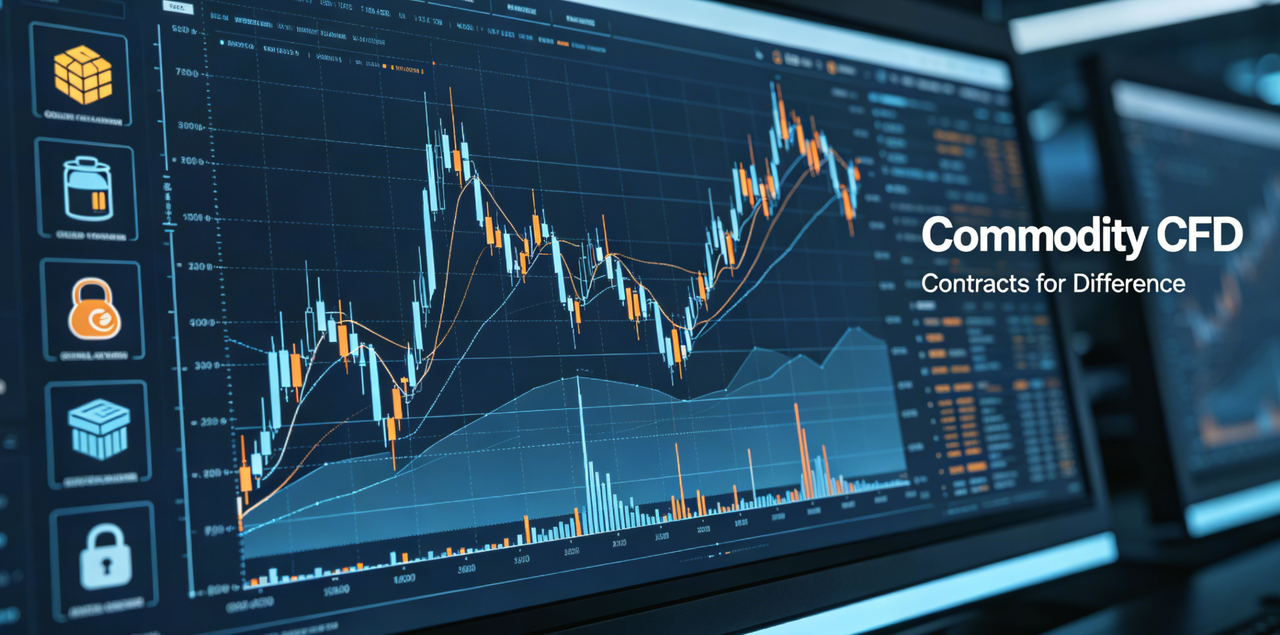
A Commodities CFD is a financial derivative that enables traders to engage in price movements of assets like gold and crude oil without owning the actual commodity. This article examines how commodity CFDs work, their leverage structure, trading procedures, and associated risk characteristics.
Intermediate

A Commodities CFD is a financial derivative that enables traders to engage in price movements of assets like gold and crude oil without owning the actual commodity. This article examines how commodity CFDs work, their leverage structure, trading procedures, and associated risk characteristics.

With the rise of global online trading platforms, Commodity [CFD](https://www.gate.com/learn/articles/what-is-cfd) have become widely adopted across precious metals, energy, and agricultural Marketplace. Unlike traditional Spot Trading, Commodity CFD focus on price fluctuation trading rather than the ownership and delivery of physical goods, making them a major form of trading in the retail derivatives Marketplace. As digital assets become more integrated with global macro Marketplace, traders are increasingly using Commodity CFD for hedging, short-term trades, and cross-market Asset Allocation. ## What Are Commodity CFDs? Commodity CFD (Commodity Contracts for Difference) are financial derivatives that enable traders to profit from the price movements of Commodities. With these instruments, users can settle Profit/Loss (PnL) based on the difference between the opening and closing prices—without actually owning physical Commodities like gold, silver, crude oil, or natural gas. ![什么是大宗商品 CFD?](https://s3.ap-northeast-1.amazonaws.com/gimg.gateimg.com/learn/60a38210-aada-4624-ab60-5db758899664-969.png) ## What Assets Can You Trade with Commodity CFDs? Commodity CFD typically cover precious metals, energy products, and select agricultural Marketplace. Gold and silver CFD are among the most popular in this category. Since precious metals are widely viewed as safe-haven assets, their prices are often influenced by inflation, interest rates, and movements in the US dollar. Crude oil CFD are tied to global energy Marketplace and include major types like WTI and Brent. Given the high volatility of the energy sector, crude oil CFD are especially active in short-term trading strategies. Some platforms also offer CFD on natural gas, copper, wheat, coffee, and other Commodities, providing traders with access to a broader array of global Marketplace. ## How Do Commodity CFDs Work? At their core, Commodity CFD operate on the principle of "settlement by price difference." Traders open position(s) based on whether they anticipate a Commodity’s price will rise or fall, and their Profit/Loss (PnL) is determined by the price movement when the close position. If a trader expects gold prices to increase, they can go long; if they expect oil prices to drop, they can go short. Since CFD support Two-Way trading, both upward and downward Marketplace present trading opportunities. Commodity CFD use a Margin mechanism, which means traders don’t have to pay the full value of the underlying Commodity. Instead, they only need to lock up a fraction of the value as margin to control larger positions. For example, with 10x leverage, a $1,000 margin can control a $10,000 Commodity position. ## How Are Commodity CFDs Different from Commodity Futures? Both Commodity CFD and Commodity Futures are derivatives, but they differ significantly in structure and trading mechanisms. Commodity CFD are typically quoted by Broker, with traders dealing directly with the platform—most of these products have no fixed Expiration Date. In contrast, Commodity Futures are standardized Futures traded on exchanges, featuring set Expiration Date and delivery rules. Additionally, Commodity CFD cater more to retail traders and offer greater flexibility, while Commodity Futures are more commonly used by institutions for risk management and large-scale hedging. | Comparison Dimension | Commodity CFD | Commodity Futures | | --- | --- | --- | | Market Structure | Broker Marketplace | Exchange Marketplace | | Expiration Date | Usually none | Yes | | Physical Delivery | Usually not involved | Sometimes involved | | Leverage Structure | Broker-determined | Exchange-determined | | User Type | Primarily retail traders | Primarily institutional participants | | Holding Cost | overnight financing fee | Rollover costs | ## What Causes Price Fluctuations in Commodity CFDs? Commodity prices are heavily influenced by global macroeconomic conditions, supply and demand, and geopolitical factors. Gold prices often track the US dollar, interest rate policies, and risk sentiment. During periods of heightened economic uncertainty, gold volatility tends to rise. Oil Marketplace are particularly sensitive to output changes, geopolitical tensions, and global economic demand. For example, production cuts by major oil producers can drive prices up, while recession fears may suppress energy demand. Because Commodity Marketplace are closely tied to the global economy, Commodity CFD tend to exhibit high volatility. ## What Are the Main Risks of Commodity CFDs? Commodity CFD are high-risk leveraged derivatives. The primary risks stem from price volatility and the amplifying effect of 10x leverage. Given the inherent volatility of Commodity Marketplace, leverage can further magnify account profit and loss. In highly volatile Marketplace like crude oil, sharp price swings can quickly erode margin balances. Long-term positions typically incur overnight financing fee. If market volatility causes Net Asset Value (NAV) to fall below Maintenance Margin requirements, the platform may trigger liquidation (forced close position). Regulatory requirements for Commodity CFD vary by country and region, and some Marketplace may impose limits on 10x leverage. ## The Role of Commodity CFDs in the Global Market Commodity CFD give retail traders access to global Commodity Marketplace without the need to handle physical goods or complex Futures delivery procedures. For some traders, Commodity CFD are tools for short-term trading. For institutions or corporations, they can serve as instruments for price risk hedging—for example, energy companies may use them to manage the impact of oil price fluctuations on operations. With closer global macroeconomic integration, Commodity CFD have become a vital bridge between traditional Commodity Marketplace and online derivatives trading platforms. ## Summary Commodity CFD are financial derivatives that settle based on price differences, allowing traders to participate in Marketplace like gold and crude oil without holding physical assets. Compared to traditional Commodity Futures, Commodity CFD offer greater flexibility and lower entry barriers, with a core structure based on Margin mechanism, 10x leverage, Spread, and Risk Control. Given the inherent volatility of Commodity Marketplace, Commodity CFD are considered high-risk trading instruments. ## FAQs ### Do Commodity CFDs Require Physical Delivery? No. Commodity CFD are settled by price difference only, and no physical delivery takes place during trading. ### Why Do Commodity CFDs Offer Leverage? Commodity CFD use a Margin mechanism, allowing traders to control larger positions with relatively small capital outlay. ### What’s the Difference Between Gold CFDs and Crude Oil CFDs? Gold CFD are more influenced by risk sentiment and interest rates, while crude oil CFD are generally driven by supply and demand factors and geopolitics. ### Are Commodity CFDs and Commodity Futures the Same? Both are Commodity derivatives, but Commodity CFD are geared toward retail trading, while Commodity Futures are standardized exchange-traded products. ### Why Are Commodity CFDs High Risk? Due to significant Marketplace volatility and the potential for 10x leverage to amplify losses, Commodity CFD are considered high-risk trading products. ### Do Commodity CFDs Have an Expiration Date? Most Commodity CFD have no fixed Expiration Date, but long-term positions usually incur overnight financing fee.
2026-05-09 09:12:38
Learn Cryptocurrency & Blockchain

Your Gateway to Crypto World, Subscribe to Gate for a New Perspective

Learn Cryptocurrency & Blockchain