

Trade
Basic
Futures
Futures
Hundreds of contracts settled in USDT or BTC
TradFi
Gold
Trade global traditional assets with USDT in one place
Options
Hot
Trade European-style vanilla options
Unified Account
Maximize your capital efficiency
Demo Trading
Futures Kickoff
Get prepared for your futures trading
Futures Events
Participate in events to win generous rewards
Demo Trading
Use virtual funds to experience risk-free trading
Earn
Launch
CandyDrop
Collect candies to earn airdrops
Launchpool
Quick staking, earn potential new tokens
HODLer Airdrop
Hold GT and get massive airdrops for free
Launchpad
Be early to the next big token project
Alpha Points
Trade on-chain assets and enjoy airdrop rewards!
Futures Points
Earn futures points and claim airdrop rewards
Investment
Simple Earn
Earn interests with idle tokens
Auto-Invest
Auto-invest on a regular basis
Dual Investment
Buy low and sell high to take profits from price fluctuations
Soft Staking
Earn rewards with flexible staking
Crypto Loan
0 Fees
Pledge one crypto to borrow another
Lending Center
One-stop lending hub
VIP Wealth Hub
Customized wealth management empowers your assets growth
Private Wealth Management
Customized asset management to grow your digital assets
Quant Fund
Top asset management team helps you profit without hassle
Staking
Stake cryptos to earn in PoS products
Smart Leverage
New
No forced liquidation before maturity, worry-free leveraged gains
GUSD Minting
Use USDT/USDC to mint GUSD for treasury-level yields

More



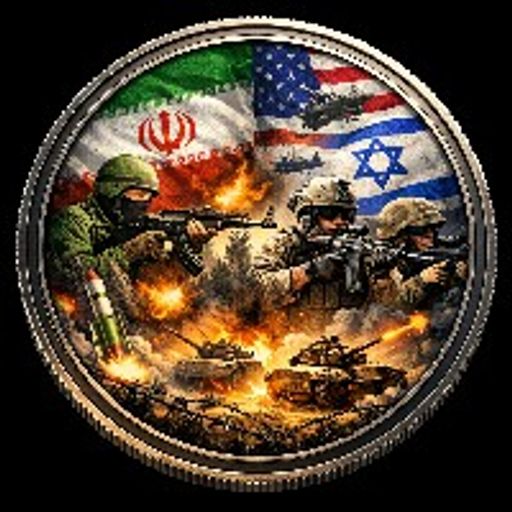

Two roads
On February 27th, former Israeli Defense Minister Gallant wrote the following sentence:
The choices made in the coming weeks will determine whether the post-Iran Middle East is more stable or simply differently dangerous.
This article titled “The Next Strategic Shift in the Middle East” is highly worth reading. Besides Iran, it also mentions Turkey. Just a side note, over time I increasingly feel that geopolitical studies resemble a network structure rather than a linear one. This means that on Chinese the internet, there are many gaps that need filling, because research on many countries remains blank. For example, BYD will definitely pay close attention to the comparison between Turkey and Hungary, but Turkey’s geopolitics is influenced by Israel. This indicates that without a resilient and comprehensive network analysis, point-to-point analysis can easily miss key information.
Frankly, I didn’t expect such intense geopolitical activity this week. I know Iran is already in a difficult situation, but Netanyahu and Trump’s decisiveness in this action is still worth learning from. In this geopolitical world, deception and even unscrupulous competition are the norm.
The current situation is quite similar: inheriting Khamenei is very difficult. Successors either choose to be more hardline or opt for moderation and redemption.
But I want to briefly review the situation. Thanks to a friend’s reminder, Saudi Arabia has joined Israel and the US in this process. This shows that for Israel, the US, and Saudi Arabia, they all see this as a good opportunity to push for regime change in Iran.
This actually makes sense. After a strong leader leaves, successors generally have only two choices: double down or buy time. For Saudi Arabia, they hope for economic development; Israel wants to resolve issues once and for all; the US has more demands.
Iran itself, in 1989, with the Rafsanjani + Khamenei combination, was also a form of succession to Khomeini—somewhat a form of redemption at that time.
Such policies require a leader with a military background and prestige to implement a peace and economic development strategy. Historically, such transitions are rarely successful and often fail. Sometimes, the health of reformers is also critical, because the success of such transitions often takes about ten years.
So, the first scenario: if we see an elected official in Iran supported by the Revolutionary Guards, slowly or thoroughly reforming, then this is what Israel, Saudi Arabia, and the US hope to see. Middle Eastern security and development could become possible. But currently, we don’t know who this person might be.
The second scenario is the opposite: a more hardline successor like Béria or Stalin, with a stronger Revolutionary Guard. I want to clarify that many views in Iranian cities and rural areas are quite different—this is common. Rural areas tend to be more nationalist, while urban areas lean more pro-Western. Frankly, it’s hard to judge who is more likely to succeed. When Pinochet overthrew Allende, rural supporters still supported Allende, but in contrast, Khomeini’s revolution was not so closely tied to urban residents.
Therefore, rational analysis is somewhat limited here. As the title suggests, when decades change in a matter of weeks, courage and choices at key moments are more important than rational planning.
In the second scenario, the situation would worsen, with even more internal chaos, and the situation would not de-escalate.
This aligns with the title: I believe that once Iran’s next leader is clear, we will see the country follow these two paths. At this point, there’s no need to predict too much—this is true regime change, and there will be many opportunities afterward.
However, often history has a period of easing. So there’s also the possibility that a Revolutionary Guard puppet is chosen, or a civilian elected official with little military background is selected to ease tensions. After internal pressures in Israel subside and US military presence diminishes, the Guard could return to take control. If the first option faces internal Iranian pressures, and the second external security pressures, then a third option might seem feasible—one that requires a rational and united collective. I doubt Iran already has such a group.
Most geopolitical analyses assume that situations will gradually ease, with only a few cases of escalation. Most of the time, the observation period is just next week.
For me, the successor in Iran, the three scenarios above, serve as indicators of which hypothesis the market is leaning toward.
A peaceful Iran would bring changes to the Middle East comparable to China’s reform and opening-up
A warlike Iran could make the Strait of Hormuz highly uncertain
Even a chaotic Iran, not leaning toward either side, would have profound regional impacts
The misfortune of our era is that it is full of great upheavals, but the fortunate part is that any of these three possibilities would constitute a structural change.
Right now, we are experiencing a structural shift. I feel that by next week or the latest the week after, we will have a preliminary conclusion.
Source: Peifengke
Risk Warning and Disclaimer
The market carries risks; investments should be cautious. This article does not constitute personal investment advice and does not consider individual users’ specific investment goals, financial situations, or needs. Users should consider whether any opinions, viewpoints, or conclusions in this article are suitable for their particular circumstances. Invest accordingly at their own risk.