As the digital economy accelerates, cloud storage and cloud computing have become foundational to internet services. From data storage to application deployment, many enterprises depend on centralized cloud service providers for resource allocation and business scaling. However, while this model boosts efficiency, it also leads to resource concentration, rising costs, and excessive centralization of data control.
In this context, Decentralized Physical Infrastructure Networks (DePIN) are emerging as a major trend in Web3 infrastructure. By connecting globally distributed resources through a unified protocol, DePIN aims to transform traditional infrastructure supply models—with decentralized cloud networks as a core component.
What Is Impossible Cloud Network (ICNT)?
Impossible Cloud Network is a decentralized infrastructure protocol that delivers cloud resource services via a distributed node network. Node operators can contribute storage or computing resources to the network, while enterprises or Developers access these resources through the protocol, creating an open cloud resource Marketplace.
Unlike traditional cloud platforms, ICNT does not rely on a single service provider for centralized resource management. Instead, it coordinates resource supply and demand at the protocol layer. This design increases resource utilization and reduces dependency on any single platform.
At its core, ICNT transforms the resource management, billing, and scheduling logic of traditional cloud services into protocol-based processes, allowing cloud infrastructure to operate in a more open and distributed fashion.
How Does Impossible Cloud Network Work?
ICNT’s core operating logic is to connect distributed resource nodes to a unified protocol network for efficient resource matching.
Node operators contribute idle or dedicated storage, bandwidth, or computing resources to the network. The protocol registers and schedules these resources based on type and demand. When users request resources, the protocol selects suitable nodes according to preset rules and settles payments once the service is delivered.
This approach allows resource providers to earn incentives by supplying infrastructure, while users access cloud services through a standardized protocol. Resource scheduling and payment distribution are managed by the protocol, increasing Marketplace transparency and flexibility.
Who Participates in the ICNT Network?
The ICNT network is composed of resource providers, resource users, and protocol governance participants.
Resource providers, typically node operators, contribute storage or computing resources and earn protocol incentives based on their contributions. Resource users include Developers, enterprise clients, and application service providers who access network resources for data storage or computing needs.
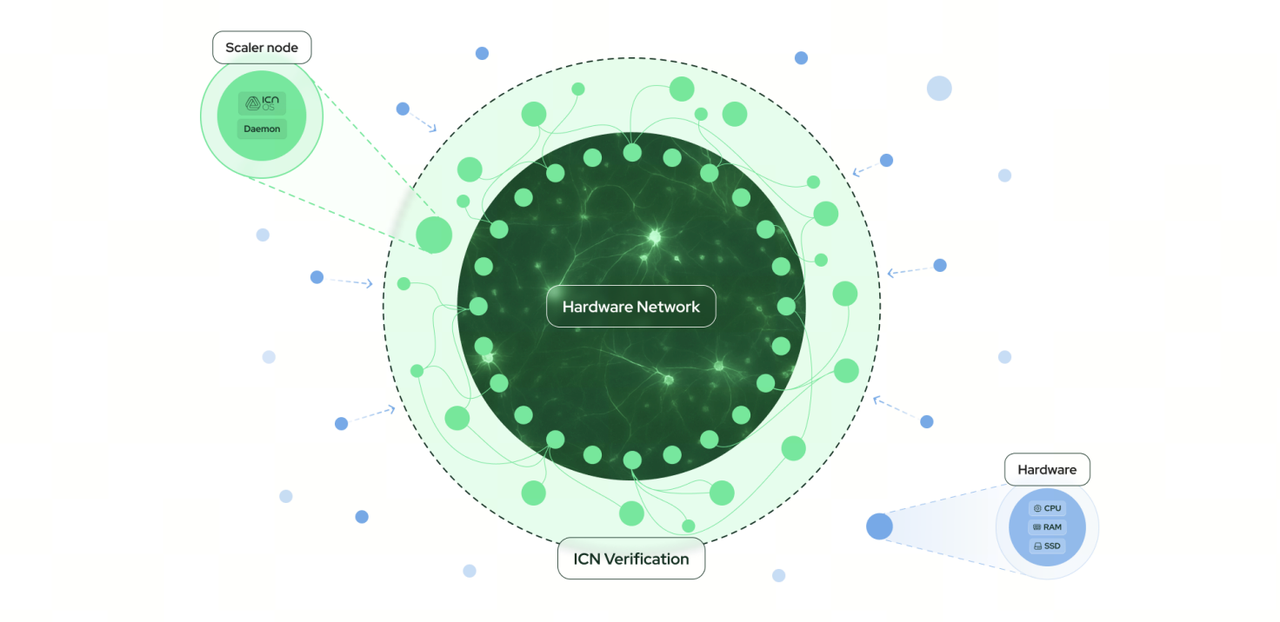
Governance participants use tokens to take part in protocol governance, such as setting resource pricing, reward distribution, or network upgrade rules. This multi-role structure underpins ICNT’s decentralized operating model.
What Role Does the ICNT Token Play in the Network?
The ICNT Token is essential to Impossible Cloud Network, powering payment, incentives, and governance.
For payments, users pay for cloud resources with ICNT Token. For incentives, node operators receive token rewards for providing resources. For governance, holders can vote on key network parameters and protocol updates.
This structure makes the ICNT Token a critical bridge between resource suppliers and users, driving network growth and stable service delivery through incentives.
What Are the Use Cases for Impossible Cloud Network?
ICNT’s primary use cases include decentralized cloud storage, enterprise data services, and distributed computing infrastructure.
For cloud storage, the network offers object storage to enterprises. For data processing, it supports AI data infrastructure and large-scale data access. For enterprise cloud services, it can supplement traditional cloud resources.
Thanks to its open resource supply model, ICNT’s use cases go beyond on-chain data to include enterprise-level infrastructure, making it a strong growth candidate in the DePIN sector.
How Is Impossible Cloud Network Different from Traditional Cloud Services?
The main difference between ICNT and traditional cloud services lies in resource organization and service architecture.
Traditional cloud services rely on centralized platforms to provide resources, while ICNT aggregates resources via a distributed node network. Centralized models offer service stability and management advantages, while ICNT stands out for openness, lower resource costs, and resilience against single points of failure.
Resource pricing and scheduling are controlled by traditional platforms, but ICNT uses protocol-based mechanisms for allocation and settlement. This increases Marketplace transparency and gives resource providers greater participation.
What Are the Advantages and Challenges of Impossible Cloud Network?
ICNT’s main advantages include an open resource supply mechanism, cost optimization, and decentralized resource allocation. By connecting global distributed resources, it can boost utilization and lower infrastructure costs.
However, decentralized cloud networks face challenges such as inconsistent node quality, complex performance management, and difficulties in service standardization. For enterprise adoption, balancing decentralization with service quality is a key long-term challenge.
Summary
Impossible Cloud Network (ICNT) is a decentralized infrastructure protocol for cloud storage and distributed cloud services, building an open cloud resource Marketplace by integrating distributed node resources. Its core value lies in coordinating resource supply, payments, and incentives through protocol, providing enterprises and Developers with more open infrastructure options.
As DePIN becomes a cornerstone of Web3 infrastructure, ICNT’s decentralized cloud network model is expanding the boundaries of blockchain applications. Whether in cloud storage, data processing, or enterprise infrastructure, protocol-driven cloud resource networks are shaping the future of decentralized infrastructure.
FAQs
Is ICNT a DePIN project?
Yes. ICNT is a Decentralized Physical Infrastructure Network (DePIN) project, aiming to provide cloud resource services through a distributed node network.
Does ICNT provide storage or computing resources?
ICNT supports both storage and computing resources, including object storage, data processing, and cloud infrastructure support.
What is the main function of the ICNT Token?
The ICNT Token is used for paying cloud resource fees, incentivizing node operators, and participating in protocol governance.
What is the biggest difference between ICNT and traditional cloud services?
The biggest difference is in the resource supply model. Traditional cloud services rely on centralized platforms, while ICNT delivers resources through a distributed node network.
What are the application scenarios of ICNT?
ICNT’s use cases include decentralized cloud storage, AI data infrastructure, enterprise cloud services, and distributed computing support.