What Is Kyo Finance: Project Overview and Latest Price Dynamics Explained
What is Kyo Finance?
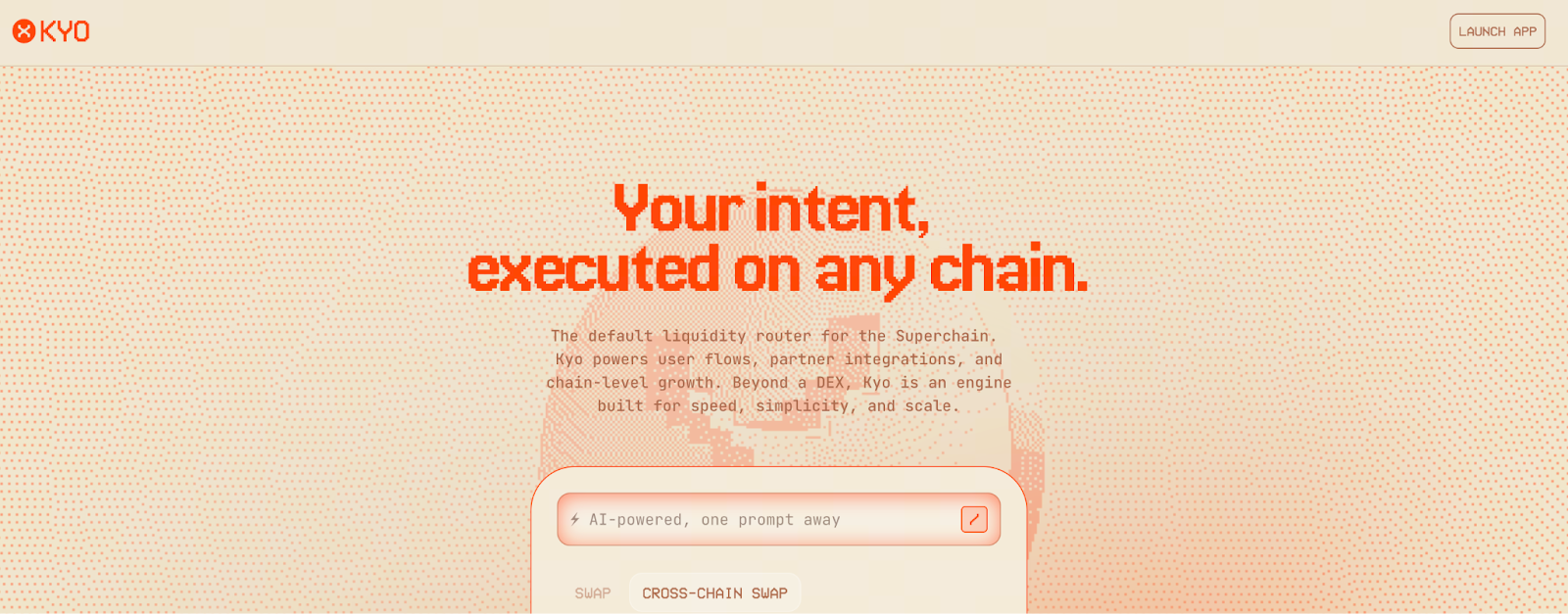
Image: https://kyo.finance/
Kyo Finance is a decentralized trading and liquidity platform designed as a native veDEX. The project aims to lower the barrier for Web2 users to enter DeFi by providing configurable pools and supporting both Uni V2 and Uni V3 mechanisms. This approach delivers lower slippage and higher capital efficiency for trades. The official documentation offers detailed explanations of the project’s vision and design goals.
Core Technologies and Product Highlights
- Native veDEX Architecture: Kyo uses a governance and reward system based on the ve-token mechanism (veDEX), integrating voting, rewards, and liquidity to establish a closed loop between tokens, liquidity, and governance.
- Uni V2 / Uni V3 Pool Compatibility: Kyo natively supports existing Uni V2 and Uni V3 pools, enabling developers to access additional yield and governance features within a familiar concentrated liquidity framework. The official architecture documentation highlights abstraction and encapsulation for enhanced security.
- Configurable Pools: This unique feature from Kyo enables more flexible swaps between various asset pairs and helps mitigate unnecessary losses from impermanent loss in equivalent asset exchanges. The official documentation and resource pages provide contract addresses and technical details for audits and developer reference.
Tokenomics
Kyo Finance’s native token, KYO, leverages the ve model to create a unified system for governance, incentives, and value sharing. Users can lock KYO as veKYO to participate in governance votes, determine liquidity pool incentive allocations, and earn a share of platform fees and ecosystem rewards. Locking tokens for longer periods increases voting weight and rewards, naturally reducing circulating supply and selling pressure. Token distribution typically covers community incentives, team, investors, and treasury, with community incentives receiving the largest share to drive protocol growth. Team and advisor allocations follow a long-term linear vesting schedule to ensure ecosystem stability. As trading volume and lock-up rates rise and the Bribe voting market expands, demand and value for KYO are expected to grow, establishing it as the core asset for platform governance and yield capture.
Key Risks Investors Should Consider
- Liquidity Risk and Slippage: New tokens or pools often face insufficient liquidity, so large trades may result in high slippage or losses.
- Smart Contract and Bridge Risks: Despite the emphasis on encapsulation and secure design in official documentation, all smart contracts carry potential vulnerabilities or integration risks, particularly in cross-chain or bridge modules.
- Market and News Manipulation: Events like TGE, listings, or airdrop announcements can attract short-term speculation, causing significant price volatility. Always verify event timings through official channels.
Summary: Who Should Pay Attention to Kyo Finance?
- Users interested in DeFi technology and AMM mechanisms, such as those researching the Uni V3 model or looking to participate in ve tokenomics.
- Short- and medium-term traders with risk tolerance who can quickly verify official announcements and manage their positions as information is released.
- Users seeking to participate in airdrops or Launchpools—be sure to confirm official addresses and procedures to avoid phishing scams.
Gate will be the first to launch Kyo Finance (KYO) spot trading and open the 325th HODLer Airdrop. Users holding 1 GT can participate in the airdrop for free and share 60,000 KYO tokens. Click the link to join: https://www.gate.com/hodler-airdrop/2451?airdrop_name=KYO
Share
Content


Related Articles

Crypto Future Profit Calculator: How to Calculate Your Potential Gains

Crypto Futures Calculator: Easily Estimate Your Profits & Risks

What is Oasis Network (ROSE)?

The $50M Crypto Scam Nobody Is Talking About

What Are Crypto Options?