ONE vs NEAR: Comparing Two Blockchain Platforms for Scalable DApp Development

2025-10-20 00:41:57
Blockchain
Crypto Ecosystem
DeFi
Investing In Crypto
Layer 2
Article Rating : 4.6
half-star
0 ratings
This article delves into the strategic comparison between Harmony (ONE) and NEAR Protocol for scalable DApp development, providing insights into their historical price trends, supply mechanisms, institutional adoption, and ecosystem development. Investors seeking to understand which blockchain platform offers better investment value will find comprehensive analyses and forecasts up to 2030. Key areas of focus include tokenomics, enterprise partnerships, technical advancements, and macroeconomic factors. Readers will learn investment strategies, potential risks, and why NEAR might be more appealing to institutional investors. View real-time prices and predictions on Gate, enhancing cryptocurrency market understanding.
ONE vs NEAR: Comparing Two Blockchain Platforms for Scalable DApp Development

Introduction: Investment Comparison of ONE vs NEAR

In the cryptocurrency market, the comparison between Harmony (ONE) vs NEAR (NEAR) has always been a topic that investors can't ignore. The two not only have significant differences in market cap ranking, application scenarios, and price performance, but also represent different cryptocurrency asset positioning.

Harmony (ONE): Since its launch in 2019, it has gained market recognition for its high scalability and security based on sharding technology.

NEAR (NEAR): Introduced in 2020, it has been hailed as a highly scalable base protocol, ensuring fast enough support for DApp operations on mobile devices.

This article will provide a comprehensive analysis of the investment value comparison between Harmony vs NEAR, focusing on historical price trends, supply mechanisms, institutional adoption, technological ecosystems, and future predictions, attempting to answer the question that investors are most concerned about:

"Which is the better buy right now?"

I. Price History Comparison and Current Market Status

  • 2021: ONE reached its all-time high of $0.37902 on October 26, 2021.
  • 2022: NEAR reached its all-time high of $20.44 on January 17, 2022.
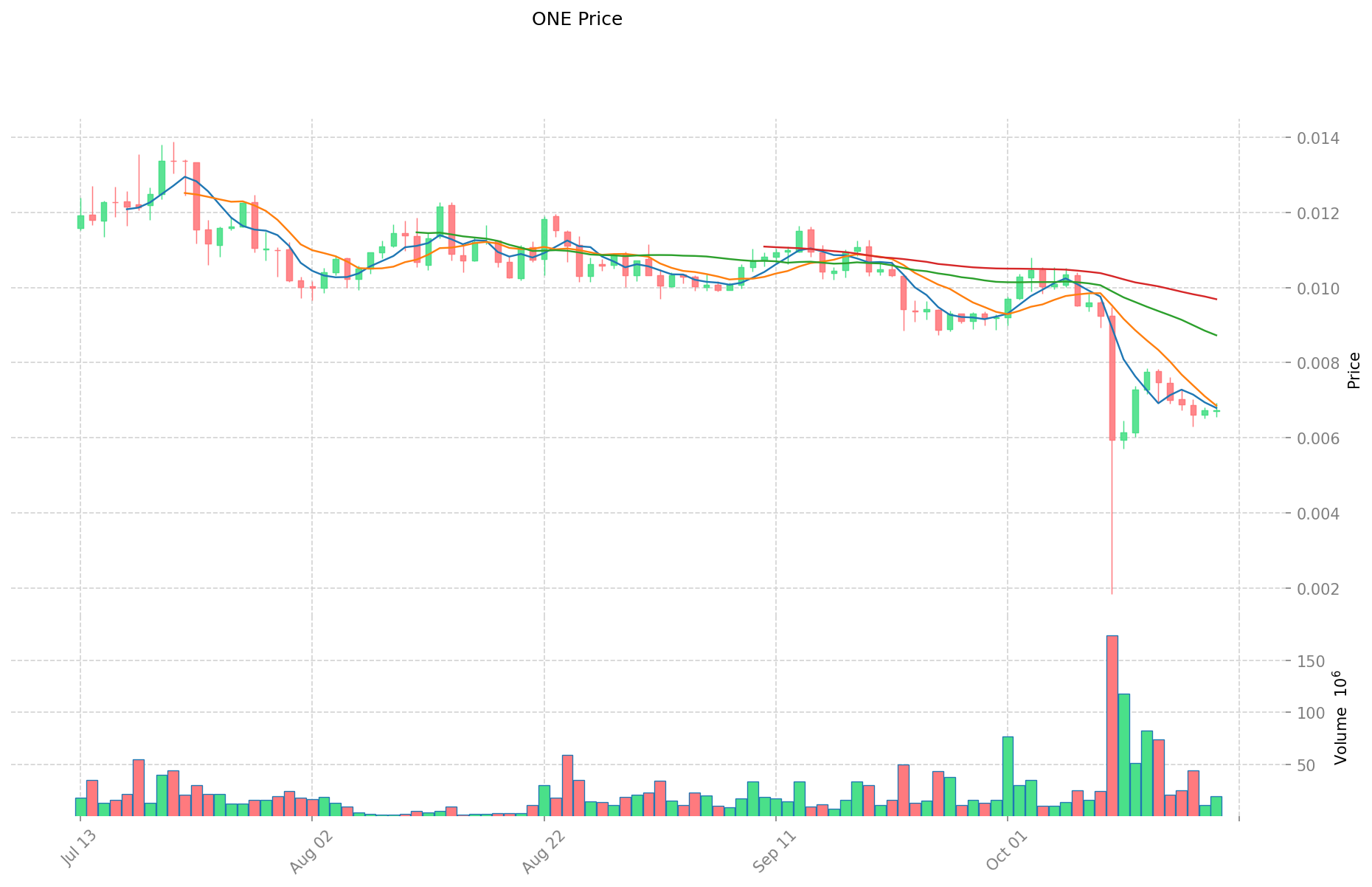
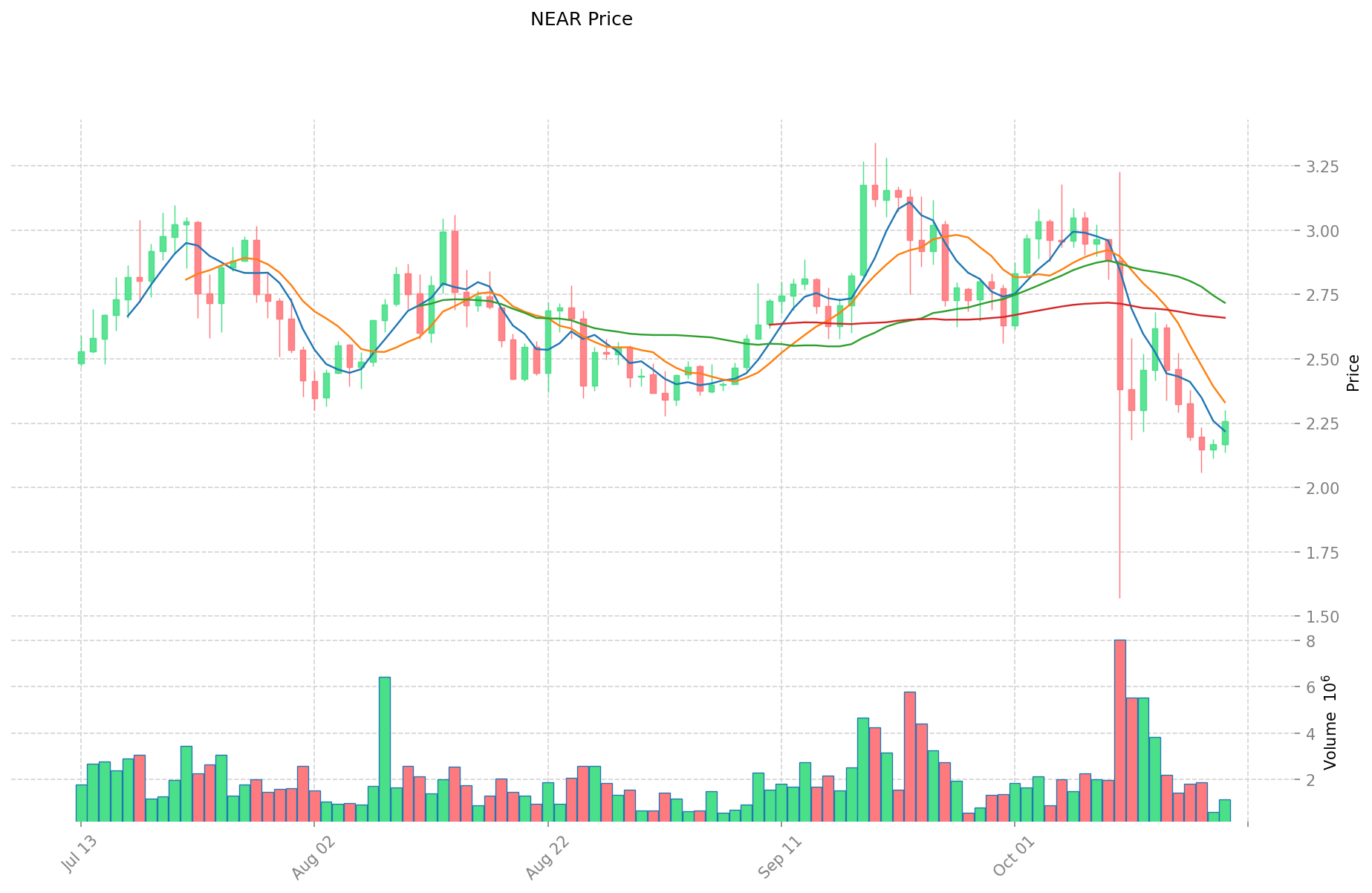
  • Comparative analysis: In the recent market cycle, ONE has fallen from its high of $0.37902 to a current price of $0.006604, while NEAR has declined from $20.44 to $2.224.

Current Market Situation (2025-10-20)

  • ONE current price: $0.006604
  • NEAR current price: $2.224
  • 24-hour trading volume: $130,198.32 (ONE) vs $2,478,947.07 (NEAR)
  • Market Sentiment Index (Fear & Greed Index): 29 (Fear)

Click to view real-time prices:

price_image1 price_image2

II. Core Factors Affecting Investment Value of ONE vs NEAR

Supply Mechanisms Comparison (Tokenomics)

  • ONE: Harmony ONE has a maximum supply cap of 13.156 billion tokens. It initially issued 12.6 billion tokens in 2019, with additional issuance through staking rewards. Currently, ONE operates with an inflation rate of approximately 3% annually.
  • NEAR: NEAR Protocol implemented a deflationary model through its tokenomics. The initial supply was 1 billion tokens, with 5% annual inflation. However, 70% of transaction fees are burned, creating a deflationary effect that could offset inflation when network activity is high.
  • 📌 Historical pattern: Deflationary or supply-capped tokens tend to perform better during bull markets. NEAR's partial burning mechanism provides stronger tokenomic fundamentals during periods of high network usage.

Institutional Adoption and Market Applications

  • Institutional holdings: NEAR has attracted more institutional investment, with notable backers including Andreessen Horowitz (a16z), Pantera Capital, and Electric Capital. ONE has fewer major institutional backers.
  • Enterprise adoption: NEAR has developed stronger enterprise partnerships, including Aurora (Ethereum compatibility layer) and Pagoda (development platform). ONE's cross-chain bridges have seen limited institutional adoption compared to NEAR's ecosystem.
  • Regulatory attitudes: Both tokens operate in similar regulatory environments. Neither has faced specific regulatory challenges that would significantly differentiate their market positions.

Technical Development and Ecosystem Building

  • ONE technical upgrades: Harmony implemented sharding technology for scalability and a trustless Ethereum bridge, but development momentum has slowed since 2022.
  • NEAR technical development: NEAR has continued strong development with its sharding solution (Nightshade), fast finality, and Aurora EVM compatibility layer. The protocol has maintained consistent technical progress.
  • Ecosystem comparison: NEAR's ecosystem shows stronger development metrics with over 1,000 projects building on the platform, including significant DeFi protocols and NFT marketplaces. ONE's ecosystem has faced challenges with fewer active developers and projects.

Macroeconomic Factors and Market Cycles

  • Performance in inflationary environments: NEAR's partial fee-burning mechanism provides better theoretical protection against inflation compared to ONE's fixed issuance model.
  • Macroeconomic monetary policy: Both tokens show correlation to broader crypto market movements in response to interest rate changes and USD strength.
  • Geopolitical factors: NEAR has demonstrated broader global adoption across different regions, potentially offering better resilience to regional regulatory changes.

III. 2025-2030 Price Prediction: ONE vs NEAR

Short-term Prediction (2025)

  • ONE: Conservative $0.00453813 - $0.006577 | Optimistic $0.006577 - $0.0072347
  • NEAR: Conservative $1.64428 - $2.222 | Optimistic $2.222 - $2.57752

Mid-term Prediction (2027)

  • ONE may enter a growth phase, with estimated prices $0.0043392908475 - $0.0084579397875
  • NEAR may enter a bullish market, with estimated prices $2.370722904 - $3.835776384
  • Key drivers: Institutional capital inflow, ETF, ecosystem development

Long-term Prediction (2030)

  • ONE: Base scenario $0.005853712087019 - $0.01064311288549 | Optimistic scenario $0.01064311288549 - $0.01564537594167
  • NEAR: Base scenario $3.590230197634344 - $4.1267013765912 | Optimistic scenario $4.1267013765912 - $6.107518037354976

View detailed price predictions for ONE and NEAR

Disclaimer

ONE:

年份 预测最高价 预测平均价格 预测最低价 涨跌幅
2025 0.0072347 0.006577 0.00453813 0
2026 0.0078036105 0.00690585 0.004557861 4
2027 0.0084579397875 0.00735473025 0.0043392908475 11
2028 0.011622312477562 0.00790633501875 0.006483194715375 19
2029 0.011521902022824 0.009764323748156 0.006151523961338 47
2030 0.01564537594167 0.01064311288549 0.005853712087019 61

NEAR:

年份 预测最高价 预测平均价格 预测最低价 涨跌幅
2025 2.57752 2.222 1.64428 0
2026 2.9277072 2.39976 1.6078392 7
2027 3.835776384 2.6637336 2.370722904 19
2028 3.83471089056 3.249754992 2.1123407448 46
2029 4.7111698119024 3.54223294128 3.2588543059776 59
2030 6.107518037354976 4.1267013765912 3.590230197634344 85

IV. Investment Strategy Comparison: ONE vs NEAR

Long-term vs Short-term Investment Strategies

  • ONE: Suitable for investors focused on cross-chain interoperability and potential ecosystem growth
  • NEAR: Suitable for investors seeking a more established ecosystem and potential for deflationary tokenomics

Risk Management and Asset Allocation

  • Conservative investors: ONE: 20% vs NEAR: 80%
  • Aggressive investors: ONE: 40% vs NEAR: 60%
  • Hedging tools: Stablecoin allocation, options, cross-currency portfolios

V. Potential Risk Comparison

Market Risks

  • ONE: Higher volatility and lower liquidity compared to NEAR
  • NEAR: Potential for increased competition in the Layer 1 space

Technical Risks

  • ONE: Scalability challenges, network stability issues
  • NEAR: Centralization concerns, potential security vulnerabilities in sharding implementation

Regulatory Risks

  • Global regulatory policies may have different impacts on both tokens, with NEAR potentially facing more scrutiny due to its larger market presence

VI. Conclusion: Which Is the Better Buy?

📌 Investment Value Summary:

  • ONE advantages: Lower market cap with potential for higher growth, cross-chain focus
  • NEAR advantages: Stronger ecosystem development, institutional backing, deflationary tokenomics

✅ Investment Advice:

  • New investors: Consider a higher allocation to NEAR due to its more established ecosystem and stronger market position
  • Experienced investors: Balanced approach with a slight tilt towards NEAR, while keeping an eye on ONE's potential for higher returns
  • Institutional investors: Focus on NEAR for its stronger fundamentals and ecosystem growth, with a smaller allocation to ONE for diversification

⚠️ Risk Warning: The cryptocurrency market is highly volatile, and this article does not constitute investment advice. None

VII. FAQ

Q1: What are the main differences between ONE and NEAR in terms of market performance? A: ONE reached its all-time high of $0.37902 in October 2021, while NEAR peaked at $20.44 in January 2022. Currently, ONE is trading at $0.006604, and NEAR at $2.224, with NEAR showing a significantly higher trading volume of $2,478,947.07 compared to ONE's $130,198.32 in the last 24 hours.

Q2: How do the tokenomics of ONE and NEAR compare? A: ONE has a maximum supply cap of 13.156 billion tokens with an annual inflation rate of about 3%. NEAR, on the other hand, started with 1 billion tokens and has a 5% annual inflation rate, but implements a partial burning mechanism where 70% of transaction fees are burned, potentially creating a deflationary effect during high network activity.

Q3: Which token has attracted more institutional investment? A: NEAR has attracted more institutional investment, with notable backers including Andreessen Horowitz (a16z), Pantera Capital, and Electric Capital. ONE has fewer major institutional backers comparatively.

Q4: How do the ecosystems of ONE and NEAR compare? A: NEAR's ecosystem shows stronger development metrics with over 1,000 projects building on the platform, including significant DeFi protocols and NFT marketplaces. ONE's ecosystem has faced challenges with fewer active developers and projects.

Q5: What are the long-term price predictions for ONE and NEAR by 2030? A: For ONE, the base scenario predicts a range of $0.005853712087019 to $0.01064311288549, with an optimistic scenario reaching up to $0.01564537594167. For NEAR, the base scenario predicts a range of $3.590230197634344 to $4.1267013765912, with an optimistic scenario reaching up to $6.107518037354976.

Q6: How do investment strategies differ for ONE and NEAR? A: ONE is suitable for investors focused on cross-chain interoperability and potential ecosystem growth, while NEAR is suitable for those seeking a more established ecosystem and potential for deflationary tokenomics. Conservative investors might allocate 20% to ONE and 80% to NEAR, while aggressive investors might opt for 40% ONE and 60% NEAR.

Q7: What are the main risks associated with investing in ONE and NEAR? A: ONE faces higher volatility, lower liquidity, scalability challenges, and network stability issues. NEAR risks include increased competition in the Layer 1 space, potential centralization concerns, and possible security vulnerabilities in its sharding implementation. Both tokens may face varying impacts from global regulatory policies.

* The information is not intended to be and does not constitute financial advice or any other recommendation of any sort offered or endorsed by Gate.
Related Articles
2025 HYPEPrice Prediction: Analyzing Market Trends and Growth Potential for the Next Crypto Breakthrough

2025 HYPEPrice Prediction: Analyzing Market Trends and Growth Potential for the Next Crypto Breakthrough

This article comprehensively analyzes HYPE's market trends, price predictions, and growth potential as a promising L1 blockchain within DeFi by 2025. It delves into factors influencing its price, including deflationary tokenomics and macroeconomic dynamics, offering professional investment strategies and risk management tips. Ideal for investors seeking insights into HYPE's investment value, it addresses volatility, regulatory, and technical challenges. Structured to evaluate historical data, analyze current market status, and predict future trends, the content is essential for making informed investment decisions within the rapidly evolving crypto landscape.

2025-09-09 10:55:01
DFND vs OP: The Battle of Cybersecurity Titans in the Digital Age

DFND vs OP: The Battle of Cybersecurity Titans in the Digital Age

The article "DFND vs OP: The Battle of Cybersecurity Titans in the Digital Age" offers a thorough comparison between two major crypto assets, DFND and OP, focusing on their market performance, technical analysis, and investment strategies. It addresses key investment questions and evaluates factors like price history, supply mechanisms, institutional adoption, and technical development. Readers will gain insights into which coin may be a better buy, tailored for both novice and experienced investors. Keywords are optimized for quick understanding such as "investment comparison," "DFND," "OP," and "crypto assets."
2025-11-29 19:13:23
Gate Square Spark Program 2025: Web3 Innovation Incubation to Support Blockchain Entrepreneurship

Gate Square Spark Program 2025: Web3 Innovation Incubation to Support Blockchain Entrepreneurship

In the wave of Web3 innovation, the Gate Spark Program 2025 stands out as a benchmark for blockchain entrepreneurship support. This Web3 innovation incubation project not only provides financial support for startups but also comprehensively expands the Gate ecosystem. Through a systematic cryptocurrency startup investment strategy, the Spark Program is leading the trends of Web3 development in 2025, painting an exciting blueprint for the future digital economy.
2025-07-02 07:31:47
2025 SUI价格预测:区块链新贵的未来发展与投资价值分析

2025 SUI价格预测:区块链新贵的未来发展与投资价值分析

本文从市场地位、历史价格走势、持仓分布及影响因素等方面全面分析SUI的投资价值。重点预测2025-2030年价格走势,并提供专业投资策略和风险管理框架以帮助投资者决策。适用于关注区块链技术发展和加密货币市场趋势的个人及机构投资者。文章逻辑清晰,结构包括引言、市场回顾、影响因素分析、价格预测、投资策略及风险评估,旨在支持加密投资和决策。
2025-09-09 10:38:03
2025 INJ Price Prediction: A Comprehensive Analysis of Market Trends and Growth Potential for Injective Protocol

2025 INJ Price Prediction: A Comprehensive Analysis of Market Trends and Growth Potential for Injective Protocol

This article provides a comprehensive analysis of Injective Protocol (INJ), focusing on its market trends, price predictions, investment strategies, and risks. It reviews INJ's historical price evolution and its current market status, providing insights into its potential growth as a leading DeFi blockchain. The article addresses key factors influencing future prices, such as supply mechanisms, institutional dynamics, and ecosystem development. Designed to aid investors in understanding INJ's investment value, it suggests strategies and risk management techniques appropriate for beginners, experienced, and institutional investors. The content is optimized for SEO, highlighting keywords like Injective Protocol, INJ price prediction, and DeFi investment.
2025-09-12 04:47:57
2025 NEAR Price Prediction: A Comprehensive Analysis of Factors Driving the Next Bull Run in the NEAR Protocol Ecosystem

2025 NEAR Price Prediction: A Comprehensive Analysis of Factors Driving the Next Bull Run in the NEAR Protocol Ecosystem

The article offers a thorough analysis of NEAR Protocol's price prediction from 2025 to 2030, examining historical trends, market dynamics, and key factors influencing future valuation. It addresses investment value, risk management, and strategic approaches for investors, including both long-term holding and active trading strategies. Key topics include NEAR's market position, price history, ecosystem development, and institutional involvement. Designed for investors and cryptocurrency enthusiasts, this guide provides insights into potential market scenarios and practical investment methodologies, optimizing SEO with keywords such as NEAR Protocol, price prediction, cryptocurrency investment, and blockchain scalability.
2025-09-10 01:40:31
Recommended for You
TradFi vs DeFi: How Traditional Finance is Integrating with Blockchain on Hedera

TradFi vs DeFi: How Traditional Finance is Integrating with Blockchain on Hedera

# TradFi vs DeFi: How Traditional Finance is Integrating with Blockchain on Hedera This article examines how traditional finance institutions are bridging the gap with decentralized finance through blockchain technology, specifically leveraging Hedera's enterprise-grade infrastructure. It contrasts TradFi's centralized control model with DeFi's decentralized autonomy, revealing why banks are adopting blockchain for settlement speed, cost reduction, and 24/7 market access. The piece explores Hedera's role in enabling institutional-compliant tokenization, asset management, and cross-chain operations through smart contracts. Readers discover practical hybrid finance benefits—including $28.8M annual savings examples and deterministic finality consensus—positioning this guide for financial institutions, blockchain developers, and investors evaluating Web3 integration. The comprehensive framework demonstrates how tokenized assets, embedded compliance, and instant settlement are reshaping financial infrastructure b
2026-01-07 11:05:14
MicroStrategy Bitcoin Holdings and MSCI Index Inclusion Impact on Crypto Stock Performance

MicroStrategy Bitcoin Holdings and MSCI Index Inclusion Impact on Crypto Stock Performance

# Article Overview: MicroStrategy Bitcoin Holdings and MSCI Index Inclusion Impact on Crypto Stock Performance MicroStrategy's aggressive Bitcoin accumulation strategy transforms corporate treasury practice into institutional investment vehicles, delivering leveraged Bitcoin exposure through traditional equity markets. This article examines how MSCI's decision to maintain digital asset treasury companies within benchmarks validates cryptocurrency as legitimate corporate strategy, eliminating potential delisting risks. Readers—institutional investors, portfolio managers, and crypto asset allocators—discover the high-beta correlation mechanics between MicroStrategy stock and Bitcoin price movements, revealing both amplified upside potential and dilution risks. The framework explores Bitcoin concept stocks as bridges for institutional adoption, explaining how Gate trading infrastructure enables cryptocurrency-linked equity positioning within compliance frameworks. This analysis addresses critical questions: How
2026-01-07 11:04:25
TradFi vs DeFi: Understanding Traditional Finance and Decentralized Finance in Web3

TradFi vs DeFi: Understanding Traditional Finance and Decentralized Finance in Web3

# Article Introduction This comprehensive guide compares Traditional Finance (TradFi) and Decentralized Finance (DeFi), addressing the fundamental differences in custody, access, and operational models within Web3. For investors, crypto enthusiasts, and financial professionals seeking clarity, this article explains TradFi's institutional frameworks versus DeFi's permissionless blockchain-based systems. Structured through foundational concepts, head-to-head comparisons, and current convergence trends, the article demonstrates how both ecosystems complement each other in 2026. Discover how platforms like Gate bridge traditional finance onramps with decentralized protocols, enabling seamless participation across both systems. Whether prioritizing regulatory protection or speed and accessibility, understand which model aligns with your financial objectives and risk tolerance.
2026-01-07 11:04:23
Grayscale Ethereum Staking ETF: How to Earn Passive Income with ETHE

Grayscale Ethereum Staking ETF: How to Earn Passive Income with ETHE

# Article Overview: Grayscale Ethereum Staking ETF - Passive Income Through ETHE **Core Content & Value Proposition:** Grayscale Ethereum Staking ETF (ETHE) revolutionizes crypto investing by enabling investors to earn 3-5% annual staking rewards directly through a regulated SEC ETF—eliminating the need for technical expertise, 32 ETH minimum capital, or node operation. This groundbreaking product transforms Ethereum into a yield-bearing asset comparable to dividend stocks, delivering dual benefits: staking income distributions plus price appreciation potential. ETHE addresses the institutional gap between regulatory compliance and passive income generation, offering superior liquidity and operational simplicity versus traditional staking. Available through Gate and major brokerages, ETHE serves retail investors, institutional allocators, and treasury managers seeking accessible ethereum staking income without infrastructure complexity. **Article Structure:** - Historic milestone: First U.S. Ethereum ETP di
2026-01-07 11:03:31
American Banks Bitcoin FOMO: Morgan Stanley and Bank of America ETF Filings

American Banks Bitcoin FOMO: Morgan Stanley and Bank of America ETF Filings

# Article Overview: American Banks Bitcoin FOMO - Morgan Stanley and Bank of America ETF Filings This article explores how major US banks are entering the cryptocurrency market through Bitcoin and Solana ETF filings, marking a fundamental shift from traditional finance's skepticism toward digital assets. It addresses institutional investors' growing demand for regulated cryptocurrency exposure and explains how regulatory clarity from federal banking authorities enables banks to offer custody, trading, and advisory services. The piece examines Morgan Stanley's historic move as the first top-10 bank filing crypto ETFs, Bank of America's strategic repositioning, and the emerging 1-4% institutional allocation framework reshaping bitcoin markets. Readers—including wealth managers, institutional investors, and financial advisors—will understand how mainstream banking infrastructure now facilitates cryptocurrency integration into diversified portfolios. The analysis reveals that institutional bitcoin adoption throu
2026-01-07 11:03:28
Tether Pushes Tokenized Gold Toward Payments with Scudo Rollout

Tether Pushes Tokenized Gold Toward Payments with Scudo Rollout

# Article Overview: Tether Pushes Tokenized Gold Toward Payments with Scudo Rollout Tether's Scudo initiative revolutionizes gold-backed payments by introducing a simplified unit structure for XAUT tokenized gold, addressing critical usability barriers in blockchain commerce. This article explores how tokenized gold transforms precious metals from long-term assets into practical payment mediums through fractional ownership and transparent blockchain verification. Scudo eliminates decimal complexity, enabling merchants and developers to implement gold-backed transactions seamlessly across Web3 platforms and e-commerce systems. The framework benefits institutional investors, DeFi protocols, and cross-border traders seeking stable, asset-backed alternatives to volatile cryptocurrencies. From supply chain financing to remittance services on Gate and alternative networks, gold-backed stablecoins reshape payment infrastructure while reducing systemic risk in decentralized finance. This comprehensive guide demonstr
2026-01-07 11:02:34