Author: Zhou Ziheng
“Tariff is the most beautiful word in the dictionary.” This iconic declaration by Donald Trump is stirring up a storm to reshape the global economic order.
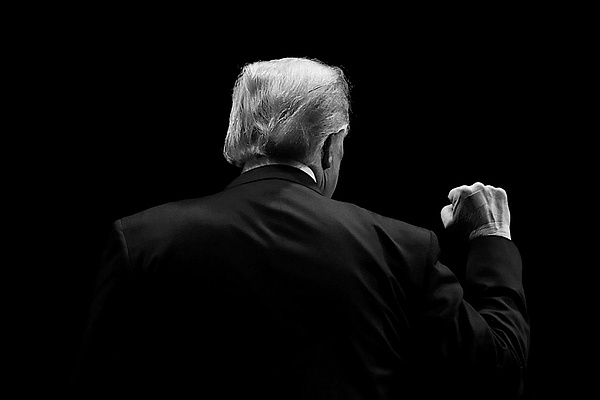
President Donald Trump after addressing the National Farm Bureau Federation’s 100th convention in New Orleans on Jan. 14, 2019.Carlos Barria / Reuters
This president, known for his unpredictability, appears to have a chaotic trade policy—from initiating a trade war with China to imposing tariffs on traditional allies, even at the cost of triggering market turmoil. However, a deeper analysis of the strategies of his new economic team reveals that there is a disruptive plan for restructuring the global order behind this.
The core of Trump’s economic team, consisting of Treasury Secretary Scott Benson and economic advisor Steven Milan, expresses deep concern over the current state of deindustrialization in the United States. Data shows that the value added by U.S. manufacturing has plummeted from 28% in the 1950s to the current 10%. This trend not only threatens Trump’s political base—the support of voters in the U.S. industrial belt—but also strategically weakens the U.S. industrial strength relative to competitors like China. This dual crisis awareness has become an intrinsic driving force for constructing a new order.
Historically, the U.S.-led global economic order has undergone two major transformations: the establishment of the Bretton Woods system in 1944 and the rise of the Reagan-Thatcher neoliberal order in the 1980s. The former created a post-war Western economic order through a monetary system linked to the dollar and gold, combined with a U.S.-led security framework; the latter was characterized by market-oriented reforms, free trade, and floating exchange rates, promoting deeper globalization. Today, the Trump team is attempting to initiate a third transformation, with its “Make America Great Again” ( MAGA ) plan consisting of three progressive stages:
Step 1: Strategic Tariff Offensive
Imposing high tariffs indiscriminately to create leverage in negotiations. Besant clearly stated: “Tariffs are our strongest bargaining chip at the negotiating table.” This seemingly chaotic tariff policy actually creates room for negotiation in subsequent talks. Myron emphasized that short-term market fluctuations are the price that must be paid for long-term strategic goals.
Step 2: Equitable Tariff System
After establishing sufficient negotiating leverage, turn to building a tariff system based on the principle of reciprocity. The Trump team believes this will reshape the international trade incentive mechanism, making the system more favorable for innovation-driven economies. Considering the unique appeal of the dollar and the U.S. market, they anticipate that major trading partners will ultimately have to accept the new rules of the game.
Step 3: New System of Mar-a-Lago
The ultimate goal is to establish the Mar-a-Lago Accord – a monetary coordination mechanism that would allow for a modest depreciation of the dollar, while requiring the currencies of participating countries to remain pegged to the dollar. Unlike the Bretton Woods system, the new system will explicitly require allies to share the cost of security, creating an international environment that is more conducive to the revival of American manufacturing.
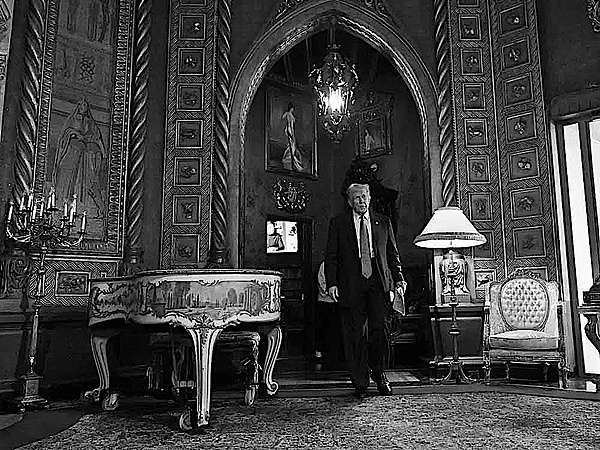
The “Mar-a-Lago Agreement” to restructure U.S. debt has attracted attention from Wall Street.
Part of Trump’s agenda is to reshape global trade through tariffs, weaken the dollar, and ultimately lower borrowing costs.
However, this ambitious plan faces severe challenges. The Trump administration’s past unilateral withdrawal from agreements has severely damaged the credibility of the United States, which may weaken other countries’ willingness to participate in the new system. The deeper contradiction lies in the fact that if it cannot attract enough countries to join, the United States will face a dilemma—either give up the privileged status of the dollar or continue to endure the pressure of manufacturing outflow.
The global trade revolution triggered by tariffs is at a critical turning point. It not only concerns the restructuring of the U.S. economy but will also redefine the international political and economic landscape of the 21st century. As the response strategies of major economies become clearer, a far-reaching new order game has already begun.
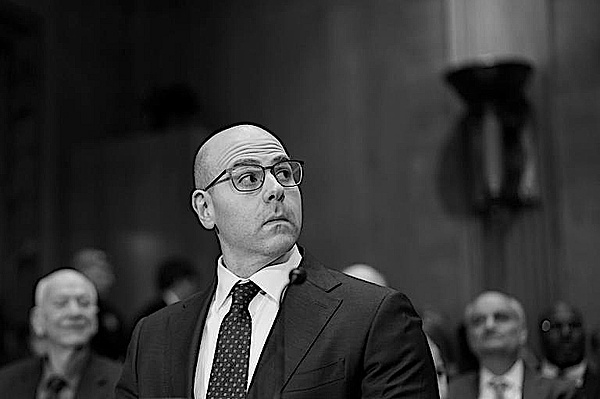
Stephen Miran during a Senate Banking, Housing, and Urban Affairs Committee confirmation hearing in Washington, DC, on Feb. 27.
Disclaimer: The information on this page may come from third parties and does not represent the views or opinions of Gate. The content displayed on this page is for reference only and does not constitute any financial, investment, or legal advice. Gate does not guarantee the accuracy or completeness of the information and shall not be liable for any losses arising from the use of this information. Virtual asset investments carry high risks and are subject to significant price volatility. You may lose all of your invested principal. Please fully understand the relevant risks and make prudent decisions based on your own financial situation and risk tolerance. For details, please refer to
Disclaimer.


