

Trade
Basic
Futures
Futures
Hundreds of contracts settled in USDT or BTC
Options
HOT
Trade European-style vanilla options
Unified Account
Maximize your capital efficiency
Demo Trading
Futures Kickoff
Get prepared for your futures trading
Futures Events
Participate in events to win generous rewards
Demo Trading
Use virtual funds to experience risk-free trading
Earn
Launch
CandyDrop
Collect candies to earn airdrops
Launchpool
Quick staking, earn potential new tokens
HODLer Airdrop
Hold GT and get massive airdrops for free
Launchpad
Be early to the next big token project
Alpha Points
NEW
Trade on-chain assets and enjoy airdrop rewards!
Futures Points
NEW
Earn futures points and claim airdrop rewards
Investment
Simple Earn
Earn interests with idle tokens
Auto-Invest
Auto-invest on a regular basis
Dual Investment
Buy low and sell high to take profits from price fluctuations
Soft Staking
Earn rewards with flexible staking
Crypto Loan
0 Fees
Pledge one crypto to borrow another
Lending Center
One-stop lending hub
VIP Wealth Hub
Customized wealth management empowers your assets growth
Private Wealth Management
Customized asset management to grow your digital assets
Quant Fund
Top asset management team helps you profit without hassle
Staking
Stake cryptos to earn in PoS products
Smart Leverage
NEW
No forced liquidation before maturity, worry-free leveraged gains
GUSD Minting
Use USDT/USDC to mint GUSD for treasury-level yields

More

From start to giving up, why I stopped doing Web3 payments.
2025-12-23 09:51
The Year of the New Token's Demise
2025-12-23 08:41
Trending Topics
View More22.93K Popularity
48.05K Popularity
15.47K Popularity
11.24K Popularity
39.3K Popularity
Hot Gate Fun
View More- MC:$3.56KHolders:10.00%
- MC:$3.56KHolders:00.00%
- MC:$3.92KHolders:21.61%
- MC:$3.56KHolders:10.00%
- MC:$3.63KHolders:20.23%




Pin
US dollar, US Treasury bonds, US stocks: sell sell sell
Waking up, the global market has changed drastically. Here are the facts that occurred during last night’s night trading:
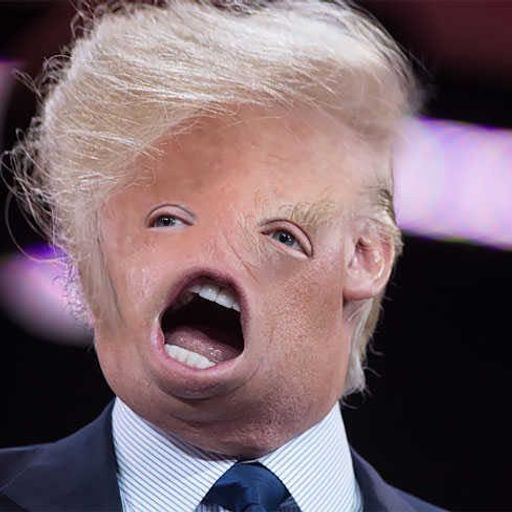
Affected by Trump’s flip-flopping, the dollar index fell more than 2% during the session, marking the largest single-day decline since 2022;
The US dollar index has fallen for the third consecutive day, reaching its lowest level in six months.
The dollar index, which measures the greenback against a basket of six major currencies, fell 1.99% on the day to settle at 100.866 at the end of the session. At the end of trading in New York, the euro was worth $1.1215, up from $1.0964 in the previous session, and the pound was worth $1.2982, up from $1.2803 in the previous session. The U.S. dollar was worth 144.58 yen, down from 147.45 yen in the previous session, the U.S. dollar was worth 0.8242 Swiss francs, down from 0.8549 Swiss francs in the previous session, the U.S. dollar was worth 1.3986 Canadian dollars, down from 1.4116 Canadian dollars in the previous session, and the U.S. dollar was worth 9.8491 Swedish kronor, down from 9.9452 Swedish kronor in the previous session.
Safe-haven asset gold breaks historical high, rising over 3%. Safe-haven currency Swiss franc records the largest increase in ten years;
Spot gold opened at a new high on Friday, breaking through $3180/oz and $3190/oz consecutively; New York futures gold once again broke the $3200 mark after a week.
Even after the inflation data in the United States eased, concerns about the impact of tariffs on the global economy continued to drive investors to seek safety in precious metals, leading gold to reach historic highs.
The sell-off of US Treasuries continues, as global investors cast a vote of no confidence in the United States;
The sell-off of U.S. Treasuries continues, with the yield on the 30-year U.S. Treasury rising by 12 basis points in one day to 4.85%.
With the implementation of reciprocal tariffs today, U.S. Treasury bonds plummeted, and the yield on the 10-year U.S. Treasury reached its highest level since February this year, while the dollar also weakened. Although some observers point out that German bonds and currencies like the yen may become new safe havens, they also face risks related to liquidity, their own economies, and monetary policy outlooks. Pilar Gomez-Bravo, Co-Chief Investment Officer of MFS Investment Management Global Fixed Income, stated: “If you want to protect your capital and achieve a certain level of return, there are not many assets available to you.” The sell-off of U.S. Treasuries is the most obvious example, indicating that investors have lost confidence in common safe-haven assets.
The S&P 500 index once plummeted by 6.3%, marking its largest drop in over 5 years.
The epic surge in US stocks was short-lived, with all three major indexes collectively closing down on Thursday. The S&P 500 index fell by 3.5%, hitting a mid-day decline of 6.3%, the largest intraday drop since March 2020; the Nasdaq fell by 4.31%, and the Dow Jones dropped by 2.5%. Major tech stocks all declined, with Tesla down over 7%, Meta down over 6%, Nvidia and Amazon down over 5%, Apple down over 4%, Google down over 3%, and Microsoft down over 2%. Chip stocks also fell, with Micron Technology down over 10%, Intel down over 7%, and TSMC down over 4%.
Yellen angrily criticizes Trump: I’ve seen the “worst economic self-destruction” in my life!
Former U.S. Treasury Secretary Janet Yellen stated on the 10th that the economic policies of the new U.S. government are the “most severe acts of self-harm” she has ever seen. Against the backdrop of policies such as increased tariffs, the risk of a recession in the U.S. economy has risen. In an interview with CNN on the 10th, she indicated that the current government’s tariff policies could increase the annual expenses of average American households by nearly $4,000. In addition to the negative impact tariffs may have on consumer spending, the U.S. economy is also facing significant uncertainty shocks.
Yellen said, “In the face of such great uncertainty, which company would make long-term investments?” The reduction in investment spending and consumer spending is likely to trigger an economic recession. Yellen emphasized that, apart from tariff policies, the current government’s cuts to public service agencies such as the Social Security Administration and the IRS, as well as the reduction of government programs like Medicaid and food assistance, could harm the interests of low-income families. This series of policies is highly “destructive.”