As the end of September approaches, the Bitcoin price fluctuates around $109,000, and market sentiment quietly shifts towards the expectation of “Uptober.”
This seasonal phenomenon is not unfounded; historical data reveals that October is often one of the strongest months for Bitcoin performance throughout the year. However, this year's market environment is complex and intertwined—September did not play out the traditional “curse,” but increased volatility, massive outflows of ETF funds, and uncertainty in macro policies have cast a shadow over the trajectory for the fourth quarter. This article will deeply analyze Bitcoin's potential trajectory in the fourth quarter from four dimensions: historical patterns, current market dynamics, the game of bullish and bearish factors, and future path outlook.
1. “Uptober” in History: Data Support and Seasonal Logic
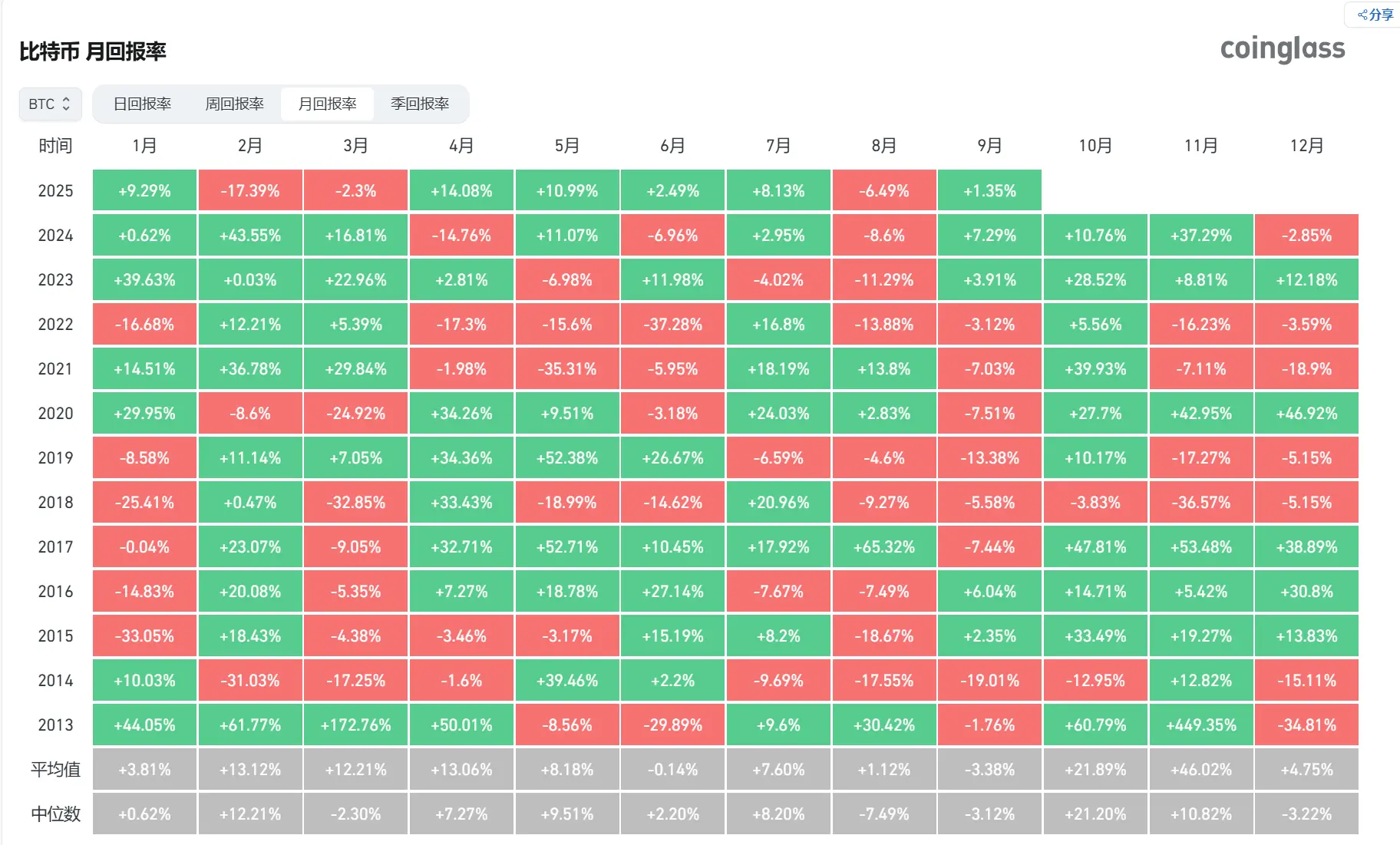
Since 2013, Bitcoin has shown significant regularity in its performance in October: over the past 12 years, there have been 10 instances of price rises, with an average increase of 21.89%. Notably, the rises during bull market phases such as in 2013 (+60.79%), 2017 (+47.81%), and 2021 (+39.93%) are particularly remarkable.
This phenomenon has been dubbed “Uptober” by the market, and there are multiple logical supports behind it.
Firstly, the fourth quarter is usually a window for institutional funds to reallocate, as investors tend to increase their positions in high-volatility assets with a rising risk appetite at the end of the year.
Secondly, the Bitcoin halving cycle often resonates with October - for example, the bull markets of 2017 and 2021 both started in October, and the supply contraction effect after the halving in 2024 may also become evident in the fourth quarter.
In addition, the macro liquidity environment tends to be loose in October: the Federal Reserve has shifted to a dovish stance multiple times in September-October in recent years. For example, after the interest rate cut in September 2024, market expectations for further rate cuts in October rose to 91.9%, which provides fuel for risk assets.
However, history is not an absolute template. October recorded declines of -12.95% in 2014 and -3.83% in 2018, indicating that “Uptober” needs to work in conjunction with the macro context to be effective.
September 2025 closed with a slight rise of 1%. Although it did not trigger a deep decline, it also failed to accumulate enough momentum, which makes the direction in October more dependent on real-time fundamentals rather than purely seasonal patterns.
2. Current Market Status: The Legacy of September's Volatility and Divergence in Funding
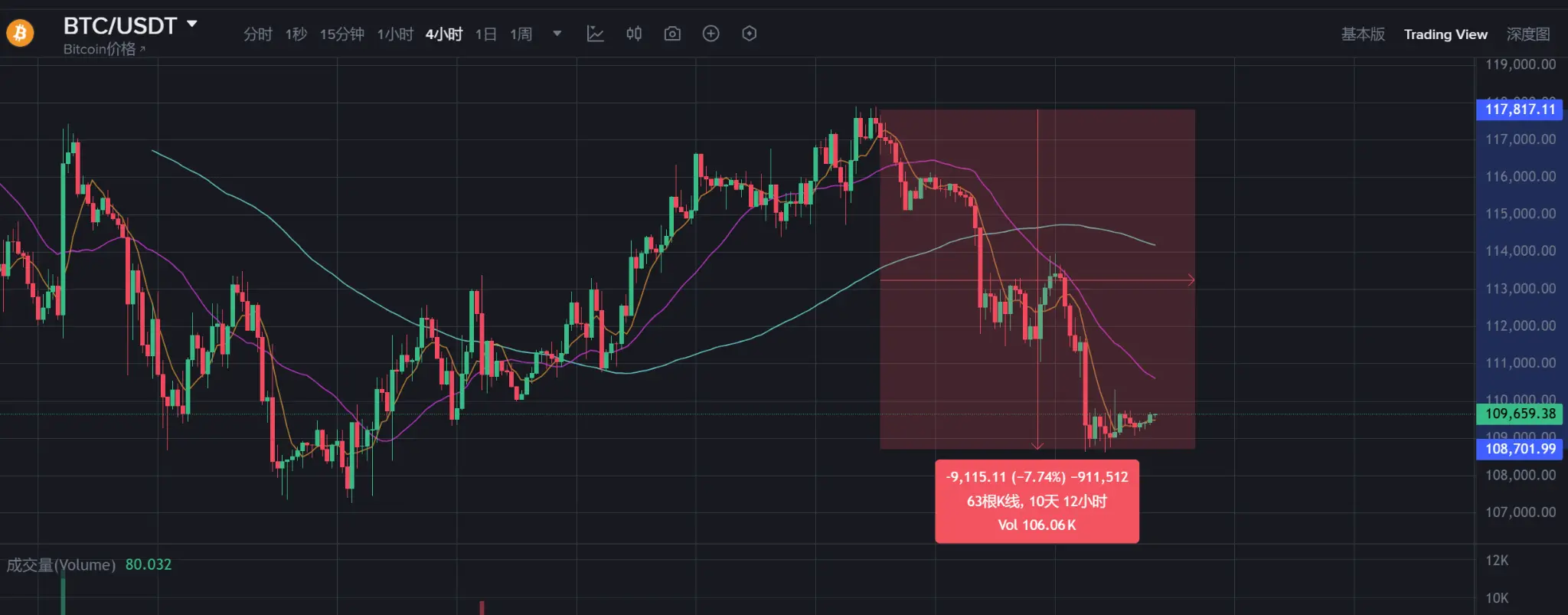
In the last two weeks of September, Bitcoin fell from $117,000 to around $108,000, a decline of nearly 8%. During this period, the total liquidation amount across the network exceeded $3 billion, and long leverage was massively wiped out.
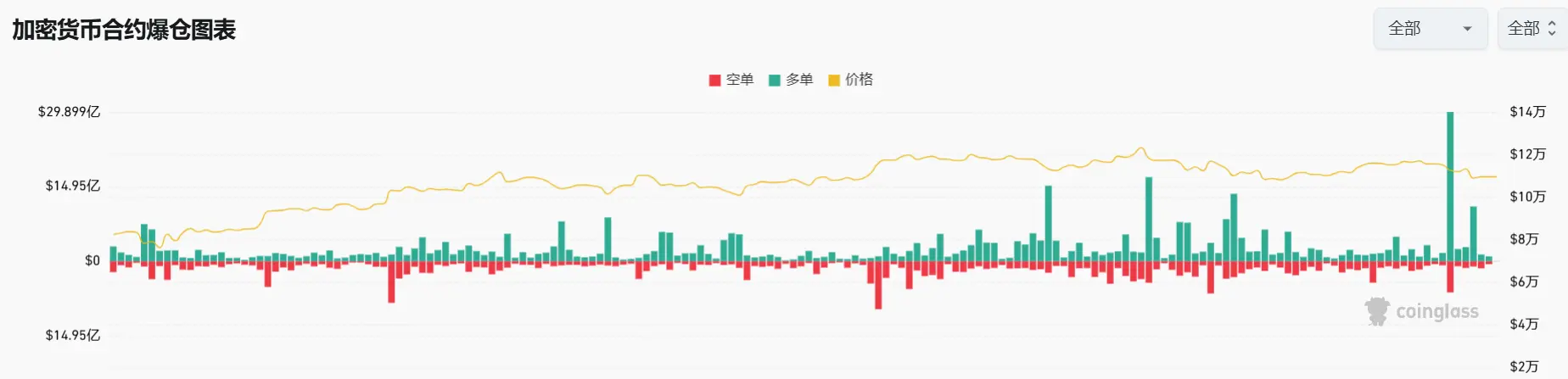
This adjustment is viewed by some analysts as a “healthy correction” because it has cleared excessive leverage and laid the foundation for a subsequent rebound. However, the signals from the funding side appear contradictory:
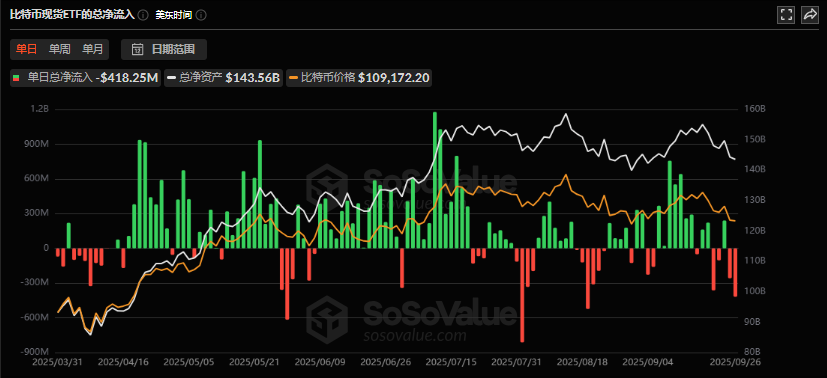
- ETF capital outflow intensifies: Bitcoin spot ETFs have seen net outflows for several consecutive days, with a weekly scale reaching $902.5 million, and BlackRock's IBIT and Fidelity's FBTC have both faced significant redemptions.
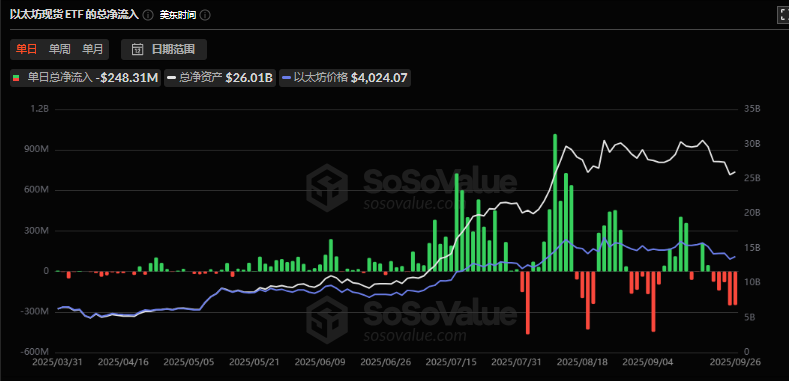
- Ethereum ETF also remains weak, with nearly $800 million flowing out weekly, marking the worst record since its launch. The phase of reduced institutional demand reflects the market's cautious attitude towards overvalued assets.
- On-chain data shows resilience: Despite price pressure, Bitcoin long-term holders (HODLers) have not experienced panic selling. Net Realized Profit and Loss (NRPL) remains positive, and buying activity around the key support level of $109,500 is active, indicating that core investors' confidence in long-term logic remains unchanged.
This differentiation reveals the core contradiction of the market: short-term capital flows are constrained by macro uncertainty (such as the Federal Reserve's policy divergence and disturbances from the U.S. elections), while the narrative of Bitcoin's scarcity (institutional accumulation and halving supply contraction) remains the long-term support.
3. Fourth Quarter Drivers: The Tug of War Between Bullish and Bearish Forces
1. Bullish Catalysts
- Macroeconomic liquidity shift: If the Federal Reserve lowers interest rates as scheduled at the FOMC meeting on October 29, it will weaken the dollar. Historical data shows that Bitcoin has reached a negative correlation of -0.25 with the dollar index (a two-year low). During the rate-cutting cycle, funds are more likely to flow into the crypto market.
- Institutional behavior deepens: As of August 2025, over 290 companies hold Bitcoin worth $163 billion, with corporate demand growing at about 4.3 times the Bitcoin production rate. In addition, the Ethereum fork upgrade is scheduled for April 2026; if the technical upgrade goes smoothly, it may rekindle market interest in smart contract platforms.
- Key technical support level: If Bitcoin holds the support level at $109,500 and breaks through the resistance at $117,700, it may trigger a trend reversal. Technical analysts believe that the current price action is highly similar to the consolidation before the start of the bull market in 2017.
2. Risks and Suppressive Factors
- Regulatory Uncertainty: The increased compliance scrutiny of cryptocurrency exchanges by the US SEC and the investigation into the Digital Asset Treasury (DAT) model may suppress the pace of institutional entry.
- Market sentiment is weak: The negative feedback loop of ETF fund outflows may amplify selling pressure, especially when the price breaks below key support levels, and panic selling could test the low of $98,000.
- Potential impact of black swan events: Recently, projects like UXLINK and GriffinAI have suffered hacker attacks, causing localized panic. If security incidents spread, they could undermine overall confidence.
Four, Future Path Simulation: Market Trends in Three Scenarios
Based on the current variables, the fourth quarter may present the following three scenarios:
Optimistic scenario (30% probability): The Federal Reserve releases a clear dovish signal, Bitcoin quickly recovers to $115,000 and challenges its all-time high. Institutional funds flow back into ETFs, combined with the “Uptober” sentiment fermenting, pushing the price towards the $165,000 target.
Neutral scenario (50% probability): Long and short factors are in a tug of war, with Bitcoin fluctuating widely in the range of 100,000-120,000 dollars. The market is waiting for clear signals such as the result of interest rate cuts in the United States, with volatility remaining high but lacking a directional trend.
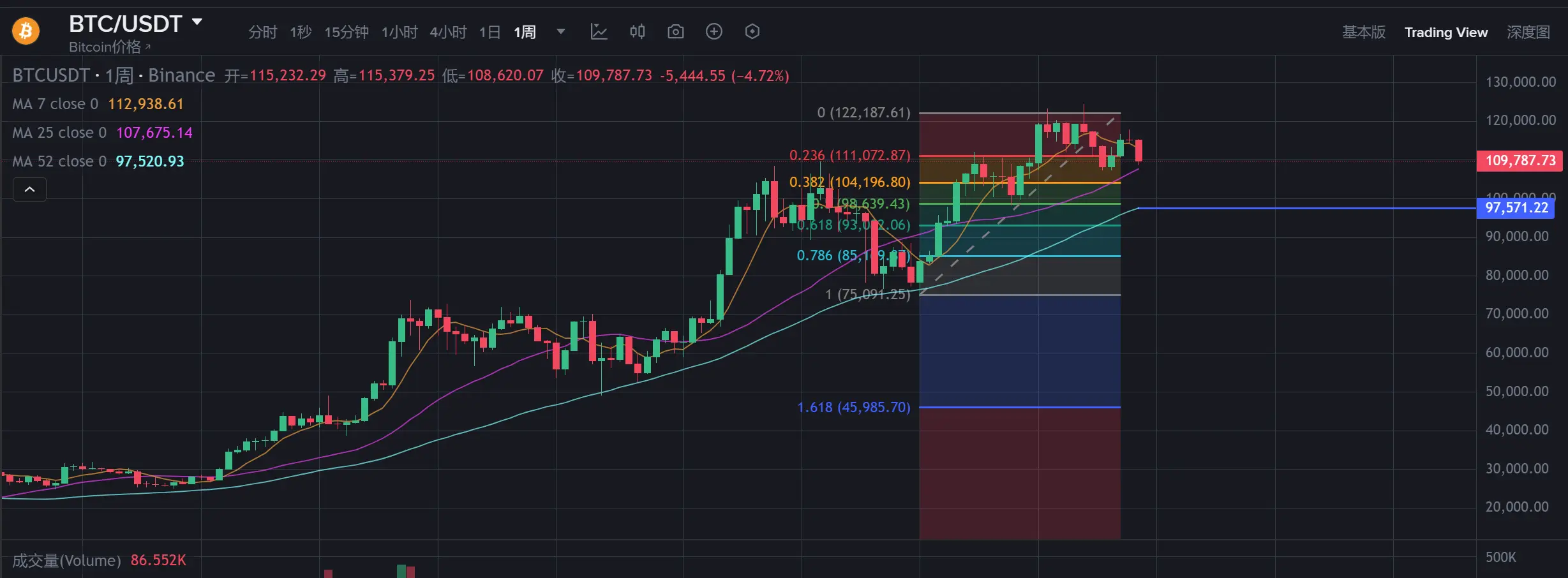
Cautious scenario (20% probability): Deterioration of macro data, geopolitical factors, or tightening regulations triggering systemic sell-off, with Bitcoin testing the support at $100,000. If it breaks below this level, it may further test $98,000 (52-week moving average), but long-term investors may accelerate accumulation in this area.
Conclusion: Seeking a balance between seasonal patterns and real-time fundamentals
“Uptober” is not an automatic calendar magic, but a combination of historical probability and market psychology. In the fourth quarter of 2025, Bitcoin faces short-term pressure from institutional capital outflows, while enjoying long-term support from the interest rate cut cycle and scarcity narrative. For investors, rationally viewing seasonal patterns and closely monitoring changes in Federal Reserve policies and ETF capital flows is essential to navigate volatility and seize opportunities.
Disclaimer: The information on this page may come from third parties and does not represent the views or opinions of Gate. The content displayed on this page is for reference only and does not constitute any financial, investment, or legal advice. Gate does not guarantee the accuracy or completeness of the information and shall not be liable for any losses arising from the use of this information. Virtual asset investments carry high risks and are subject to significant price volatility. You may lose all of your invested principal. Please fully understand the relevant risks and make prudent decisions based on your own financial situation and risk tolerance. For details, please refer to
Disclaimer.
Related Articles
Bitcoin Uptrend Likely by Late 2026, Says Scaramucci
The latest downturn in Bitcoin has sparked fresh debate across the crypto market. However, according to Anthony Scaramucci, the explanation may be far less surprising than many expect. The SkyBridge Capital managing partner believes the current pullback is simply part of Bitcoin’s long-standing
Coinfomania9m ago
Swedish-listed company H100 plans to increase Bitcoin holdings from 1,051 to 3,501
Gate News: On March 23, according to an official announcement, Sweden-listed Bitcoin treasury company H100 Group AB has signed a strategic acquisition letter of intent with shareholders of Norwegian companies Moonshot AS and Never Say Die AS. Upon completion of the transaction, H100's Bitcoin holdings are expected to increase from the current 1,051 BTC to approximately 3,501 BTC, an increase of approximately 2,450 BTC.
GateNews12m ago
Capital B increases position by 44 BTC, total holdings rise to 2,888 BTC
Gate News: On March 23, according to an official announcement, European Bitcoin treasury company Capital B completed a new round of BTC accumulation, purchasing 44 BTC at a price of approximately 2.7 million euros. Following this purchase, Capital B's total BTC holdings increased to 2,888 BTC.
GateNews13m ago
MICA Daily | Why Have Stocks Fallen While Crypto Has Risen Recently? Analyzing the Truth Behind the Decoupling
Since October 2025, the positive correlation between Bitcoin and the S&P 500 Index has significantly weakened, entering a decoupling phase. This change stems from large-scale liquidation events, depressed market liquidity, and reduced risk appetite among traders. Meanwhile, ETF outflows and geopolitical tensions have also impacted Bitcoin's performance, demonstrating that its potential as a safe-haven asset is gradually increasing as deleveraging comes to an end.
区块客16m ago
Bitcoin Rebound Timeline Exposed: Scaramucci Says Q4 May Launch New Bull Market, $1 Million Target Unchanged
Under geopolitical risks and macroeconomic pressures, Bitcoin's price has broken below $68,000. Anthony Scaramucci, founder of SkyBridge Capital, believes this represents a typical cyclical pullback and anticipates Bitcoin may rally again in 2026. Despite short-term market risks, long-term bullish sentiment remains solid.
GateNews17m ago
Bitcoin Potentially Dips to $62,000? Mega Whales Counter-Trend Accumulation Hits One-Year High, Long-Short Battle Intensifies
Bitcoin broke below the head and shoulders neckline on March 23rd, with prices sliding to around $68,100. The downside target is expected at $62,200. Despite coin holders increasing positions and RSI forming a divergence signal, the market is still facing selling pressure. $69,500 serves as a key support level, and future trends will depend on the battle over key price levels.
GateNews20m ago


