The return of stablecoins after the recent market crash has drawn attention from investors. Tether (USDT) and Circle (USDC) have simultaneously issued 4.5 billion USD in new tokens, reflecting strong demand from the market.
On the Ethereum network (ETH), this momentum extends beyond stablecoins to encompass tokenized assets, with BlackRock's BUIDL fund and USDC both demonstrating steady growth.
The question is whether this new flow of funds will be maintained in stablecoins or will shift towards Bitcoin (BTC) and altcoins in the near future.
New cash flow in the market
Immediately after the market crash, Tether and Circle actively issued billions of USD.
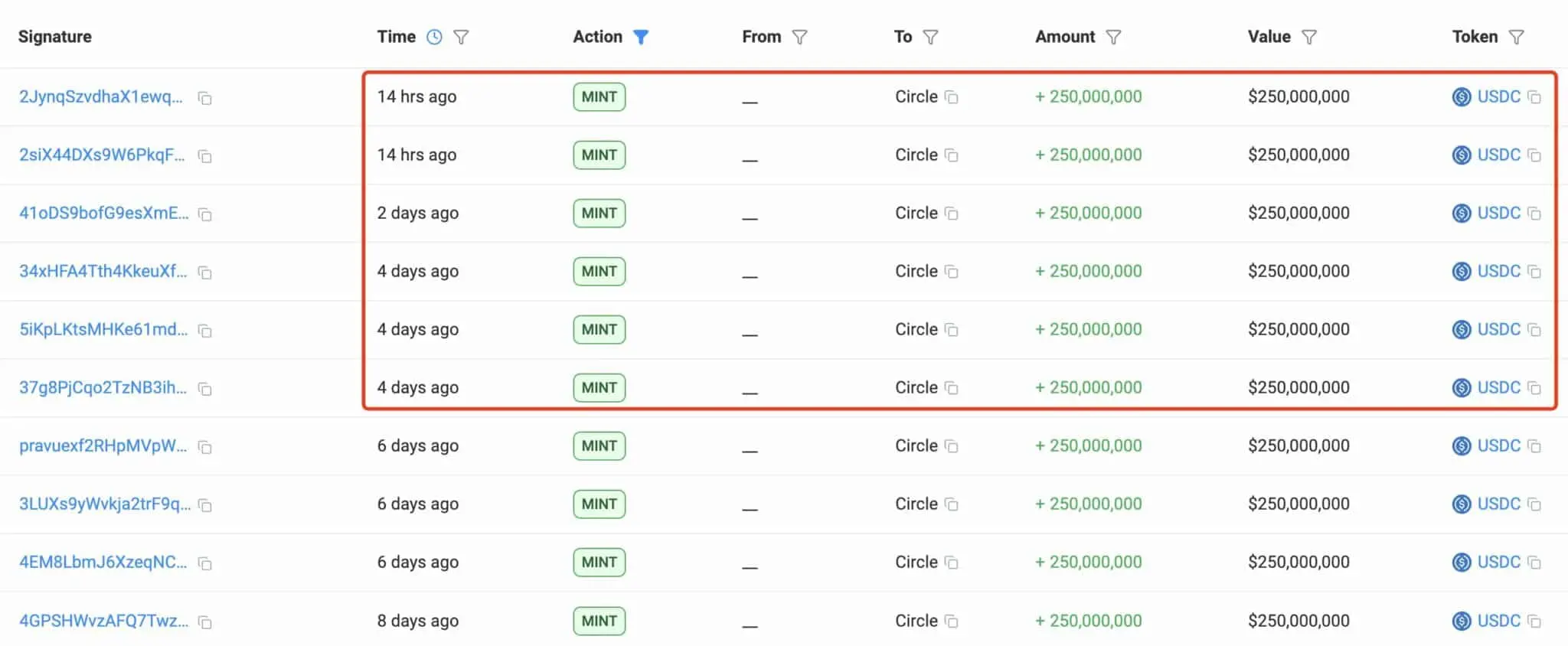 Source: Tether's XVí multisig has completed three transactions worth 1 billion USD USDT each into its treasury in just four days, while Circle has issued several batches of USDC worth 250 million USD, totaling up to 4.5 billion USD of new stablecoins.
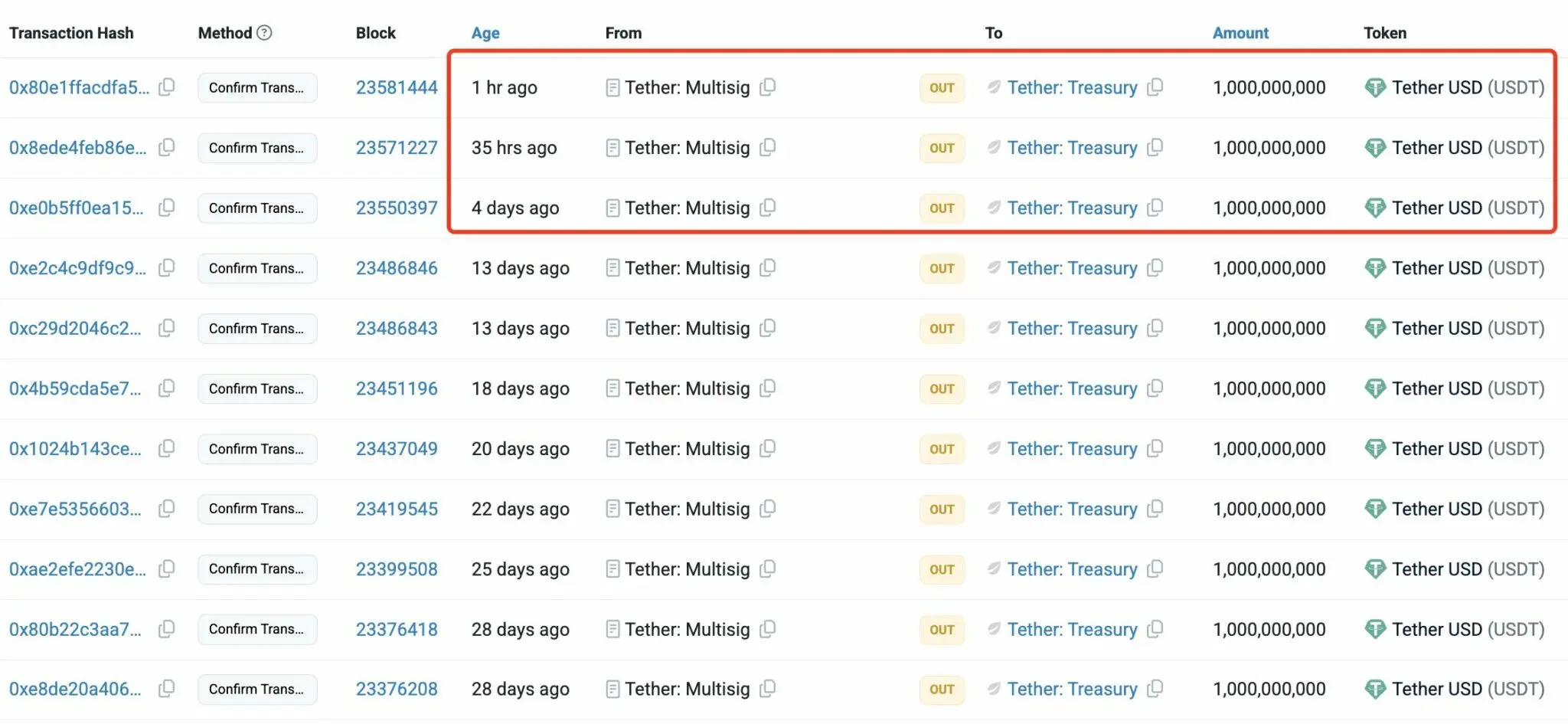 Source: XThis development could become a driving factor for the market recovery.
Dual Motivation of Ethereum
Since the increase of stablecoins, Ethereum is emerging as a platform for both cash assets and tokenized assets. The supply of USDC has rebounded to around 45 billion USD, while BlackRock's BUIDL fund ( represents exposure to tokenized US Treasury bonds ) has surpassed 2 billion USD.
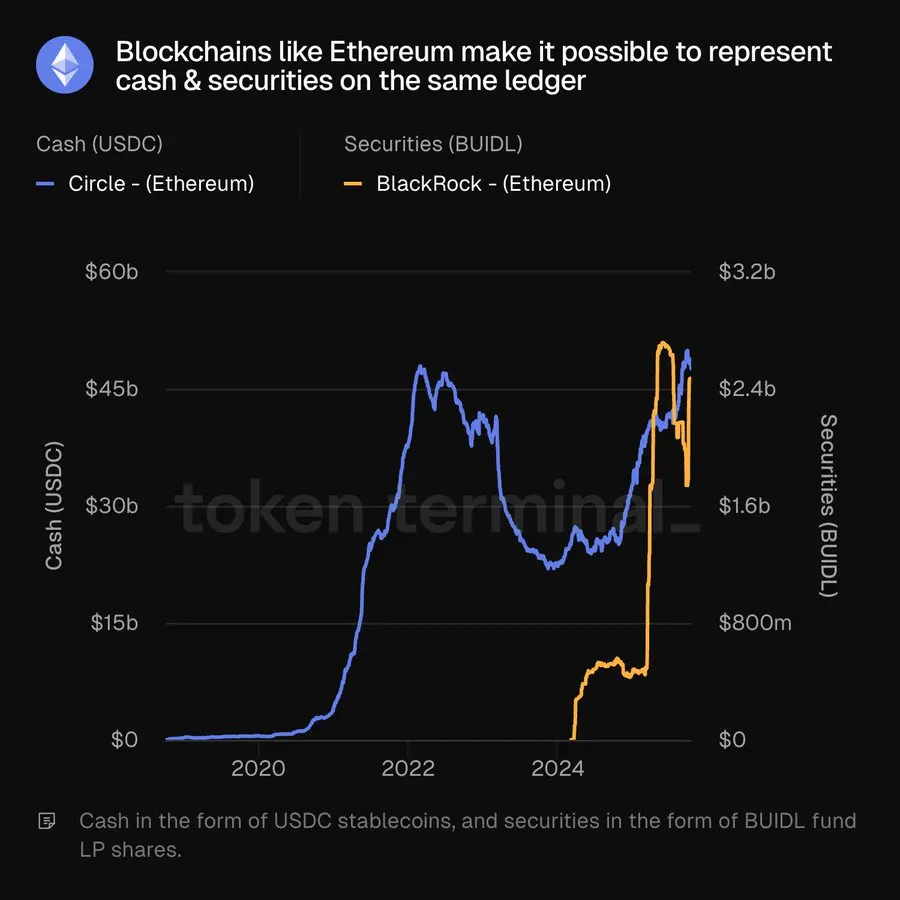 Source: XThe development of stablecoins and tokenized assets seems to be occurring in parallel. This is an important step in the issuance and tracking of financial instruments on public blockchains, instead of focusing solely on a single platform.
Is liquidity showing signs of change?
Although the dominance of USDT is still on a long-term downward trend, there have been short-term efforts to break through the declining resistance level.
The recent increase in the issuance of USDT indicates that new capital is entering the market, but it does not necessarily have to remain in stablecoins. As dominance weakens, capital tends to shift towards riskier assets.
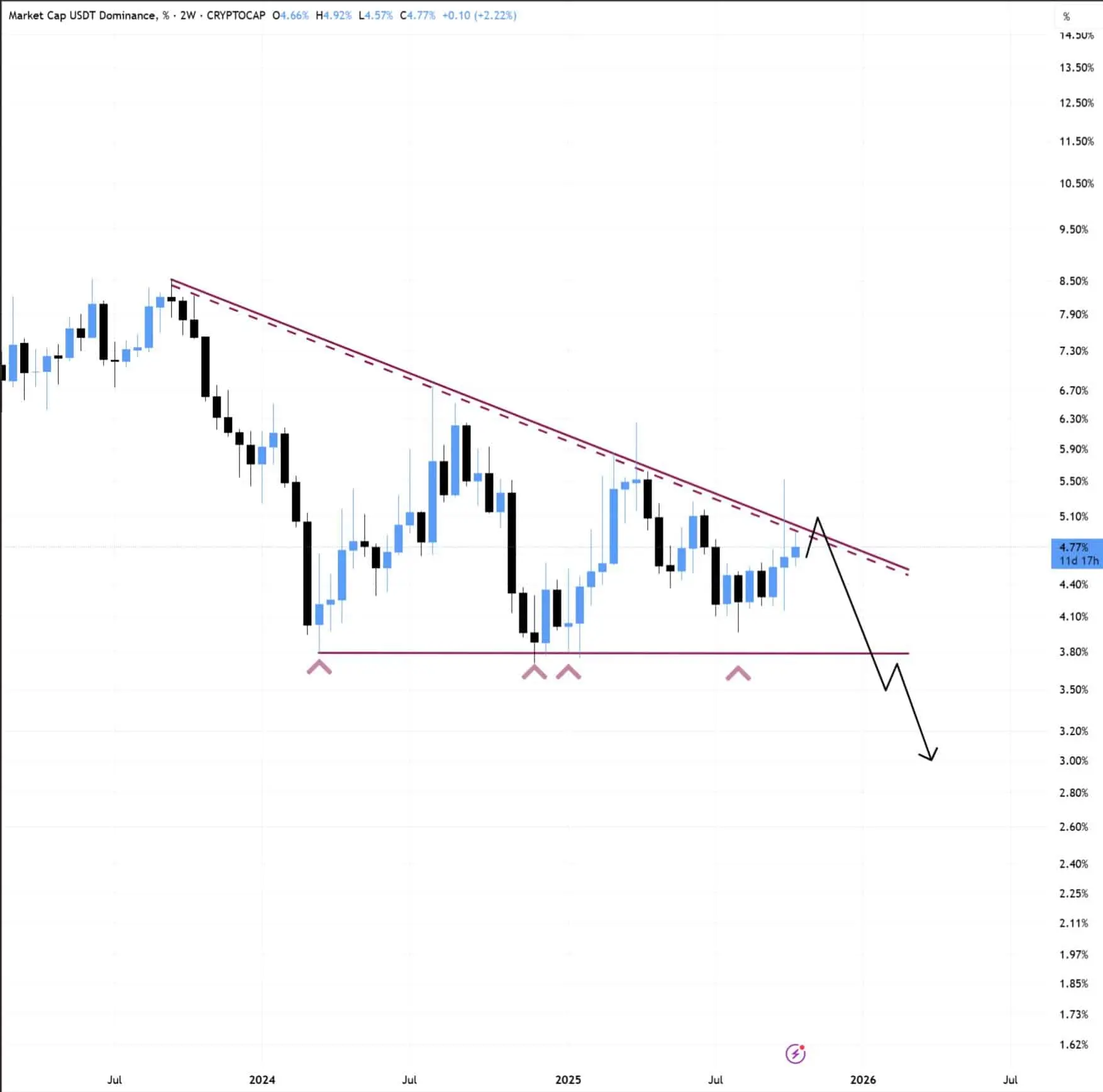 Source: XIf this trend continues, Bitcoin and altcoins may soon absorb new capital.
This will pave the way for a potential recovery across the entire cryptocurrency market, which is very much needed after the significant fluctuations in recent days.
Mr. Giáo
Disclaimer: The information on this page may come from third parties and does not represent the views or opinions of Gate. The content displayed on this page is for reference only and does not constitute any financial, investment, or legal advice. Gate does not guarantee the accuracy or completeness of the information and shall not be liable for any losses arising from the use of this information. Virtual asset investments carry high risks and are subject to significant price volatility. You may lose all of your invested principal. Please fully understand the relevant risks and make prudent decisions based on your own financial situation and risk tolerance. For details, please refer to
Disclaimer.


