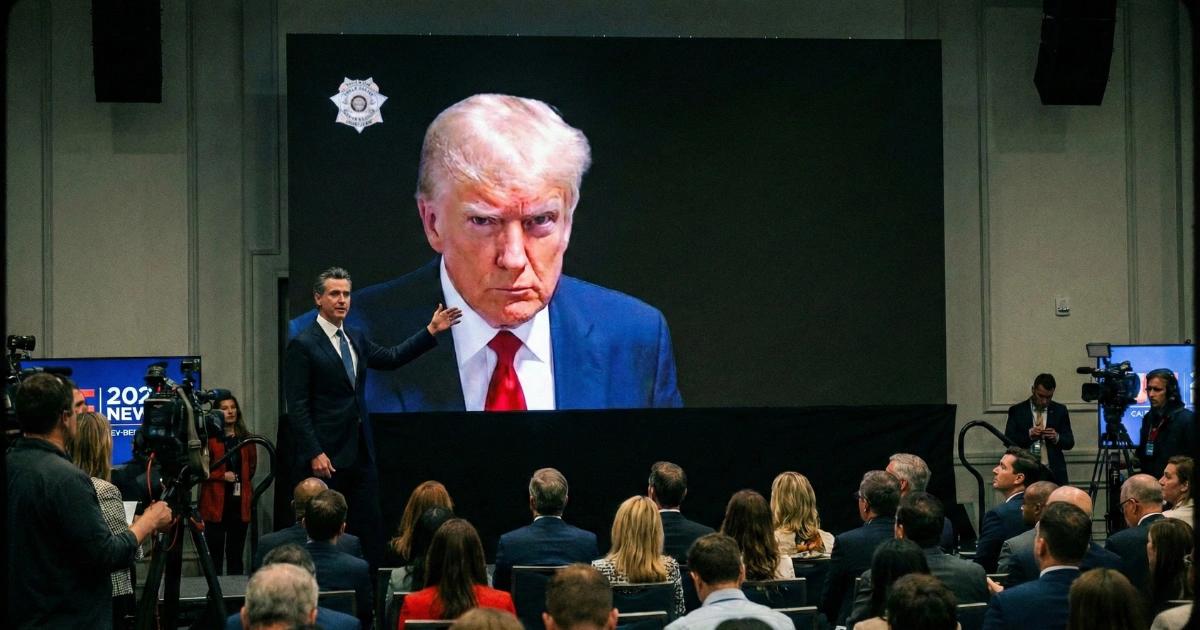
Governor Newsom Launches Page Naming Trump’s Pardon List, Focusing on Crypto Industry Figures, Questioning the Interplay of Political Power, Pardons, and Crypto Interests, Sparking a New Wave of Regulation and Election Battles.
Newsom Launches “Criminal Allies Tracking Site,” Directly Targeting Trump’s Pardon Network
California Governor Gavin Newsom has recently intensified his political campaign against President Donald Trump. On the official California government website, he launched a page titled “Tracking Trump’s Top 10 Criminal Partners,” publicly naming several individuals who have received pardons from Trump and are highly connected to major criminal cases or the crypto industry.
In the website’s introduction, Newsom states outright that Trump “is himself a felon and has chosen to associate with fraudsters and drug dealers.” The California government has compiled related public judicial records and pardon information in an effort to “put the facts in one place,” helping voters understand “who Trump promoted and protected.” The site also features California official data claiming that the state’s major violent crime rates continue to decline, contrasting this with federal political choices.
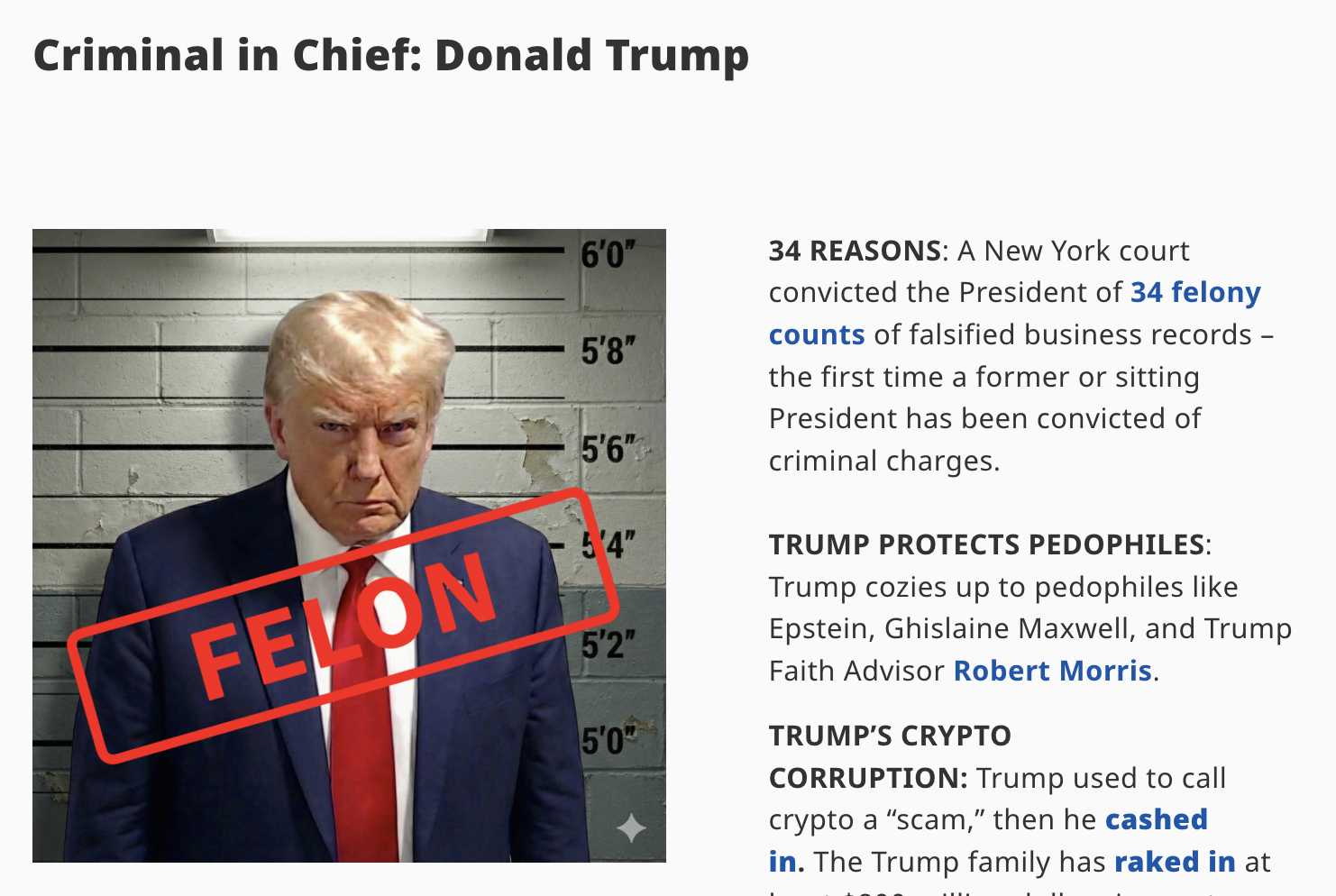
Image source: Gavin Newsom Newsom states in the website introduction that Trump “is himself a felon and has chosen to associate with fraudsters and drug dealers.”
This approach quickly drew attention because the list prominently features figures from the cryptocurrency industry, with many highly influential individuals in the global crypto scene presented in a stylized “suspect photo” format, even including Trump himself, with the word “FELON” stamped across the photo, laden with political satire.
Crypto Industry Becomes Pardons Focus, CZ, Ulbricht, and BitMEX Founders Listed
Among the names on Newsom’s list, the most notable include former Binance CEO Zhao Changpeng. The website states that Zhao Changpeng received a “full and unconditional” presidential pardon from Trump in October after admitting to violations of the Bank Secrecy Act. Newsom describes this case as involving the facilitation of illegal fund flows, but Zhao’s legal team has publicly rebutted, emphasizing that the case pertains to regulatory issues and does not involve fraud or money laundering convictions.
Image source: Gavin Newsom Among the most notable on Newsom’s list are former Binance CEO Zhao Changpeng, Silk Road founder Ross Ulbricht, and several co-founders of BitMEX, including Arthur Hayes.
Another individual listed is Ross Ulbricht, founder of the dark web marketplace Silk Road. Ulbricht was sentenced to life in prison in 2015 for involvement in over $214 million worth of illegal drug transactions and was granted a pardon early in Trump’s presidency.
Additionally, several co-founders of derivatives trading platform BitMEX, including Arthur Hayes, also received clemency after admitting to violations of banking regulations. The California website emphasizes that these cases collectively form a clear “Crypto Industry <> Political Power <> Pardons” narrative.
Further Reading
Did Trump’s pardon of Zhao Changpeng end the crypto war but ignite political exchange controversy?
Binance CZ’s lawyer reveals behind-the-scenes of the pardon! Why did Trump make this decision?
Trump pardons BitMEX founders! Sparks regulatory controversy—what does this mean for the crypto industry?
Silk Road founder released from prison! Hollywood director plans documentary—netizens ask: Will SBF be pardoned next?
Democrats Focus on “Crypto Political Interests,” Question Trump Family’s Role
Newsom’s team has not stopped at historical cases but has shifted focus to recent crypto activities involving the Trump family. The website alleges that since 2025, the Trump family has earned at least $800 million through various crypto-related businesses and questions whether there are conflicts of interest between these profits and policy decisions.
Specifically, the site mentions the stablecoin project World Liberty Financial, stating that its issued $USD1 stablecoin has been integrated into Binance’s infrastructure. Although Binance and Zhao Changpeng deny any investment or operational ties to the project and claim the related accusations are “false and defamatory,” Democrats still see this as a potential regulatory risk.
Meanwhile, Newsom’s website also suggests that the Trump administration may have temporarily halted or influenced investigations into other crypto founders, raising concerns among congressional Democrats about whether “crypto capital is truly infiltrating governance.” Senator Elizabeth Warren recently sent letters to the Treasury and Justice Departments requesting clarification on the role of decentralized exchanges and stablecoins in cross-border money laundering.
Further Reading
Did Trump use shadow lobbying to raise funds? Democratic investigation report accuses, claiming the White House has become the most corrupt new player in crypto!
Political Battle Intensifies, Pardons and Crypto Regulation Become Battlegrounds
The White House has yet to respond officially to Newsom’s website, but the move is seen as part of the prelude to the 2028 presidential election. In recent years, Newsom has frequently used social media and public policy issues to shape his national political image. Many see him as a potential Democratic presidential candidate.
On crypto issues, Newsom’s office emphasizes a distinction between “responsible blockchain innovation” and “unregulated commercial activities,” stressing that California supports technological development but opposes linking financial risks with political power. This narrative contrasts sharply with the Trump camp’s stance of “full deregulation and embracing the crypto industry.”
As the pardon list, crypto industry, and political interests intertwine as hot topics, the debate over crypto regulation, executive power, and the rule of law in the U.S. is rapidly escalating. Clearly, this conflict will not end with just a website.
Disclaimer: The information on this page may come from third parties and does not represent the views or opinions of Gate. The content displayed on this page is for reference only and does not constitute any financial, investment, or legal advice. Gate does not guarantee the accuracy or completeness of the information and shall not be liable for any losses arising from the use of this information. Virtual asset investments carry high risks and are subject to significant price volatility. You may lose all of your invested principal. Please fully understand the relevant risks and make prudent decisions based on your own financial situation and risk tolerance. For details, please refer to
Disclaimer.


