Author: Castle Labs & Vincent
Translation: LlamaC

(Portfolio: Burning Man 2017, About Tomo: ETH Foundation Illustrator)
"Recommended Message: This article mainly explores Bitcoin’s positioning as ‘Digital Gold,’ comparing it with traditional gold’s reserve value and liquidity, and discusses Bitcoin’s role within the financial system and its potential future.
From the legend of searching for the Golden Fleece to the mines of South Africa, humanity has been endlessly pursuing this noble and mysterious treasure.
It seems to be captured sunlight, perhaps truly originating from deep space, as scientists believe gold was born from the collision of dying stars—supernova explosions. Although most of the gold on Earth is sealed within the core, the remaining part was brought to the surface by meteorites.
Throughout human history, gold has been the core hard currency in commerce.
If all the gold mined by humans were collected, it would form a cube with a side length of about 20 meters, weighing approximately 176,000 tons.
Such enormous wealth can surprisingly be stored in a single warehouse, which is truly astonishing. While stocks, art, oil, or collectibles require vast physical space or management resources, gold uniquely possesses portability.
Gold becomes the ultimate store of value because it bears no counterparty risk. It is the only asset that does not constitute a liability to others. J. P. Morgan once said: “Gold is money; everything else is credit.” Its high stock-to-flow ratio not only ensures scarcity but also shields it from arbitrary fiat devaluation. From ancient Lydian coins to modern central bank reserves, for thousands of years, gold has maintained its status as a store of value, serving as a highly liquid and immutable anchor during financial, political, and social upheavals.
However, recently, a new contender has emerged vying for the title of ‘currency.’
Despite its volatility and cryptographic nature setting it apart from traditional precious metals, cryptocurrencies like Bitcoin are still called ‘Gold Killers.’
Bitcoin is often called digital gold. Will it replace gold in the future? If so, is abandoning this ancient asset advisable?
This article examines gold and Bitcoin against the backdrop of modern economy, decentralized finance (DeFi), and monetary properties. We will then compare and analyze whether these assets can coexist in a highly competitive macro environment, and assess current trends to determine if Bitcoin possesses the attributes of ‘Digital Gold.’
Ultimately, diversification of assets benefits the global economy. Fiat currencies—assets whose value mainly depends on arbitrary monetary policies—are likely to be replaced by more pure forms of money. Whether gold or some yet-to-be-invented new asset, they may escape the inherent devaluation of fiat money, especially given the fatal flaws of our current debt-dependent economic system.
The Historical Legacy of Gold in Finance
For centuries, gold has been the pillar of the system, the only reserve asset. This status was not established by legislation but reinforced by the laws of physics of the universe. As former Fed Chairman Alan Greenspan famously testified in 1999: “Gold still represents the ultimate form of payment in the world. In extreme circumstances, no one will accept fiat currency, but gold will always be accepted.”
Gold’s widespread acceptance stems from its intrinsic properties, which distinguish it from all other materials. These qualities establish its enduring role as a store of value, what Aristotle called ‘sound money’:
- Durability: Gold is a noble metal that resists most chemical reactions. Unlike silver, it does not oxidize or tarnish, ensuring its physical stability over time. This unique chemical trait makes it reliable for reserves and high-tech infrastructure (electric vehicles, drones, defense systems, rockets). Additionally, gold does not rust.
- Interchangeability: Due to gold’s softness and ductility, it is easy to shape, cast, and divide. This allows standardization into interchangeable coins or bars, where units of the same weight (ounces or grams) and purity (most commonly 14k, 18k, 24k) are identical in essence.
- Stability: Gold is a reliable store of value. Its scarcity and utility (despite high costs, it remains the best choice for key industrial applications) enable it to retain value over time, unlike fiat currencies which are subject to inflation. Moreover, gold as a final store of value bears no counterparty risk.
- Portability: As a dense, expensive metal, even small amounts of gold carry high value. Its high value-to-weight ratio makes transporting large wealth efficient—unlike silver, art, or other bulk commodities. One can easily carry half a kilogram of gold in a pocket.
- Recognizability: Gold’s physical properties make it relatively easy to verify authenticity. Modern instruments like Sigma can instantly detect counterfeit gold.
Therefore, gold is a perfect store of value—except for one caveat. Gold is not a replaceable credit card nor a line of code. Transporting gold, even for ordinary citizens holding small bars, is as cumbersome as transporting uranium; if customs declarations are not filed, authorities can seize and fine most of it. It can be stolen, cut, hidden, misappropriated, and due to human error, it can also be lost.
The famous Operation Fish in 1940 exemplifies this logistical nightmare. As Nazi Germany advanced, to prevent the seizure of its £2.5 billion worth of gold reserves, Britain secretly transported it to Canada—becoming the largest physical wealth transfer in history. Today, trillions of dollars can be transferred instantly with a click.
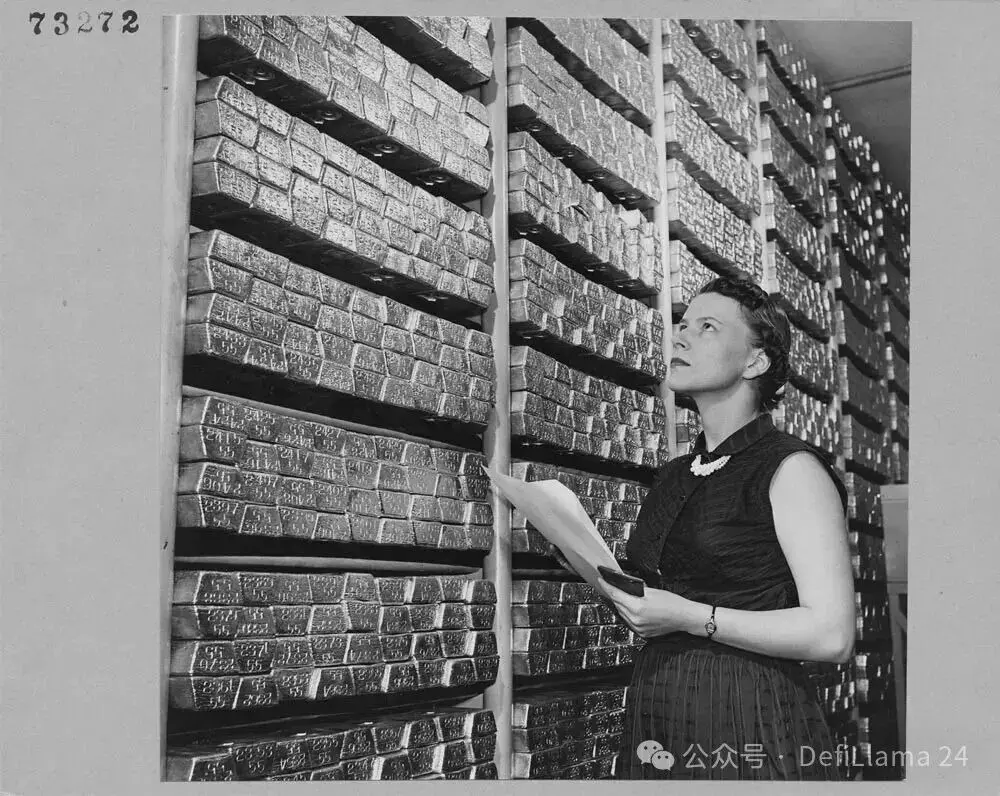
The most notorious example of state plunder is Franklin D. Roosevelt’s Executive Order 6102 in 1933, which made it illegal for U.S. citizens to hold monetary gold. Unlike passwords or mnemonics, you cannot store gold in memory; it must be physically held, and once found, it can be seized. Gold yields no interest, pays no dividends, and incurs high storage and insurance costs. Most of the world’s gold is stored in vaults in London, Switzerland, Singapore, or Manhattan—like an ancient, forgotten mythic Sphinx, quietly lurking in darkness.
Indeed, because humans are prone to mistakes yet ingenious, they will inevitably devise a better alternative than that “barbaric relic.” Although gold itself is nearly perfect, the rapid evolution of our financial system makes creating a modern substitute necessary. Out of disappointment with the outdated access mechanisms of traditional finance and the desire to overhaul them, Bitcoin was originally invented to challenge the existing system. Yet, it quickly pioneered a powerful new paradigm far beyond its initial intent: the potential to be regarded as a digital equivalent of gold!
The Birth of Cryptocurrency
In 2008, during the global financial crisis, Satoshi Nakamoto published the white paper titled “Bitcoin: A Peer-to-Peer Electronic Cash System.” This paper proposed a solution to double-spending without relying on centralized trust authorities.
If gold is inherently money, then Bitcoin is money created through computer engineering. It is scarce, difficult to mine, limited in total supply, and indestructible. The invention of blockchain triggered a “Cambrian explosion” of digital assets, some interesting, some worthless.
While Bitcoin’s fixed supply of 21 million coins quickly established its status as ‘Digital Gold,’ other tokens emerged to fill various economic niches.
In 2011, Litecoin positioned itself as “Silver to Bitcoin’s Gold,” promoting faster, cheaper transactions. In 2015, Ethereum introduced the concept of a “world computer,” replacing gold’s passive store of value with active, programmable smart contracts. Today, it is the second-largest cryptocurrency by market cap. Despite disappointing price performance, its position remains unshaken. Privacy tokens like Monero (XMR) and Zcash (ZEC) attempt to replicate the anonymity of cash and gold, which Bitcoin’s public ledger lacks. This year, driven by privacy narratives, they experienced surges amid the collapse of mainstream tokens.
When altcoins, mainstream coins, and Bitcoin all declined, ZEC and later Monero began a rally, costing many bears dearly. However, their total market caps remain insignificant, insufficient to threaten Bitcoin’s dominance.
Finally, high-performance blockchains like Solana or MegaETH, sacrificing decentralization for speed, aim to match Nasdaq’s transaction speeds rather than traditional wire transfer speeds (Internet capital markets). They have attracted entrepreneurs, institutional investors, and banks, but the current Layer 1/Layer 2 landscape is so vast that it’s hard to say which will survive long-term. The core narrative of the 2010s was not coexistence but mutual destruction, as each new trend erases the old.
The industry’s obsession with precious metals was perfectly exemplified in Grayscale’s controversial 2019 “Drop Gold” ad campaign. It depicted gold investors as burdened with heavy stones (shiny rocks), exhausted suits, while trendy millennials carried digital wealth past them at high speed.
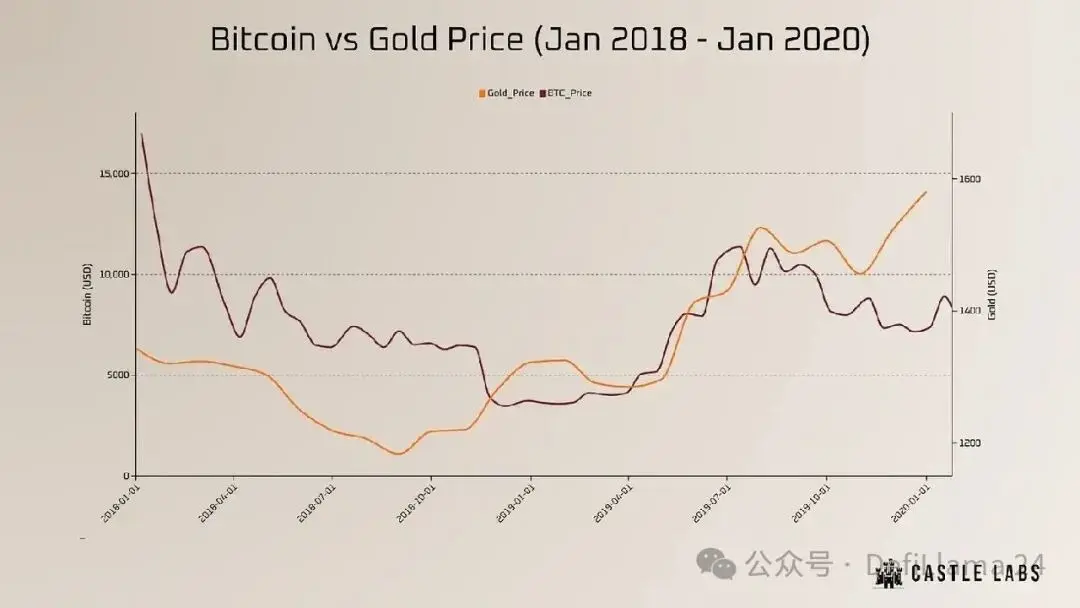
Gold is heavy, tangible, and primitive, while cryptocurrencies are lightweight, digital—simply put, the currency of the future. However, when Bitcoin still largely belongs to a fringe geek asset, promoting the idea that “gold is dead” is probably just a cheap, ill-considered marketing stunt. Yet, after the COVID-19 pandemic, the public blindly embraced this narrative. Although Grayscale took time to clear its name, the next Bitcoin cycle gave them reason.
This newfound appetite for risk assets indicates that scarcity can be engineered, not just mined.
It remains unclear whether this artificially created, man-made commodity should replace physical assets in sovereign nations’ eyes, but the 2020s show that investors have already bought into it.
The Maturation of Bitcoin
Between 2010 and 2025, Bitcoin emerged from the cryptopunk mystery circle to become a hot topic on Wall Street, transforming from a worthless novelty into a trillion-dollar behemoth. These fifteen years have not been smooth, but whenever Bitcoin crashes, it always recovers and hits new highs.
The media has been skeptical, declaring Bitcoin “dead” about 450 times. This narrative arc is far from straightforward. It began with retail enthusiasm in 2017, when some even sold their houses to buy more. Driven by retail frenzy, ICO speculation, and perhaps a general reckless mindset, Bitcoin soared from under $1,000 to nearly $20,000. But it crashed the same year, dragging down the entire crypto market (which seemed truly finished at the time). The macro hedge era of 2020,
propelled by legends like Paul Tudor Jones and Michael Saylor, reignited this controversial asset. Bitcoin found its champions, becoming a macro asset capable of challenging gold. A real breakthrough occurred in January 2024, when the U.S. Securities and Exchange Commission (SEC) approved a Bitcoin spot ETF.
In just 15 years, Bitcoin evolved from a libertarian internet token into an ETF capable of mobilizing billions in regulated funds. **BlackRock, Fidelity, and VanEck ultimately became Bitcoin’s advocates.** Those once hiding in basements, the tech geeks, may now be billionaires, their anti-capitalist ideals perhaps long forgotten in pursuit of yachts. Institutional acceptance pushed Bitcoin past the $100,000 psychological barrier in December 2024, culminating in a frenzy peak of $125,000 in October 2025. At that moment, the supercycle theory seemed irrefutable. The U.S. even explored strategic Bitcoin reserves, delighting crypto traders.
However, in October, Binance’s USDe pricing glitch caused a cascade of leveraged long positions to collapse. Although the market rebounded shortly after, the prior price shadow was filled, and Bitcoin entered a slow decline, approaching a critical level; whispers of a drop to $67k emerged. The seemingly endless cycle suddenly showed a starkly different picture at the end of 2025.
While Bitcoin hit new highs, other blue-chip projects like Aave, Ethereum, Solana, and Ethena never regained momentum. Bitcoin remained undefeated, but its relative strength did not translate into broad market rally support. This divergence reinforced Bitcoin’s status: it is not only a novel asset but a reliable, enduring one. Through its absolute scarcity and first-mover advantage, it successfully replicated the monetary premium of precious metals. Unlike fiat currencies prone to endless devaluation, Bitcoin offers a decentralized beacon with durability, divisibility, and instant portability. Despite its high volatility due to immaturity, it effectively digitized gold’s inherent qualities and achieved a near-monopoly among similar assets. 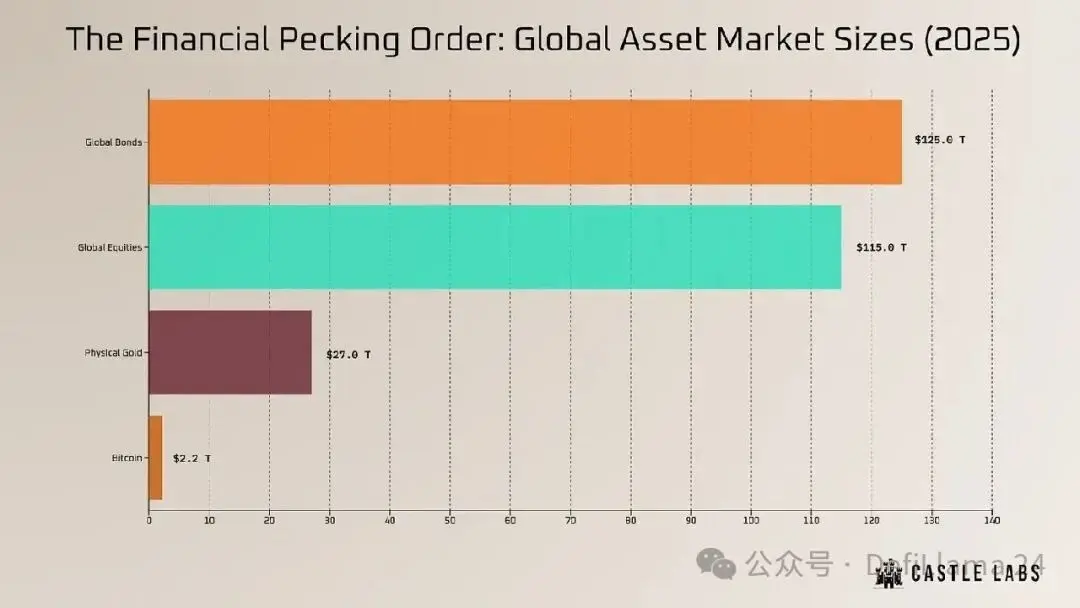
By November 2025, a brutal correction pushed Bitcoin back to $80,000, dragging the rest of the market down. Frustrating everyone, stocks, gold, silver, collectibles, and assets between the two experienced parabolic rises. This time, did cryptocurrencies—especially those beyond Bitcoin—really go extinct?
Did we exchange real currency promises for an ETF ticker and a pump-and-dump spectacle? Is the “institutions are coming” narrative just marketing hype? An asset under regulation, taxation, and strict oversight, now even unable to keep pace with the market, seems more boring than gold.
Gold prices surged parabolically, silver followed, and even copper—the cheap metal used in electronics and weapons manufacturing—has gone out of control.
Has gold always been the only stable currency?
The Triumph of Gold in 2025
Although Bitcoin meets the criteria of sound money, recent developments show it has yet to demonstrate the qualities of digital gold.
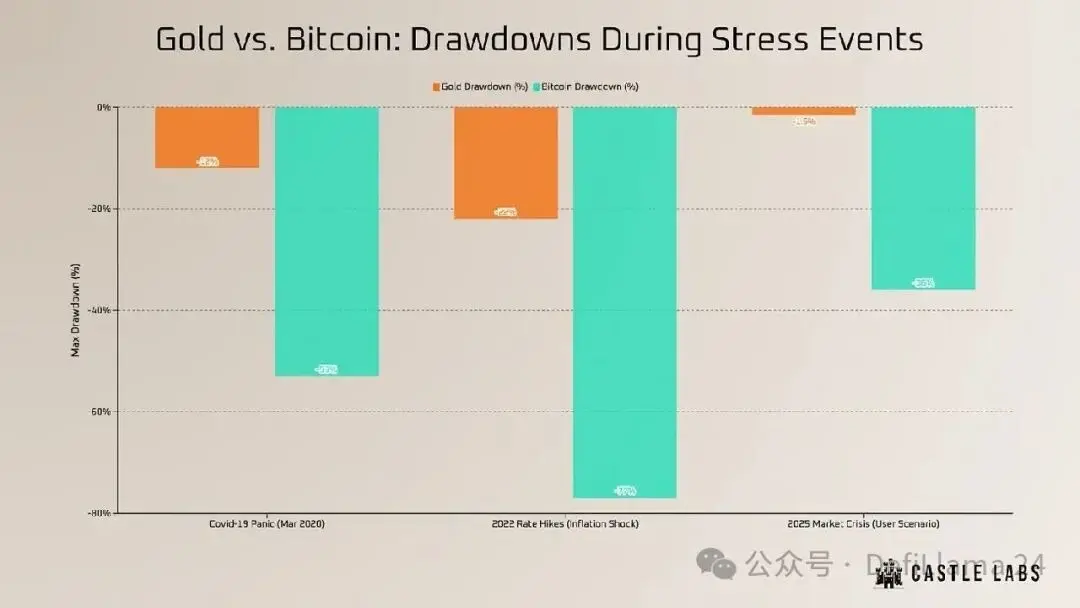
In 2025, as a tool for inflation hedging, geopolitical turmoil, and war, gold outperformed Bitcoin as an investment.
The global gold rush is characterized by large-scale accumulation of official reserves, led by aggressive purchases by the Polish National Bank, continued buying by the Reserve Bank of India, Turkey, and China, with Brazil joining at year-end for diversification. Despite central banks shifting their gold strategies from the West to the East, China and India still have the highest demand for jewelry and physical gold bars, followed by the U.S., Turkey, and Iran—whose citizens see gold as the primary hedge against currency devaluation and economic instability.
In 2025 alone, currencies in Turkey, Argentina, and Iran hit record lows. If you think this rally is over, institutions have shifted from “gold is dead” to “gold will rise to $5,000.” VanEck has published that ongoing geopolitical instability, fiscal instability, and inflation could push gold prices to $5,000 per ounce before 2030, and undervalued gold mining stocks will inevitably explode. JPMorgan predicts that driven by a non-temporary structural shift, the average gold price will reach $5,055 per ounce by the end of 2026.
The bank highlights two main reasons for this rally:
First, central banks are accelerating their gold holdings (continuing the 2025 trend) to diversify assets and reduce dependence on the dollar;
Second, the Fed’s rate cuts trigger a flow back into Western ETFs.
Gold is actively traded as an inflation hedge against currency devaluation, once again proving that ancient customs may indeed be rooted in wisdom. Gold is truly a bet on fear. For cryptocurrencies, tightening regulations worldwide—from the EU’s Markets in Crypto-Assets (MiCA) regulation to aggressive crackdowns on privacy coins and non-compliant stablecoins by the U.S. Treasury—reflect this trend. Ultimately, the illusion shatters.
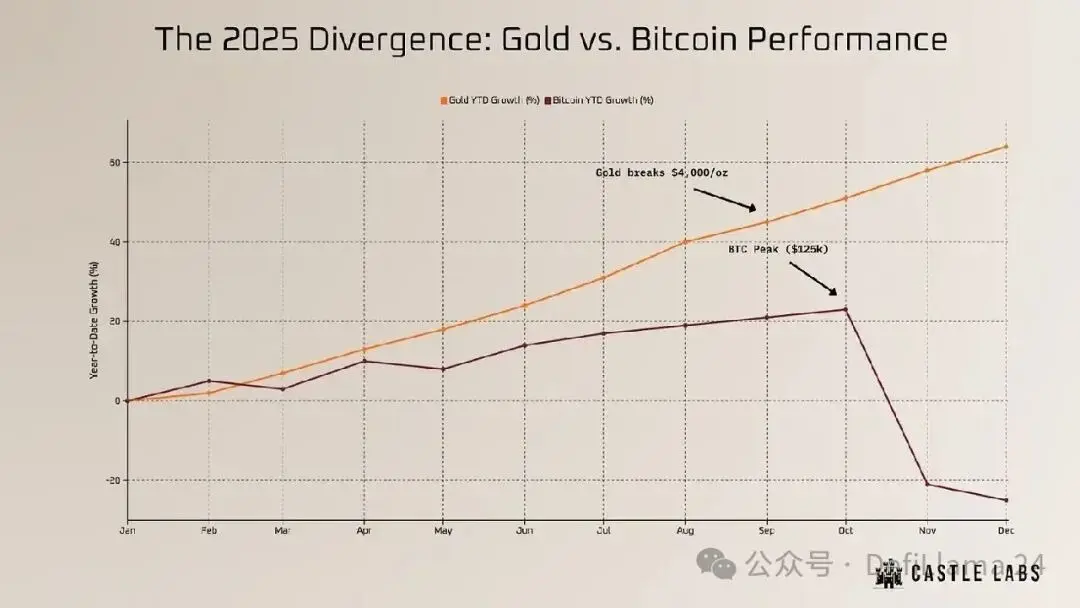
Since we are still in a turbulent transition, assessing the current situation is quite difficult. Cynics might say the test of Bitcoin as “Digital Gold” has failed, and we are merely returning to the mean. After a long experiment, in the eyes of public and private institutions, Bitcoin has not passed the “sound money” test. While these institutions hold a positive view of the “Digital Gold” concept, they ultimately tend to revert to familiar, reliable assets already held in large quantities by central banks.
For risk-averse investors, traditional gold’s relatively stable price may be another advantage over Bitcoin; although precious metals’ prices fluctuate with the global economy, they rarely crash outright. Part of this is because influencing such a large asset class is not easy—even for institutions with enough capital to leverage the precious metals market via derivatives. Moreover, most of gold’s market value is dormant (jewelry, central bank vaults, private holdings) and not actively traded.
Conversely, Bitcoin is naturally leveraged by retail and institutional traders to capture intraday volatility. Compared to inert physical commodities, it’s much easier to manipulate an asset whose direction is determined by dynamic liquidity. Despite believers in its inflation hedge narrative, Bitcoin’s performance resembles that of an immature asset—characterized by high volatility and unpredictable swings. The expectations for a reserve asset do not align with Bitcoin’s actual behavior. The de-pegging panic of stablecoins reminds us: if you don’t hold it physically, you don’t truly own it.
On one hand, gold is the ultimate tangible asset; on the other, it’s difficult to store securely.
Dismissing Bitcoin outright might be premature, but solely viewing gold as the only sound currency in the digital age is shortsighted.
Currently, the bulls have retreated, and the “Baby Boomer” generation has taken all the profits. It’s fair to say that after 15 years of maturation and widespread enthusiasm, Bitcoin has not demonstrated the reserve asset qualities expected. Meanwhile, a titan that has ruled our imagination, senses, and desires for thousands of years is destined to awaken from its slumber someday.
Dethroning Bitcoin: A Herculean Task
The idea that privacy coins or Bitcoin forks could replace gold as a global store of value re-emerged at the end of 2025. But data reveals a different reality: although gold’s total market cap is about $3.2 trillion, the combined market cap of Monero and Zcash struggles to break through $20 billion—amounts that are tiny compared to the fluctuations in Nvidia’s stock price on its hourly chart.
In Q4 2025, Zcash briefly caught the attention of crypto Twitter, not for its sound money properties, but due to a narrative shift: amid a wave of compliance-driven washouts of privacy assets on exchanges, Zcash survived thanks to its auditability under the EU’s MiCA framework and the U.S. GENIUS Act. Moreover, Solana’s founders launched a marketing blitz, sparking a spontaneous ZEC buying frenzy.
Compared to gold, silver, stocks, or private equity, such price movements hardly suggest a stable currency; they resemble pump-and-dump schemes. Instead, privacy coins in 2025 became regulatory contraband. They satisfy niche demands of short-lived narratives but may be insignificant in the current boom-bust cycle. Even fears of surveillance and potential state intrusion triggering sporadic rebounds cannot attract the sustained institutional capital that crypto is trying to absorb.
Ironically, tokens designed to evade institutions may only survive by relying on the funds they aim to bypass, at the cost of transparency. Funds and banks supporting assets meant to bypass them are unimaginable. These alternatives cannot withstand the test of sound money: Bitcoin Cash, for example, lost its “store of value” narrative years ago; it is a payment network, more or less forgotten by institutions and retail alike. With the rise of stablecoins, Bitcoin Cash has become irrelevant, replaced by capital-rich tokens designed specifically for payments.
After two forks and lacking community focus, Bitcoin Cash appears insignificant compared to Bitcoin. The value of Zcash lies in its privacy. Any sovereign nation cannot base reserves on assets that regulators worldwide are trying to kill or that are highly volatile. Such tokens are tools for private transactions, not for public treasuries, because they lack the liquidity and stability needed to replace a $3.2 trillion gold market.
Although Zcash has a cap of 21 million coins, despite this attractive and familiar feature, it remains in Bitcoin’s shadow. Monero (XMR) is an alternative, but Monero’s privacy is mandatory. In terms of scarcity, the fixed issuance of new XMR (0.6 per block) and the increasing total supply cause inflation to decline toward zero but never reach it.
At least in this aspect, Monero resembles physical gold more than Bitcoin, with a stable, low annual inflation rate akin to gold (new gold mined by miners). However, XMR cannot replace gold as a reserve asset because it lacks auditability. Its ledger is opaque; without revealing private keys or destroying its privacy features, it cannot prove reserves publicly. Conversely, central banks require public trust and transparency in their reserves—even though actual accountability of U.S. and Chinese reserves remains controversial.
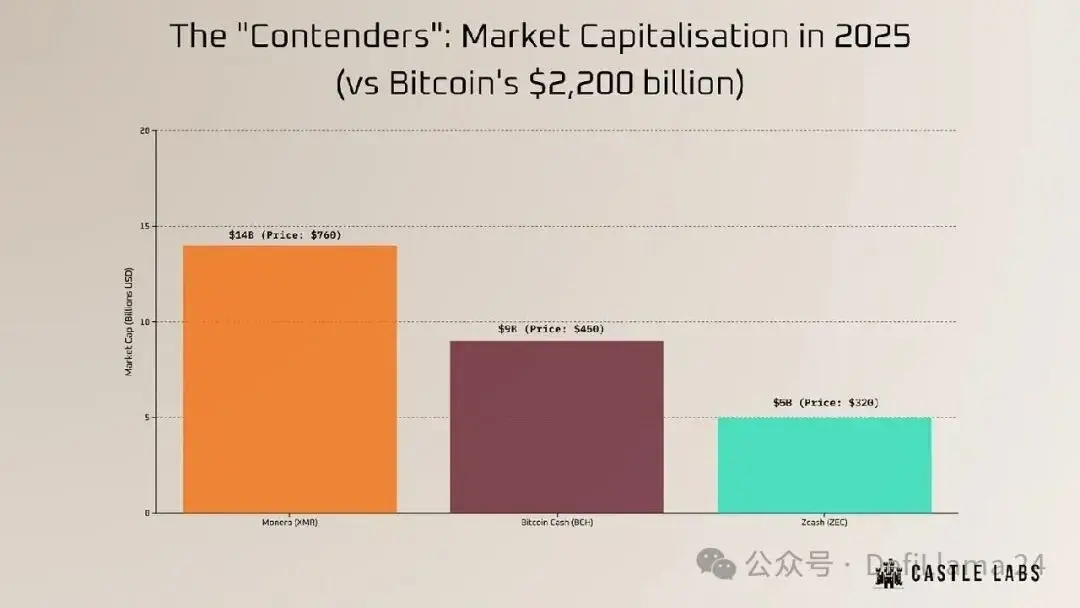
From the above analysis, we conclude that, structurally, only Bitcoin can theoretically replace gold. It has passed the test of sound money, is well-capitalized, and widely recognized at both institutional and individual levels.
Despite ongoing competition, Bitcoin has clearly established itself as the core of cryptocurrencies. It is the only digital asset legally recognized by the U.S. government: in March 2025, the U.S. issued an executive order officially designating confiscated over 200,000 BTC as a national asset, rather than auctioning it, thus establishing a Strategic Bitcoin Reserve (SBR).
This grants Bitcoin legal legitimacy, and other countries like El Salvador (about 6,000 BTC) and Bhutan (mining about 13,000 BTC via hydropower) have established more or less official SBRs. No other asset enjoys such support from governments worldwide. However, replacing gold remains an unrealistic, feverish dream—not only because of Bitcoin’s high volatility (in 2025, its annualized volatility hovered around 45%, three times that of gold’s 15%) but also because its current market cap is tiny compared to gold and silver. Sovereign nations need deep liquidity and buffers to support their monetary policies; unless Bitcoin recovers and reaches $1 million per coin, it will never dominate like gold.
The Best of Both Worlds?
For fifteen years, the fiercest debate has revolved around the conflict between massive precious metals and ambitious digital assets—gold versus Bitcoin. A series of events in 2025 temporarily paused this debate: gold remains the real money, while Bitcoin remains a risk asset. If its high volatility has not caused Bitcoin to crash to a level requiring caution, then the entire ecosystem has suffered a huge loss. Gold reaffirmed its status as the “king of wealth” with thousands of years of history. It is a national asset, the ultimate insurance that requires no electricity, internet, or permission.
Through large-scale purchases of gold by Poland, China, and Brazil, and ignoring Bitcoin altogether, we see that in turbulent times, gold remains the most sought-after commodity. Bitcoin, on the other hand, has matured into a high-beta asset with apparent institutional authority.
Most importantly, this asset is suitable for traders who profit from its extreme bidirectional volatility. Its high volatility, portability, and liquidity enable capital to be transferred across borders in seconds, bypassing the outdated, sluggish traditional banking system. Although Bitcoin’s image as a frontier asset has diminished, gold’s reputation is becoming more solid: it was the undisputed winner in the past year. Replacing gold—a task that is extremely difficult—is actually just a marketing gimmick. What the entire financial system needs now is coexistence, especially considering that Bitcoin has spawned a trillion-dollar industry reliant on its steady development.
Nevertheless, cryptocurrencies remain the explosive assets we relentlessly chase. In turbulent times ahead, cautious investors will not choose between gold and code; the two cannot be conflated. If gold is the safeguard of generational wealth and empire-building, then Bitcoin is that quirky pet asset—elusive, sometimes crazy, yet irresistibly charming. Whether it can evolve into the reserve asset we hope for depends on more stress tests and years of trial and error to finally reveal the answer.


