Bitcoin (BTC) has recorded an impressive 17% increase since the $60,150 bottom last Friday. However, derivatives market indicators suggest caution, as demand for bullish investments near the $70,000 level remains quite hesitant. Traders are concerned that the liquidation of $1.8 billion from leveraged long futures contracts over the past five days could be a sign that some large hedge funds or market makers are facing serious risks.
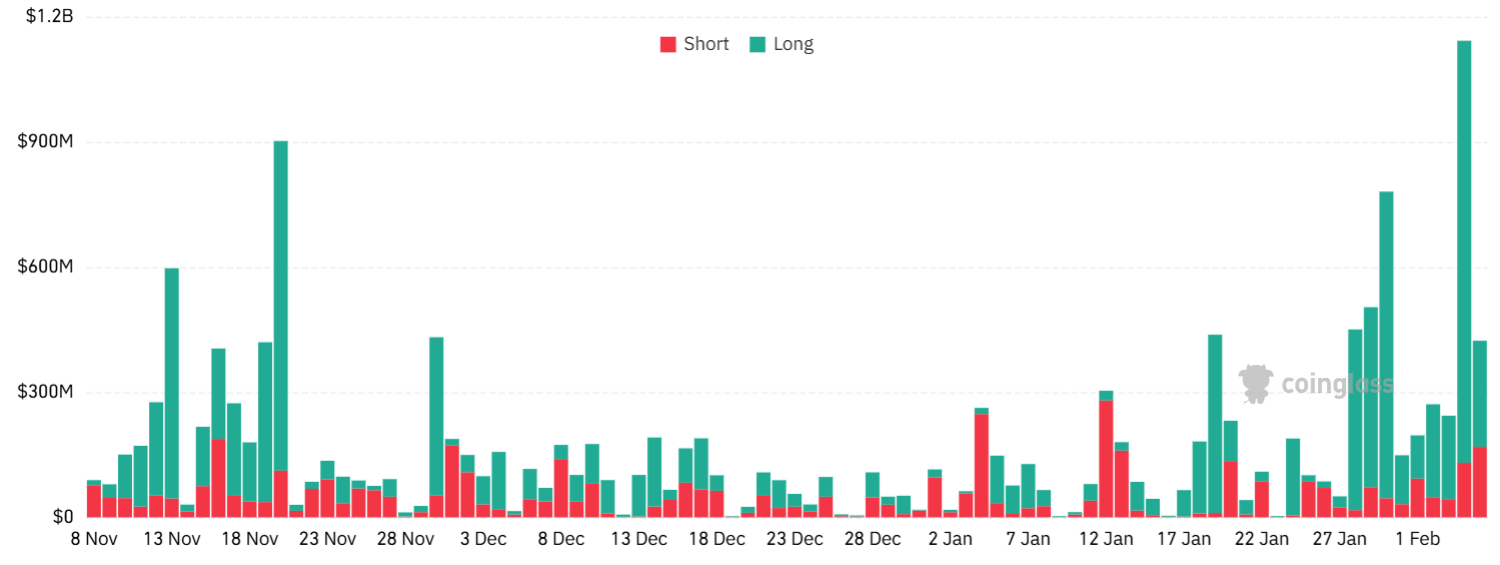 Total Bitcoin futures contract liquidations, in USD | Source: CoinGlass Unlike the market crash on October 10, 2025, which led to a record liquidation of $4.65 billion on Bitcoin futures contracts, the recent price weakness has persisted for three consecutive weeks under heavy selling pressure. Nevertheless, the bulls are still persistently increasing their positions within the $70,000 to $90,000 range. This is reflected in the continued rise in open interest in futures contracts despite significant liquidations caused by margin shortages.
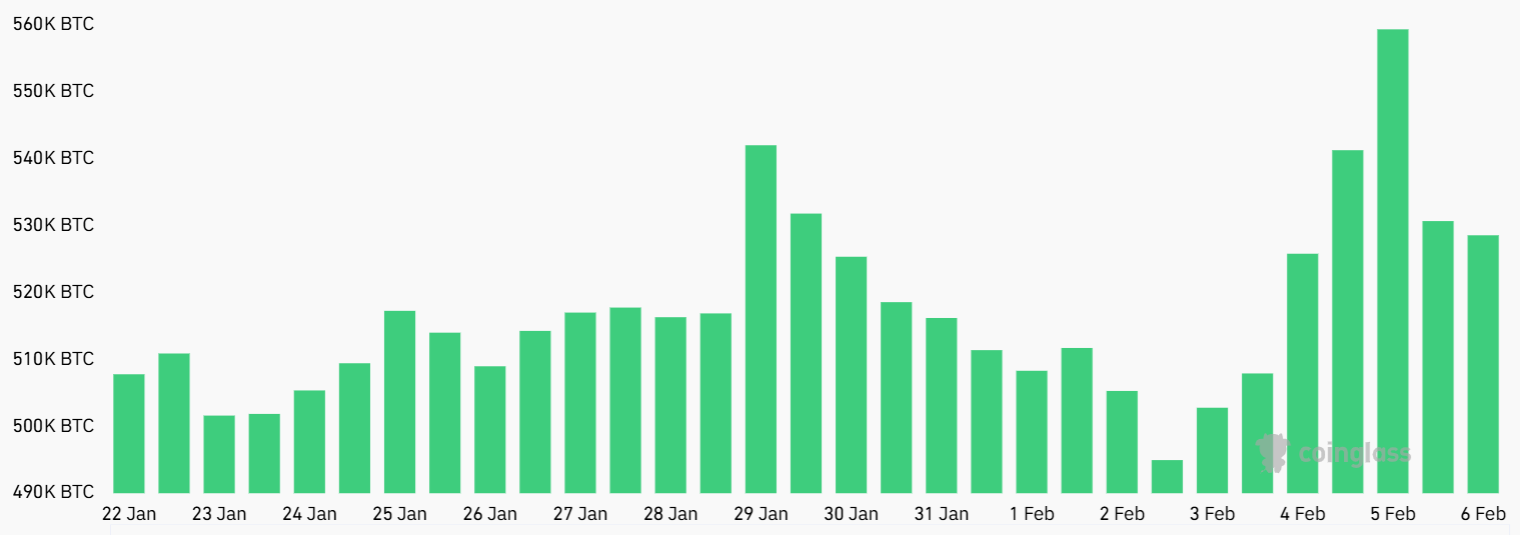 Total open interest in Bitcoin (BTC) futures | Source: CoinGlass As of Friday, the total open interest in Bitcoin futures across major exchanges reached 527,850 BTC, nearly unchanged from the previous week. However, the notional value of these contracts has decreased from $44.3 billion to $35.8 billion, a 21% drop alongside Bitcoin’s price decline over the same period. Data indicates that the bulls are still actively increasing their positions, even as prices continue to correct downward.
To assess whether “whales” and market makers are shifting toward an uptrend, it’s important to look at the BTC futures basis rate, which measures the price difference between futures and the spot price. In neutral market conditions, the basis rate typically fluctuates between 5% and 10% annually to compensate for longer settlement times.
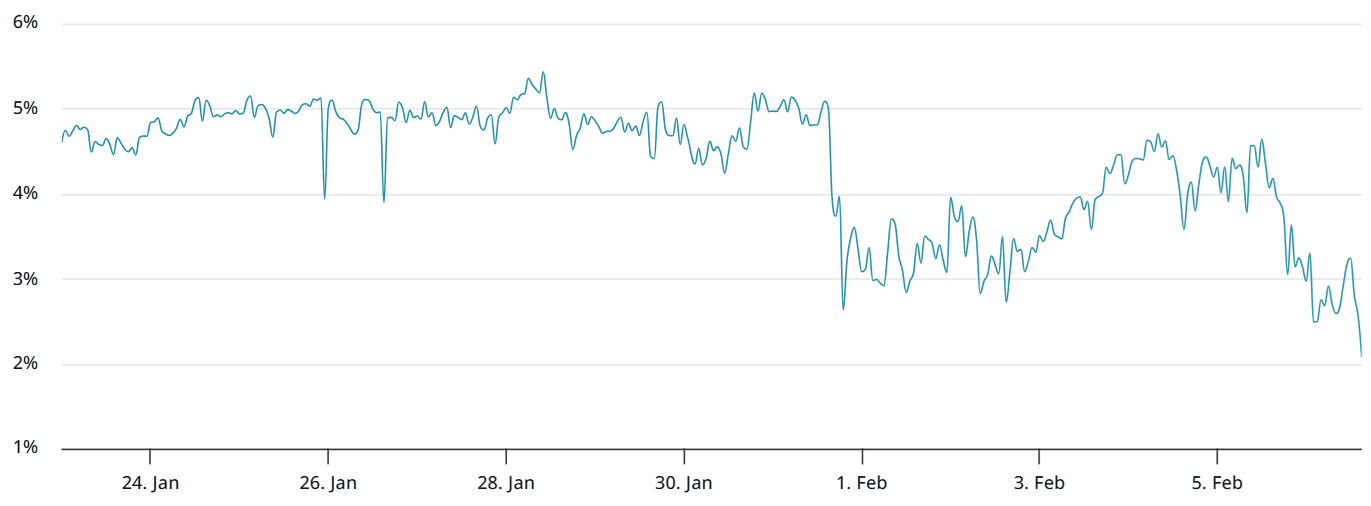 Annualized basis rate of 2-month Bitcoin futures | Source: laevitas.ch However, on Friday, the BTC futures basis rate dropped to its lowest level in over a year, just 2%. The lack of demand for leveraged bullish investments is understandable, but it also indicates that bullish speculators will need more time to regain confidence, even if Bitcoin surpasses the $70,000 mark. Notably, BTC is still 44% below its all-time high.
Bitcoin Derivatives Indicators Reflect Extreme Fear
Trader confidence in Bitcoin is further reflected in the BTC options market. The high demand for put options—a clear sign of bearish sentiment—has pushed the skew index above 6%. Conversely, when “fear of missing out” (FOMO) dominates, traders are willing to pay higher premiums for call options, causing the skew to turn negative.
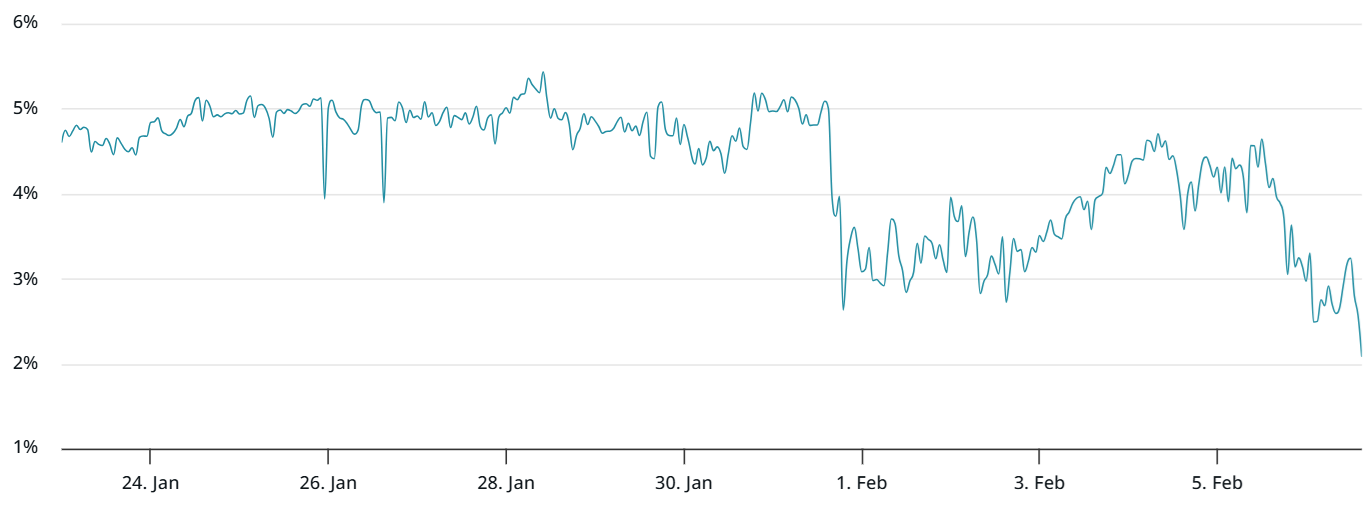 BTC 2-month options skew chart (call options – put options) on Deribit. Source: laevitas.ch On Friday, the BTC options skew index reached 20%—a rare level that often indicates market panic. In comparison, on November 21, 2025, the skew was only 11% after Bitcoin dropped 28%, from a peak of $111,177 to $80,620 over 20 days. With no specific catalysts for the current correction, fear and uncertainty have increased significantly.
Many traders are now speculating that a major market maker, exchange, or investment fund may have gone bankrupt. This sentiment continues to erode market confidence and suggests a high likelihood of the downtrend continuing. Therefore, the prospects for a sustainable recovery of Bitcoin remain very fragile, as derivatives indicators continue to signal extreme fear.
Disclaimer: The information on this page may come from third parties and does not represent the views or opinions of Gate. The content displayed on this page is for reference only and does not constitute any financial, investment, or legal advice. Gate does not guarantee the accuracy or completeness of the information and shall not be liable for any losses arising from the use of this information. Virtual asset investments carry high risks and are subject to significant price volatility. You may lose all of your invested principal. Please fully understand the relevant risks and make prudent decisions based on your own financial situation and risk tolerance. For details, please refer to
Disclaimer.
Related Articles
Bitcoin Cash Battles $459 Resistance as Massive Sell Walls Stack Toward $650
BCH is trading at $455.86 close to the resistance range of $459.20 with the support level of $447.44.
The chart data indicates that the chart has strong resistance levels at around $520, $580 and $650 which restricts the momentum on short term upside.
Following a sharp fall, price
CryptoNewsLand9m ago
Bitcoin and XRP Hold Gains as Regulatory Debate Shapes Market Outlook
Bitcoin and XRP maintained steady prices on Sunday as the broader cryptocurrency market posted modest gains. The recovery followed renewed buying activity and stronger market sentiment across major digital assets. Meanwhile, political debate in Washington over crypto regulation added a new layer
CryptoBreaking55m ago
Steak 'n Shake Credits Bitcoin Payments as Same-Store Sales Rise ‘Dramatically’
Steak ‘n Shake is leaning deeper into bitcoin, tying customer payments, employee bonuses, and a growing BTC treasury into a strategy the company says is boosting sales and reshaping its financial model.
Steak ‘n Shake Expands Burger-to- Bitcoin Strategy
Growing corporate experimentation with bitc
Coinpedia1h ago
Metaplanet Lines Up $255M in Funding As It Pursues 210,000 BTC
Metaplanet said Monday that it has secured roughly $255 million from global institutional investors through a third-party private placement, a fresh infusion meant to accelerate the company’s aggressive plan to amass 210,000 bitcoins.
The capital raise consists of newly issued shares sold at a
BlockChainReporter1h ago


