Bitcoin (BTC) is trading below $69,000, reinforcing the view that the market is entering a short-term correction phase. The sell-off down to $60,000, followed by a rebound to $72,000, has pushed many of BTC’s price indicators into what analysts call the “deep value zone.” However, the question remains: Are investors sharing this view and willing to participate in the market?
Bitcoin’s Realized Price Range: Long-Term Accumulation Indicator
Bitcoin’s realized price and shifted realized price metrics have proven effective in identifying long-term accumulation zones since 2015.
Currently, Bitcoin’s realized price hovers around $55,000, while the shifted realized price is approximately $42,000.
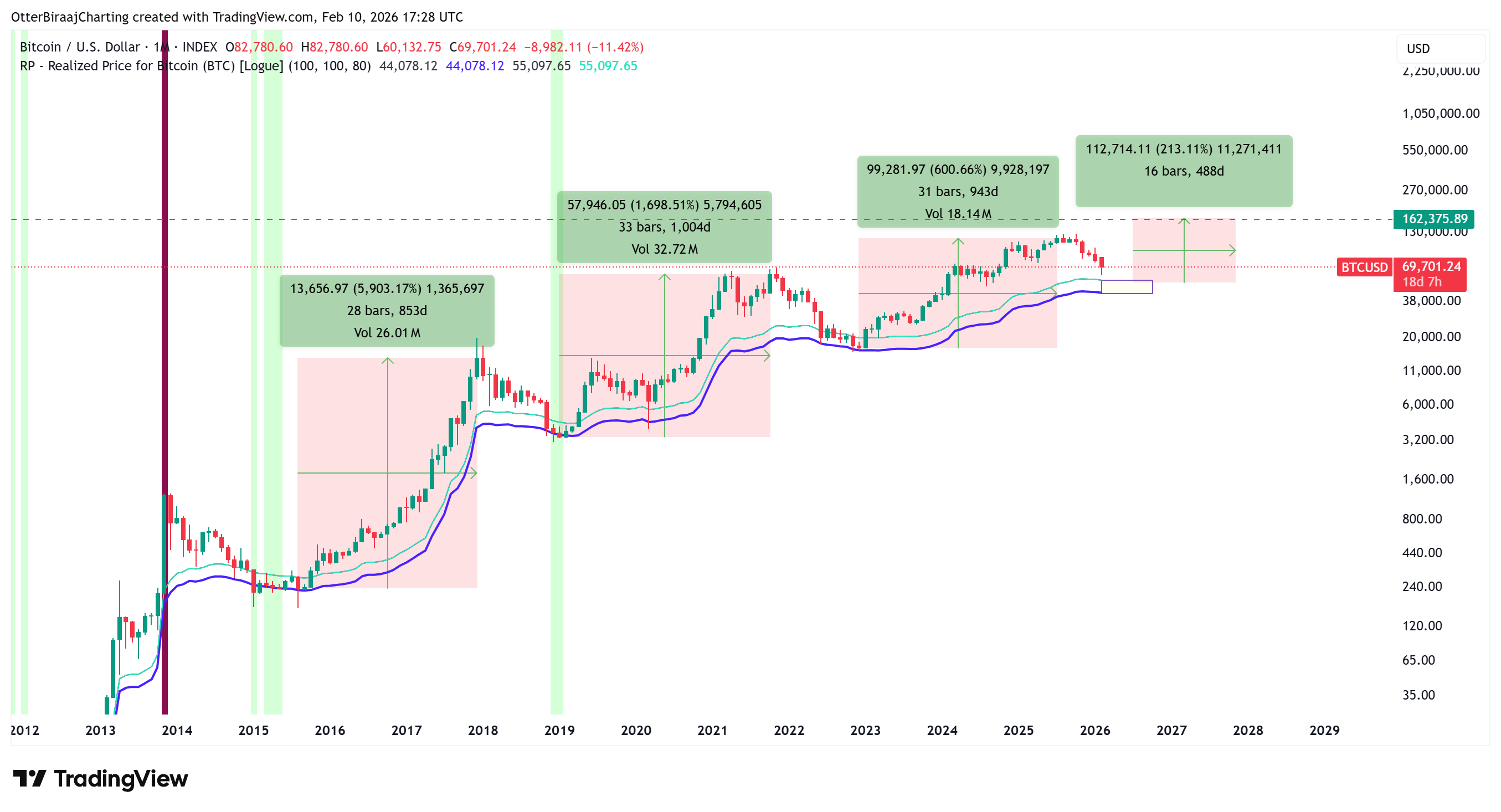 Monthly BTC price zones based on realized price ranges | Source: Cointelegraph/TradingView Historical data shows that strong rallies often occur after Bitcoin revisits these price zones, delivering significant profits to investors. Although profit margins tend to diminish across cycles, the current model still indicates growth potential of 170% to 220%, corresponding to prices above $150,000 in the next bull cycle.
Typically, Bitcoin tends to accumulate for 6 to 8 months after touching the realized price bands before resuming its upward trend and setting new highs.
“Power Law” Model Indicates Bitcoin is Undervalued
The “Power Law Quantile” model, developed by Bitcoin researcher Giovanni Santostasi, currently positions Bitcoin at 14% within the long-term log-log price corridor. This suggests Bitcoin is temporarily undervalued after the most recent cycle peak failed to reach the forecasted $210,000 by 2025.
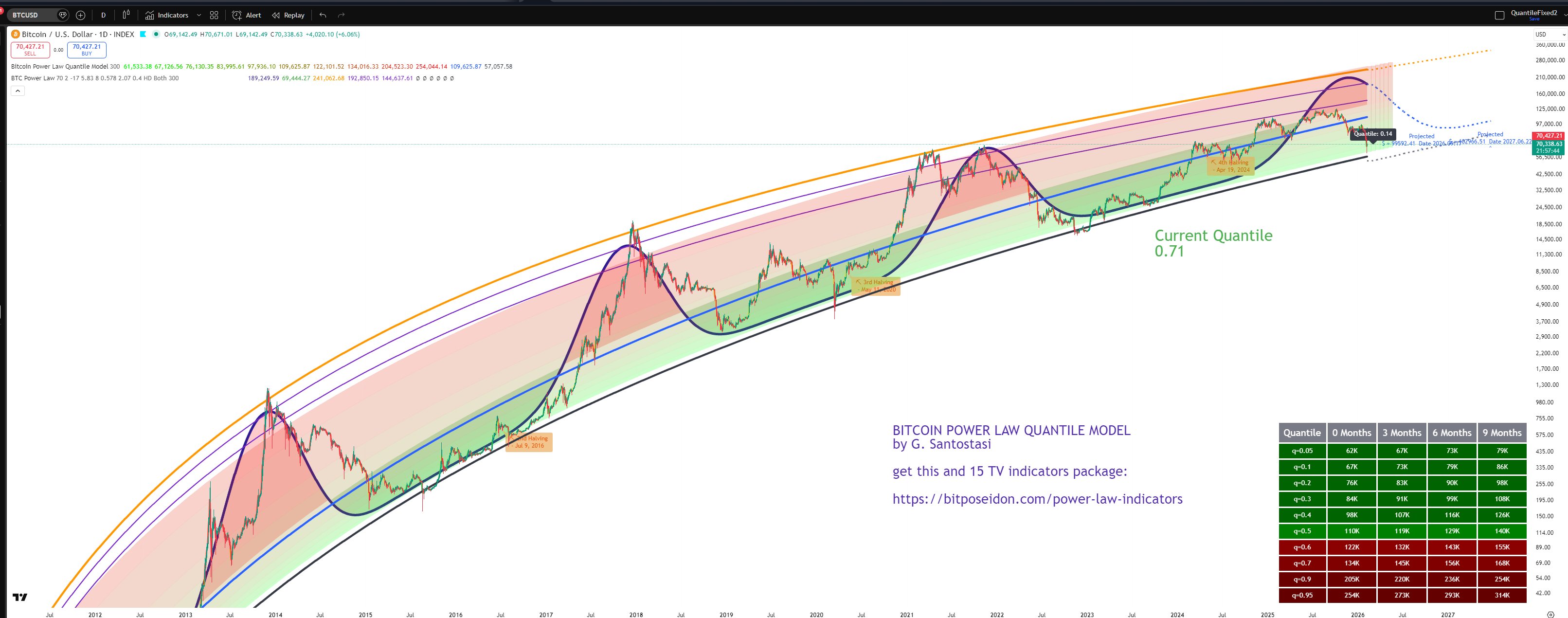 Bitcoin forecast based on the Power Law model | Source: XL The history shows that convergence of trading prices near realized price bands and lower percentiles of the “Power Law” model often signals strong recoveries.
Notably, the 5th percentile (0.05) of the model—previously marking long-term cycle lows—is now in the range of $50,000 to $62,000. This zone also aligns with the realized price bands, creating an attractive opportunity for long-term investors.
Analysts Suggest Bitcoin Could Drop Before Next Major Rally
According to Bitcoin investor Jelle, BTC’s current price has fallen about 31% from the break of the RSI 37 level on the weekly chart, a signal often associated with cycle lows since 2014.
Previous declines ranged from 17% to 55%, with recent cycles typically bottoming out with drops between 40% and 43%. This indicates BTC could fall further, possibly to $52,000, before establishing a solid bottom.
Additionally, crypto analyst Sherlock pointed out the decline in the BTC/Gold (XAU) ratio below 15–16, a sign that previously indicated a transition into a bearish market phase.
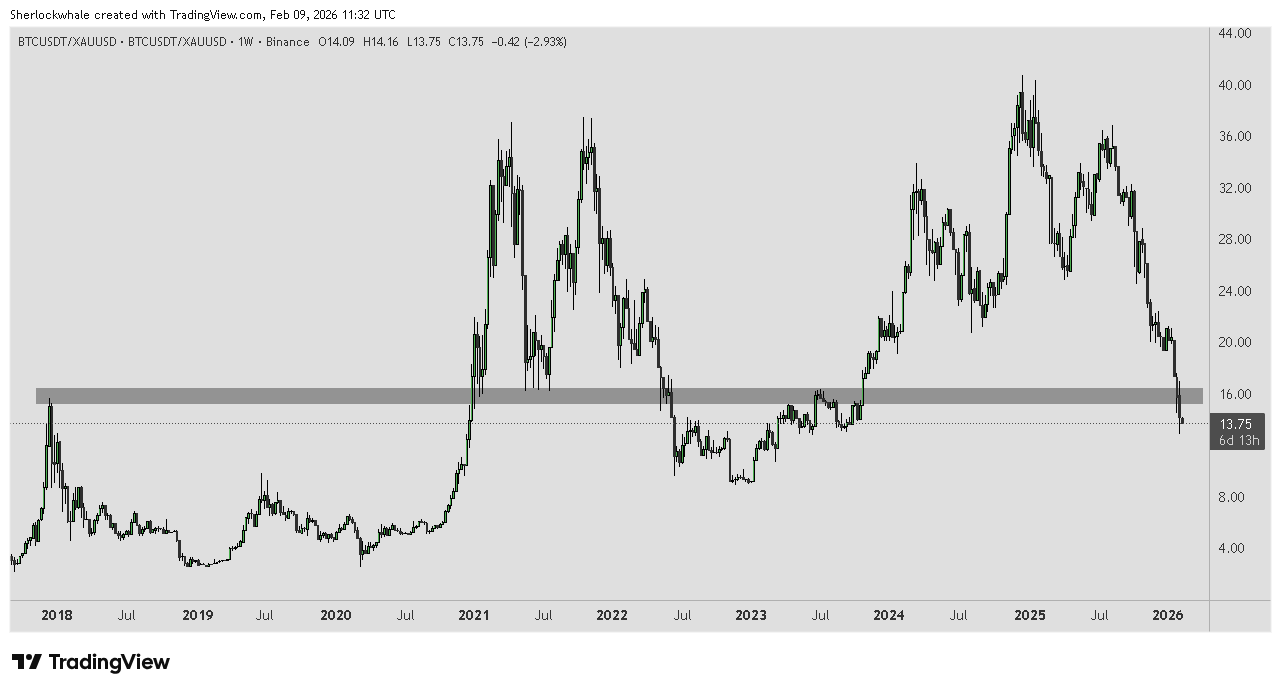 Sherlock’s BTC/Gold ratio analysis | Source: Based on analysis, Sherlock warns that Bitcoin could continue to correct further, potentially falling into the $38,000–$40,000 range if history repeats.
Conclusion
Bitcoin is currently undergoing a short-term correction, with analyses suggesting prices may continue to decline before entering a new growth cycle. However, long-term indicators such as the realized price and the “Power Law” model still show significant growth potential, especially in the upcoming bullish phase. Investors should closely monitor market signals to determine the optimal timing for long-term accumulation strategies.
Disclaimer: The information on this page may come from third parties and does not represent the views or opinions of Gate. The content displayed on this page is for reference only and does not constitute any financial, investment, or legal advice. Gate does not guarantee the accuracy or completeness of the information and shall not be liable for any losses arising from the use of this information. Virtual asset investments carry high risks and are subject to significant price volatility. You may lose all of your invested principal. Please fully understand the relevant risks and make prudent decisions based on your own financial situation and risk tolerance. For details, please refer to
Disclaimer.


