
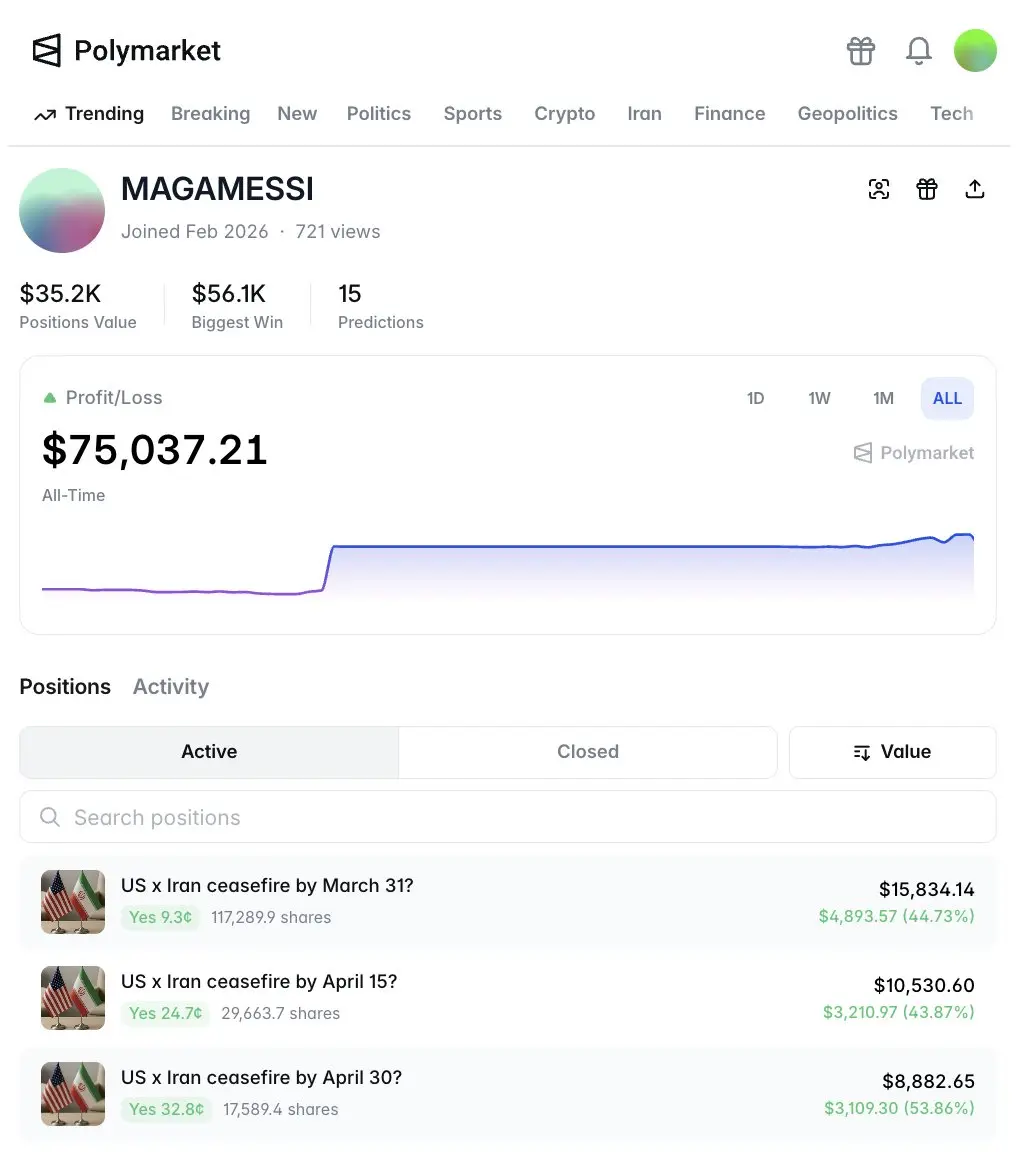
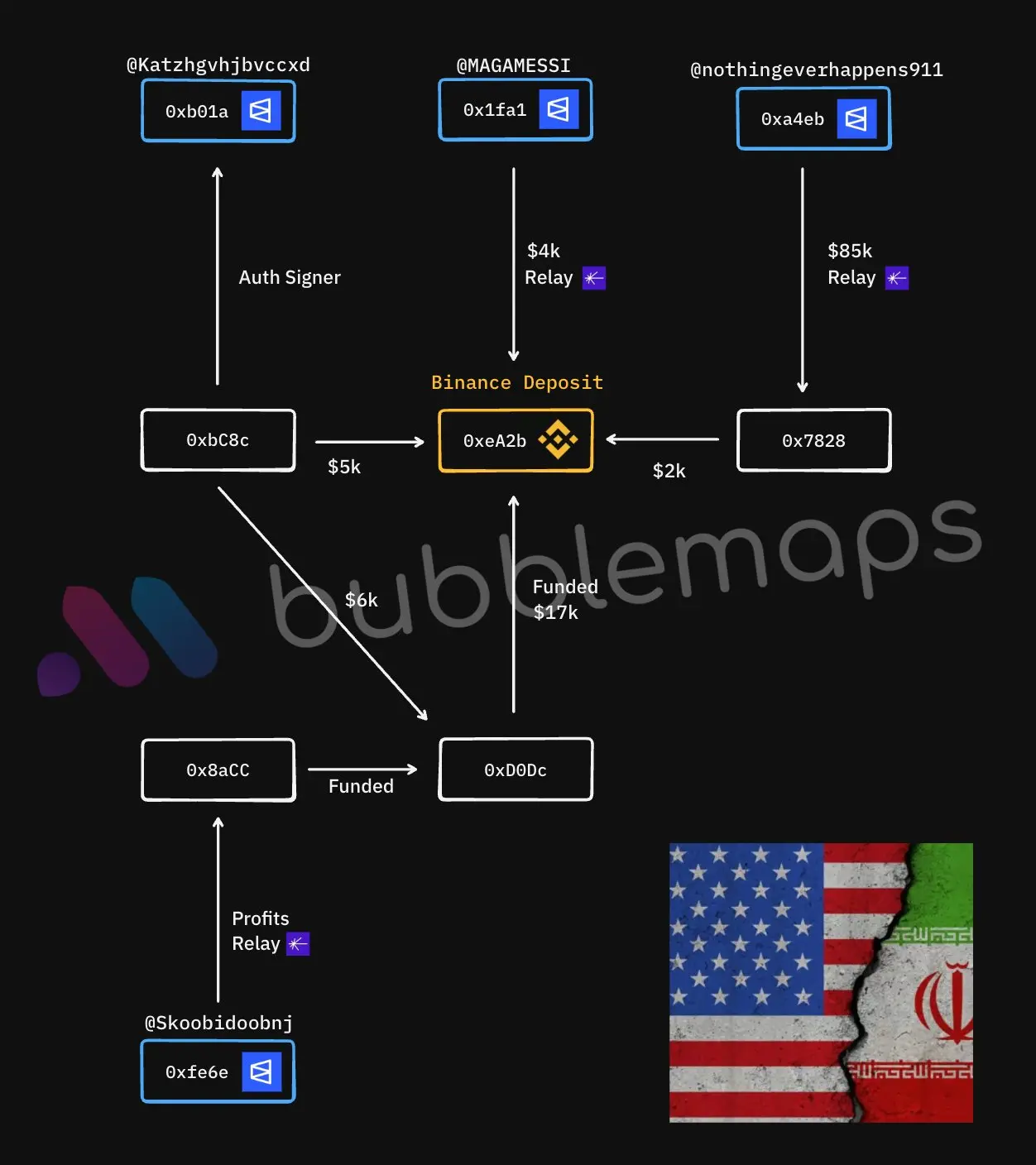
On-chain data shows that six Polymarket wallets, which precisely built positions and earned approximately $1.2 million in profit just before the U.S. attack on Iran on February 28, recently coordinated bets of around $100,000 predicting a ceasefire between the U.S. and Iran before March 31, with some bets extended into April. This series of accurate bets has sparked significant skepticism among market observers regarding informational advantages, and these wallets are currently under close surveillance by on-chain monitoring agencies and the crypto community.
Three Precise Bets: From Attack to Nuclear Facilities to Ceasefire
(Source: Polymarket)
On-chain records reveal a trading pattern spanning three geopolitical events. About 24 hours before the U.S. launched an attack on Iran on February 28, six recently funded Polymarket wallets simultaneously placed bets that “the U.S. will attack Iran before February 28,” later earning about $1.2 million in profit. The timing of these bets far exceeds what would be expected under normal probability.
Subsequently, the same addresses successfully bet on Iran’s nuclear facilities being targeted in subsequent strikes, earning additional profits. Now, at a critical moment when ceasefire rumors are intensifying, these wallets appear for the third time, coordinating bets of about $100,000 on the ceasefire outcome.
Analysts note that this pattern is consistent—newly created or less-funded wallets establish positions before major geopolitical events, then exit with substantial profits after the events, with each bet targeting information beyond normal market scope.
Insider Trading Suspicion: Structural Contradictions in On-Chain Transparency
(Source: Bubblemaps)
Currently, there is no concrete legal evidence indicating that these transactions involve illegal insider information. However, the precise timing and coordinated nature of the three bets have exceeded reasonable explanations based on random distribution, raising systematic doubts among market analysts and on-chain monitoring agencies.
Polymarket and similar prediction markets are built on public blockchains, where fund flows are fully traceable, but the true identities of traders are difficult to verify. This “transparent yet anonymous” structure allows abnormal trading patterns to be identified but makes it difficult to trace responsibility back to specific parties, creating fundamental limitations for regulation and enforcement.
The ceasefire bets also coincide with highly sensitive market windows—Washington and Tehran issuing conflicting signals, which have repeatedly triggered sharp reactions in stock markets, oil prices, and crypto markets. The fact that these wallets entered the market at this critical juncture further deepens external doubts about their information sources.
Market Implications: How Informed Trading Clouds Erode the Credibility of Prediction Markets
This incident raises a deeper structural issue: if Polymarket’s pricing increasingly reflects the informational advantage of insiders rather than the collective wisdom of broad market participants, its core value as a neutral prediction tool will be fundamentally challenged.
Traders’ strategies are no longer solely based on event analysis but increasingly rely on abnormal fund flows on Polymarket as forward-looking indicators. This “following suspicious wallets” logic is forming a new market behavior pattern, which in turn amplifies the impact of geopolitical events on crypto market volatility.
Frequently Asked Questions
What signs suggest these Polymarket wallets may be involved in informed trading?
Main signs include: wallets that, about 24 hours before major events, receive funds and immediately establish positions; three consecutive precise bets before the events; concentrated bet sizes with clear coordination features. While there is no definitive legal proof yet, the timing precision exceeds what would be expected under normal probability.
How does Polymarket respond to suspicious insider trading?
Polymarket has updated its market integrity rules, explicitly prohibiting trading based on stolen confidential information or illegal insider tips, and has set up a suspicious activity reporting page. However, since the platform is built on a public blockchain, actual enforcement is fundamentally limited by anonymity, with technical and legal hurdles in identity tracing.
Does this ceasefire betting indicate an increased likelihood of a U.S.-Iran ceasefire?
Polymarket bets reflect market participants’ probability assessments at specific times, not definitive predictions of actual outcomes. The current uncertainty surrounding these bets stems more from doubts about information sources than from a broad consensus on the likelihood of a ceasefire. Investors should treat this data as a market sentiment indicator rather than a decision-making basis.
Disclaimer: The information on this page may come from third parties and does not represent the views or opinions of Gate. The content displayed on this page is for reference only and does not constitute any financial, investment, or legal advice. Gate does not guarantee the accuracy or completeness of the information and shall not be liable for any losses arising from the use of this information. Virtual asset investments carry high risks and are subject to significant price volatility. You may lose all of your invested principal. Please fully understand the relevant risks and make prudent decisions based on your own financial situation and risk tolerance. For details, please refer to
Disclaimer.


