Author: Martin Young, BeinCrypto Compiler: Shan Ouba, Golden Finance
Summary
- In 2022, the total amount of stablecoins settled on the blockchain exceeds 11 trillion US dollars, which is close to Visa’s 116 trillion US dollars in transaction volume and poses a threat to the payment giant.
- These stable digital assets have the potential to provide global financial services to underserved customers.
- Despite facing regulatory hurdles, Tether remains the dominant stablecoin with $83 billion in circulation and a market share of 67%.
Payments giants like Visa and PayPal could see their business models threatened by the increased adoption of stablecoins such as Tether. U.S. dollar-based blockchain assets offer several fundamental advantages over traditional payment methods.
Dollar-pegged stablecoins “look like a threat” compared to the likes of Visa and PayPal, according to an Aug. 23 report in Barron’s.
The Stablecoin Threat Is Growing
In addition to being an on-ramp for cryptocurrency investments, stablecoins are also reportedly increasingly being used for payments. By 2022, the settlement volume of stablecoins on the blockchain will exceed 11 trillion US dollars. That dwarfs the transaction volume PayPal handles, approaching Visa’s $11.6 trillion transaction volume.
Additionally, more than 25 million blockchain wallets hold more than $1 in stablecoins, 80% of which hold $100 or less. By comparison, the bank with 25 million accounts would be the fifth largest in the US, notes macro hedge fund Brevan Howard’s team.
According to the company’s analysts:
“Remarkably, in just a few years, the new global railroads of money flows rival some of the largest and most important payment systems in the world.”
The large number of small-dollar stablecoin holdings shows that “stablecoins have the potential to provide global financial services to customers underserved by traditional financial institutions.” PayPal announced the launch of its own stablecoin earlier this month, but its stock price has fallen by 18% since the beginning of August. %. The lack of enthusiasm may stem from the notion that dollar-pegged stablecoins are more popular outside the US.
“Adoption of stablecoins is an inherently global phenomenon,” said the Brevan analysts. “One of the key value propositions of stablecoins is that they can provide basic, dollar-denominated currency to almost anyone with an internet connection,” they added. Basic financial services.” Stablecoins provide faster, cheaper transactions. In contrast, companies such as PayPal charge up to 10% in fees and foreign exchange spreads on cross-border transactions.
Regulations and Ecosystem Outlook
Stablecoins, on the other hand, do face regulatory hurdles, especially in the United States, which has been at war with the cryptocurrency industry this year. Tether remains the industry-leading stablecoin with $83 billion in circulation and a market share of nearly 67%.
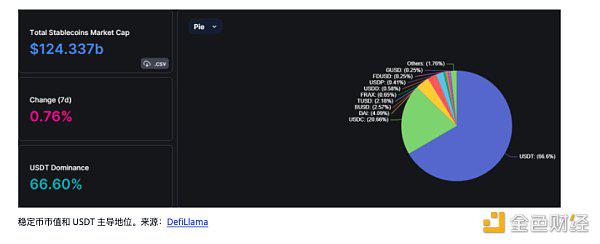
The supply of its closest competitor, Circle, has plummeted by more than 40% since the start of the year. Currently, the number of USDC in circulation is 26 billion, and the stable currency market share is 21%.
The third largest stablecoin is decentralized DAI with a supply of 3.9 billion and a market share of just over 3%. U.S. regulators have cracked down on Binance Dollar (BUSD), which has seen its supply cut by 80% since the start of 2023.
Disclaimer: The information on this page may come from third parties and does not represent the views or opinions of Gate. The content displayed on this page is for reference only and does not constitute any financial, investment, or legal advice. Gate does not guarantee the accuracy or completeness of the information and shall not be liable for any losses arising from the use of this information. Virtual asset investments carry high risks and are subject to significant price volatility. You may lose all of your invested principal. Please fully understand the relevant risks and make prudent decisions based on your own financial situation and risk tolerance. For details, please refer to
Disclaimer.


