Original source: Qubits
 Image source: Generated by Unbounded AI
** From AI pharmaceuticals to the field of large-scale models in an all-round way! **
This is what Qi Yuan, former vice president of Ant Group and dean of the AI Innovation and Industry Research Institute of Fudan University, is doing.
The company he founded, Infinite Lightyear, is now shifting from the field of AI pharmaceuticals to focusing on generative AI and AGI research and development.
Qubit learned that this company is planning to develop its own base for tens of billions of large-scale models, and ultimately build industry applications for medical, gaming and education scenarios.
At the end of 2021, Qi Yuan, then vice president of Ant Group, returned to academia and served as dean of the AI Innovation and Industry Research Institute of Fudan University; in the first half of the next year, Qi Yuan founded Infinite Lightyear.
At the beginning of its establishment, the company was positioned as an AI pharmaceutical company, mainly engaged in “medical research and experimental development (except human stem cells, gene diagnosis and treatment technology development and application)”.
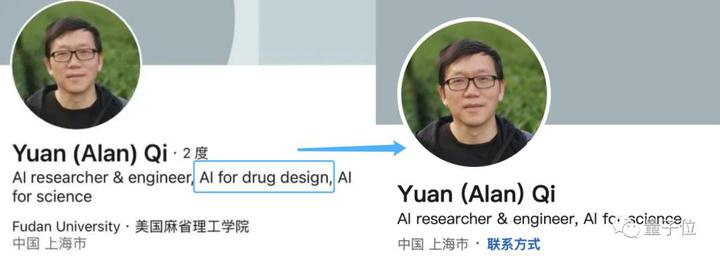
At that time, Qi Yuan’s LinkedIn profile added the description “AI for drug design”, but this sentence has now been deleted from his profile.
 The company previously received a first-round investment of tens of millions from Qiming Venture Partners. At this year’s forum, Qiming Venture Partners listed Infinite Lightyear as one of its generative AI invested projects. Other projects include Zhipu AI, Xianyuan Technology, etc.
The Road to Large Models of Infinite Light Years
In May 2022, Infinite Lightyear was established, focusing on AI pharmaceuticals.
At present, the company’s pharmaceutical directly related technical positions on the recruitment platform are completely closed, and the existing recruitment directions are mostly related to algorithms and infra architecture.
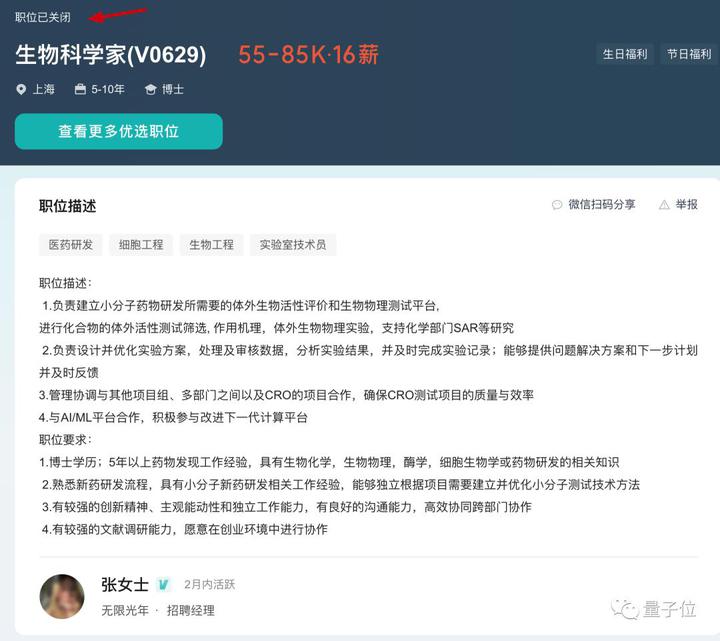 So, after transforming from AI pharmaceuticals and adjusting its positioning, how will Infinite Lightyear focus on the field of large models?
According to the news from the market, Infinity Lightyear currently employs about 50 to 60 people. The ** members are mainly from Ali**, and there are also members from Microsoft, Tencent, and Byte. The proportion of production and research is about 85%. .
As for the first threshold of the entrepreneurial model - computing power resources, it is said that the company has abundant cluster resources and is not worried.
The latest news is that the company plans to self-develop tens of billions of large-scale models to build bases, and will also start the research and development of domain-adaptive agents** to allow machines to solve problems in complex environments by simulating human learning and behavior. question.
From this point of view, the chosen route seems to be related to the AI Agent trend set off by projects such as AutoGPT and BabyAGI.
As for the specific differentiated play style that will be adopted, Qi Yuan revealed in a previous forum:
Precipitate and optimize a complete algorithm engineering product system in business based on vertical scenarios.
Qubit learned that one of the “vertical fields” referred to here is the medical health field related to the company’s original track. Infinite Lightyear may launch large industry models and related applications for the medical field.
Followed by fields such as finance and e-commerce marketing.
Such positioning may have considerations of training costs and computing power requirements, as well as considerations of industry service capabilities. Qi Yuan said at a forum in Hangzhou in May that the cost of training generalists is extremely high. For large-scale models for industry applications, it may be necessary to train “high school students” to understand and reason well before focusing on one or several related majors. study.
Who is Qi Yuan?
** Qi Yuan, ** graduated from Huazhong University of Science and Technology with a bachelor’s degree in automatic control. After obtaining a master’s degree in pattern recognition from the Chinese Academy of Sciences, he worked on machine learning at the MIT Media Laboratory and obtained doctorate and postdoctoral degrees.
He first came into contact with AI in 1998, and his MIT graduation thesis was also related to Bayesian reasoning and probabilistic graphical models in machine learning.
According to his early concept that “automatic control, pattern recognition, and machine learning are all branches of AI”, Qi Yuan’s undergraduate, master, and doctoral research are all related to AI.
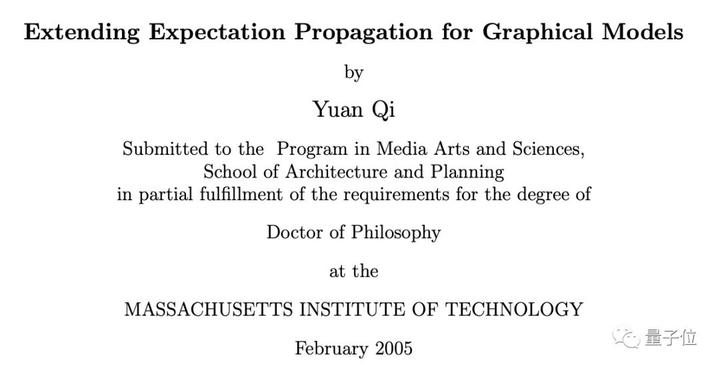 While working at MIT, both Google and Facebook extended olive branches to him, but Qi Yuan finally chose to stay in academia, and later left MIT to come to Purdue University as an assistant professor in the Department of Computer Science and the Department of Statistics , and got the tenured position of associate professor in 2013.
Just a year later, Qi Yuan returned to China to join Alibaba and witnessed the company’s listing a year later.
Qi Yuan once said that this choice not only has a sense of “learning by application” meaning that technical achievements can be directly used by hundreds of millions of users, but also a sense of technical challenge.
After entering Ali, Qi Yuan, Tu Zipei, Jin Rong and others** jointly founded the predecessor of Dharma Institute - iDST**, and Qi Yuan was responsible for leading the research team in China.
And starting from the infrastructure, he led the construction of Alibaba Group’s first large-scale distributed machine learning platform, which has now been iterated into PAI 3.0.
In addition, he also led the establishment of Ali’s first professional deep learning-based speech recognition team.
Later, he served as vice president and chief data scientist of Ant Financial, head of financial intelligence at Dharma Academy, and chief scientist of Ant AI.
In 2021, Qi Yuan** returned to academia and joined Fudan University** (it was revealed that it was due to personal and family reasons):
Served as Haoqing Distinguished Professor, Doctoral Supervisor and Dean of Artificial Intelligence Innovation and Industry Research Institute of Fudan University.
Now, Qi Yuan started from the academic world again, and started his business in the trend of large-scale models.
The reason may be seen from Qi Yuan’s lecture on “From ChatGPT to AI for Science” at the School of Economics, Fudan University.
He said at the lecture that based on the development status of ChatGPT, AI for Science will have longer-term development prospects in various fields, such as the combination of AI and life science large models, meteorological large models, fluid large models, etc.
The content production-intensive industries mentioned in the words, such as medical health, finance, etc., are exactly the areas where the Infinite Lightyear AI large model is targeted.
But the deeper reason may be that the tide of AI is rising again.


