On October 24, Time magazine released a list of “Best Inventions of 2023”, covering key areas such as artificial intelligence, green energy and sustainable development. A total of 200 groundbreaking inventions (and 50 Special Award inventions) were selected for the selection based on ingenuity, efficiency, impact, and more, which are changing the way we live, work, play, and think about what’s possible.
Here is a brief summary of the 14 selected inventions in the field of AI:
1. Out-of-the-box free editing: Adobe Photoshop Generative Expand and Generative Fill
 Adobe puts powerful AI in the hands of millions of people by building artificial intelligence into Photoshop, the world’s most popular image editor. Powered by Adobe’s AI image generator Firefly, Photoshop now includes Generative Expand and Generative Fill. The former allows users to seamlessly fill imaginary content outside the boundaries of the photo. The latter simply enters a few simple words to add or remove content from an existing image. Neither feature requires technical expertise. Ashley Still, senior vice president of digital media at Adobe, says these options enable “customers to bring their visions to life faster than they can imagine.”
2. A game-changing chatbot: OpenAI GPT-4
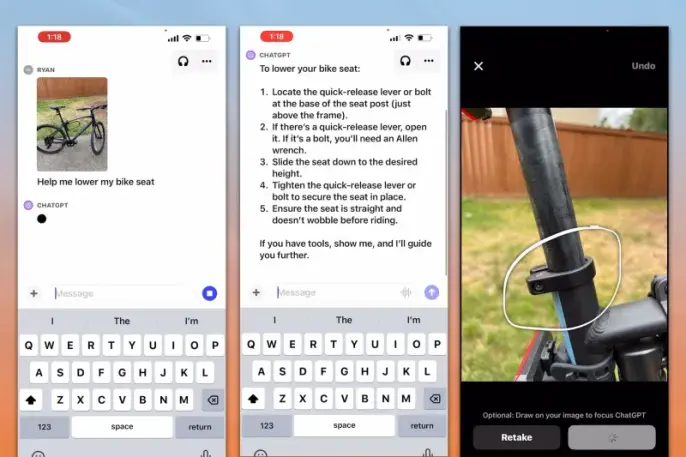 OpenAI’s GPT-4 is 8 months since its release in March, and it’s still the most powerful chatbot available to the public. Its predecessor, ChatGPT, performed better than 10% of students who took the bar exam, while GPT-4 performed more than 90%. It excels at verbal reasoning, breaking down complex concepts into simple language and even explaining why a joke is funny. In September, OpenAI began rolling out the ability to interact with models through voice and use images as input. The updated GPT-4 V was tested in Be My Eyes, an organization that provides tools for the visually impaired, to verbally describe picture content in natural language.
3. Inventive Film Editing: Runway Gen-2
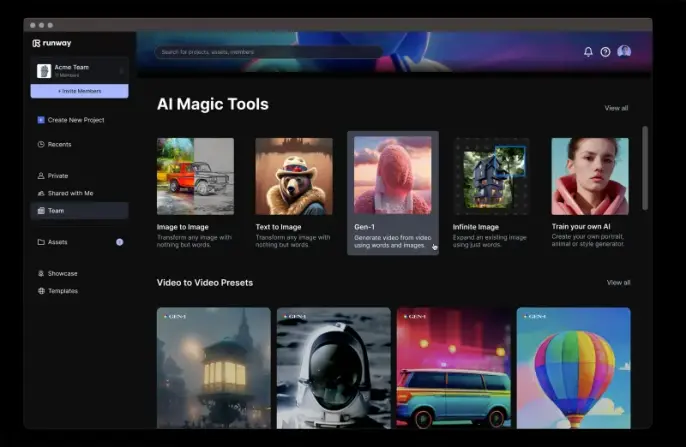 Runway is a Google-backed startup whose visual effects tools have been used to create the eerie images of the Oscar-winning film Everything Everywhere All At Once. In June, Runway introduced the Gen-2 model. The new version allows anyone to generate a complete video from text prompts, images, or other videos. Runway co-founder and CEO Cristóbal Valenzuela likens the new technology to the invention of the camera 200 years ago. “AI is a new type of camera that will forever reinvent the way stories are told and lead to fully generated, complete feature films,” he said. ”
4. Artificial Intelligence Authenticity: Alitheon FeaturePrint
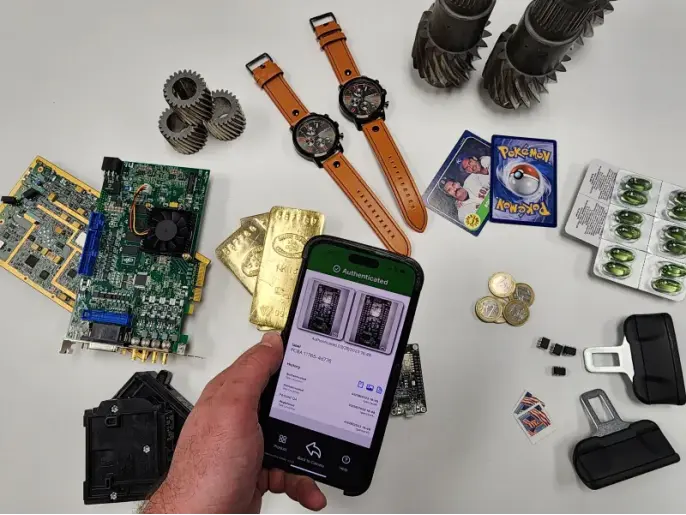 The solution to the multi-trillion-dollar problem of counterfeit goods could be as simple as pointing your phone’s camera at a watch or handbag and letting smart software determine its authenticity. FeaturePrint is an optical artificial intelligence technology that first “sees” the tiny surface details of a physical object and “fingerprints” them into unique mathematical identifiers. Then, with the click of a button, it tells you the authenticity of an item. Roei Ganzarski, CEO of Alitheon, said: "There is no need for stickers, labels or markings. One of the customers is Argor-Heraeus, which produces gold bars for banks around the world. ”
5. Eyes in the Sky: Dedrone City-wide Drone Detection
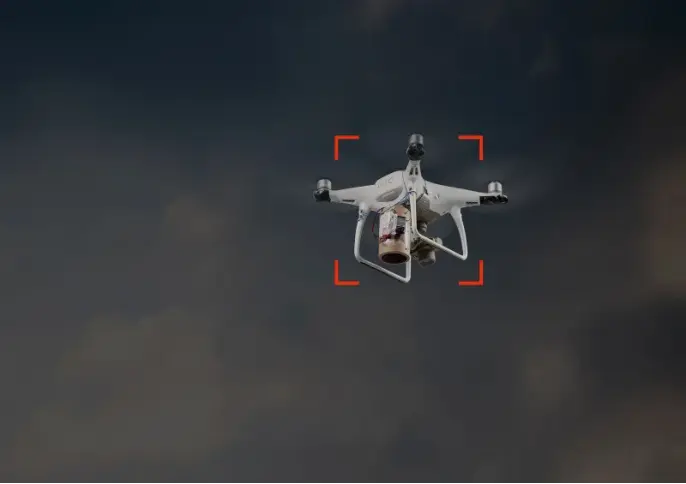 Drones can bring both destruction and benefit. Dedrone’s city-wide drone detection products can throw virtual shields around a geographic area and warn law enforcement within seconds if the drone enters a designated airspace. Dedrone tracks proprietary mixed signals emitted by drones, including radio frequencies, ADS-B data (also used in aircraft), and RemoteID beacons to determine the location of the intrusion. Mary-Lou Smulders, the company’s chief marketing officer, likened it to an air traffic control system for drones that hadn’t existed before. Customers include Con Edison, which is using it to secure its infrastructure; police force in Barcelona; and an unknown number of airports.
6. Master translator: Meta SeamlessM4T
 Meta compares its SeamlessM4 T AI model to Babel Fish, the universal language translator in The Hitchhiker’s Guide to the Galaxy. The company’s software is capable of understanding nearly 100 languages from speech or text and translates them in real time in a variety of formats, including speech-to-speech, text-to-text, speech-to-text, or text-to-speech. According to Meta, in addition to handling far more languages than its predecessor, the system is more efficient, has a lower error rate, and can even decipher multiple languages mixed together in the same sentence. Meta has open-sourced the model, which means its code is available to researchers around the world.
7. Amazing parody: So-VITS-SVC
 Earlier this year, a song called “Heart on My Sleeve” by an anonymous creator named Ghostwriter caused a stir. (The song was quickly taken down by the legal streaming service, but before that, it had gone viral.) These sounds are generated through open-source software called So-VITS-SVC, which allows technicians to neural network train a singer’s voice and then make any song using an AI-generated voice. Enthusiasts exchange voice models in the Discord community, from Bad Bunny to Taylor Swift to James Hatfield. At the same time, user-friendly websites that adopt the software have sprung up.
8. AI Firefighters: California and Cal Fire AI Wildfire Detectors
 Detecting wildfires before they spread is a challenge currently plagues many parts of the world. California, a public safety program at the University of California, San Diego, is using artificial intelligence to help. The project, in partnership with Cal Fire, trained AI to detect smoke and other early signs of fire from a network of more than 1,050 cameras spread across forests across the state. As soon as the system detects an abnormality, it will alert the local fire department via SMS. In the first two months, the system correctly identified 77 fires before any alarm calls were received. Falco Kuester, co-principal investigator at California, said, "The biggest success stories [of this [system] are fires you’ve never heard of. ”
9. Create music with ease: Stable Audio
 Created by Stability AI, Stable Audio harnesses the power of artificial intelligence to generate almost any sound or song you want with just a few simple text prompts. (For example, typing “ambient techno, drum machine, peaceful, instrumental” generates a relaxing new age music that doesn’t stand out in a funky lounge.) The model was trained on a dataset (so it’s all legitimate) on an inventory audio site that contains more than 800,000 audio files for a total of 20,000 hours and can be used for both professional and amateur projects.
10. Animal Defenders: TrailGuard AI
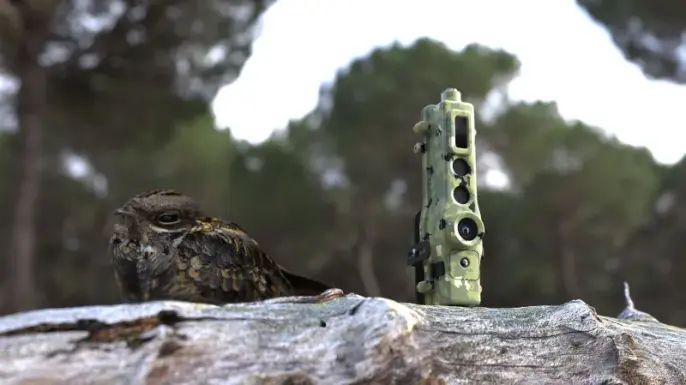 In India and parts of Africa, poaching remains the biggest threat to extinction of elephants and big cats, even in protected areas. TrailGuard AI, created by U.S. environmental group Resolve, uses tiny cameras powered by Intel technology to monitor endangered species and spot poachers. The system uses cell phones or long-range radio signals to transmit images to authorities’ phones in as little as 30 seconds. TrailGuard’s custom-built AI models are trained to detect not only humans, but any species of interest, from tigers to hyenas. The technology, which arrested more than 30 poachers during the testing phase in East Africa, is currently undergoing large-scale testing in tiger-dense central India.
11. Draw Your Imagination: OpenAI Dall-E 3
 When OpenAI released ChatGPT to the world last November, it revolutionized the AI landscape. The company hopes that DALL-E 3, a new and improved version of its AI-powered image generator, will have the same impact. Aditya Ramesh of OpenAI, inventor of DALL-E 3, says previous image generators needed to learn a new technical language, including adding minus signs and numbers to strings, to get the best results. DALL-E 3, on the other hand, collapses into ChatGPT so that the user can enter session commands and get an image that matches its description.
12. Listen: Project Gutenberg Open Audiobook Collection
 Project Gutenberg is the oldest digital library, founded in 1971 to make e-books more accessible. But CEO Greg Newby says it’s “neither good at creating nor spreading.” As a result, Microsoft and MIT have teamed up to produce the Open Audiobook Collection, which utilizes text-to-speech technology to turn 5,000 books into free synthesized narration audiobooks, now available for download on Spotify. The software that fueled the project was also released for free.
13. Beat: AudioShake
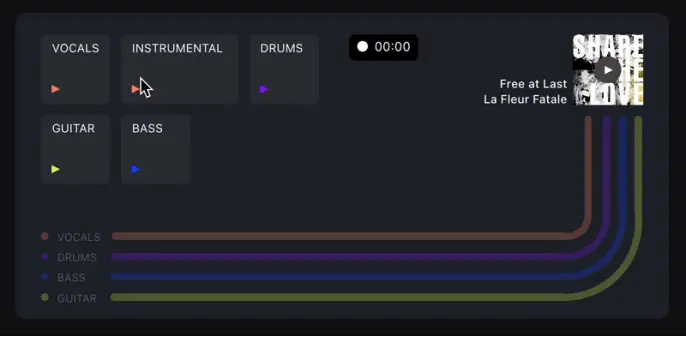 Its members were ecstatic when one of the greatest rock bands recently struck a deal to use their 1970s hits in commercials. But there’s a catch: the ad producers only want the instruments, and all the band has is the final mix. So the rock band’s team contacted AudioShake, a company whose AI program isolates pre-recorded audio elements, breaking them down into individual components. “We make audio interactive and editable, and be able to drive these really practical uses that help artists make money,” said Jessica Powell, co-founder and CEO.
14. Rethinking the smartphone: Humane Ai Pin
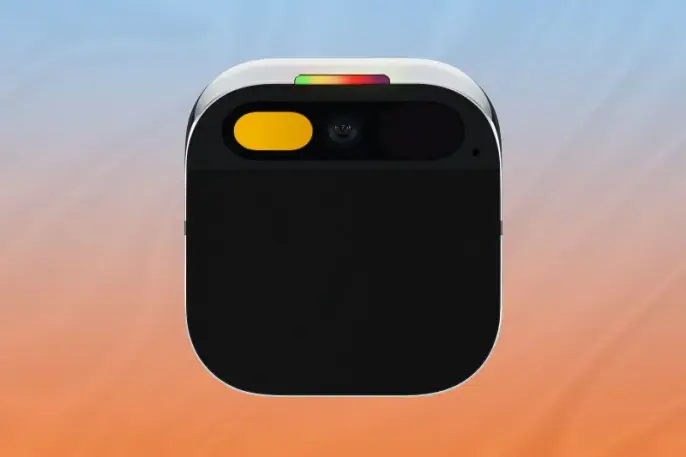 The two former Apple executives who founded Humane envisioned a screenless future, and Ai Pin was their first step. Once the lightweight Humane Ai Pin magnetically snaps onto your clothes, it becomes your AI personal assistant. Using a combination of proprietary software and OpenAI’s GPT, the device allows you to do everything from asking complex questions to making calls and texting messages, all with a single order. At the same time, built-in cameras can identify things and provide contextual information, such as calorie estimates for foods. Whenever a PIN’s camera, microphone, or input sensor is active, a prominent privacy indicator called the Trust Light lights up to ensure that everyone around knows it’s listening or recording. If you need visual effects, a pico projector will project them directly onto the palm of your outstretched hand. The product is scheduled to launch on November 9.
Note: Humane investors include Marc Benioff and Lynne Benioff, co-chairs and owners of Time magazine


