ShizukaKazu

vip
Age 3.4 Yıl
Peak Tier 5
No content yet
#Gate现货衍生品双双冲进全球前三 3 In 013, the overall trading volume in the crypto market fell, dropping to the lowest level since September 2024, down 15.7% month-over-month in spot. But in such an environment, Gate delivered an impressive countertrend performance👇
Gate’s spot trading volume remains the third largest globally; even as the industry as a whole contracted, it still maintains strong liquidity and market depth.
Gate’s derivatives market share first surged into the global top three, reaching 12.0%. Open contracts amounted to $8.68 billion, holding steady among the top three retail exchange
View Original
post-image
post-image
  • Reward
  • 19
  • Repost
  • Share
GateUser-98d4ab7a:
Hop in the car!🚗
View More
#Gate广场四月发帖挑战 The collapse of US-Iran talks and its impact on the market
This weekend, representatives from the United States and Iran sat at the negotiation table in Islamabad. The result was that both sides returned home with sullen faces, no agreement signed, and plenty of tough words exchanged. US Vice President Vance said "no real negotiations," while the Iranian representatives directly insulted the US as "too greedy."
Honestly, no one was surprised by this outcome. Even before negotiations began, both countries' leaders were hyping up their "victory" domestically, with conditions th
View Original
Ryakpanda
#Gate广场四月发帖挑战 US-Iran talks collapse—views on the market impact
This weekend, representatives from the US and Iran sat across from each other at the negotiation table in Islamabad. In the end, both sides returned home with grim faces, with no agreement signed, but plenty of harsh words were thrown around. US Vice President Vance said, “There’s simply no way to make it work,” while an Iranian representative directly scolded the US as “too greedy.”
Honestly, no one was really surprised by this outcome. Before the negotiations even began, the two leaders were already hyping domestically that “we have already won,” and the conditions they laid out were totally mismatched—like speaking different languages. From the very start, this negotiation looked more like a political performance staged for audiences at home and abroad.
What’s interesting is that while the two sides traded barbs, another drama was unfolding over the Persian Gulf. A US warship tried to approach the Strait of Hormuz, and Iranian small boats immediately surrounded it. The two sides then held a standoff at sea for a while, and in the end the US warship turned around and left.
The US said it was there to “mine-sweep,” while Iran said, “If you dare go any further, we will fire.” Even more dramatically, the Iranian negotiation representative relayed a message through an intermediary on the spot: “If your ships don’t withdraw, we’ll act within half an hour—there’s no point in talking about this negotiation anymore!”
This incident reveals a key piece of information: the US now really has no way to deal with the Strait of Hormuz. Iran doesn’t need any high-tech weapons. Just tossing a few sea mines and flying a few drones could cost only tens of thousands of dollars, yet it may be enough to scare insurance companies into refusing coverage and make ship owners afraid to set sail. The strait is still open in name, but in reality it’s been semi-paralyzed.
But what’s interesting is that for financial markets, this negotiation breakdown might not necessarily be a bad thing.
In the Middle East, don’t expect true peace in the short term. But now things have changed a bit—after this round of contest, the “rules of the game” between the US and Iran have gradually become clearer.
What financial markets fear most isn’t bad news, but rather “not knowing what will happen.” Previously, everyone worried that if both sides went off the deep end and “lost their tempers,” what if they blew up oil fields, oil pipelines, and ports. Now this bottom line has been drawn: civilian energy facilities must not be touched.
It’s like two people fighting. At first, they might have been able to use knives, but now they’ve agreed they’re only allowed to use fists. They may still fight, but the probability of someone getting killed is much lower. For the market, this is good news.
Just look at the oil price trend to understand the logic. A few days ago, rumors came out that a ceasefire might be possible. Within a day, oil prices plunged by 20%, crashing from above $110 per barrel to around $95.
Why did it fall so sharply? Because in the previous upswing, a large portion of the rise was “panic premium”—everyone was worried that the strait would be blocked for the long term, so they priced in the worst-case scenario in advance. Now it turns out the “worst-case” is basically just that. Naturally, the extra “fear fee” collected earlier has to be paid back.
Some people say Trump is playing a long game, deliberately dragging things out with Iran to cripple the Middle East oil-producing countries so the US can dominate the market. That idea is a bit naive.
What the US needs most right now are two things: first, to maintain its lead in the AI race; second, to bring down high interest rates and ease debt pressure. If it keeps耗ing with Iran like this, global inflation won’t come down, and the US Federal Reserve won’t dare to cut rates. Meanwhile, financing costs for US businesses stay high—doesn’t that mean digging its own grave?
More importantly, the US’s credibility in the Middle East is currently eroding. Previously, Gulf countries felt it was worth paying protection fees. But now they can see the US can’t even handle a strait—so they must be thinking twice. After this commotion, the proportion of Middle East countries selling oil to China and settling in renminbi has risen to 41%, while the share of the US dollar has fallen to 52%. And just a few years ago, the US dollar still held an absolute dominant position of over 90%. The foundation of this “oil dollar” is starting to loosen.
Every great power has its cycle and will make strategic mistakes. The US has made plenty of errors over the years, but because of its sheer size, it can absorb the trouble. However, the situation now is that it is stepping on the accelerator on the way downhill, shouting “from victory to victory.” This can only accelerate the depletion of its own reserves.
For investors, the path ahead has become fairly clear: the game between the US and Iran will continue, and fighting while negotiating will become the norm. Oil prices may oscillate back and forth between $80 and $120, making it difficult to return to the low levels of the past, but the kind of violent spikes that would happen on a whim like before will likely become less frequent.
The world is moving from a unipolar era where “the US calls the shots” toward a new pattern of multiparty games. The old order is loosening, and a new balance is forming. In this process, there will be chaos and uncertainty—but new opportunities will also emerge.
repost-content-media
  • Reward
  • 20
  • Repost
  • Share
GateUser-98d4ab7a:
Hop in the car!🚗
View More
#Gate广场四月发帖挑战 Negotiation Breaks Down, Oil Prices Surge: Monday Crude Market Analysis Amid US-Iran Standoff
Key Points
The US-Iran Islamabad negotiations failed to reach an agreement, and geopolitical risk premiums quickly reemerged. It is expected that the international crude oil market will open sharply higher on Monday, with Brent crude potentially challenging the $110 per barrel level again. Market focus has shifted entirely from supply and demand fundamentals to the security of passage through the Strait of Hormuz and the risk of conflict escalation.
Negotiation Failure: The "Switch
View Original
Ryakpanda
#Gate广场四月发帖挑战 Negotiation Breakdowns, Oil Prices Surge: Monday Crude Market Analysis Amid US-Iran Standoff
Key Points
The US-Iran Islamabad negotiations failed to reach an agreement, and geopolitical risk premiums quickly reemerged. It is expected that the international crude oil market will open sharply higher on Monday, with Brent crude potentially challenging the $110 per barrel level again. Market focus has shifted entirely from supply and demand fundamentals to the security of passage through the Strait of Hormuz and the risks of conflict escalation.
Negotiation Failure: The "Switch" of Risk Premium Reopened
According to the latest news, the third round of US-Iran talks in Islamabad concluded on April 12 without any agreement to end the war. US Vice President Vance confirmed that despite 21 hours of substantive discussions, significant disagreements remained on core issues, and no breakthrough was achieved.
The failure of negotiations directly caused the geopolitical risk premium, which had previously diminished due to a temporary ceasefire, to be rapidly re-priced into oil prices.
Earlier, the market had anticipated progress in negotiations, which drove oil prices to record their largest weekly decline in nearly six years this week, with Brent crude briefly falling near $94.75 per barrel. However, news of the breakdown completely reversed this expectation, shifting market sentiment from cautious optimism to tense risk aversion.
Key Dispute: Control of the Strait of Hormuz Is Central
The core deadlock in these negotiations revolves around control of the Strait of Hormuz.
- US Position: Calls for "joint management" of the Strait to ensure freedom of navigation and insists on Iran’s denuclearization.
- Iran’s Bottom Line: Rejects joint management, insists on sovereignty over the strait and the right to collect "tolls," and demands the unfreezing of all overseas assets.
The Strait of Hormuz, as the "throat" of global oil transportation, carries about 20%-30% of the world’s seaborne crude oil trade (approximately 20 million barrels per day). Its passage status directly determines the stability of global oil supply. Currently, the strait remains under strict flow restrictions, with about 2,000 ships stranded in the Persian Gulf, and on Sunday, there was even an extreme situation with zero ships passing through. The failure of negotiations sharply increases the risk of the strait being fully blocked again, which is the most direct factor pushing oil prices higher.
Monday Market Outlook: Surge and High Volatility
Based on the established fact of negotiation failure, the international crude oil market on Monday (April 13) is expected to show the following trends:
- Gap Up Opening: The market will react directly to the breakdown of negotiations, with Brent and WTI crude prices likely opening sharply higher. Brent crude may quickly rebound, challenging the psychological level of $110 per barrel, and could even push above $120 per barrel.
- Volatility Spikes: Market sentiment will be extremely sensitive, and any minor changes in military standoffs, Strait passage status, or official statements from both sides could trigger violent price swings. Traders will closely monitor changes in the actual number of ships transiting the Strait of Hormuz.
- Technical Breakouts: The rapid rise in prices may break through previous technical resistance levels, triggering algorithmic trading and stop-loss orders, further amplifying gains.
Follow-up Watchpoints
The market’s direction on Monday will heavily depend on the following key information:
- Fourth Round Negotiation Developments: Whether both sides announce the continuation of a fourth round of talks, and the tone and progress of these negotiations. Any signals of easing could suppress the upward momentum of oil prices.
- Official Statements: Subsequent statements from US and Iran officials, whether they show a tough stance or leave room for negotiations.
- Military Movements: US and Iranian military activities in the Persian Gulf, especially the possibility of direct military clashes.
- Regional Situation: Whether Israel’s military operations in Lebanon will escalate, which could be another significant variable disturbing the situation.
In summary, the failure of US-Iran negotiations injects strong bullish momentum into the Monday international crude oil market. Until the issue of the Strait of Hormuz is substantively resolved, oil prices will remain high with extremely high volatility. Investors should remain alert to extreme market conditions driven by geopolitical risks.
repost-content-media
  • Reward
  • 23
  • Repost
  • Share
GateUser-3ef79f61:
Buy the dip and enter the market 😎
View More
#Gate13 Time flies so fast—Gate has reached its 13th year. As a user who has accompanied Gate for Gate1231 days, this day deserves a proper message: Happy 13th anniversary, Gate.
13 years: from a little-known exchange to one of the world’s top platforms; it didn’t fold during the bear market, and it didn’t run during the bull market—this alone is one of the rarest things in the crypto industry. Wishing that in each coming year, the product becomes even more useful, the security perimeter grows even more solid, and the transaction fees continue to get lower!
View Original
  • Reward
  • 28
  • Repost
  • Share
GateUser-98d4ab7a:
Enter the market at the bottom 😎
View More
#Gate广场四月发帖挑战 The Iran-U.S. war enters a tug-of-war negotiation, gold and crude oil consolidate at high levels
Fundamental outlook: In 2026, the Federal Reserve will still maintain an accommodative monetary policy, with major commodities such as gold, silver, copper, and aluminum remaining in a bull market explosion cycle. By December 2025, the Fed will cut interest rates again by 0.25 percentage points, lowering the federal funds rate to 3.5-3.75%. The balance sheet reduction will end in December, and there may be another rate cut. The long-term monetary policy remains accommodative, increasi
View Original
post-image
post-image
post-image
  • Reward
  • 37
  • Repost
  • Share
ybaser:
To The Moon 🌕
View More
#Gate广场四月发帖挑战 🚀 Joint Earnings Coin Phase Nine is now live with an upgraded prize pool
Invite friends, open red envelopes, earn cash rewards, no cap on individual cash rewards
👉 Invite friends to share a $500,000 prize pool, participate now: http://gate.com/referral/earn-together?gt_nav_bar=0
Simple participation, easy rewards
✅ When friends complete designated tasks during registration, both you and your friends can receive red envelopes
✅ Each time, you can open up to 50 USDT cash red envelopes
✅ Event period: 4/11 12:00 - 4/24 12:00 (UTC+8)
The more friends you invite, the m
View Original
  • Reward
  • 32
  • Repost
  • Share
GateUser-3ef79f61:
Buy the dip and enter the market 😎
View More
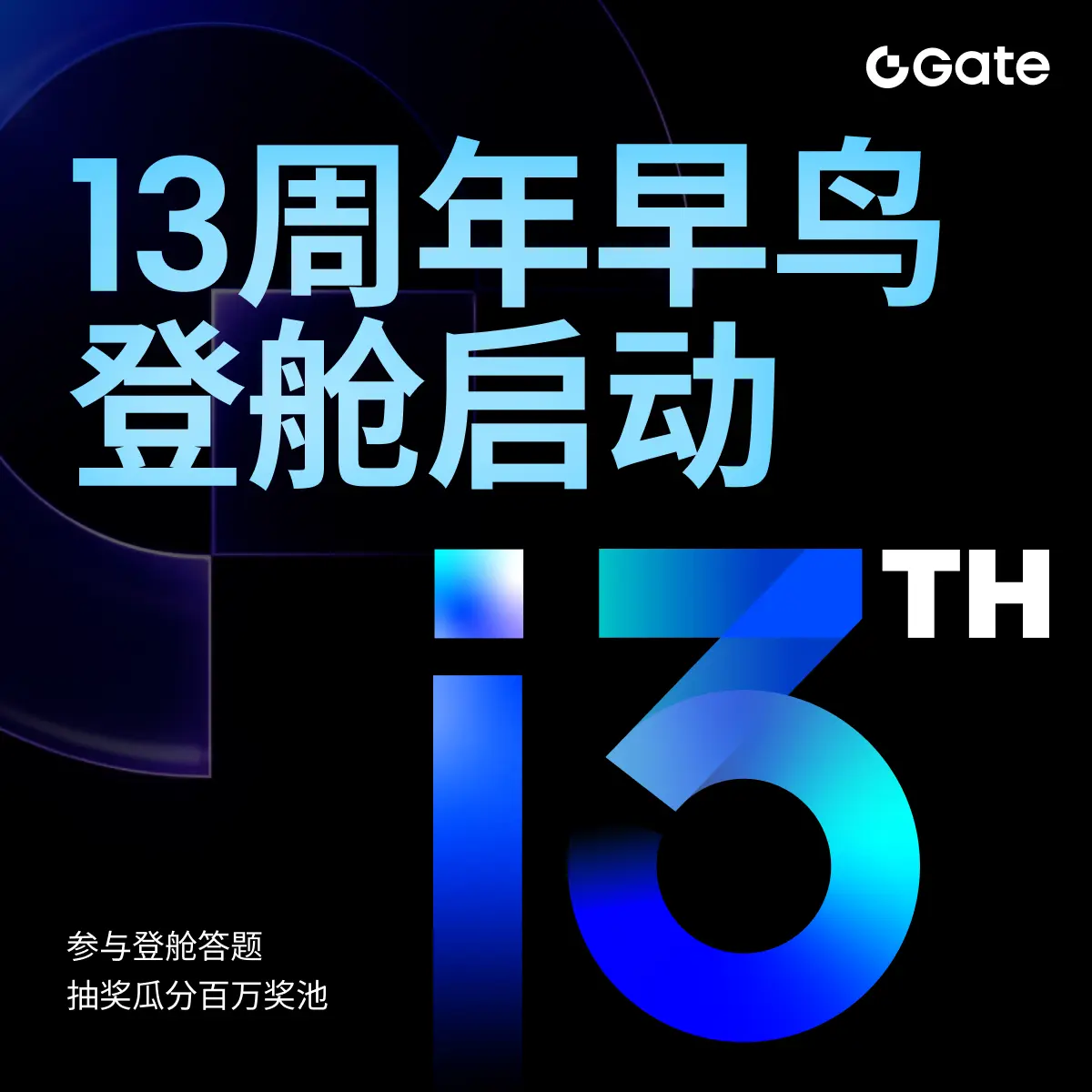
🚀 Gate 13 Anniversary Celebration Officially Launches!
The first stop, "Early Bird Boarding Program," is now live, with a million prize pool waiting for you to share!
🎫 Answer questions daily to board for free and get exclusive tickets
🏆 Top 50 in quiz rankings automatically upgrade cabins, with higher chances of winning first class draws
🎁 Luxurious prizes: 1g gold tickets, limited edition Red Bull car models, anniversary gift packs, up to 100 USDT token rewards
🔥 Collect 13 time capsules to unlock the mysterious ultimate prize
✈️ Early Bird Station Time: April 9, 2026, 17:00 - April 17,
View Original
post-image
post-image
  • Reward
  • 31
  • Repost
  • Share
GateUser-3ef79f61:
Buy the dip and enter the market 😎
View More
#Gate广场四月发帖挑战 The failure of US-Iran negotiations! Financial markets face a major sell-off on Monday!
The US-Iran negotiations have completely collapsed, and financial markets will shift directly from a "high volatility" mode to a "liquidity flight" mode. This is not just about fluctuations on paper, but a systemic financial storm sweeping across the globe. The financial markets will face the following four major "deadly crises":
📈 Panic sentiment explodes: The VIX index soars, and at the moment the negotiations break down, the global investors’ first reaction is to "flee the scene."
Panic in
View Original
post-image
post-image
  • Reward
  • 34
  • Repost
  • Share
GateUser-3ef79f61:
Steadfast HODL💎
View More
#Gate广场四月发帖挑战 U.S.-Iran Negotiations Fail: Next Week's Global Asset Class Trend Analysis
The talks between the U.S. and Iran failed to reach a consensus, with core disagreements remaining. The geopolitical uncertainty will significantly impact the trend of various global assets next week, and different asset categories may show notable divergence.
Gold, as a traditional safe-haven asset, has its risk-averse properties highlighted under geopolitical uncertainty. It is highly likely to remain in a high-level oscillation pattern next week. The current Federal Reserve interest rate environment and
BTC-3,42%
View Original
post-image
post-image
  • Reward
  • 28
  • Repost
  • Share
GateUser-41929615:
Buy the dip and enter the market 😎
View More
#Gate广场四月发帖挑战 U.S.-Iran Talks Collapse, Embracing Uncertainty Anew
The Disappearance of the "21 Hours" and the Expected Outcome
On the morning of April 12th, outside the Serena Hotel in Islamabad, the long guns and cameras ultimately failed to capture the anticipated handshake.
According to the latest reports from Jintou Data and CCTV News, U.S. Vice President Vance has led a delegation out of Pakistan, and after 21 hours of intense negotiations with Iran, the talks have officially broken down. Before leaving, Vance left a final ultimatum: "What we brought is the final and best proposal, but I
View Original
post-image
post-image
  • Reward
  • 32
  • Repost
  • Share
GateUser-3ef79f61:
Hop in the car!🚗
View More
🚀 The 9th round of Coin Earning Together is now live with an upgraded prize pool
Invite friends, open red envelopes, and get cash rewards—individual cash rewards have no upper limit
👉 Invite friends to share the $500,000 grand prize pool—join now: http://gate.com/referral/earn-together?gt_nav_bar=0
Easy participation, effortless to claim rewards
✅ Once your friends complete the specified tasks upon registration, you and your friends can both receive red envelopes
✅ Up to 50 USDT cash red envelopes can be opened in a single instance
✅ Event time: 4/11 12:00 - 4/24 12:00 (UTC+8)
View Original
post-image
post-image
  • Reward
  • 46
  • Repost
  • Share
HighAmbition:
To The Moon 🌕
View More
#Gate广场四月发帖挑战 Hong Kong issues first stablecoin license; how will traditional financial giants reshape the crypto market?
📈 Market Overview
Data retrieval time: April 11, 2026, 06:11 CST (UTC+8)
Today’s cryptocurrency market shows a broad rally driven by multiple positive factors. The issuance of Hong Kong’s first stablecoin licenses injects confidence into the market, and traditional financial giants officially enter; Iran’s demand for oil tankers to pay Bitcoin tolls highlights the unique value of cryptocurrencies in geopolitical contexts. As of 06:11 this morning, the main coin prices are
BTC-3,42%
ETH-4,9%
SOL-4,24%
BNB-3,2%
View Original
Ryakpanda
#Gate广场四月发帖挑战 Hong Kong issues first stablecoin license; how will traditional financial giants reshape the crypto market?
📈 Market Overview
Data collection time: April 11, 2026, 06:11 CST (UTC+8)
Today’s cryptocurrency market shows a broad rally driven by multiple positive factors. The issuance of Hong Kong’s first stablecoin licenses injects confidence into the market, and traditional financial giants officially enter; Iran’s demand for oil tankers to pay Bitcoin tolls highlights the special value of cryptocurrencies in geopolitical contexts. As of 06:11 this morning, the main coin prices are as follows:
Bitcoin (BTC): $73,159.60 (+1.01%) Ethereum (ETH): $2,253.23 (+1.66%) Solana (SOL): $85.21 (+0.69%) (BNB): $607.20 (-0.01%, basically flat) Ripple (XRP): $1.359 (+0.14%) Cardano (ADA): $0.2561 (-0.35%) Dogecoin (DOGE): $0.09417 (+0.19%) Polkadot (DOT): $1.31 (-0.83%)
Overall market sentiment has clearly turned optimistic, with Bitcoin breaking through the $73,000 key resistance level, opening space for further gains. Ethereum remains above $2,200, showing strong momentum. Driven by regulatory breakthroughs and geopolitical innovations, the market presents structural opportunities.
🔍 In-Depth Analysis of Key News
1. Hong Kong issues first stablecoin licenses: traditional finance officially enters
Event overview: The Hong Kong Monetary Authority (HKMA) officially granted stablecoin issuer licenses to Gindian Financial Technology Limited and Hong Kong Shanghai HSBC Bank Limited, with licenses taking effect immediately on the same day. Out of 36 applications, only 2 were approved. HKMA Chief Executive Yu Weiwen stated that licensing has a "considerably high threshold." HSBC plans to launch a Hong Kong dollar stablecoin in the second half of 2026, and Gindian Financial is a joint venture formed by Standard Chartered Bank, Hong Kong Telecom, and Anli Group.
Deep dive:
Regulatory milestone: This is the first systematic issuance of stablecoin licenses in major global financial centers, marking the transition of cryptocurrency from the "wild west" era to the "compliance era." As an international financial hub, Hong Kong’s move could trigger regulatory imitation worldwide.
Traditional finance entry: The participation of giants like HSBC and Standard Chartered indicates mainstream financial acceptance of cryptocurrencies. In the future, more banks may launch their own stablecoin products.
Market impact: In the short term, increased compliance boosts institutional investor confidence and may attract more capital inflows. Long-term, competition in the stablecoin market will intensify, but the safety of compliant products will significantly improve.
Investment opportunities: Focus on crypto enterprises related to Hong Kong’s compliance process and the crypto initiatives of traditional financial institutions.
2. Iran demands oil tankers pay Bitcoin tolls: combining geopolitics and digital currency
Event overview: During a two-week ceasefire with the U.S., Iran requires ships passing through the Strait of Hormuz to pay crypto tolls based on the amount of oil carried. The fee is set at $1 per barrel of crude oil, with empty ships free of charge. An official from the Iranian Oil, Gas, and Petrochemical Products Exporters Union stated that paying with Bitcoin ensures the fee cannot be tracked or confiscated under sanctions. Iran’s crypto ecosystem has grown to about $7.8 billion.
Deep dive:
Geopolitical innovation: This is the first time a sovereign nation has used Bitcoin as an international trade settlement tool, a milestone. Iran’s approach circumvents international sanctions, demonstrating Bitcoin’s practical value in special political environments.
Bitcoin’s expanded functions: The event reinforces Bitcoin’s dual roles as "digital gold" and "international payment tool." When traditional financial channels are restricted, Bitcoin provides an unstoppable value transfer pathway.
Market impact: Short-term demand for Bitcoin may rise, and long-term, more sanctioned countries might explore digital currency solutions.
Risks and opportunities: Geopolitical risks remain, but this event provides strong support for Bitcoin’s long-term value.
3. Bitcoin $80k call options top popular bets: market sentiment shifts clearly
Event overview: Data from Deribit shows that $80k call options have become the most popular trading position, with open interest exceeding $1.6 billion. Meanwhile, $60k put options have been replaced. Signals of easing tensions in the Middle East have driven Bitcoin up over 7%, hitting a daily high of $72,851. Investors are increasing bets that Bitcoin will rise to $80k.
Deep dive:
Sentiment indicator: The options market is a barometer for professional investors. The active $80k call options indicate institutional optimism about future prices, shifting market sentiment from cautious to positive.
Technical support: Bitcoin breaking through the $72,000 key resistance opens the way for further upward movement. The options bets and price trend reinforce each other.
Investment strategy: Monitor open interest changes in options to gauge market sentiment. Be cautious, as overly concentrated bullish positions could increase volatility.
4. Bernstein warns: 1.7 million Bitcoins face quantum attack risk
Event overview: Investment firm Bernstein released a report indicating that about 1.7 million Bitcoins are at risk of permanent quantum attacks, representing 6.9% of the total supply. The risk stems from early use of P2PK scripts exposing public keys. Google research shows that improved Shor’s algorithm could reduce cracking time to under 10 minutes. The Bitcoin community has initiated defensive upgrades like BIP-360.
Deep dive:
Cutting-edge security: The threat of quantum computing to traditional cryptography is real, but large-scale practical quantum attacks are still distant. The Bitcoin community has proactively prepared for quantum resistance.
Market impact: Short-term concerns may arise, but long-term, technical upgrades will strengthen Bitcoin’s security leadership. Investment insight: Follow developments in quantum-resistant tech; breakthroughs could create new investment opportunities. For long-term holders, Bitcoin’s technological evolution is a key factor.
5. Solana ecosystem’s Drift Protocol hacked, losing $285 million
Event overview: On April 1, 2026, Eastern Time, Solana’s leading decentralized derivatives platform Drift Protocol was hacked, losing about $285 million, the largest DeFi hack of 2026 so far. The attack was not due to code vulnerabilities but a security breach in multi-signature management. TRM Labs investigation found features consistent with North Korean tactics, suspected to be Lazarus group.
Deep dive:
Security governance pain point: The incident highlights the importance of "human factors" in DeFi security. Even perfect code can be compromised by management process flaws.
Industry impact: Likely to push DeFi platforms to strengthen multi-signature management and permission controls. Industry security standards are expected to improve further.
Investor protection: When choosing DeFi platforms, consider not only technical architecture but also the team’s security governance capabilities. Diversify investments and control risk exposure.
📊 Technical Analysis
Based on the latest price data at 06:11 this morning, we analyze the main coins:
Bitcoin (BTC):
Current price: $73,159.60 Key support: $72,000 (psychological level), $70,000 (previous high) Key resistance: $75,000 (round number), $78,000 (near historical high)
Technical pattern: Broke above $73,000 with an upward breakout, MACD golden cross, RSI at 65 (strong zone). Outlook: If above $73,000, test the $75,000–$78,000 range; if below $72,000, possible retest of $70,000 support.
Ethereum (ETH):
Current price: $2,253.23 Key support: $2,200 (psychological level), $2,150 (30-day moving average) Key resistance: $2,400 (previous high), $2,500 (round number)
Technical pattern: Stabilized above $2,200, volume increased, Bollinger middle band providing support. Outlook: Break above $2,300, test the $2,400–$2,500 range; if below $2,200, possible pullback to $2,150.
Solana (SOL):
Current price: $85.21 Key support: $83 (recent low), $80 (psychological level) Key resistance: $88 (previous high), $90 (round number)
Technical pattern: Consolidating near $85, MACD approaching zero, RSI neutral. Outlook: Break above $88 resistance, potential new rally; if below $83, test support at $80.
(BNB):
Current price: $607.20 Key support: $600 (psychological level), $580 (30-day moving average) Key resistance: $620 (previous high), $650 (near historical high)
Technical pattern: Slight correction, volume shrinking, overall upward trend remains. Outlook: Strong support at $600, hold could lead to testing $620 again; if below $600, retest at $580.
Overall technical conclusion: The market shows strong momentum, with Bitcoin breaking key resistance, providing upward space for other major coins. Technical indicators are generally bullish, but short-term overbought risks should be watched.
🎯 Investment Strategies
Short-term (1-7 days)
Focus on compliance themes: Hong Kong stablecoin licenses may boost related sectors; consider positioning in compliant crypto assets. Geopolitical opportunities: Iran’s Bitcoin toll event may temporarily boost demand, but watch for unfolding uncertainties. Technical follow-up: If Bitcoin holds above $72,000, consider gradual accumulation; if support breaks, stay on the sidelines.
Medium-term (1-3 months)
Invest in quantum-resistant tech: Follow Bitcoin community upgrades; breakthroughs could present new opportunities. DeFi security governance: Choose platforms with strong security management and transparent teams to diversify risk. Traditional finance integration: Track crypto initiatives of traditional institutions for potential collaborations.
⚠ Risk Warnings
Regulatory uncertainty: Global policies are still evolving, policy changes may cause market volatility.
Technical security risks: Quantum computing threats persist long-term; security upgrades may impact confidence.
Geopolitical risks: Middle East tensions remain unstable; sudden events could trigger sharp market reactions.
Market liquidity risks: In extreme conditions, liquidity shortages may affect trading execution.
💎 Summary
Today’s crypto market features a dual track of "regulatory breakthroughs" and "geopolitical innovations." The issuance of Hong Kong stablecoin licenses marks the official entry of traditional finance, bringing long-term benefits; Iran’s Bitcoin tolls demonstrate the unique value of crypto in special political environments. Meanwhile, market sentiment has turned optimistic, with Bitcoin $80k call options becoming a hot bet.
Investors should seize the structural opportunities from compliance, closely monitor security upgrades, and maintain rational, diversified, long-term perspectives amid complex market factors.
This report is based on news and price data collected this morning and is for reference only; it does not constitute investment advice. Markets carry risks; invest cautiously.
repost-content-media
  • Reward
  • 39
  • Repost
  • Share
HighAmbition:
To The Moon 🌕
View More
#我的周末交易计划 This weekend, the market's "bright signs" and "hidden dangers" are both abundant; here is a detailed overview.
First, the big picture: BTC is currently trading at $72,976, up about +1% in 24 hours; ETH is at $2,245, up +2.24%. But the Fear & Greed Index is only 15 / Extreme Fear, which is a very contradictory signal—prices are rising, but sentiment is falling. The Bollinger Bands have narrowed to the lowest level since early 2024, indicating that a sharp fluctuation of around ±40% is building up, waiting for a trigger.
Black Swan: Could suddenly trigger over the weekend!
1. Iran War
BTC-3,42%
ETH-4,9%
WLFI0,1%
USDC-0,02%
View Original
Ryakpanda
#我的周末交易计划 This weekend, the market's "bright signs" and "hidden dangers" are both abundant; here is a detailed overview.
First, the big picture: BTC is currently trading at $72,976, up about +1% in 24 hours; ETH is at $2,245, up +2.24%. But the Fear & Greed Index is only 15 / Extreme Fear, which is a very contradictory signal—prices are rising, but sentiment is falling. The Bollinger Bands have narrowed to the lowest levels since early 2024, indicating that a sharp fluctuation of around ±40% is building up, waiting for a trigger.
Black Swan: Could suddenly erupt over the weekend!
1. Iran War + Strait of Hormuz - the most watched macro risk. Iran-U.S. ceasefire negotiations remain fragile. If negotiations break down or the Strait of Hormuz is blocked again, global energy prices will surge, and risk assets including the crypto market will face intense selling pressure. Liquidity is extremely low over the weekend, so the plunge could be even sharper.
2. World Liberty Financial liquidation risk - a project under the Trump family used 500 billion WLFI tokens as collateral to borrow $75 million from Dolomite. Although officials deny liquidation risks, market chatter calls it "FUD," which often precedes price declines—if WLFI continues to fall, collateral devaluation could trigger a chain of liquidations.
3. Circle stock price collapse - Circle dropped -9.9% in one day, with a nearly 24% decline over the past month. This involves an investigation into the Drift Protocol vulnerability.
When stablecoin issuers face issues, it often triggers concerns about USDC de-pegging. Although the probability is low, it is a tail risk, and weekend news is harder to control.
Golden Phoenix: Might quietly take off over the weekend!
1. Hong Kong stablecoin license granted (HSBC + Standard Chartered) - The Hong Kong Monetary Authority officially issued the first stablecoin licenses to Anchorpoint led by HSBC and Standard Chartered. This is the first time traditional banking giants have obtained regulatory approval for stablecoin issuance.
Positive signals: HKD stablecoin narratives, RWA, compliant DeFi protocols in Asia-Pacific.
2. Bitcoin as "Hormuz toll" settlement currency - Iran plans to use BTC to collect tolls for passing through the Strait of Hormuz under a ceasefire agreement—this is not a joke, but a formal report by Cointelegraph. If negotiations go smoothly, this could be a major breakthrough for BTC's sovereign-level use case, serving as a strong positive catalyst for BTC price.
3. Japan incorporates cryptocurrencies into financial product regulation - Japan's Cabinet passed a bill to include crypto assets under the Financial Instruments and Exchange Act for the first time. While this increases short-term compliance costs, in the medium to long term, it lays infrastructure for institutional entry and is expected to boost related ecosystems like ASTR, IOTA.
4. Coinbase CEO pushes for the CLARITY Act - US Treasury Secretary Bessent and Coinbase CEO Armstrong both called for accelerating the passage of crypto market regulation legislation on the same day. If there is further legislative progress over the weekend, it could be one of the most significant US compliance positives this year.
Summary:
This weekend is a highly asymmetric market—upside catalysts (sovereign-level BTC use, Hong Kong regulatory approval, US legislation) are gradually accumulating, but the black swan risks (Iran negotiations breakdown, liquidation risks, Circle crisis) could trigger a panic sell-off during the weekend when liquidity is at its lowest.
Recommendation: Those with positions should watch their stop-loss levels; avoid increasing leverage during extreme fear. If you want to position, wait until the black swan hits and creates a dip—"Golden Phoenix" tends to fly higher after panic.
repost-content-media
  • Reward
  • 31
  • Repost
  • Share
HighAmbition:
2026 GOGOGO 👊
View More
#Gate广场四月发帖挑战 Last 24 Hours of US-Iran Negotiations: The Night Before Oil Prices Plunge, Is War Restarting Countdown?
The Ultimate Battle Between War and Markets: Where Will Global Assets Go After US-Iran Ceasefire?
24 Hours, Deciding War or Peace
April 11, 2026, Global Investors’ Eyes Focused on Islamabad, Pakistan.
The “Luxury Negotiation Team” composed of U.S. Vice President Vance, Special Envoy Witkov, and Trump’s son-in-law Kushner is in place, with Iranian Foreign Minister Araghchi and Speaker Ghalibaf also arriving on site. Trump’s deadline is: “We’ll know in about 24 hours, there will
View Original
Ryakpanda
#Gate广场四月发帖挑战 Last 24 Hours of US-Iran Negotiations: The Night Before Oil Prices Plunge, Is War Restarting?
The Ultimate Battle Between War and Markets: Where Will Global Assets Go After US-Iran Ceasefire?
24 Hours, Deciding War or Peace
April 11, 2026, All Eyes on Islamabad, Pakistan.
The "Luxury Negotiation Team" composed of U.S. Vice President Vance, Special Envoy Witkov, and Trump’s son-in-law Kushner is in place, with Iranian Foreign Minister Araghchi and Speaker Ghalibaf also arriving on site. Trump’s deadline is: "We’ll know in about 24 hours, there will be results soon."
Meanwhile, outside the negotiation table, U.S. warships are cruising near the Strait of Hormuz loaded with "the most advanced munitions." Trump’s warning still echoes: "If no agreement is reached, we will use these weapons, and very effectively."
This is a weekend that will determine the fate of the global financial markets.
01 What has this war changed?
The US-Iran war erupted in late February 2026, lasting less than six weeks, but its impact on the global economy far exceeded expectations.
The most direct impact came from the Strait of Hormuz. This strategic passage, carrying one-fifth of the world’s oil supply, was once closed, causing oil prices to soar. The U.S. March CPI rose 3.3% year-over-year, the largest single-month increase in nearly four years, with energy prices surging 10.9%, contributing three-quarters of the increase.
Even more worrying is the loss of control over inflation expectations. A University of Michigan survey in April showed consumers expect inflation to rise to 4.8% over the next year, up 1 percentage point from March’s reading.
Analysts warn: "Due to the prolonged closure of the Strait of Hormuz, we expect one or two more high inflation readings in the future, mainly driven by transportation services and some durable goods prices."
02 Ceasefire Agreement: The Market’s "Quick-Relief Pill"
On Tuesday, news of a temporary ceasefire agreement between the US and Iran was announced, and global stock markets responded with a rally.
The S&P 500 index rose 3.6% this week, with the Nasdaq jumping 4.7%, both marking their biggest weekly gains since November last year. The Nasdaq achieved eight consecutive days of gains, and the Philadelphia Semiconductor Index hit a new high.
Nvidia rose for eight days straight, the longest streak in nearly two years; Amazon surged 5.6% on Thursday, leading tech giants.
All of this is based on the same expectation: that the ceasefire can last, and peace can be achieved.
But Friday’s market performance sent another signal — the Dow fell 0.56%, and the S&P declined 0.11%, as investors chose caution ahead of weekend negotiations.
03 24 Hours: The Critical Moment Deciding Fate
Trump’s statements before negotiations are unsettling.
He said, "We are conducting a ‘restart’," while emphasizing that U.S. warships are loaded with "more powerful" weapons "than before," "levels higher than those used to completely destroy."
What’s more worrying is his distrust of Iran: "You’re facing some people whose honesty you can’t be sure of. They say in front of us they will give up all nuclear weapons, everything will disappear. But then they tell the media, ‘No, we still want enrichment.’"
Iran’s stance is equally tough. Iran insists on unfreezing its overseas assets and demands Israel stop attacks on Lebanon. Meanwhile, Israel continues bombing Lebanon, despite Prime Minister Netanyahu’s claim that he is seeking direct negotiations with Lebanon.
The core gap between the two sides makes the prospects of these negotiations highly uncertain.
04 Three Scenarios, Three Strategies
Based on three possible negotiation outcomes, global assets will head in very different directions:
Scenario 1: Negotiations Break Down, War Resumes (Probability: Medium)
If negotiations fail, Trump has made it clear he will resume military strikes. The Strait of Hormuz may be closed again, and oil prices will quickly rebound above $100.
Inflation will spike further, forcing the Fed to hold steady or even consider rate hikes. Stock markets will repeat the early-war plunge, with safe-haven assets like gold and the dollar benefiting.
Strategy: Increase holdings in gold, energy stocks, and defense stocks; reduce technology stocks and non-essential consumer goods.
Scenario 2: Temporary Agreement Reached, Situation Eases (Probability: High)
If both sides agree to extend the ceasefire and reopen the strait, oil prices will accelerate back below $90. Market risk appetite will improve significantly, with tech stocks and semiconductor sectors likely to continue leading gains.
Inflation concerns will gradually ease, and expectations of Fed rate cuts this year may reignite, benefiting growth stocks.
Strategy: Increase positions in tech stocks, semiconductor ETFs; moderately allocate to financial stocks.
Scenario 3: Long-term Peace Agreement (Probability: Low)
If a miracle occurs and both sides reach a long-term peace deal, the Strait of Hormuz will fully return to normal traffic, and oil prices could plummet below $80.
This would greatly ease global inflation pressures, giving the Fed room to cut rates, and global stock markets would rebound strongly. However, energy and defense stocks would face pressure.
Strategy: Overweight tech and consumer stocks; underweight energy and defense.
05 Investor’s Weekend Guide
How should ordinary investors respond to this uncertain weekend?
First, holders need not panic-sell. The market has already priced in some worst-case scenarios, and panic selling often occurs at the lowest point. It’s advisable to set moving stop-loss orders based on key support levels.
Second, those with no positions can wait for clearer direction. The weekend’s negotiation results are expected to be announced by Saturday at the latest, and the market will give a clear signal then. Prepare plans before Monday’s open to avoid emotional trading.
Third, watch oil prices as a "barometer." WTI crude is currently hovering around $96–98. If weekend news is hawkish (negotiation failure), prices will spike; if dovish (agreement reached), prices will fall back. This is the most direct indicator of market sentiment.
In Conclusion
This is not the first time geopolitical crises have impacted global markets, nor will it be the last.
Historical experience shows that war’s impact on markets is often short-term and driven by sentiment. The true long-term drivers of asset prices remain fundamentals and monetary policy.
But what’s different this time is that: the Strait of Hormuz carries the world’s energy lifeline, and inflation is at a sensitive juncture. The Fed has been hijacked by inflation, losing flexibility to respond.
This weekend, global investors are waiting for news from Islamabad.
No matter the outcome, one thing is certain: volatility will be the norm
repost-content-media
  • Reward
  • 39
  • Repost
  • Share
HighAmbition:
Diamond Hands 💎
View More
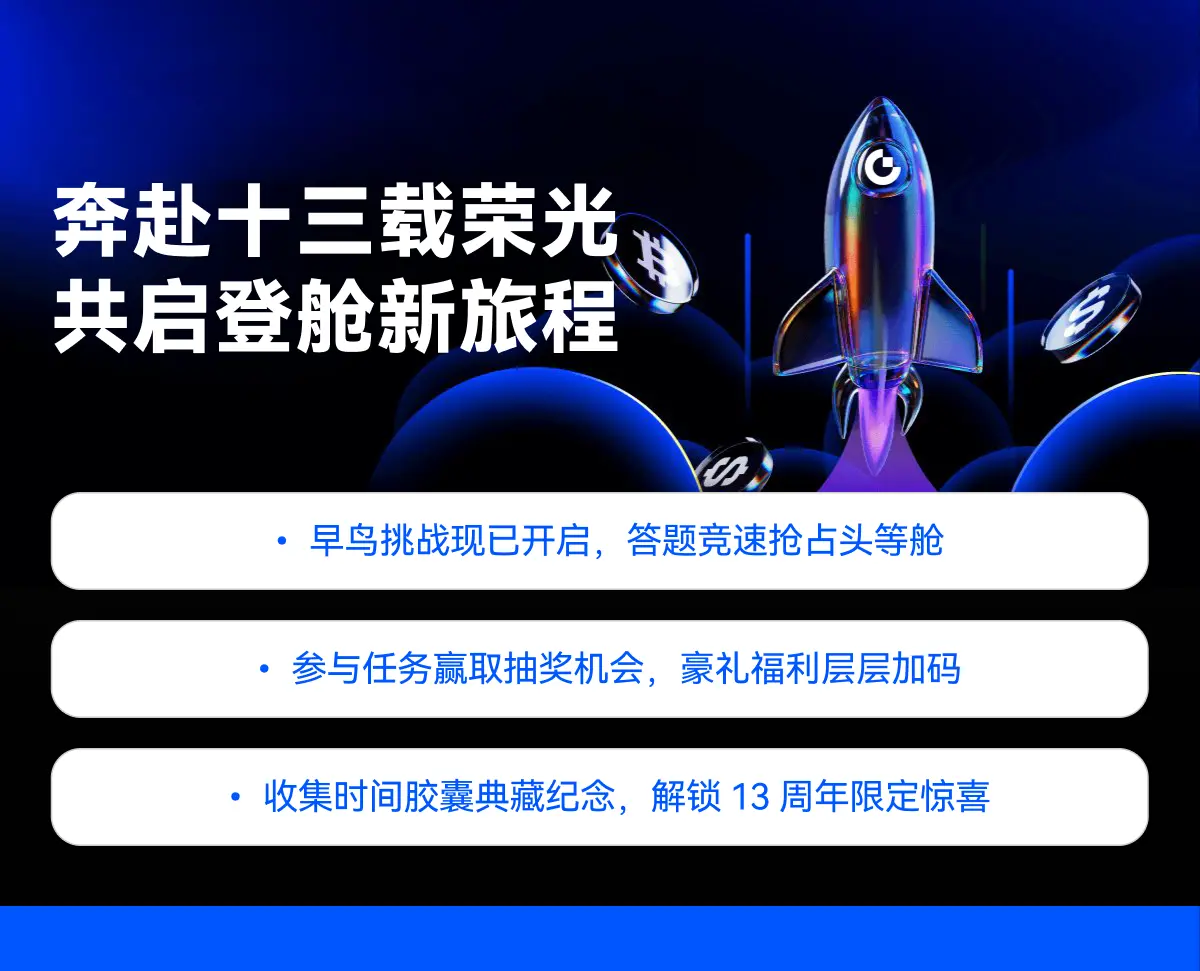
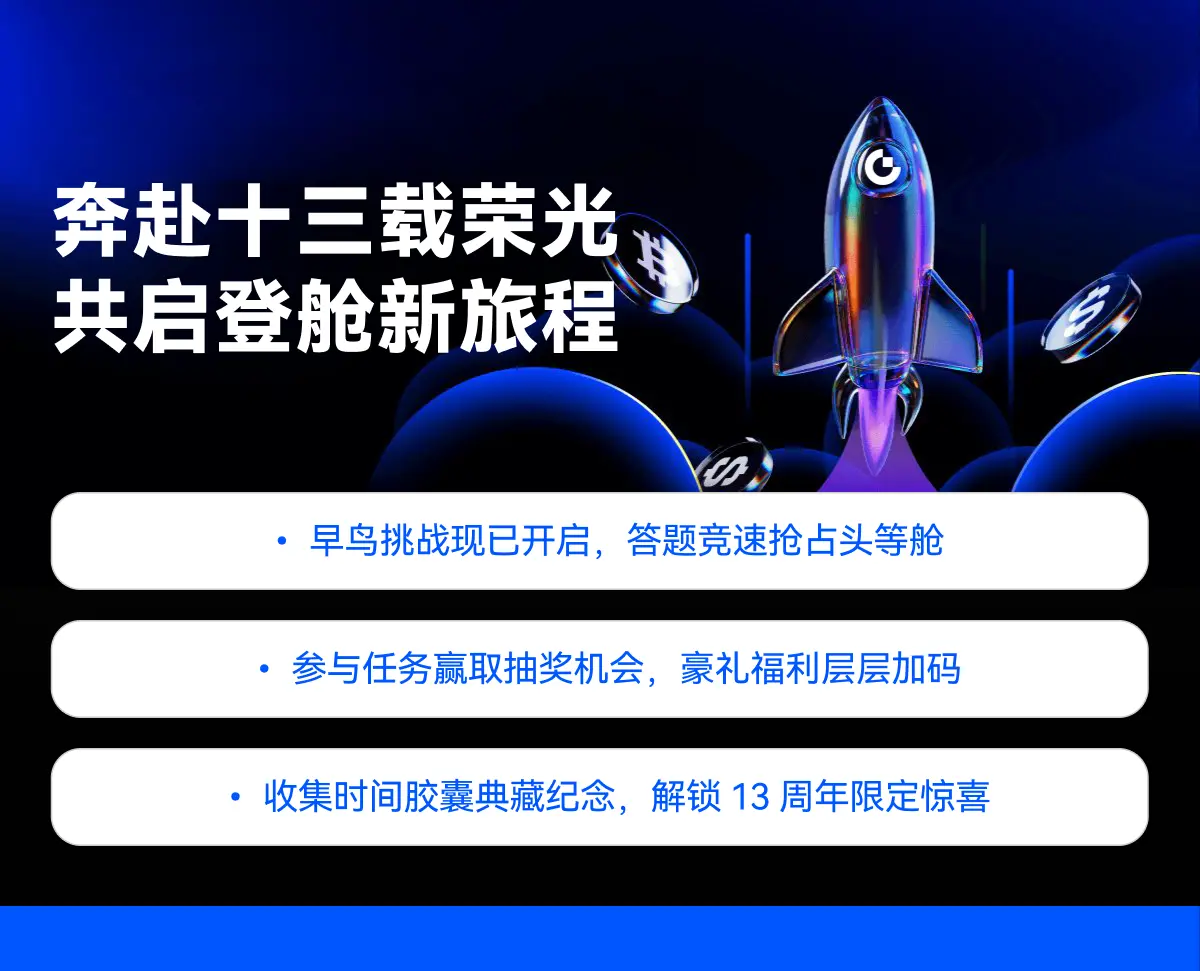
🚀 "Embarking on a 13-year journey of glory, together we start a new space voyage"
The three major activities directly maximize anticipation:
🔹 Early Bird Quiz Challenge: Brainpower race, grab first-class seats, exclusive benefits pouring in
🔹 Task Lottery to Win Grand Prizes: Participate in interactions for a chance to win, benefits layered upon benefits, good luck every time
🔹 Time Capsule Collection Commemoration: Collect exclusive memories, unlock 13th anniversary limited surprises, full of ceremony
Thirteen years of companionship, grateful for every moment of support~
Come
View Original
post-image
post-image
  • Reward
  • 36
  • Repost
  • Share
HighAmbition:
To The Moon 🌕
View More
#Gate广场四月发帖挑战 Bitcoin: Approaching a key resistance level at 74,000
On February 6th, after a significant volume surge and a low point of 59,000, it has been oscillating upward within the 60,000-70,000 range for the past few months, with the lows gradually rising, which is a positive sign.
In the past four days, BTC has been consolidating at relatively high levels, patiently creeping upward, just one step away from a breakout.
If it can break through and stabilize above 74,000, the next target is to challenge 80,000.
If it encounters strong resistance, it may need to test the support at
BTC-3,42%
View Original
post-image
post-image
  • Reward
  • 35
  • Repost
  • Share
HighAmbition:
good information 👍👍
View More
#周末我的交易计划 Is 24 Hours the Key to Determining Peace or War? U.S.-Iran Negotiations, Three Bottom Lines Non-Negotiable, Global Markets Hold Their Breath!
Just now, the world’s attention focused on the entrance of a hotel in Islamabad. Not to chase stars, not to watch the excitement. It’s about war and peace. On April 11th, local time, Islamabad, Pakistan, Serena Hotel. The U.S. and Iran finally sat down at the same negotiation table. This day, more than 40 days have passed since the outbreak of hostilities. Just before the negotiations began, Trump made a statement that made the heart of global
View Original
post-image
post-image
  • Reward
  • 31
  • 1
  • Share
HighAmbition:
good information 👍👍
View More
#Gate广场四月发帖挑战 4.11 Weekly Gold Chart Rebound from Bottom, Next Week Bullish and Bearish Trends Likely to Reopen
This week, international gold prices generally fluctuated higher, forming a typical bottoming rebound pattern. As of the close on April 11, spot gold was at $4,749, down slightly by 0.40% for the week. Early in the week, influenced by easing Middle East tensions and a rebound in risk appetite, gold prices briefly dipped below the $4,600 level; subsequently, due to weaker-than-expected U.S. March CPI data and rising market expectations of long-term Fed rate cuts, combined with ongoing
View Original
post-image
post-image
  • Reward
  • 31
  • Repost
  • Share
HighAmbition:
thnxx for the update
View More
💰 Post now to claim! #Gate广场四月发帖挑战 Red envelopes are being wildly distributed!
Haven't posted in the plaza yet? Don't miss this chance to "pick up money"!
New users posting have a 100% chance to win; the more posts old users make, the bigger the red envelopes. The 13th anniversary limited gift box is ready, just waiting for you to take it! 🧧
Money claiming guide:
1️⃣ New users in the plaza post to instantly receive a 100% guaranteed red envelope!
2️⃣ Post and interact more; there’s no limit to the red envelope amount!
3️⃣ Share for a chance to win 200U + an exclusive bottle opener!
4️⃣ Aim
View Original
post-image
post-image
post-image
  • Reward
  • 34
  • Repost
  • Share
HighAmbition:
good information 👍
View More
  • Pin